I bought a pair of black court shoes for £95 in 2019 and wore them 140 times before the heel tip wore through. That’s 68p a wear. I also bought a £35 pair the year before that I wore nine times, which works out at nearly £4 a go, and I only stopped at nine because the lining had shredded.
Nobody tells you that at the till. The cheap pair feels like the sensible decision for about three weeks.
If you’re buying office wear shoes for women and you’ve got a budget, the number that matters isn’t on the price tag. It’s price divided by the number of times you’ll actually put them on, and that second number is decided by three things you can check in the shop in under a minute.
The pair I wore 140 times, and why it survived
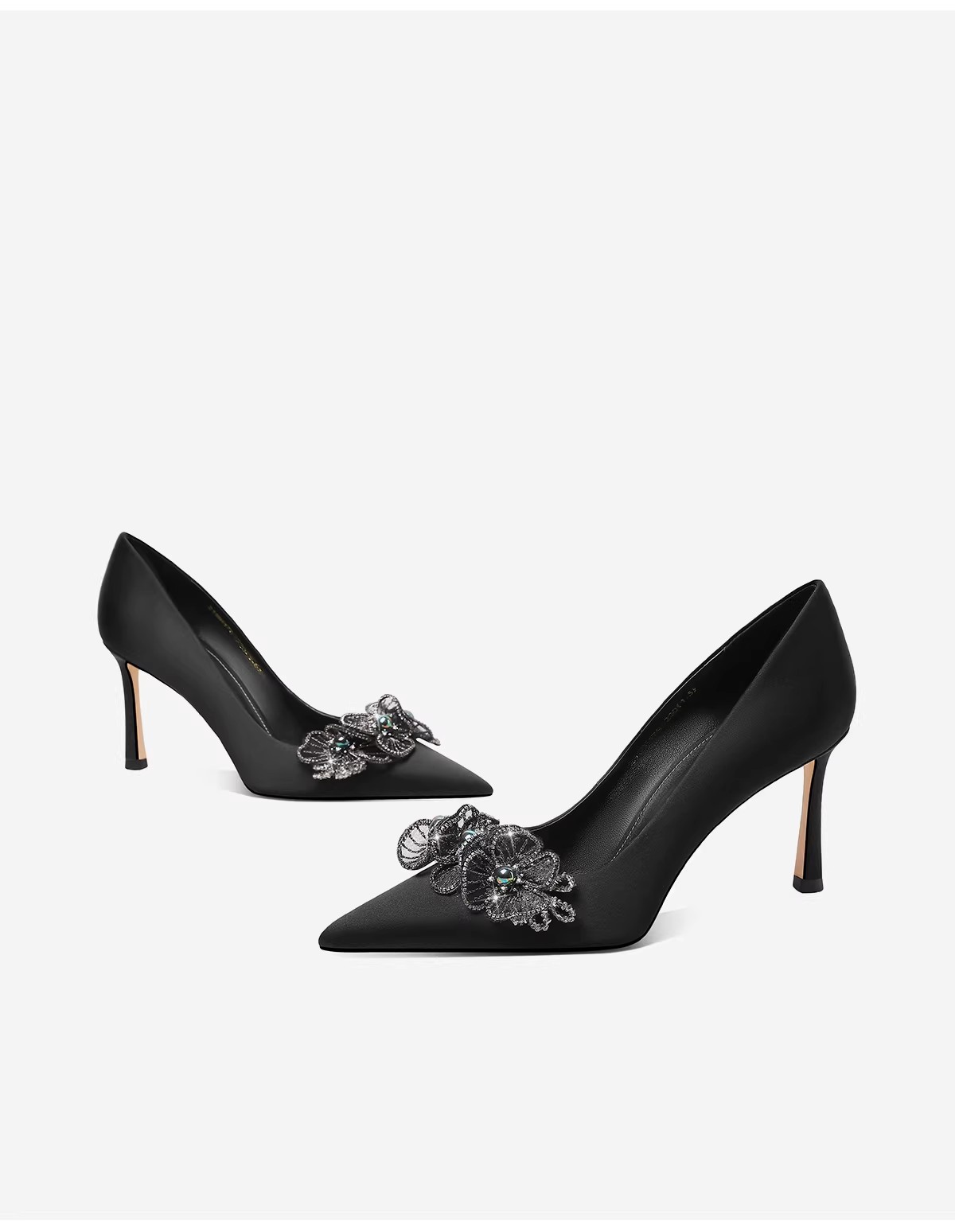
Nothing special about them. Black leather, 60mm heel, round toe, a leather lining, and a sole that a cobbler could take off and replace. That’s the whole list.
What made them last was boring construction. The heel tip was a replaceable nylon block, so when it wore down at 80 wears I paid £12 to have both replaced instead of buying new shoes. The lining was leather, so it didn’t rot from the inside. The upper was one piece of leather with a seam at the back, which meant no stress points across the toe.
I cleaned them maybe six times in four years, with a damp cloth and a bit of saddle soap. That’s it. Leather that gets looked after once a season outlasts leather that gets a full kit every weekend and nothing in between.
They weren’t comfortable in the way a trainer is comfortable. They were comfortable in the way that a shoe which matches your foot shape is comfortable: nothing pressing, nothing slipping, no thinking about them by 11am.
Here’s the honest part. I didn’t do any maths when I bought them. I did the maths three years later, out of curiosity, and realised the expensive pair had been the cheap option all along.
The heel tips are the detail that made it work. A replaceable tip is a small plastic or nylon block that’s pinned into the heel, and it takes a cobbler about twenty minutes to swap both. When it’s moulded into the heel as one piece, the whole heel has to be rebuilt, which costs £30 and up, which is more than most people will spend on a £60 shoe.
I also did one thing that cost nothing. I kept them on a shoe rack instead of in a box, and I stuffed them with newspaper when they got wet. Four years of that and the toe box never collapsed.
That’s the whole argument. Not that you should spend more. That you should count wears before you count pounds.
How I count wears, and why most estimates are wrong
Most people estimate wears by imagining their best-case week. “I’ll wear them twice a week, so that’s a hundred wears a year.” Then they wear them once a fortnight because the heel is slightly too high for the walk from the station, and the real number is 22.
There’s also a version of this where the shoe is fine and the outfit is the problem. If a pair only works with one dress, you’ll wear it once a month whether you like it or not, and the cost per wear stays high no matter what you paid. That’s a wardrobe problem dressed up as a shoe problem.
My rule now: count the wears you’d do in a bad month, not a good one. If you’d wear them twice in a wet February when you’re tired and late, that’s 24 wears a year, not 100. Multiply by how many years the shoe will realistically survive. Two years is generous for a £40 pair. Four is normal for a leather pair you maintain.
- £35 pair, 24 wears a year, 2 years: 73p a wear, and that assumes the lining holds
- £35 pair, 9 wears total before it fails: £3.89 a wear
- £95 pair, 45 wears a year, 4 years: 53p a wear
- £160 pair, 60 wears a year, 5 years, one £30 resole: 70p a wear
Look at the last two lines. The £160 pair costs more per wear than the £95 pair, even though it’s the better shoe. That’s because I assumed you’d wear it more often, and if you wouldn’t, the maths flips.
Which is the point. Cost per wear isn’t an argument for expensive shoes. It’s an argument for shoes you’ll actually wear, at a quality level that survives the wearing.
I track it in a notes file now, which sounds obsessive and takes about four seconds a day. Every time I put a pair on, I add a tick. At the end of a year I know exactly which pairs earned their place and which ones were a mood purchase. The results were not flattering. Three pairs in my wardrobe had fewer than fifteen ticks, and one had two.
If you don’t want to keep a file, use a simpler proxy. Count how many times you reached for a pair in the last month without thinking. That’s your real wear rate, and it’s almost always lower than what you’d estimate in a shop.
Pair one: the £35 court shoe that cost £3.89 a wear
I bought these for a job interview and then kept them in a drawer for two years. When I finally started wearing them daily, the problems showed up in the first fortnight.
The lining was a bonded synthetic sheet, so by 3pm my feet were damp and sliding forward. The heel tip was plastic moulded into the heel rather than a replaceable block, so when it wore at the outer corner there was nothing to replace. The insole was 4mm of foam glued down, which compressed to about 1mm in three weeks.
The toe scuffed within a week, too. Coated leather does that: the finish is a thin layer over a split hide, so a knock against a desk takes the colour off and leaves a lighter patch. Polish sits on top of it and comes off again the next day.
None of that is a scandal at £35. The scandal is that I thought I’d saved £60. There’s a piece on why the size chart lies about half sizes that covers the fit side of the same mistake.
There’s a specific moment I remember. Standing on a platform at 6:40pm in November, waiting for a delayed train, and my left heel had started to rub because the shoe had stretched and my foot was sliding. I took them off on the train and walked barefoot from the car park. Nine wears in, and I’d already stopped trusting them.
A cheap pair can be a good buy if you’ll wear it eight times a year with a dress and nothing else. It’s an expensive buy if you’re going to stand in it for nine hours.
I tried to rescue them with a gel insole. It made the toe box tighter, which made the rubbing worse, and I took it out after two days. That’s the trap with cheap shoes: every fix costs money and adds bulk, and the shoe wasn’t built with room for either.
What I should have done is bought them one size up and used the insole from day one. That would have got me maybe twenty more wears. It still wouldn’t have got me to 140.
Pair two: the one that paid for itself, twice
The £95 pair did 140 wears over four years and one resole. But the number I care about more is the second one: because they were comfortable, I wore them on days I’d otherwise have worn trainers. Weddings, long meetings, the days with three site visits.
That’s the hidden return. A pair that doesn’t hurt gets worn, and being worn is what makes the maths work. A pair that hurts gets worn nine times and then lives in a box, and no amount of quality compensates for that.
So the practical question isn’t “how long will these last”. It’s “would I put these on at 7am on a Tuesday in February when I’m already running late”. If the answer is no, the price is irrelevant.
There’s a trap in the other direction, which is buying the expensive pair and then treating it as too precious to wear. A £200 shoe worn six times a year is £33 a wear, and there is no version of that maths that works. If you’re going to spend, you have to actually wear them, in the rain, on the days you’re late.
Two things pushed the £95 pair into the yes column. The heel was 60mm, which is low enough to walk in and high enough to look deliberate with a suit. And the toe was round, so there was room for my toes to spread when I stood, which is what stops the ache at hour six.
They weren’t perfect. The right heel tip squeaked for the first month until the cobbler shaved a millimetre off it, and the leather creased across the vamp in a way that would bother anyone who wants shoes to look new. I stopped caring around wear thirty.
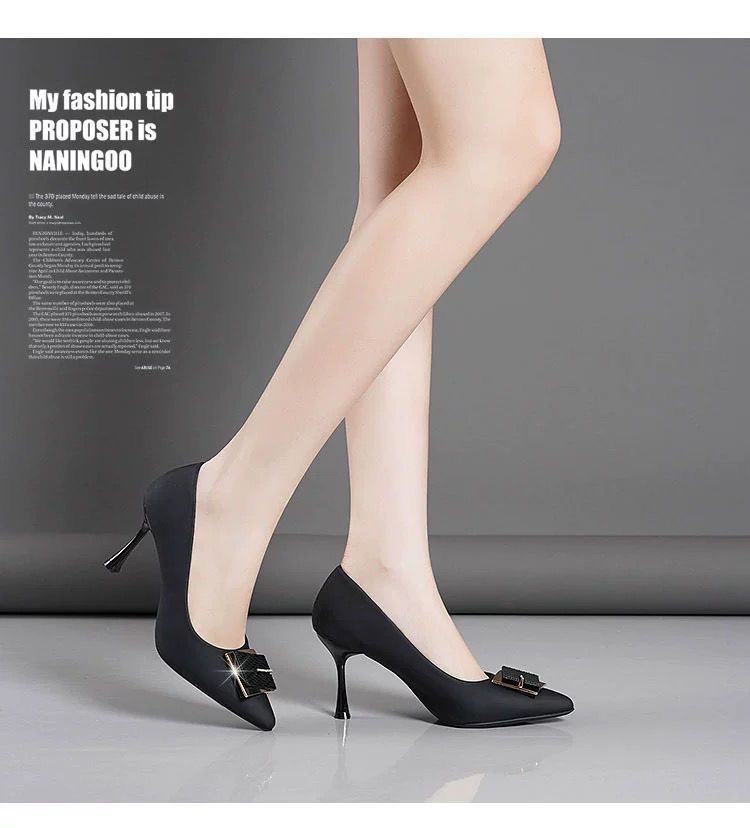
You can see the same logic in a black commuting heel with a shallow vamp, which is the shape I’d look at first if I were buying again. The pointed professional single shoe is the sharper version, and the point costs you toe room. There’s also a block-heel option built for standing shifts, which is the compromise I’d suggest if you’re on your feet more than six hours.
The repair maths: when a cobbler beats a new pair
This is where cheap shoes quietly become expensive and good shoes quietly get cheaper. A heel tip replacement is £10 to £15 for a pair. A full resole on a leather-soled shoe is £45 to £70. Re-stitching a seam is £15.
My £95 pair: one resole at £45, total outlay £140 over four years, 140 wears, £1 a wear including repairs. Still cheaper per wear than the £35 pair that failed at nine.
But repairs only work on shoes that can be repaired. Three things decide that, and they’re all visible before you buy:
- Is the heel tip a separate block? If it’s moulded into the heel, there’s nothing to replace and the whole heel unit has to be rebuilt, which usually costs more than the shoe.
- Is the sole stitched or glued? Stitched welts can be replaced. Glued soles can sometimes be re-glued, but a cobbler can’t rebuild what was never built to come apart.
- Can you get the shoe back on the last? Cheap uppers lose shape when the sole comes off, and the shoe never sits right again. Leather holds its shape. Bonded synthetics don’t.
One more thing on repairs: get the heel tips done the week you notice they’re worn, not the week they’ve worn through. Once the plastic tip is gone, the heel block itself starts grinding down, and that’s when a £12 job becomes a £35 job.
Ask the cobbler before you buy, if you’ve got one nearby. Most will tell you in ten seconds whether a given pair is repairable, and it’s free advice that changes the whole calculation.
Rough prices where I live, for reference. Heel tips, £10 to £15 a pair. Half sole and heel, £30 to £40. Full leather resole, £55 to £70. Re-stitching a split seam, £12 to £18. Zip replacement on a boot, £25 to £40 and rarely worth it.
What a cobbler can’t fix: a shredded synthetic lining, a collapsed heel counter, or an upper that’s lost its shape because it was stored squashed. Those are the failures that end a shoe’s life, and every one of them is decided before you buy.
One caveat: if the shoe cost £40 and a resole is £45, don’t resole it. Repair maths only works when the shoe is worth more than the repair, and there’s no shame in that being a short conversation.
The other caveat is time. A resole means the shoes are gone for a week, so you need a second pair. That’s a real cost, and it’s the reason I now keep two work pairs in rotation rather than one good pair and a standby that doesn’t fit.
What I’d do differently, and the two numbers I check now
Two numbers, both about the shoe rather than the price. The first is heel height in millimetres, and there’s useful background on how heel height changes the load on your forefoot if you want the why rather than the what. because 60mm is where most people can walk normally and 85mm is where they start walking carefully. If you can’t walk normally, you won’t wear them, and the cost per wear collapses.
The second is the heel width at the base. A 60mm heel with a 10mm base is a stiletto in disguise and it will sink into grass and grate on paving. A 60mm heel with a 25mm base is stable, and you’ll forget you’re wearing a heel by the afternoon.
Other things I’d do differently:
- Buy the second pair before the first one dies, so I’m never choosing under pressure
- Keep a £12 heel tip replacement in the budget from day one, because it’s coming
- Try the shoes at 4pm, standing, on a hard floor, for five minutes
- Ignore the “comfort” claims on the box and check the lining material instead
And I’d stop buying black shoes only. Two pairs in two shades cover more outfits than four pairs in the same colour, and the cost per wear on each goes up because you wear each one more often. That’s backwards from how most people shop, and it’s what the maths actually says.
The lining thing is worth repeating because it’s the single best predictor I’ve found. Push your hand inside. Smooth and cool means synthetic. Slightly warm and textured means leather. The leather ones last longer, smell less, and cost more, and over four years they’re the cheaper option. Tanned leather is also the material most likely to carry a restricted-substance certification, which matters if you’re wearing a pair ten hours a day.
If you want to keep the palette simple while you’re working this out, one tan shade across three pairs and nine outfits is a good place to start, and the wider range of women’s office-appropriate styles gives you the shapes to compare against.
And write the price on the inside of the box, with the date. It sounds daft, but in three years you’ll have no idea what you paid, and the maths only works if you remember the number.
Last thing. The pair I wore 140 times is now at the back of the wardrobe with a scuffed toe and I still can’t throw them out. Not sentiment. I keep them as a reminder that the £35 pair felt like a bargain for exactly three weeks, and the £95 pair felt like a mistake for about a month, and only one of those feelings was right.
There’s one case where the cheap pair genuinely wins. If you need a specific colour for one event, or a shape you’ll wear four times a year, buy the cheap one and don’t feel bad about it. The maths only punishes cheap shoes when you wear them hard.
Count the wears. Then look at the price.