

It’s 7:20 on a Tuesday. You’ve got a nine o’clock, the hallway is still dark, and the outer edge of your left foot is already sore before your coat is on. The shoes are your size. The shop said so, and the box says so. What nobody mentioned is that your forefoot measures 106mm across and the shoe was built for 95mm.
Eleven millimetres doesn’t sound like much. It’s the difference between a pair you wear for two winters and a pair that gives you a numb little toe by Thursday.
Extra wide walking shoes for women fix this, but only if you buy by measurement instead of by label. The whole check takes about fifteen minutes and most of it happens sitting on your own floor.
The width letter on the box is a guess, not a specification
US widths run B (medium), D (wide), 2E (extra wide) and 4E (double extra wide). Women’s shoes use the same letters on a smaller scale, and most brands treat B as standard, roughly 89 to 95mm across the ball of the foot. D lands near 100mm, 2E around 105 to 110mm, and 4E past 115mm. Those numbers are a convention, not a law, and the way US and UK widths line up is loose enough to trip you up across brands.
The real problem is where a brand draws those lines. A 4E from one factory measures the same as a 2E from another. A “wide” built on a narrow last is a normal shoe with slack at the seams, and you’ll feel that within ten minutes of walking.
Three things decide whether the letter helps you at all:
- The last the shoe is built on, meaning the physical mould, not the marketing copy
- Where the extra width sits: at the ball only, or across the whole forefoot including the toe box
- Whether the upper can give a few millimetres at the exact seam you press against
Ask an assistant for the last width in millimetres. Most can’t tell you, which isn’t their fault, because it isn’t printed anywhere. That’s why you measure your own foot and carry the number into the shop.
One distinction worth holding on to: width and volume aren’t the same thing. Width is measured across the ball. Volume is the room above your instep. A high instep in a 4E shoe still presses on the laces, and a shallow shoe still pinches the top of your foot even when the sides are generous. If your sore spot is the top rather than the sides, you’re shopping for volume and the width letter won’t save you.
Measure at 6pm, standing, in the socks you’ll actually wear
Feet swell through the day. By evening yours can be half a size longer and 2 to 3mm wider than they were at breakfast, which is why a pair that felt fine at 10am can ache by dinner. Measure late, and measure standing up with your weight on the foot, because a foot in the air is a smaller foot.
What you need: a sheet of A4 paper, a pencil held vertically, a ruler, and the socks you wear with walking shoes. Not barefoot, unless you genuinely walk barefoot.
Size charts for extra wide walking shoes for women are usually listed as a single band, like “2E fits 105 to 110mm”. That band is wide enough to hide a 5mm difference between two pairs in the same size, which is exactly the difference you’ll feel. Treat the chart as a filter, then confirm with your own number.
- Stand on the paper with your heel near one edge and your weight even on both feet.
- Trace the outline without leaning over, since leaning shifts weight and changes the shape.
- Mark the widest point across the ball of your foot, which is usually just behind the big toe joint.
- Mark heel to longest toe. Repeat on the other foot, then use the larger of the two for everything.
That width number is your starting figure. Add 5mm of clearance for a walking shoe, because your foot spreads on impact and the shoe needs somewhere to put that spread. A 106mm foot wants a 111mm interior, and now you can compare it against something real instead of a letter.
Most people find their two feet differ by 3 to 6mm in width. Not a big deal for sneakers, a very big deal for anything with a stiff toe cap. Buy for the wider foot and pad the other one if it slops.
Where extra wide walking shoes for women actually add room
Two shoes with identical interior width can feel completely different, because width is only useful in the place you need it. Check three zones before you commit.
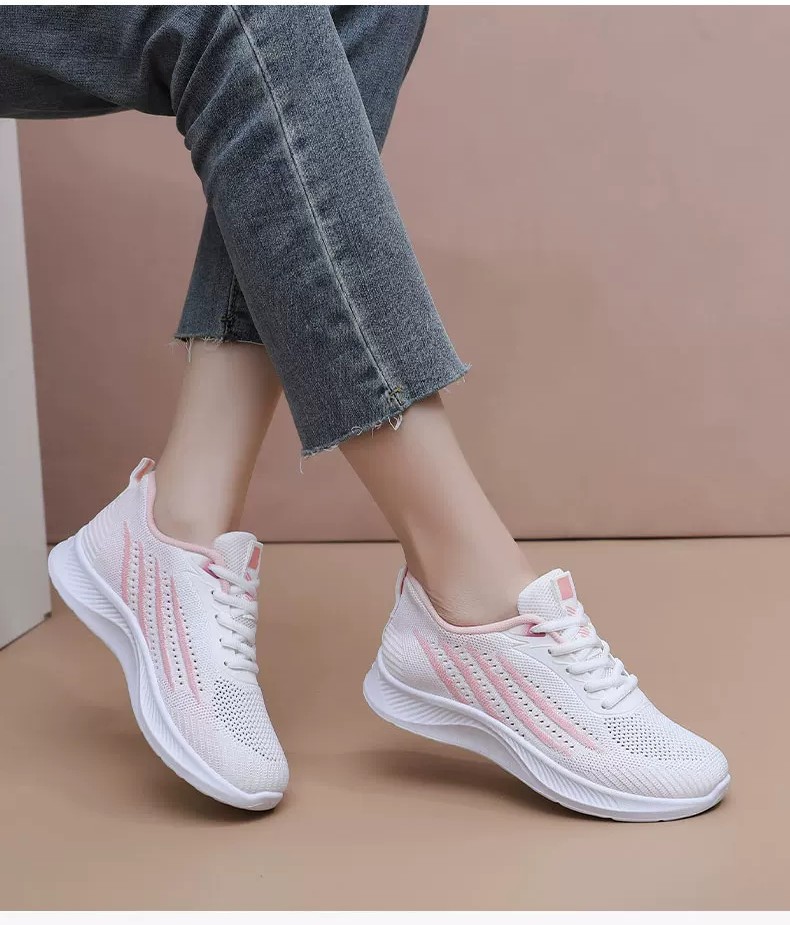
The toe box. This is where most wide feet get pinched. You want 10mm of air in front of your longest toe and enough height that your toes don’t brush the top. Press down on the upper above your toes. If it’s rigid, your toes will fight it for the whole walk.
Ball and flex point. The shoe should bend where your foot bends, which is roughly at the ball. Hold the heel and push the toe up. If it folds halfway down the shoe, it’ll fight your stride. If it barely folds at all, it’s a stiff board and your calf will do all the work.
Heel cup. Wide forefoot plus narrow heel is the most common women’s foot shape and the hardest to fit. A shoe that’s wide all the way back will slip. Look for a pair that’s 2E or 4E in front and normal at the heel, then use the top lace eyelet to lock it down.
Here’s the part that surprises people: a shoe can be extra wide at the ball and still narrow at the toes, because the manufacturer widened the middle and left the front alone. That’s the pair that feels fine in the shop and ruins your second toe on day three.
If you want a starting point that’s cut generously through the front without a brick of a sole, these breathable flat-bottomed board shoes with a thick sole have a roomy toe box and a flat platform, which suits a forefoot that spreads on impact better than a rockered sole does.
The upper decides whether the width works
Materials move. Leather gives a little, mesh gives immediately, and patent gives nothing at all. That matters more than the width number, because a shoe that can stretch 4mm at the seam buys you a size you didn’t have to order.
Rough guide to what each upper does over the first month:
- Engineered mesh: soft from hour one, stretches maybe 3 to 5mm across the ball, and shows every scuff. Best for summer and for feet that change width through the day.
- Full-grain leather: firm for a week, then moulds to your foot and holds that shape. Expect 2 to 4mm of give, no more. It also gets heavy in rain.
- Knit: the most forgiving upper for a wide forefoot and the least supportive for a heavy walker. Great for 3,000 steps, vague at 12,000.
- Patent or coated leather: essentially zero stretch, and it creases where it pinches. If the fit isn’t right on day one, it never will be.
- Suede: soft, generous, and unhappy in wet weather. Keep it for dry pavements, as this guide to suede slip-on shoes and how they survive rain points out.
One honest caveat about mesh: it stretches where you push, so a shoe that’s tight at the little toe will bulge there and look worn out within weeks. Stretch is a rescue, not a plan.
Lacing is the cheapest width adjustment you own. Skipping the eyelet closest to the sore spot creates a window over that part of the foot, and a heel lock at the top keeps the shoe from sliding forward into your toes. Two minutes with the laces beats another pair of shoes.
What I’d skip, and why
Extra wide doesn’t automatically mean comfortable. Some of the roomiest shoes I’ve tried are the worst to walk in, because width without structure lets your foot slide sideways and your ankle do correction work all day.
Things I’d leave on the shelf:
- Any extra wide shoe with a soft, tall midsole. Width plus mush equals a rolling ankle on uneven pavement.
- Stiff toe caps on a wide foot. The cap doesn’t stretch, so your toes take the pressure instead.
- “Wide fit” pairs that are only wide in the marketing. Check the interior measurement or don’t buy.
- Slip-ons for long walks. Nothing holds the heel, so your toes grip to keep the shoe on, and that’s a blister factory.
- Bargain widths online with no return policy. Fit is the whole product here.
Also worth saying out loud: extra wide shoes often run long, because brands scale the whole last rather than just the girth. If you normally take a 7 and the 2E fits well across, try a 6.5 as well before you decide.
And if you have a diagnosed condition rather than a wide foot, get the shoe fitted by someone who can look at your gait. Aching along the arch after 20 minutes is a different problem, and plantar fasciitis won’t be solved by 4E alone.
Break them in without losing a week
New walking shoes need roughly 20 to 30km before the upper and midsole settle. Doing that all in one weekend is how people end up limping into Monday. Extra wide walking shoes for women usually need the full three weeks, because a wider upper has more material to soften around your forefoot.
A plan that works:
- Day 1: 20 minutes indoors or on a soft track. Just enough to find the pressure points.
- Day 2 to 4: 40 minutes a day on flat pavement, same socks every time.
- Day 5 to 8: one 5km walk, then your normal routine.
- Week 3: the long walk. This is where the shoe either works or doesn’t.
Put a plaster on the spot that rubbed before it blisters, since blisters form faster in a shoe that’s slightly too roomy than in one that’s snug, because a loose heel slides and friction does the rest. Counter-intuitive, but it’s why wide shoes need good lacing, not just space.
Keep the receipt and the box for three weeks. Wear them indoors first. A shoe that’s wrong at 2km will be unbearable at 10, and most shops will still take them back if the soles are clean.
One last check before you cut the tags: walk 200 metres on pavement, not carpet. Carpet hides a shoe that’s too stiff at the ball, and it also hides a heel that slips. The street tells you in ninety seconds what three laps of your living room won’t.
Three pairs, three jobs
Nobody needs one perfect shoe. Most people with a wide forefoot end up with two or three pairs on rotation, and the rotation is what keeps any single pair from wearing into the shape of your worst walking habit.

For dry city days and a lot of standing, the mesh soft-soled sports shoes for wide feet give the most instant room. The mesh moves with your foot instead of against it, and the sole is flexible enough that your toes can actually push off.
For longer walks where you want a bit more under you, the sports and leisure shoes for everyday walking sit in the middle. Cushioning, some structure in the heel, not so much foam that you feel disconnected from the pavement.
If your week is mostly indoors and on smooth floors, a flat pair is genuinely easier on a wide foot than a rockered one, because you control the roll instead of the shoe doing it for you. Start with the women’s sneakers collection if you want to see the shapes side by side, and the full women’s shoes range if you’re shopping across categories.
For work shoes that survive a shift rather than a walk, the maths is different, and this breakdown of shoes you can stand in for a twelve-hour shift covers it. If you’re still working out which shape you even want, the twelve main shoe shapes and what each one is for is the faster read.
Measure once, write the number on your phone, and stop buying by letter. Extra wide walking shoes for women aren’t a niche anymore, and the only thing standing between you and a pair that fits is 111mm on a ruler. If a shop can’t tell you the interior width, that’s your answer about the shop, not about your feet. What’s your number?
