

Somewhere around 4pm on a normal Tuesday, your little toe starts talking to you. Not pain exactly. More of a complaint. By the time you get home and take your shoes off there’s a red mark down the side of the foot, and the shoe looks completely innocent.
That’s a toe box problem, and it’s the thing most women’s walking shoes get wrong. Not cushioning, not arch support. Room. Walking womens wide toe box athletic shoes exist because the standard last is built around a foot that many women simply don’t have.
Here’s what’s odd: I spent two years buying half a size up to fix this, and it never worked. The shoe got longer, my heel started slipping, and the little toe was still pressed against the same wall. Width and length are separate problems, and only one of them can be solved with a bigger number on the box.
How much room does your foot actually need at the toes?
Measure it and you’ll stop guessing. Stand on a piece of paper, weight on both feet, and trace around your foot. Then measure the widest point across the ball, roughly where the metatarsal heads sit.
Now measure the shoe’s internal width at the same point. Most women’s walking shoes give you 90 to 95mm at a size 38. A wide fitting gives about 100mm. If your traced foot measures 97mm across the ball, a standard shoe is squeezing you by a few millimetres every step, and after 8,000 steps that adds up to a bruise.
Depth matters too, and it’s the number nobody publishes. You want roughly 10mm of clearance above your longest toe when you’re standing, because your foot flattens and lengthens under load. Check it sitting down and you’ll overestimate the room by about a centimetre.
- Width: measure across the ball, not the toes. That’s where shoes are narrowest relative to feet.
- Length: standing, not sitting, with a thumb’s width past the longest toe.
- Depth: press the upper above your big toe. It should give, not press back.
- Shape: a rounded or square toe follows your foot. A pointed one doesn’t, whatever the size.
Shape is the point people skip. A shoe can be 100mm wide at the ball and still crush your toes if it tapers sharply from there. Foot-shaped lasts, the ones that look almost clumsy in photos, are the ones that leave your toes flat and spread the way they are when you’re barefoot.
If you have a bunion, the pressure point moves. The anatomy of a bunion explains why the joint at the base of the big toe drifts outward and takes the shoe’s side wall with it. That’s why a wide toe box helps more than extra length ever will.
Worth knowing how the standard width got so narrow. Most women’s lasts are scaled from a mould that was never designed around a splayed forefoot, and the taper from ball to toe is there for looks rather than anatomy. Your toes want to spread when you take a step. A tapered toe box stops them, and over years the shape of the foot follows the shape of the shoe.
That’s also why people who switch to a roomier forefoot often describe their feet as having “got wider”. They haven’t. The toes have just gone back to where they were supposed to sit.
The thumb test, and why it lies to you
You know the test. Press a thumb on the end of the shoe while standing and see if there’s a thumb’s width of space. It’s the most common fit check in the world and it only measures one dimension.
Press the sides too. Put your thumb on the outer edge at the widest part of the foot and push inward. If the upper doesn’t move at all, the shoe has no width to give, and your little toe is going to spend the afternoon against a wall. If it moves 5mm, that’s a shoe with room.
Then do the version almost nobody does: take the insole out and stand on it. Your foot should sit inside the outline with a couple of millimetres to spare on each side. If any part of your foot hangs over, the shoe is too narrow at that exact point, and no lacing pattern fixes it.
This test is why I ignore the thumb check for walking shoes now. Length is rarely the problem. Width and shape are, and they’re invisible from the outside.
One caveat about insoles: the one that comes with the shoe is often thinner than the one you’ll actually use. Swap in a supportive insole and you lose volume, both width and depth. Take the insole you plan to wear when you try shoes on, or you’ll buy a pair that fits a footbed you’re going to throw away.
Do all of this late in the day. Feet swell by half a size between breakfast and dinner, and a shoe that passes every test at 10am can fail at 6pm. If you can only shop in the morning, walk for twenty minutes first and try the shoes on in the shop’s thickest socks.
And never judge fit on carpet. Carpet hides the two things that matter most: how the sole grips and how much your foot slides forward when the shoe meets a hard surface. Ask to walk on tile or, better, step outside onto the pavement.
Who actually needs a wide toe box, and who just needs a bigger size
Three groups get real benefit. Women with bunions or a family history of them. Women with hammer toes, where the toe curls and needs vertical room as much as width. And women who’ve spent a decade in narrow shoes and whose toes have slowly been pushed into a point.
The mechanics of a hammer toe are worth understanding because the fix is partly footwear and partly not. A deeper, wider toe box stops the toe being pressed down. It doesn’t uncurl it. But it stops the shoe making it worse, which is the realistic goal.
- Bunion: buy width plus a soft upper over the joint. Stiff leather over a bunion is a bad week.
- Hammer toe: buy depth. Width alone won’t stop the top of the toe rubbing.
- Wide forefoot, nothing else wrong: buy a wide fitting in your normal length. Don’t size up.
- Nothing wrong, just uncomfortable: try the insole-outline test before buying anything new.
And the group that doesn’t need this: women whose feet are genuinely narrow. A wide toe box on a narrow foot means your foot slides, and sliding causes blisters on the heel and under the arch. If your shoes feel loose rather than tight, this is the wrong solution.
That’s the honest limit. Wide toe box shoes aren’t universally better, they’re better for a specific shape of foot. I’ve recommended them to friends who then complained about heel slip, and they were right to.
There’s a middle option worth mentioning. Some brands make a standard width with a rounded toe and a wider ball, which is not the same as a wide fitting but solves the pinching without turning the whole shoe into a boat. If your foot is only slightly wide, that’s usually the better buy.
Age changes this too. The fat pad under the ball of the foot thins with time, and the forefoot spreads slightly. A shoe that fitted at 30 can feel tight at 45 without your weight changing at all, which confuses people who assume their feet are fixed.
Athletic styling, walking reality
Most wide toe box shoes come in an athletic shape, which is convenient, because that’s also the shape that suits walking. But the styling and the function aren’t the same thing, and the mesh upper that looks fast is sometimes the weakest part.
What matters: a firm heel counter, a midsole that doesn’t collapse, and a toe bumper. The bumper is the bit that stops you stubbing through the front on a kerb, and on a wide shoe it’s often the first thing to go.
What matters less than the marketing suggests: rocker geometry. A pronounced rocker helps if you have a stiff toe joint, and it’s genuinely useful for some people. For everyone else it changes where your foot rolls, and a flatter sole lets your foot do its own work.
Check the flex point. Bend the shoe where your toes bend. On a wide toe box shoe, the flex should happen at the widest point of the forefoot, not behind it. If it bends mid-arch, the shoe is fighting your foot and your calf will tell you after an hour.
Weight is the other spec worth checking. Wide shoes sometimes add material and end up at 330g or more per shoe, which by hour five feels like walking in boots. Under 300g at a size 38 in a wide fitting is a good target, and it’s achievable.
Look at the outsole wear pattern on any pair you already own. If the outer edge of the heel is worn down more than the rest, you land on the outside of your foot and you’ll do the same in a new shoe. Nothing about a wide toe box changes that, and the fix is a firmer heel counter rather than more width.
One thing I’d skip: heavily cushioned uppers with a wide forefoot. They look generous and feel soft, but the foam compresses within a month and the width you paid for quietly disappears.
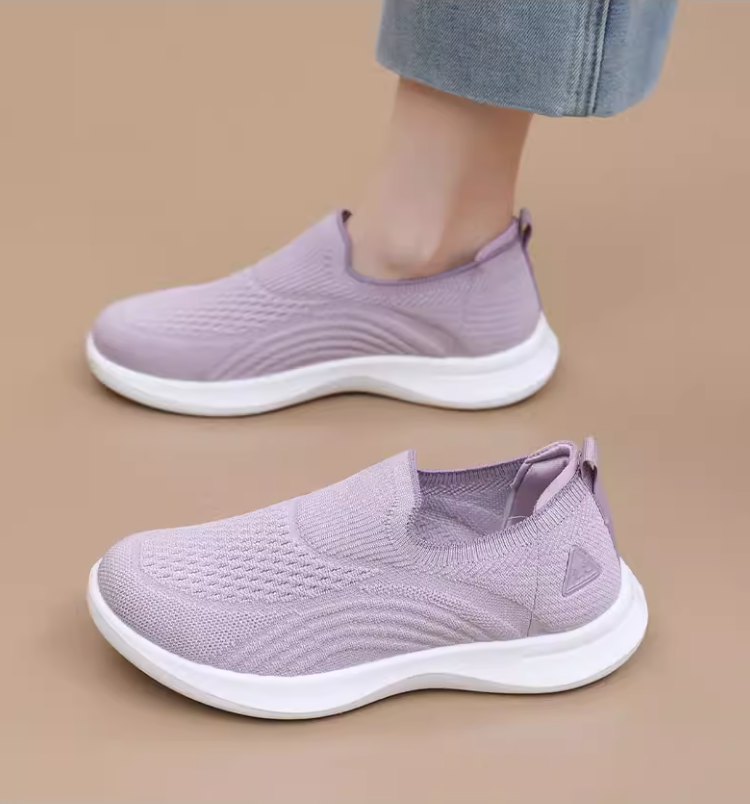
If you want a shape that leans this way without looking medical, this breathable flat-soled walking shoe has a roomy, rounded forefoot, and the soft leather sports style is the version that works with trousers.
Lacing and socks change the fit more than you’d think
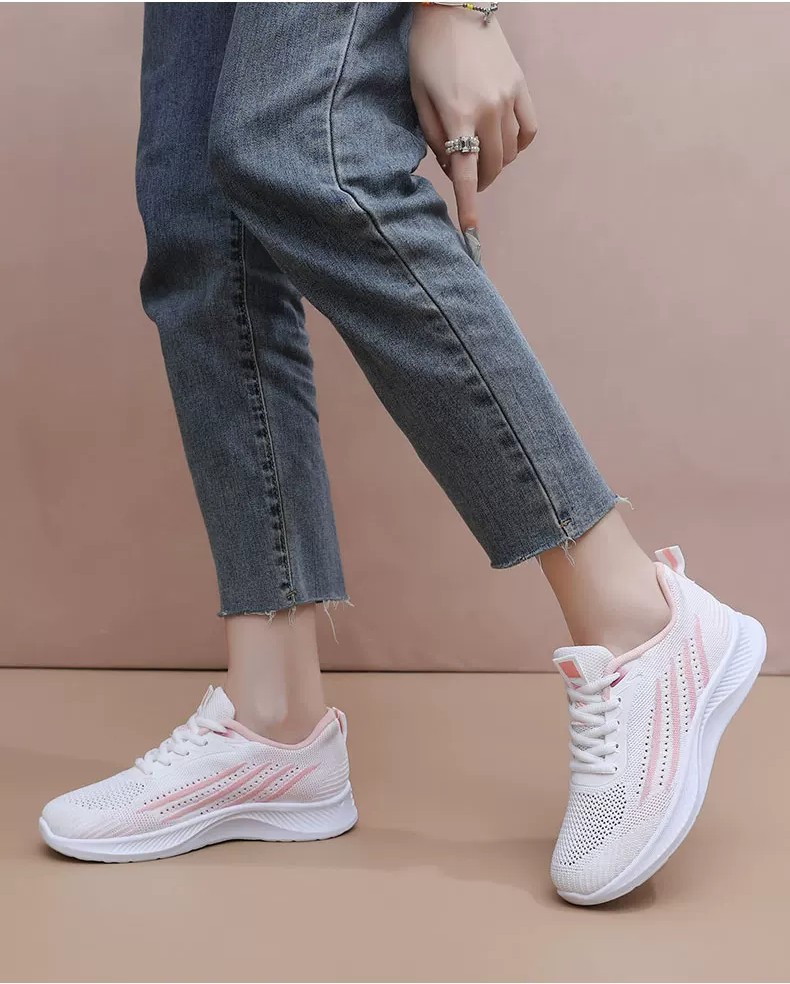
Before you return a shoe for being too narrow, try two things. First, relace it. Skipping the bottom eyelet pair gives the forefoot a few extra millimetres, because the lacing no longer pulls the two sides together at the widest point.
Second, change the sock. A thick cotton sock can eat 3mm of width on each side. A thin merino or synthetic sock gives it back. If the shoe fits with thin socks and not thick ones, you’ve learned something useful about which socks to travel with, not that the shoe is wrong.
Three lacing fixes worth knowing:
- Skip the bottom pair: releases pressure across the ball of the foot. The best first fix for a tight toe box.
- Straight-across lacing: at the bottom, run the lace straight rather than crossing, for the same reason.
- Heel lock: use the top two eyelets to stop the heel lifting if you sized up. Fixes slip without tightening the toes.
None of these add actual width to the shoe. They redistribute pressure, which is often enough, and if it isn’t, the shoe is the wrong last for your foot. That’s not a failure of technique.
One more variable: the insole. A thick aftermarket insole lifts your foot and pushes it against the upper, so a shoe that fits with the original footbed can feel narrow with a supportive one. If you need arch support and width, look for a shoe that’s roomy enough to take both, and try the combination before you commit.
Sock thickness is measurable, by the way. A thin liner sock is about 1mm at the sole, a standard cotton crew is 3mm, and a thick wool hiking sock is closer to 6mm. That’s 12mm of circumference you’re adding or removing just by changing socks, which is more than most width fittings give you.
Break-in, and the point where you should stop trying
A wide toe box shoe shouldn’t need breaking in at the toes. That’s the entire point. If the forefoot feels tight on day one, it will feel tight on day thirty, because the upper doesn’t grow and your foot doesn’t shrink.
What does break in is the heel, the collar, and the flex point. Expect three walks: twenty minutes, forty-five, then ninety. After the ninety-minute walk, the shoe should feel neutral. Not wonderful, just neutral.
Here’s my rule, learned expensively: if a shoe hurts in the same spot on the third walk that it hurt on the first, return it. Plasters, moleskin and hope are not a fit strategy. Neither is “it’ll stretch”, which is true for leather uppers by about 2mm and false for everything else.
One legitimate exception: a stiff leather heel counter can take a week to soften around the ankle. That’s a different spot from the toes, and it’s the only place where patience pays.
If the toe box is right and the shoe still rubs the top of a hammer toe, that’s a depth problem, and no amount of breaking in fixes it. Look for a taller toe box or a softer upper over that specific toe.
Replace walking shoes somewhere between 500 and 800km, which for most people is nine to fourteen months of daily wear. The upper usually still looks fine when the midsole has gone, which is why people keep wearing dead shoes for another season without noticing. Press the midsole at the ball of the foot and compare it to when you bought them. If it’s flat and hard, the shoe is done.
For more on matching a walking shoe to a wet trip, this piece on waterproof walking shoes for travel covers membranes and drying times, and there’s a practical guide to walking shoes for travel packing if you’re deciding what goes in the bag. The walking shoes category has the rest of the range.
Take the insole out, stand on it, and look at where your foot hangs over. That single check tells you more than any size label, and it takes about four seconds.
