

You put the shoe on in the shop, stand up, and your toes spread out for the first time all day. That’s the square toe effect, and it’s why women with wide feet or a sore joint keep coming back to this shape after every pointed-toe phase ends.
Square toe heels aren’t new. They come around every decade or so, get called a trend, and then quietly stay in the wardrobe because they solve a problem the pointed version never could. Here’s what the shape actually does to your foot, which versions work for which feet, and where this style goes badly wrong.
Why a wider toe box changes how the whole shoe fits
A pointed heel narrows to a single point at the front, so your toes are squeezed into a triangle. Your big toe gets pushed toward your second toe, and your little toe gets compressed against the side. A square toe keeps the front of the shoe at close to full width, which means your toes stay in roughly the position they’re in when you’re barefoot.
That difference shows up in fit numbers. Most women need about 10mm of clearance beyond the longest toe. In a pointed shoe with a 60mm point, a chunk of that space is empty air past your toes, so the shoe feels long while still squeezing the sides. In a square toe, the space is distributed across the width, so the same length feels roomier.
This is why so many people size down in square toe heels and end up with a shoe that’s too short. Don’t. Measure your foot length on paper, add 10mm, and buy that length. The width is what changed, not the length.
Bunions are the reason a lot of women switch shapes in the first place. The NHS guidance on bunions and pressure on the big toe joint makes the obvious point that tight, narrow footwear makes the problem worse, and a wider toe box takes pressure off the joint. A square toe isn’t a treatment. It’s just a shoe that stops fighting your foot.
Three square toes that look nothing alike
The label says square, but the shapes vary enough that you need to know which one you’re buying.
- Classic block square. Straight across the front, sharp corners. Most room, most statement, and the hardest to wear with a very formal dress.
- Soft square. Rounded corners with a flatter front. Reads almost like an almond toe from a distance and suits nearly every foot.
- Elongated square. Narrow and long with a squared-off tip. Looks sharp and modern, but adds length and can look like a small boat on a short foot.
The soft square is the safest first pair. It gives you the width benefit without the boxy look that makes some people feel like they’re wearing their mother’s shoes.
Length matters here more than in any other toe shape. An elongated square toe in a size 38 can look elegant on someone with a long leg line and clumsy on someone who’s 5’2″. Try them with the trousers or skirt you plan to wear, not with the jeans you wore to the shop. Proportion is decided by the whole outfit, and a long square toe needs a hem that isn’t cropped right at the ankle.
Heel choice: block for walking, slim for sitting
A square toe and a block heel is the most wearable combination in the category. The wide front spreads pressure across the ball of your foot, and the wide heel spreads load at the back, so the shoe doesn’t wobble. If you’re going to be on your feet for a wedding or a work event, this is the version to buy.
A square toe on a slim stiletto is a different shoe entirely. It looks sharper and more evening-appropriate, and it puts all your weight on a 9mm footprint. That’s fine for a dinner where you sit for two hours. It’s miserable for anything involving stairs and a cocktail hour.
Mid-height block heels, around 60mm to 70mm, hit the sweet spot for most people. You get a real lift, the block keeps you stable on carpet and pavement, and the wide toe box means your toes aren’t the thing that gives out first.
Watch the heel placement rather than just the height. On a well-made pair, the heel sits directly under your heel bone. If it’s set back further than that, the shoe tips you forward and your toes take the load, which defeats the whole point of buying a wide toe box. Stand in them and check whether you feel pressure at the ball of your foot or under your arch.
If you want the stability without the height, a thicker heeled pair built for standing is the practical pick for an event where you’ll be upright for four hours.
What to wear them with, and the one hem that fails
Square toe heels work with wide-leg trousers, straight jeans that hit the top of the foot, midi skirts, and anything with a bit of volume. The square front balances a wide hem, which is why this shape keeps coming back alongside relaxed tailoring.
They work less well with a very short, tight hem. A mini skirt plus a boxy square toe reads heavy at the bottom of the outfit, because the shoe has visual weight and the hem doesn’t. If you want to wear them with something short, go for the elongated square in a lighter colour so the shoe reads longer and less blocky.
Colour is the other decision. Black square toe heels are the default and they do look slightly heavier than nude or burgundy. A mid-tone neutral softens the shape and makes the toe look smaller than it is. Patent finishes amplify the boxiness under light, so if you’re worried about the shoe looking clunky, stick to matte leather or suede. If you want to pick a neutral that won’t date, the Pantone colour forecasts are where most brands take their palette from, and warm greys and taupes have held up better than cool ones over the last few seasons.
And here’s the one that catches people out: cropped wide-leg trousers that stop right at the ankle. They cut the leg line exactly where the square toe starts, and the whole thing looks like a stack of rectangles. Either go full length so the toe peeks out, or go shorter so there’s visible ankle.
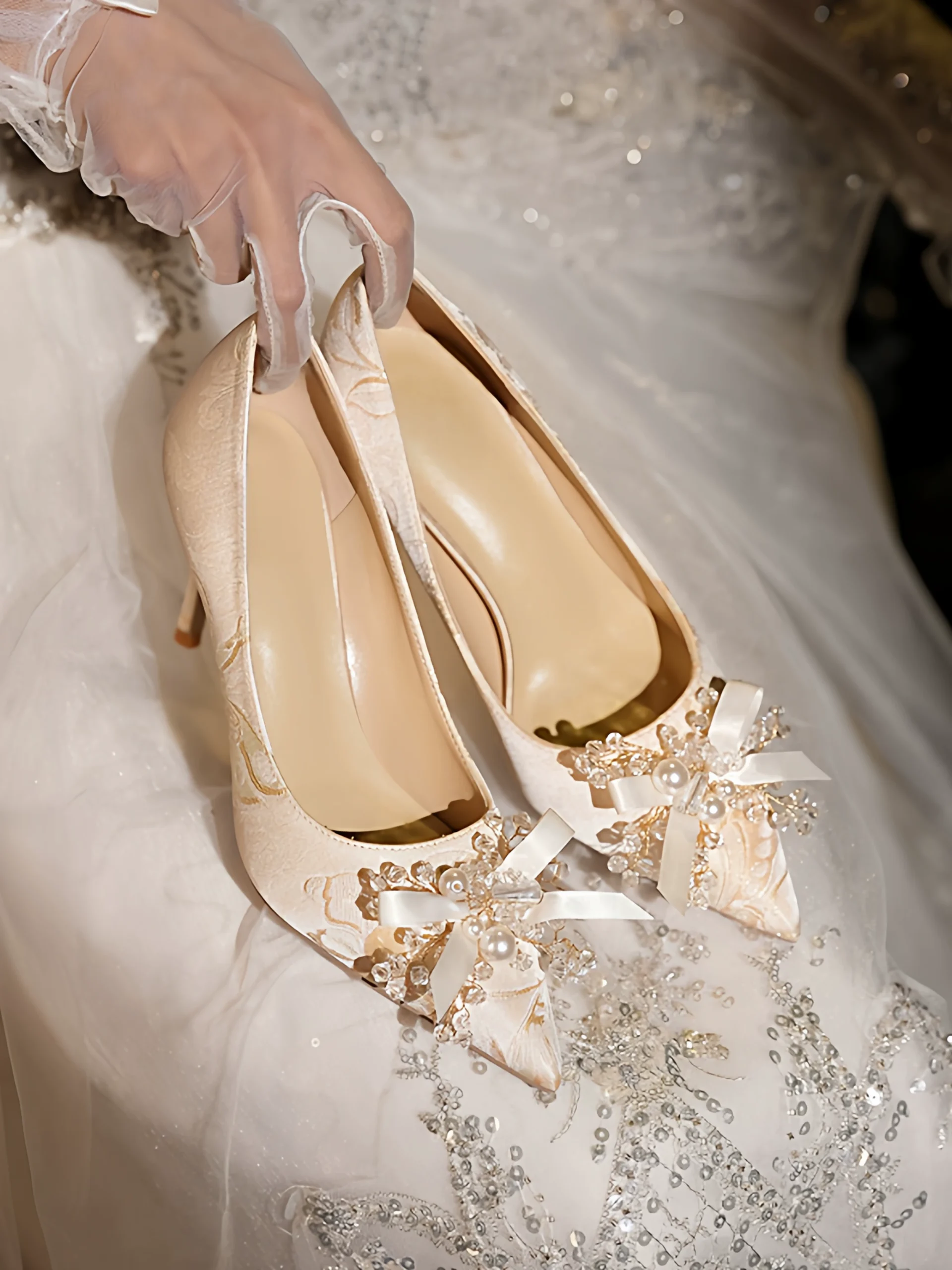
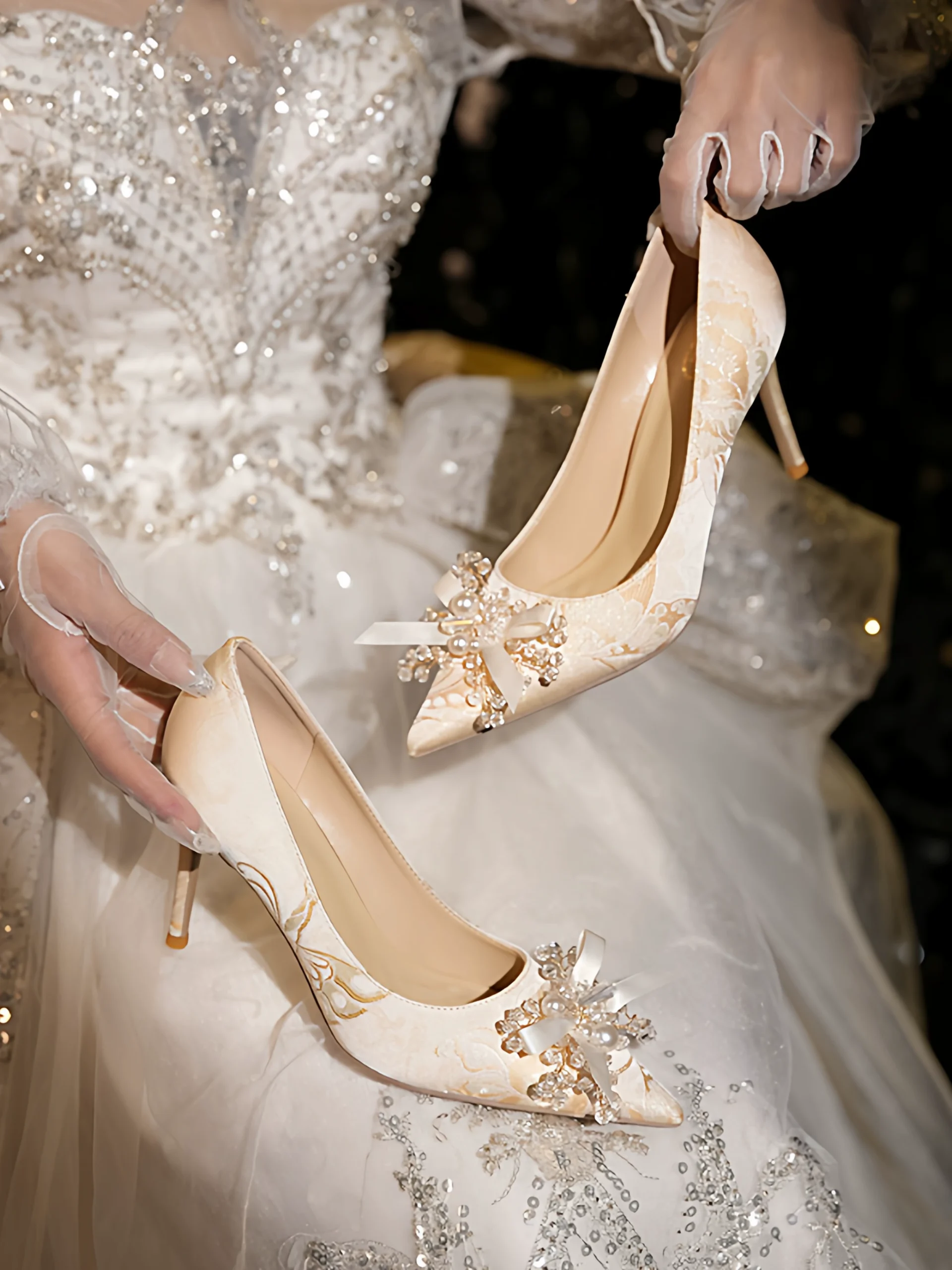
If you want the sharper version of this shape for evening, these square toe heels with a slim heel and crystal detail are built for a seated event rather than a commute. For daytime, a plain leather pair with a block heel will get three times the wear.
Three checks in the shop before you commit
Square toe shoes hide fit problems better than pointed ones, which is both good and bad. Good because they’re forgiving. Bad because you can buy a pair that’s genuinely too small and not notice until the third wear.
- Press the front of the toe box. You want it to hold its shape, not collapse onto your toes.
- Walk four steps and check whether your heel lifts out of the shoe. If it does, the shoe is too long, not too wide.
- Look down. You should see the edge of the shoe past your toes, not your toes past the edge.
The toe box structure is the thing cheap pairs get wrong. A square toe with no reinforcement inside will soften and sag within weeks, and once it sags it presses on your toes exactly like a pointed shoe. Squeeze the front from both sides. It should feel firm, with a bit of give and no collapsing.
Check the width at the widest point of your foot, which is usually just behind the toes. If the upper bulges out over the sole edge, the shoe is too narrow regardless of what the size label says. Sizing up won’t fix that. It’ll just make the shoe longer and the heel will slip.
Foot length also changes during the day, and it changes more than most people realise. Measure your foot in the evening if you can. The different shoe sizing systems used by US, UK and EU brands don’t map cleanly onto each other, so a 38 from one label can be a 38.5 from another. Buy from the brand’s own size chart and its own measurements, not from the number you wear elsewhere.
The break-in period is shorter than you’d expect
Leather square toe heels usually need about 8 to 12 hours of wear to soften at the flex point. That’s faster than a pointed pair because there’s less tension across the toe, so the leather isn’t fighting to hold a narrow shape.
What you’ll notice first is stiffness across the top of your foot, where the vamp meets your instep. That eases as the leather warms and moulds. What you shouldn’t notice is pressure on the outside of your little toe or a hard edge along the sole line.
Suede breaks in faster but stretches more, so buy suede square toe heels slightly snug. Patent breaks in slowest and, in my experience, never really gets comfortable across a stiff square vamp, because the coating doesn’t flex the way the leather underneath does.
One caveat about the whole shape: a square toe doesn’t automatically mean comfortable. If the heel is 90mm and the sole is thin, your toes still take the load on every step no matter how much room they have. The toe box solves one problem. Heel height and sole cushioning solve the others.
Where this style fails, honestly
Square toe heels make feet look wider. That’s the trade you’re making. If you already feel self-conscious about the width of your feet, the shape will emphasise it, and no amount of styling fully hides it.
They also date faster than round or almond toes. The shape has a strong trend cycle, and a heavily exaggerated square from three seasons ago looks dated now. A soft square with rounded corners is the version that survives the cycle, which is why I’d spend money there rather than on the sharpest, most editorial pair in the shop.
And they’re not a solution for a very high instep. The straight topline across the front can press on the top of the foot, and the extra width at the toe doesn’t help with that at all. If you have a high instep, look for a square toe with a cutaway side or a lower vamp.
For anyone who wants the width without the boxy look, the alternative is a rounded almond toe in a wide fitting, which gives you the toe room with a more classic line. Our piece on what a 50mm heel does over a long day covers that middle ground if you’re after something lower.
Keeping the shape from collapsing
Square toe shoes need support in the toe or they lose their shape. Cedar shoe trees are the cheap fix, and they’re especially worth it here because a collapsed square toe is very obvious.
Store them with the toes stuffed, not just the heels. Most shoe trees push from the heel forward and don’t fill the front of a wide toe box, so add a rolled sock or a bit of tissue at the tip.
Clean suede with a brass brush when the nap goes flat, and keep them out of the rain. Water marks on a wide flat toe are much more visible than on a narrow one, because there’s more surface area facing up.
If the sole is leather, get a rubber topy fitted before you wear them outside. It costs a small amount and roughly doubles the life of the sole, which matters more on a block heel because you’ll walk further in them than you would in a stiletto.
Finally, try them with the outfit you’ll actually wear. Take the trousers. Take the dress. Ten minutes in the shop with the right hem will tell you more than any photo, and it’s the difference between a pair you wear weekly and a pair that lives in the box. Have a look at the rest of the heel styles on the site before you decide on a height, and check the toe shape on every pair, because the listing photo rarely shows it clearly.
