

It’s 6:40 on a Friday evening. You’ve got twenty minutes to change, and the pair you bought for exactly this kind of night is still in the box with the tissue paper in the toes. Velvet heels for women look incredible in a product photo. Then you put them on, walk to the bathroom mirror, and something feels off around your heel.
That feeling isn’t in your head. Velvet behaves differently from leather, patent, or suede, and most product pages won’t tell you how. What follows is what the fabric actually does once it’s on your foot, which heights hold up, and where these shoes quietly fail.
The nap is the whole story
Velvet is a woven fabric with a short, dense pile standing up from the surface. That pile is why the color looks deep and why light seems to sink into the shoe instead of bouncing off it. The structure of velvet has stayed roughly the same for centuries: a ground cloth, plus a second warp that gets cut to create the standing threads.
For your feet, one property matters more than all the rest. Pile has direction. Run your hand from heel to toe and the fabric feels smooth and looks lighter. Run it the other way and it feels slightly rough and reads a shade darker. Nobody mentions this on the box, and it explains most of the surprises.
This is why a pair can look mismatched in daylight even though both shoes left the same factory. One was cut with the nap running up, the other down. On cheap velvet it’s obvious from across the room. On good velvet it’s subtle, but you’ll still catch it in a car window.
You can test it in ten seconds in the shop. Hold both shoes side by side under the light, then flip one around 180 degrees. If the color shifts noticeably, the panels were cut in different directions. That’s a manufacturing shortcut, and it tells you something about how the rest of the shoe was built.
One more thing about pile: it has a grain you can feel with dry skin. If your hands are rough in winter, you’ll feel the difference between the two directions instantly. Use that. It’s the fastest quality check you can do while standing in a fitting room with three other pairs in your arms.
Online, you’re stuck trusting photos, so look at the toe. Studio shots usually light the vamp from above, which makes even mediocre velvet look rich. A photo taken in daylight with a phone is far more useful, because that’s where you’ll see the pile going flat in patches or a light seam ridge running up the center. If every image is a studio render with a hard highlight, assume the fabric is thinner than it appears.

Velvet, velour, and crushed velvet aren’t the same purchase
Sellers use these words loosely, and the difference shows up on your foot within a month. Four materials get labeled velvet in online listings, and only one of them holds a heel’s shape.
- Velvet has a dense, short pile on a woven base. Holds shape, resists crushing, costs more.
- Velour is a knit with a longer, looser pile. Stretches more and bags at the toe faster.
- Crushed velvet has the pile deliberately flattened in random directions. Hides scuffs well, looks intentionally rumpled.
- Stretch velvet blends in elastane. Comfortable on wide feet, but it relaxes about half a size after a few wears.
For a heel you plan to keep, plain woven velvet is the safer bet. It holds the shape of the vamp, so the shoe doesn’t slowly mold itself into a slipper. Velour feels softer against the skin for the first hour and starts looking tired by the third wear.
Here’s a counterintuitive one. The most expensive velvet in the shop is often not the most durable. High-pile, long-staple velvet feels amazing and photographs beautifully, but it crushes where your toes flex and where your heel rubs. A tighter, shorter pile with a slightly drier hand survives real use better, and it hides the crease marks that appear above the toe box.
If you’re ordering velvet heels for women online, read the fiber content instead of the adjective. Silk and viscose piles look richest and mark easiest. Polyester blends look flatter but shrug off rain and scuffs. Cotton velvet sits in the middle and takes a brush well without shining.
Ask one question in the listing or the shop: is the pile cut or looped? Cut pile is what you want on a dress shoe. Looped pile is tougher but looks like upholstery under any light, and no amount of styling rescues it.
Where velvet heels work, and the two places they don’t
Think about the surface you’ll be standing on before you think about the outfit. That single decision prevents most of the regret people feel about velvet shoes.
Velvet is genuinely great in three settings. Indoor evening events with carpet and short walks: dinners, gallery openings, theatre, a reception that runs from 7 to 11. Cold-weather dressing, because the pile traps a little warmth and doesn’t feel icy against your instep the way patent does in January. And anything photographed under warm light, since the fabric absorbs glare and keeps color saturated in pictures instead of blowing out white.
Now the two places it fails.
Wet pavement. Water spots velvet permanently. Not “until it dries” permanently. The pile mats down where the droplet sat, and once it dries you get a slightly darker bald patch that no brush fully lifts. If your city does 100 rainy days a year, leather or a coated fabric is the honest choice, and no protector spray changes that.
Long walking days. A wedding where you’re on your feet from 2pm to midnight, an airport, a trade show floor. Velvet itself isn’t the problem. The issue is that velvet heels for women usually get built on delicate lasts with thin soles and no padding, because the fabric signals “indoor shoe” to the factory as much as it does to you.
One softer limitation worth knowing. Velvet picks up lint, pet hair, and the fuzz from a wool coat like a magnet. Keep a lint roller in the car if you have a cat, and don’t lean your ankles against a velvet sofa at a party unless you want a bald spot on the shoe.
There’s a timing angle too. Late autumn is the best window for these shoes in most climates, because you get cold evenings without road salt. Salt is worse than rain. It dries into a white crust that works into the pile and pulls the fibers apart, and once that happens the panel looks permanently dusty even after brushing.
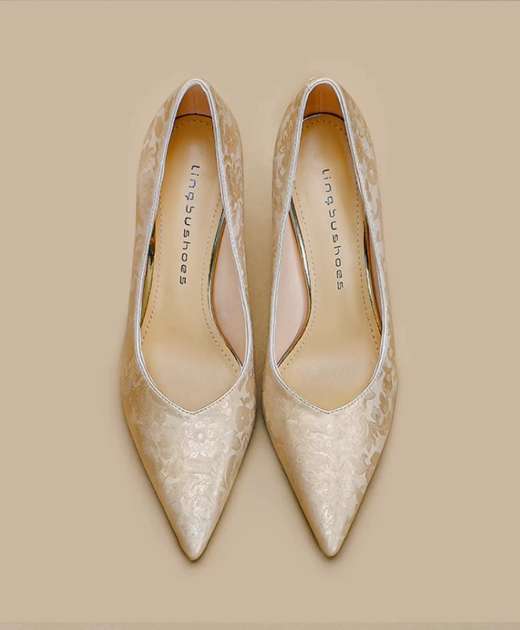
Heel height: 70mm is where most people stop
If you take one number from this piece, take this one. A 70mm heel with a slightly thicker stem is the height where most people can stand for two hours without shifting weight every few minutes. Above 90mm, the load moves onto the ball of your foot and stays there until you sit down.
Height changes what your feet do, not just how you look. A high heel shifts body weight forward and shortens the calf muscle, which is why walking barefoot at the end of the night feels strange for a minute. Higher isn’t automatically worse. Higher without support is.
Here’s how the numbers play out in practice, based on what people report after a full evening rather than after five minutes in a shop:
- 50mm to 60mm: You forget you’re wearing them. Best for anyone who hasn’t worn heels in a year.
- 70mm: The sweet spot. Enough lift to change your posture, still walkable on carpet and short pavement.
- 85mm: Fine for a seated dinner. Give up on stairs after the second glass.
- 100mm and up: A posed shoe. Beautiful in photos, brutal on a curb.
Two design details matter as much as the number itself. A heel set slightly forward under the arch feels far more stable than one planted at the very back edge, and you’ll notice it on stairs. A stem with 8mm or more of thickness at the base won’t sink into grass or wobble on cobblestone.
My own correction: I spent years assuming pointed toes meant pain. The actual culprit was a toe box that narrowed 12mm too early, not the shape. A pointed velvet heel with a wide enough vamp can be comfortable for hours. A round-toe pair that pinches is still a bad shoe, no matter how kind the shape looks on the shelf.
Sizing: velvet doesn’t give, so fit the widest part
Leather stretches. Velvet mostly doesn’t. The pile compresses a little in the first week and then stops, which means you buy velvet heels for the foot you have today rather than the foot you’re hoping to break them into over a month.
Measure at the end of the day, when your feet are at their largest. Stand on a sheet of paper, mark your longest toe, and measure from heel to mark. Then measure across the widest part of your forefoot. Write both numbers down and compare them with the size chart, because charts vary wildly between brands that claim the same sizing.
If you’re between sizes, size up. Half a size too big with a thin leather insole is a fixable problem. Half a size too small in velvet isn’t, because there’s no give in the material to work with and no break-in period that rescues it.
Watch the instep as well. High-instep feet get pinched across the top of the foot in a closed velvet pump, and it’s a pressure point no insole solves. Slingbacks and mules skip that area entirely, which is why they’re often the better first velvet purchase for anyone with a high arch or a wide forefoot.
Check the heel counter last. Because velvet has friction, a slightly loose heel will rub skin rather than slide, which is the opposite of leather. If the shoe already feels loose at the back in the shop, it will take the skin off your heel by 9pm, and a heel grip will only buy you an hour.
Width matters more than length for most people, and velvet makes that obvious because it won’t spread. If your forefoot measures wider than the chart’s standard, look for a rounded or almond toe, a slightly higher vamp, and a sole that extends past the upper at the widest point. That last detail is the difference between a shoe that holds you and one that squeezes you.
The first hour, the third hour, and the walk home
Velvet heels for women follow a predictable arc over an evening, and knowing it helps you plan instead of hoping.
Hour one. Everything feels fine. The pile is soft, there’s no break-in discomfort, and you’ll be tempted to conclude you’ve found the comfortable pair at last. You haven’t yet. Velvet hides pressure without relieving it, which is the one thing the fabric is genuinely bad at.
Hour three. The metatarsal area starts talking, especially if you’ve been standing rather than sitting. That’s normal at 85mm and above, and it’s a signal to sit for ten minutes rather than to switch into flats you didn’t bring.
The walk home. This is where velvet earns or loses its keep. Check three things before you commit to a pair: whether the sole flexes at the ball of the foot, whether there’s any padding under the forefoot, and whether the heel tip is rubber or bare plastic. A 4mm rubber tip costs almost nothing and changes the whole experience on tile and marble.
Practically, plan the night around the shoe. Book the table you can reach in a short walk. Slip foldable flats into your bag if the last leg involves 15 minutes of pavement. That’s not defeat. That’s logistics, and the people who look relaxed at midnight are usually the ones who planned for it.
One habit that helps: wear the pair indoors for 40 minutes on carpet before the event. You’ll find the pressure points while you can still return them, and you’ll learn whether the heel height is realistic for the evening you’ve actually planned.
Bring a backup plan that fits in a clutch. A pair of thin roll-up flats weighs almost nothing and takes the drama out of the last mile. If you’d rather not carry anything, at least scout the route. Knowing there’s a bench 200 metres from the venue changes how much you’ll enjoy the evening, and it costs nothing to check the map beforehand.
Care: what ruins velvet in a single evening
Most velvet damage happens in the first two wears, and nearly all of it is avoidable with five habits.
- No water-based sprays straight onto the pile. Test any protector inside the heel first.
- Never machine wash, even on cold. The drum crushes the pile flat and it doesn’t come back.
- Store them in the dust bag, not loose in a closet where heels knock against each other.
- Brush with a soft clothes brush in one direction only, following the nap.
- Steam from 15cm away lifts light creases. Direct iron contact kills the pile permanently.
A water stain can sometimes be rescued by damping the whole panel evenly with distilled water and letting it dry away from heat. Notice the word sometimes. Once velvet mats into a hard patch, the fibers are felted, and no home method brings them back to the original texture.
If you live somewhere with real winters, treat velvet as a seasonal shoe and rotate it. Wearing the same pair three nights a week crushes the pile at the flex point above the toe, and that’s the first place anyone notices age. Two pairs in rotation will outlast one pair worn twice as often.
Suede brushes with a rubber side work better on velvet than cloth alone, because the rubber lifts grit instead of pushing it deeper into the base. Give each shoe twenty strokes after a night out, and you’ll skip most of the problems that make people give up on velvet altogether.
Store them stuffed with acid-free tissue rather than newspaper. Newsprint ink transfers into pale velvet and stays there, and it’s the kind of mistake that costs you a pair you liked.
If a heel tip wears down, replace it before the plastic stem starts contacting the floor. That repair costs a few pounds at any cobbler and prevents the wobble that ruins the shoe’s balance. It’s the cheapest maintenance you’ll ever do on a pair of heels, and most people skip it until the damage is already visible from across the room.
Three outfits that make them look deliberate
Velvet is a texture, so the rest of your outfit should stay quiet. Two textures fighting for attention is the most common styling mistake, and it’s why some people decide velvet is “too much” after one attempt.
Wide-leg wool trousers and a fine knit. A black velvet pump or black satin heel with the same visual weight reads sharp against matte wool. Keep the hem just above the ankle so the shoe isn’t swallowed by fabric.
Slip dress plus a long coat. This is the one place velvet and satin can share a look, because both are soft and catch light in a similar way. A dark velvet slingback under a bias-cut dress works from October through February in most cities.
Straight jeans and a blazer. The casual route. A 60mm velvet suede-finish retro heel with denim is a genuinely good Saturday-night outfit, and it surprises people who assume velvet only works with dresses.
Skip velvet with heavy ribbed knits, chunky tweed, or anything with a lot of surface detail. The pile loses definition, the color goes muddy, and the whole look reads flat in photos. If you want the fabric to do its job, give it a matte surface to sit against.
If you want to go further into shape and styling decisions, the breakdown of seven heel shapes and what each one does to your feet is worth ten minutes before you buy. If strap placement is your usual problem, this piece on slingback strap fit and grip covers the details that matter. For the wider range of heights and shapes, browse the full heels category on the site.
Try this before you peel the tag off. Put both shoes on, walk 30 steps on a hard floor, and check three things. If your heel lifts more than 3mm at the back, return them. If your toes touch the very front edge, return them. If the only thing you like is the color, that’s not enough.
Velvet heels for women are a good buy when you match them to the right kind of night, and a bad buy when you expect them to behave like leather. Get the height and the fit right, and the fabric will do the rest of the work for you.
