

Burberry Block Heels: The Regent Street Sale Test
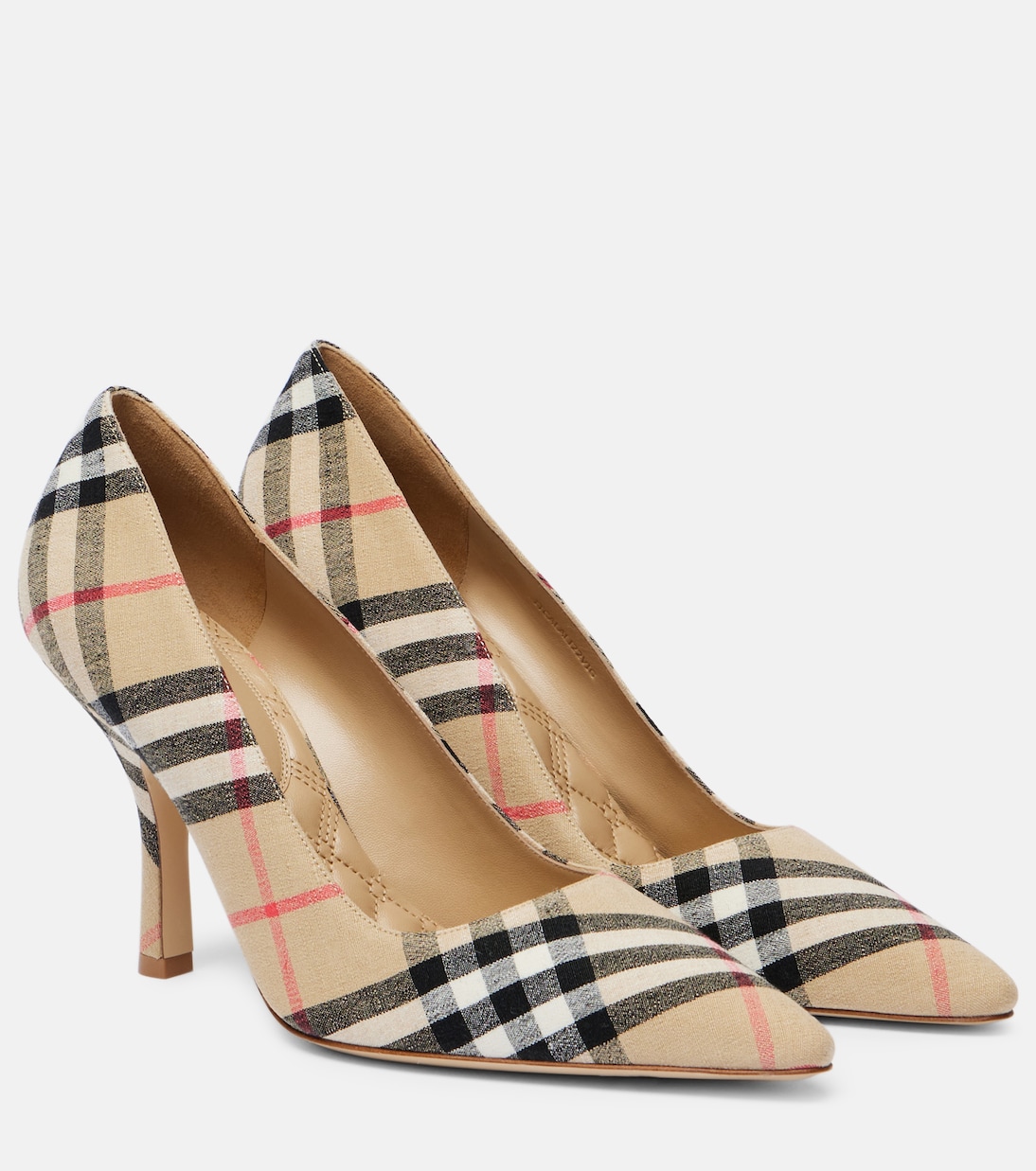
I bought my Burberry block heels on a wet Tuesday in the Regent Street sale, mostly because my feet were soaked and I wanted to sit down somewhere with carpet. Eight minutes later I owned a pair of 65mm pumps. I’ve worn them in four countries and about eleven months of the year since, which is more than I can say for anything else in that cupboard.
That’s the thing about Burberry heels. They don’t look like a seasonal shoe, so you end up treating them like a daily one. Here’s what I’ve learned about making that work from February to December without wrecking them.
The heel shape matters more than the check
Everyone talks about the check. Honestly, the block heel is the reason these shoes get worn. A 65mm block spreads your weight over a wider base than a stiletto, so you can stand through a two-hour gallery opening without shifting from foot to foot like you need the loo.
I’m not going to pretend they’re trainers. By hour five my arch knows about it. But I’ve done a full day of meetings, a train, and dinner in them, and I walked home from the station rather than calling a cab. With a 90mm stiletto I’d have been barefoot on the platform.
That’s the whole argument, really. Height you can stay in.
One warning, and it’s a real one: the leather soles on the dressier styles are slippery on wet stone. Not slightly slippery. Genuinely dangerous on a painted crossing. Get a rubber half-sole fitted before winter, or you’ll find out the hard way outside a Tube station like I did.

Spring: the season these shoes were built for
March and April are where a nude or check-embossed pair earns its keep. The trick is that spring clothes are soft and the heel is not, so the shoe does the structuring for you. A fluid midi dress in pale blue looks unfinished with a flat. The same dress with a pointed nude pump looks deliberate.
My go-to in April is cropped wide-leg trousers in lightweight gabardine, hemmed to just above the ankle bone so there’s a sliver of skin before the shoe. That gap is doing all the work. Without it the whole outfit reads short.
Colour, if you care about this sort of thing: cool-toned check heels sit better with ash pink and pale blue. Warm tan leather wants ivory and ochre. I got this wrong for a whole season, wearing tan with a lilac coat, and looked slightly ill in every photograph.
Summer: the honest version
June to August is where I’d tell you to be careful. Leather pumps in 30 degrees are a bad idea and no amount of styling fixes sweaty feet. If you’re buying a summer pair, get the cut-out or woven styles, or a strappy sandal with a block heel you can actually walk in.
The one summer rule I stick to: don’t wear a closed pump with bare legs to anything that involves standing on grass. You’ll sink, the heel will tip, and you’ll spend the reception on the paving. Wedges are for gardens. Pumps are for indoors.
What does work is the evening switch. A linen suit and a metallic sandal takes you from a 4pm meeting to a rooftop bar without going home, and that’s the real value of a summer pair. Not the look. The logistics.
Autumn: the season I’d actually buy for
If you’re only wearing these shoes for three months of the year, make it October and November. Suede ankle boots with a block heel, or pumps in burgundy and dark green, sit perfectly against wool.
Texture is the whole game here. A suede heel next to a plaid wool skirt is a nice clash. A suede heel next to a suede skirt is a costume. Keep one texture soft and let the other one be smooth, and the outfit stops looking like you tried.
The trench is the obvious partner, and it works because gabardine is matte and slightly stiff. It holds its shape next to a polished leather heel instead of collapsing into it. I wear mine belted with the sleeve pushed up, which is a small thing that makes a big difference in photos.

Winter: where most pairs go to die
Salt is the enemy. One slushy walk to the office and a suede heel is finished, and no cobbler in the country will tell you otherwise. If you want a winter pair, buy leather or coated canvas, and wipe them down the same evening with a damp cloth. That habit is worth more than any protective spray.
Knee-high boots in weather-resistant leather are the sensible answer, and they handle the other winter problem, which is tights. Thick opaque tights plus a slim boot equals a clean line. Ankle boots plus tights equals a visible gap of leg that looks cold even when it isn’t.
My winter formula is boring and it works: dark boot, dark tights, wool coat that hits mid-calf. The heel gives you enough height that the coat doesn’t swallow you. Without it I look like a duvet with a face.
One last winter note, then I’ll stop. Don’t put wet leather next to a radiator. It dries too fast, the leather goes stiff, and the creases set permanently. Stuff them with newspaper and leave them by the door overnight.

Buying them without paying full price
Burberry discounting is predictable if you watch for it. The main sale hits just after Christmas and again in late June, and the outlet stores carry a lot of the same stock at 40 to 50% off with a slightly older label inside. I’ve bought from both. The outlet pair had a half-size mismatch in the box and I didn’t notice for a month, so check before you leave the shop.
Fit is the thing people get wrong. These run true to size in the pumps and slightly narrow across the ball of the foot. I take my normal 39 in the boots and a 39.5 in the pointed styles. If you’re ordering online and you’re between sizes, go up, because the leather doesn’t stretch much and a tight toe box never gets better.
And a small confession. My first pair sat in the box for six weeks because I was saving them for something special. There was no special. I eventually wore them to a supermarket and a dentist appointment, and that’s when they became mine.
