

It’s 7:52, the school gate closes at 8:05, and the pair by the door has laces. That’s the moment slip-on walking shoes earn their place in a hallway, and it’s also the moment most people discover the pair they bought slips off at the heel instead of on at the foot.
Slip on walking shoes women buy and return more than any other casual category, and the reason, and the reason is almost never the size. It’s the elastic gusset: the small panel of stretch fabric at the side of the opening that lets the shoe open wide enough for a foot to enter and then holds it there. A gusset that’s 4 mm too shallow makes a shoe that won’t go on. One that’s 4 mm too deep makes a shoe that won’t stay on.
What follows is what the fitting room shows, season after season: which details matter, which pairs fail, and who should walk past the whole category.
The gusset is the whole shoe
Turn a slip-on over and look at the side opening. There’s a triangular or rectangular panel of elastic, usually hidden under a leather or mesh flap, stitched between the vamp and the heel quarter. That panel is doing all the work.
Depth matters more than width. Measured from the top edge of the collar down to the base of the elastic, useful gussets run 22 to 30 mm on a women’s pair. Under 20 mm and the opening barely clears the instep; the shoe goes on with a shoehorn and a small argument. Over 34 mm and the collar has nothing to grip, so the heel lifts with every step.
Elastic quality is the second variable, and it’s invisible in photographs. Cheap elastic loses recovery after about 40 wears. You can test it in a shop by stretching the gusset between thumb and forefinger and holding for five seconds. Good elastic snaps back flat. Poor elastic comes back slightly wavy, and that waviness is what turns into a floppy collar by month three.
- Look for: a gusset at least 22 mm deep, double-stitched at both ends, with a fabric backing rather than exposed elastic.
- Avoid: elastic sewn straight to the upper with a single row of stitching. That’s the seam that fails first.
There’s a trade-off nobody mentions. A generous gusset makes a shoe easy to put on and slightly less secure at speed. A tight gusset holds the foot beautifully and requires two hands and a bit of patience. If you’re buying for a commute with stairs, take the tighter one; if you’re buying for a hallway with a four-year-old in it, take the generous one.
Most slip-ons fail at the heel, not the toe
The classic slip-on complaint is a heel that lifts with each step. It’s not a sizing error in most cases. It’s a shape mismatch between the heel collar and the back of your ankle.
Three causes, in order of frequency:
- The collar is cut too low at the back. If the rear height is under 55 mm, there’s simply not enough material to cup the heel.
- The last is too wide at the heel. This is a fit problem, not a shoe problem, and it affects narrow-heeled feet disproportionately.
- The outsole is too stiff. A rigid sole doesn’t flex at toe-off, so the whole shoe pivots around the heel instead of rolling over it.
Cause three catches people out, because a stiff sole feels supportive in the shop. Walk 20 metres on a hard floor before deciding. If the shoe slaps rather than rolls, the stiffness will show up as heel slip within a week.
The fix for cause two is a heel grip or a thin insole under the forefoot, which lifts the heel back into the collar. The fix for cause one is a different shoe. A collar that’s cut too low can’t be built up without looking like a repair, and it will keep slipping no matter how thick your socks are.
Worth saying plainly: if you have a narrow heel and a wide forefoot, slip-ons are the hardest category to fit. Laces exist precisely to solve that combination, and a pair of women’s sneakers with a soft knit upper will fit that foot shape better than any elastic-sided shoe.
Instep height: the number that rules people out
Slip-ons have no lacing to adjust, which means the opening has to accommodate your instep as it is. If your instep is high, the vamp will press across the top of your foot and the shoe will feel a half size small even when it isn’t.
Measure your instep roughly by wrapping a tape from the inside of the arch, over the top of the foot at its highest point, to the outside of the arch. Anything above about 235 mm on a women’s foot is a high instep, and slip-ons become a gamble.
What helps:
- A lower vamp line. A shoe cut lower across the top of the foot has more room without being wider.
- Softer leather or knit. Firm corrected-grain leather doesn’t give; a tumbled or oiled leather will relax by 2 to 3 mm.
- A slightly longer size with a heel grip. Not ideal, but workable if the gusset is good.
What doesn’t help: buying a wider width. Width runs side to side; instep pressure runs top to bottom. A wider shoe often makes the problem worse, because the foot sits lower in the shoe and the vamp presses harder.
This is where the category splits. Slip-on walking shoes for women with a low-cut vamp and a soft upper fit a surprising range of feet. The ones built like a trainer with the laces removed fit almost nobody well, because the pattern was designed for a closure that isn’t there.
Airports, school runs and the five-minute exit
The reason people buy slip-ons is time. Not comfort at hour six, but speed at minute one. On that measure, the category is genuinely hard to beat: a good pair goes on in under four seconds per foot, with one hand, while you’re holding a coffee.
The airport is the classic case. Most European airports still ask for shoes off at security in some lanes. A slip-on saves about 40 seconds per person, which matters less than the fact you’re not standing on a cold tile floor in socks trying to re-tie a bow.
But the school run is the harder test, because it involves a wet pavement, a rushed child, and a 400-metre walk at a pace set by someone with shorter legs. Two details matter there:
- Outsole grip on wet stone. Look for a rubber outsole with visible tread, not a smooth moulded one.
- A wipe-clean upper. Anything suede will be grey by November.
Some pairs handle that; most don’t. This is the point where a flat-bottomed casual board shoe with a thick rubber sole is the more sensible buy than a fashion slip-on. It’s not elegant. It goes on fast and it grips a wet pavement.
If you want the fast version in leather, soft leather sports shoes take about a fortnight to mould to the instep and then behave like a slipper with a sole. They’re heavier, and they scuff at the toe. They also survive three winters, which the mesh versions don’t.
Breaking in a shoe with no laces
Laces let you loosen a shoe where it presses. Slip-ons don’t, so break-in has to happen differently.
The method that works:
- Wear them for 20 minutes indoors on day one. Not an hour. Twenty minutes, then take them off and look for red marks.
- Use a shoe stretcher overnight if the vamp presses. A simple two-way stretcher costs about 20 euros and is the single best purchase for anyone who buys leather shoes.
- Add a thin insole for the first week if the collar is loose, then remove it once the leather has taken the shape of your foot.
- Keep them dry. Wet leather stretches unevenly and dries stiff. If they get soaked, stuff with newspaper and leave them away from heat.
The mistake is wearing a new pair for a full day because they feel fine for ten minutes. Slip-ons feel fine for ten minutes by design, because there’s no lace tension to tell you something’s wrong. The pressure shows up at hour two, at the top of the instep, in a place you can’t adjust.
Socks change everything, and it’s worth settling that question before you buy. A slip-on fitted with thin socks will be loose in winter socks. Fit them with the socks you’ll wear most, and accept that the summer version of the fit will be slightly loose. Most people buy for the thin-sock fit and then complain all winter.
Ninety seconds in the shop, six things to check
If you’re buying slip on walking shoes women will actually keep, this sequence takes a minute and a half and catches almost every problem:
- Stretch the gusset and watch it recover. Wavy means cheap elastic.
- Press the vamp where it crosses your instep. You want a few millimetres of give, not contact.
- Stand and lift your heels. If the shoe stays on the foot, the collar is doing its job.
- Walk 20 metres on tile. Listen for slapping. Slap means a stiff sole and future heel slip.
- Twist the shoe lengthwise. It should resist a little. A shoe that twists like a sock has no midsole support.
- Check the insole is removable. That’s what lets you swap in an orthotic or a thin insert later.
If you’re buying online, the same checks map to the listing photos. Look for a side shot that shows the gusset depth clearly, and a rear shot that shows the collar height. If a listing has neither, the seller is hiding something, whether intentionally or not.
Returns data tells a consistent story here, and it’s the same story every autumn: the pairs that come back most are the ones with a shallow gusset and a smooth outsole. Neither fault is visible in the product photo. Both are obvious the first time you try to put the shoe on in a hurry.
What three months of daily wear does to a gusset
Elastic has a working life, and it’s shorter than the sole’s. The elastomer in a shoe gusset is designed to stretch and recover thousands of times, but heat, sweat and UV all shorten that count. In practice, a decent gusset holds its shape for about 250 to 400 wears.
Three signs a gusset is going:
- The collar won’t stand up on its own. Lay the shoe on its side and look at the opening. A tired collar sags inward.
- The shoe goes on too easily. If a pair that once needed a small tug now slides on without contact, the elastic has stretched.
- The heel starts moving. This arrives before the visible sag, and it’s usually blamed on the socks.
The practical consequence is that slip-on walking shoes for women have a shorter useful life than lace-ups with the same sole. A lace-up pair’s upper can outlast two midsoles if the leather is good. A slip-on’s usable life is set by the elastic, and the elastic isn’t replaceable.
Two things extend it. Rotate pairs, so the elastic gets 48 hours to recover between wears. And don’t store them squashed in a bag; the collar deforms and the membrane between the elastic layers creases in the same place every time.
If you walk a lot, this is the argument for buying one good pair rather than two cheap ones. Two cheap pairs will both sag at month four. One good pair gets you to month eighteen with a replacement in the middle of the second year, which works out cheaper per wear and better for your knees in the meantime.
Smart-casual is where slip-ons quietly win
The styling case for slip-ons is stronger than the performance case, and it’s usually undersold. A low-cut leather slip-on in dark brown or black reads as a shoe rather than a trainer, which means it clears the dress code in about 80% of offices that don’t require heels.
What works:
- Cropped trousers, ankle length. The opening of the shoe is the point, so show it. A hem that breaks on the vamp hides the only interesting line.
- Straight-leg jeans, single cuff. One cuff, not three. The shoe is low-profile and a heavy stack swallows it.
- Midi skirts with a heavier fabric. Wool or corduroy balances the flat sole. A floaty viscose midi with a flat slip-on reads as a mistake to most eyes.
What fails: wide-leg trousers that cover the shoe entirely, and anything tailored with a sharp break. If the shoe is hidden, you’ve paid for a detail nobody sees, and the flat sole makes the silhouette look bottom-heavy.
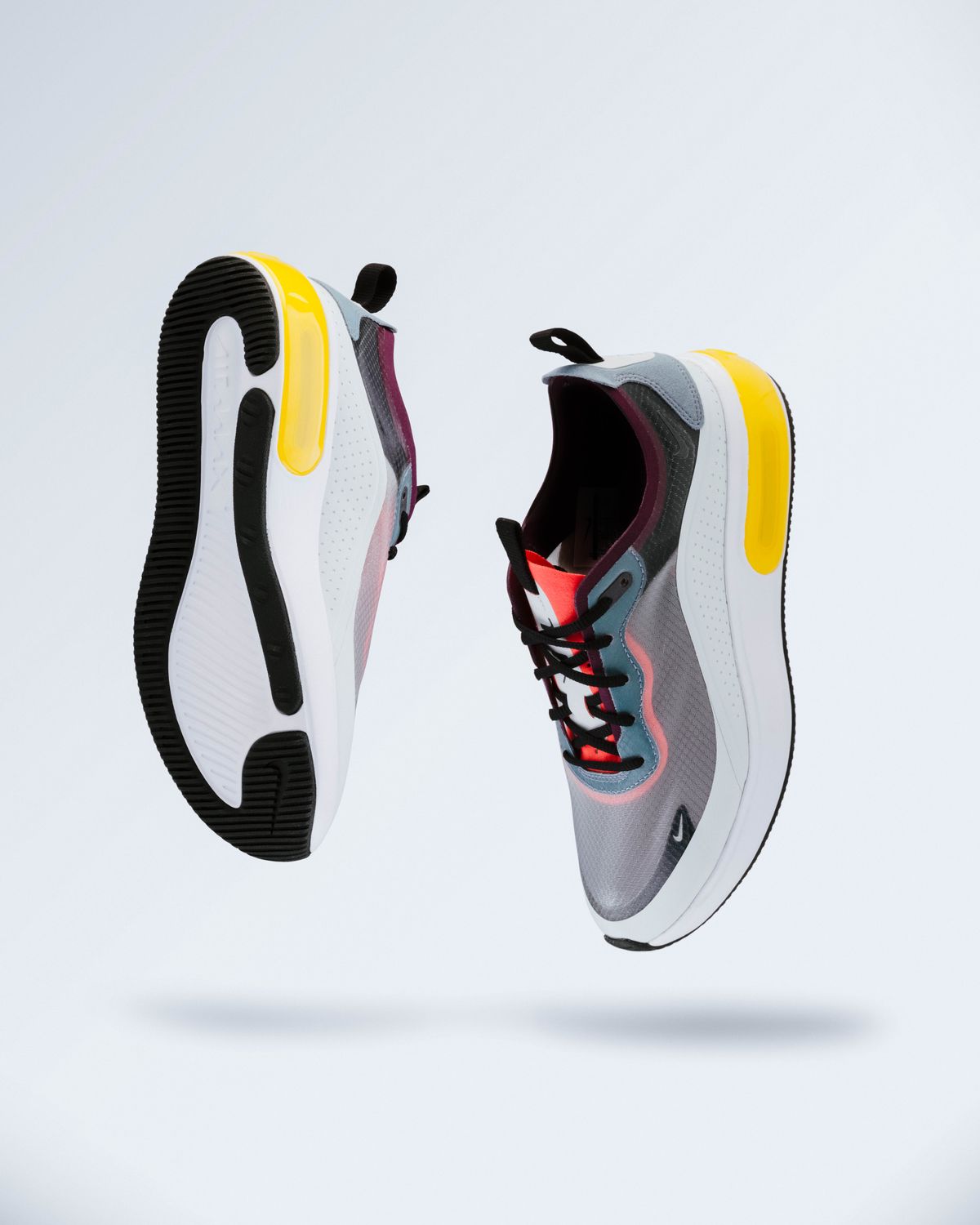
Photographs are worth a mention here, because they’re how most people judge a pair before buying. A slip-on photographed from the front looks like a plain shoe. From the side, with the gusset and the collar visible, it looks like what it is. When you’re comparing listings, the side shot tells you more than the top-down one, and it’s usually the second or third image.
For anyone who walks to work and changes shoes at the desk, the combination that works is a leather slip-on for the commute and something with a little heel for meetings. One pair of block heels that don’t punish you by 6pm in the desk drawer covers the second half of that equation.
Who should skip slip-ons entirely
Not everyone should buy this category, and pretending otherwise wastes money.
Skip them if you have a high instep and a narrow heel together. That combination needs laces or a strap, and no amount of break-in will fix the geometry. Skip them if you need a custom orthotic that requires firm lacing tension to stay in place. Skip them if you walk more than 10 km a day regularly, because the lack of adjustable closure shows up as forefoot sliding by kilometre six.
Buy them if your day is broken into short trips: the school, the shop, the office, the car. Buy them if you have limited hand strength or an injury that makes laces difficult. Buy them if you’re travelling and want one pair that clears security without a bench.
The category is genuinely useful. It’s narrower than the marketing suggests, though, and most slip on walking shoes women are sold as a universal solution when they solve one specific problem: getting out of the door quickly.
That’s not a small problem, but it’s a specific one. The WHO guidance on physical activity puts the weekly target at 150 minutes of moderate movement, which for most people means a lot of short trips rather than one long walk. A slip-on is well matched to that pattern. It’s badly matched to a 12 km hiking day, and no amount of clever design changes that.
On the styling side, the black walking shoes that work with four outfits piece covers the same question from a different angle, including which trouser shapes make a flat sole look wrong.
One last number to take to the shop: 22 mm of gusset depth and 55 mm of collar height. Those two measurements decide whether a slip-on works before you’ve walked a step, and they’re the two the box never tells you.
Start from the walking shoes for women section if you want to compare styles side by side, and check the side profile on each one before you commit.
