

6:42pm. The invite said smart casual. You’re standing in front of the mirror in tights, holding a pair of red heels that looked a lot better in the product photo, and you’ve got about eleven minutes to decide.
Red is the least forgiving color in the shoe box. Black hides a scratch. Nude hides a crease. Red puts both of them under a spotlight.
Which is exactly why the good pairs are worth hunting for. The red heels women keep pulling out in the third and fourth season usually share a few boring traits: a shade that leans a little blue, a surface you can wipe with a damp cloth, and a heel height you can stand in past the toast.
Boring. Also the difference between a shoe you wear twice and a shoe you wear for three years.
The photo is doing a lot of work, and red is where it lies hardest
Cheap red and expensive red photograph almost identically under studio light. In person they don’t. Pigment is the costly part of a red dye lot, and a factory trying to hit a price point thins it out. The result is a color with a slight orange lean that only shows up once you’re away from the lights.
Hotel ballrooms run warm. So do most restaurants after 7pm. Put a warm-leaning red under 2700K bulbs and it slides toward carrot. Put a blue-based cherry under the same bulb and it stays red.
There’s a free way to check before you buy. Open the product page on your phone, then on a laptop, ideally near a window. If the shade shifts between screens, the photographer is lighting it hard. Then look for a photo where the shoe stands on plain concrete or bare wood with no flash. That’s usually the honest frame.
In that frame, check three details:
- The heel cap. Plastic caps on a red shoe go dull grey within a season.
- The sole edge. Painted edges chip, and the chip is white.
- The stitch line where the upper meets the lining at the topline.
Uneven stitching at the topline means the shoe was assembled fast. If they rushed that, the dye is the least of your problems.
I spent a year assuming price fixed all of this. It mostly does, but not in a straight line. A $90 pair from a brand that sells one red and sells it well beat a $240 pair from a label treating red as a seasonal experiment. Volume matters. A factory running the same dye lot for three years gets consistent. A factory mixing a fresh red every season doesn’t.
So check how long the shade has been on the site. Same red court shoe listed for two years, with reviews going back that far, is a good sign. A listing that appeared six weeks ago with eleven reviews that all sound the same is not.
Pick the red against your clothes, not against your skin
The skin tone rule gets repeated so often that people follow it carefully and still end up with a shoe they never wear. Your face isn’t next to your foot. Your outfit is.
Do this instead. Take the pair, or a photo of them, and hold it against whatever you’d wear most: dark denim, a grey wool skirt, a black dress. Daylight, near a window.
A red that works makes the fabric look deliberate. A red that doesn’t makes the fabric look slightly dirty.
Rough starting point:
- Cool reds (cherry, burgundy, blue-leaning crimson) sit well with grey, navy, and most denim.
- Warm reds (tomato, poppy, brick) sit well with cream, camel, olive, and brown.
One thing worth knowing: bright true red reads formal faster than burgundy does. If you want a pair that works at the office, lean deeper. Burgundy passes as a neutral in a way that poppy never will.
Where people go wrong is buying the shade they love in a photograph rather than the shade that matches the closet they actually own. I did this with a tomato-red slingback in 2023. Beautiful shoe. Nothing in my wardrobe wanted to stand next to it, and it went out four times in two years.
Skip the matching bag. A red shoe with a red bag reads as a set, and sets look like they came out of a catalogue. A red shoe with a tan bag, or no bag worth mentioning, looks like you got dressed.
Nail polish is the other trap. A cool cherry shoe next to a warm orange-red polish is visible at close range, and people do look at your feet when you’re seated. Either match the undertone or go dark enough that nobody can tell.
If you’re starting from zero, watch what the heel section restocks. A shade a shop keeps buying for several seasons is a shade other people found wearable, which is decent evidence even if it isn’t proof.
70mm is the height most people actually wear
Not because it flatters everyone. Because it’s the tallest heel the average person will still put on without negotiating with themselves first.
70mm is roughly 2.75 inches. At that height your ankle sits at a modest angle, your calf does less work, and you can stand in a taxi line without shifting weight every thirty seconds. At 100mm the angle changes enough that your toes carry load they weren’t built for.
The red heels women actually wear sit between 60mm and 80mm. That range isn’t a compromise. It’s the band where the shoe stops feeling like a costume and starts behaving like footwear.
I wore 100mm to a wedding last October and lasted until 10:40pm. The photos from 8pm are great. The photos from 11pm show me holding them.
What changes with height, in practice:
- 60-70mm: you can walk a kilometer and stand for an hour, and you’ll forget about them by dessert.
- 80-90mm: fine for a seated dinner or a two-hour event on carpet.
- 100mm and up: a photo shoe. Sit down, cross your legs, stay near a wall.
Platforms change the math. A 100mm heel with a 20mm front platform feels closer to 80mm underfoot, because the effective pitch is the difference between them. That’s the one legitimate trick in this category, and it’s why bridal shoes so often hide a front lift.
The history of the high heel is largely a history of men wearing them first, which is worth remembering next time someone tells you a 100mm shoe is inherently feminine.
Also worth saying out loud: red heels are not a comfort purchase. If comfort is the actual goal, buy a pair of block heels built for standing through a reception and skip the red entirely. Buying red and then complaining it isn’t a walking shoe is a category error.
Test the floor you’ll be on. Carpet forgives a wobble. Tile doesn’t. If the event is in a hotel with a marble lobby, do a lap of your kitchen first to find out which it is.
Patent, suede, matte: the finish decides how long the color survives
Red dye on a rough surface fades from friction faster than on a polished one. That single fact should drive the decision more than the shade does.
- Patent: wipes clean with a damp cloth and holds color hard. Cracks at the toe crease somewhere around the fortieth wear. Mine went at 38.
- Suede: hides scuffs better than anything else here, but red suede plus rain equals a permanent dark patch. No fixing that.
- Matte calf: the repairable one. Cream polish brings the color back, and a cobbler can dye it darker in a few years if you get bored.
- Satin or glitter: one wedding per pair. Treat them as a rental.
Patent is what most people picture when they picture red heels, and it’s also the finish I’d steer a first-time buyer away from. Not because it looks cheap. Because it amplifies everything: every scuff, every crease, every spot where the shoe doesn’t quite match the shape of your foot.
Suede in red is the sleeper pick if you live somewhere wet and still want the color, provided you spray it before the first wear and accept that a downpour will leave marks. Matte calf sits in the middle and causes the least drama.
Nobody mentions the inside of the shoe, so I will. A red lining that bleeds will stain your foot after twenty minutes in July. Before you wear them anywhere, press a damp white tissue against the lining for ten seconds. If the tissue turns pink, send them back.
Dye bleed is common in cheaper reds and it isn’t fixable. It’s also why some people swear a pair of red heels ruined a pedicure when the shoe was the problem all along.
If you want a baseline for what a clean, dye-consistent upper looks like in photos, these pointed courts in a plain finish are a fair thing to compare against.
Storage matters more than people think. Red fades in direct sun, and a windowsill is the worst place in the house. Keep them boxed with the tissue, and don’t stack a black shoe on a red one for six months unless you enjoy grey smudges.
The same scuff logic shows up in lighter shades too. If you’re torn between red and something softer, the beige version of this problem is honestly worse.
The twenty-minute test that saves you a return
Wear them indoors for twenty minutes before you commit. Not around the living room carpet. On tile, in the shoes, with the tights or socks you’d actually wear with them.
You’re checking four things, in this order:
- Heel slip at the back. More than a finger’s width and the shoe is too long.
- Toe box width at the widest part of your foot.
- The topline across your instep, which is where red shoes hurt most.
- Whether your arch feels supported or just propped up.
Where red heels women complain most is the topline. A stiff edge sitting on the highest point of your instep will rub through skin in about a mile, and red dye makes the mark look worse than it is.
Two fixes that actually work: a silicone heel grip for slip, and a thin foam strip under the strap. Both cost less than return shipping.
What doesn’t work is stretching spray on patent. It softens the surface for roughly a day and then the shoe goes back to where it started. On matte leather it works properly, if you wear them in slowly over a week instead of all at once.
If your feet are on the wide side, accept now that most red court shoes are cut on a standard last and will pinch at the fifth toe. Look for a rounded or square toe rather than a pointed one, and read what happens to your toes above 80mm before you fall for a 100mm pointed pair.
What to wear them with, and the outfit that turns them into a costume
Red heels look expensive next to dark denim. Grey wool too. Navy and black both work, and white is fine in summer.
The outfit that ruins them is a red dress in the same red. It reads as a costume, and the gap between two dye lots makes both pieces look cheap. If you want red on red, go two shades apart: burgundy dress with a brighter cherry shoe, or the reverse.
Second rule is hem length. A midi skirt stopping at the ankle puts all the attention on the shoe. That’s great if the shoe is good, and brutal if it isn’t. A hem just below the knee balances better.
Jeans are the easy win. Straight-leg dark denim, cropped so the ankle shows, red shoe underneath. That’s the outfit that makes people ask where the shoes came from.
Office wear is the hard one. Red heels with a grey suit is a strong look. Red heels with a printed dress is chaos. When in doubt, keep everything else quiet and let the shoe be the only loud thing in the frame.
To see how shape changes the read, this piece on why the sole decides whether a heel works does the job better than I can here.
A note on tights. Sheer black tights with a red shoe is a combination that divides people. Opaque black works. Sheer black makes the shoe look like it’s floating an inch off the ground. If it’s cold enough for tights, go opaque or wear a boot instead.
Sizing, returns, and why ordering two pairs is the smart move
Most red heels women order online run about half a size small, and the reason is dull: dyeing can shrink the upper slightly, and factories compensate inconsistently from one run to the next.
If you’re between sizes, size up and add a heel grip. If you’re a half size and the brand only makes whole sizes, definitely size up. If the site says true to size but the reviews keep using the word snug, believe the reviews.
Order both sizes when the return policy allows it. Read three things before you click:
- Whether return shipping is free and who pays for it.
- Whether sale items are excluded, because red is often the marked-down color.
- How long you have, counted from delivery rather than from the order date.
Then send the worse one back inside the window and stop thinking about it. The pair you keep should feel slightly snug across the toe and comfortable everywhere else. Leather gives about 2mm in the first month. Patent gives almost nothing.
If you follow footwear at all, WWD’s footwear desk is a decent read on which shades get restocked season after season. Deep reds come back more reliably than brights, which tells you something about what people re-buy.
One last warning about buying red on sale. End-of-season reds are frequently the shade that didn’t sell, and it didn’t sell for a reason. Deep burgundy clears out fast. Bright orange-red sits until February. If a red is 60% off in January, ask whether it’s the color you wanted or the color that was left over.
You can browse women’s shoes for the wider picture, but do the shade test against your own clothes first. Nobody online knows what’s in your wardrobe.

The short version, if you’re still standing in front of the mirror with eleven minutes left. Go for a blue-leaning red. Stay at or under 80mm unless the whole event is seated. Choose matte leather over patent if you want the pair to see a second season. And press a damp tissue against the lining before you wear them anywhere that matters.
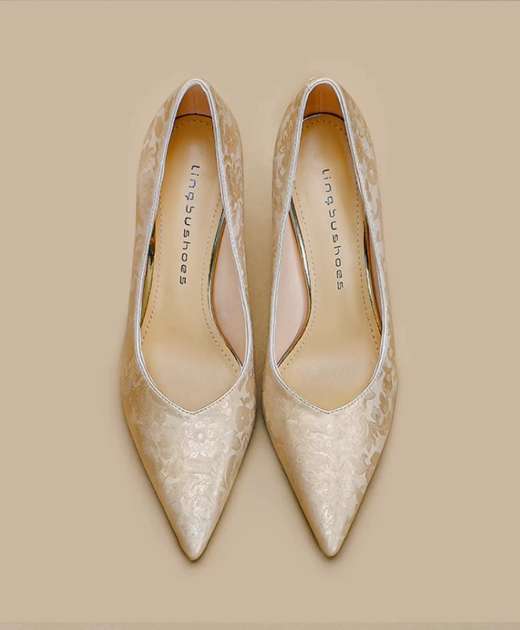
The red heels women keep for years are usually the boring ones. Deeper shade, lower heel, surface you can repair. Not the pair that got the most compliments in the first hour.
Eleven minutes is enough. Pick the deeper pair and get out the door.
