

You’ve got three invitations between now and the end of December. One is a work drinks thing in a hotel bar, one is a friend’s house party, one is dinner somewhere with a marble floor and no chairs free after 9pm.
You need one pair of holiday heels for women that handles all three, and the pair you wore for the wedding photos in September probably isn’t it. Wedding shoes are built for a day with a lot of sitting. Party shoes are built for standing.
That’s the shift most people miss. Standing for four hours is a completely different physical job from walking 6,000 steps, and it asks different things of a shoe. Most holiday heels for women fail on that one point, because they were designed for a photo rather than a night.
Here’s what to look at, in the order it actually matters.
The four-hour stand is a different sport
When you walk, your foot is in motion. Weight rolls from heel to ball to toe, muscles load and unload, and blood moves. When you stand still, none of that happens. The same small patch under the ball of your foot takes steady pressure for hours, and the tissue doesn’t get a break.
That’s why a pair that’s fine for a commute can be awful at a party. The commute gives your feet 20 minutes of movement. The party gives them four hours of stillness on a hard floor, with a drink in your hand and nowhere to sit. The mechanics of how a raised heel shifts load onto the forefoot are well documented, and standing still is the worst case for it.
Two shoe features make standing easier, and neither is the heel height.
The first is the insole under the ball. A flat, hard footbed concentrates all that pressure on one spot. A footbed with a slight pad or a shaped cup spreads it over a wider area. You can feel this in the shop by pressing your thumb into the front of the insole. If it doesn’t give at all, four hours will hurt.
The second is forefoot flexibility. A sole that bends where your toes bend lets your foot make micro-adjustments while you stand. A rigid sole forces your whole foot to stay in one position, and the muscles in your arch get tired from holding it.
Neither of these shows up in a product photo. Both show up at 10pm.
If you know the party will be a standing one, look for a block heel or a thicker heel rather than a stiletto, and a sole with some give at the front. These thick heel pairs built for long wear are a better starting point than a needle-thin pair with the same height, because the wider heel spreads the load at the back too.
Floors decide more than you’d think
Hotel bar: polished stone or dark wood, often with a slight sheen. Slippery when new, and unforgiving underfoot.
House party: carpet, sometimes with a rug on top that slides. Grippy but soft, which is easier on your feet and worse for balance if the rug moves.
Restaurant: marble, tile, or sealed concrete. Hard and cold. This is the one that makes your feet ache by 10pm.
Dance floor: whatever the venue has, usually wood with a slight polish, and usually sticky by 11.
Each surface wants something different, which is why the practical answer is a sole with a rubber insert or a rubber top piece on the heel. Leather soles on polished stone are genuinely dangerous, and no amount of practice fixes that.
Test it in the shop. Put the shoe on a tiled or smooth floor, plant your front foot, and try to twist it gently under your weight. If it slides easily, it will slide on a hotel floor at midnight with a glass in your hand.
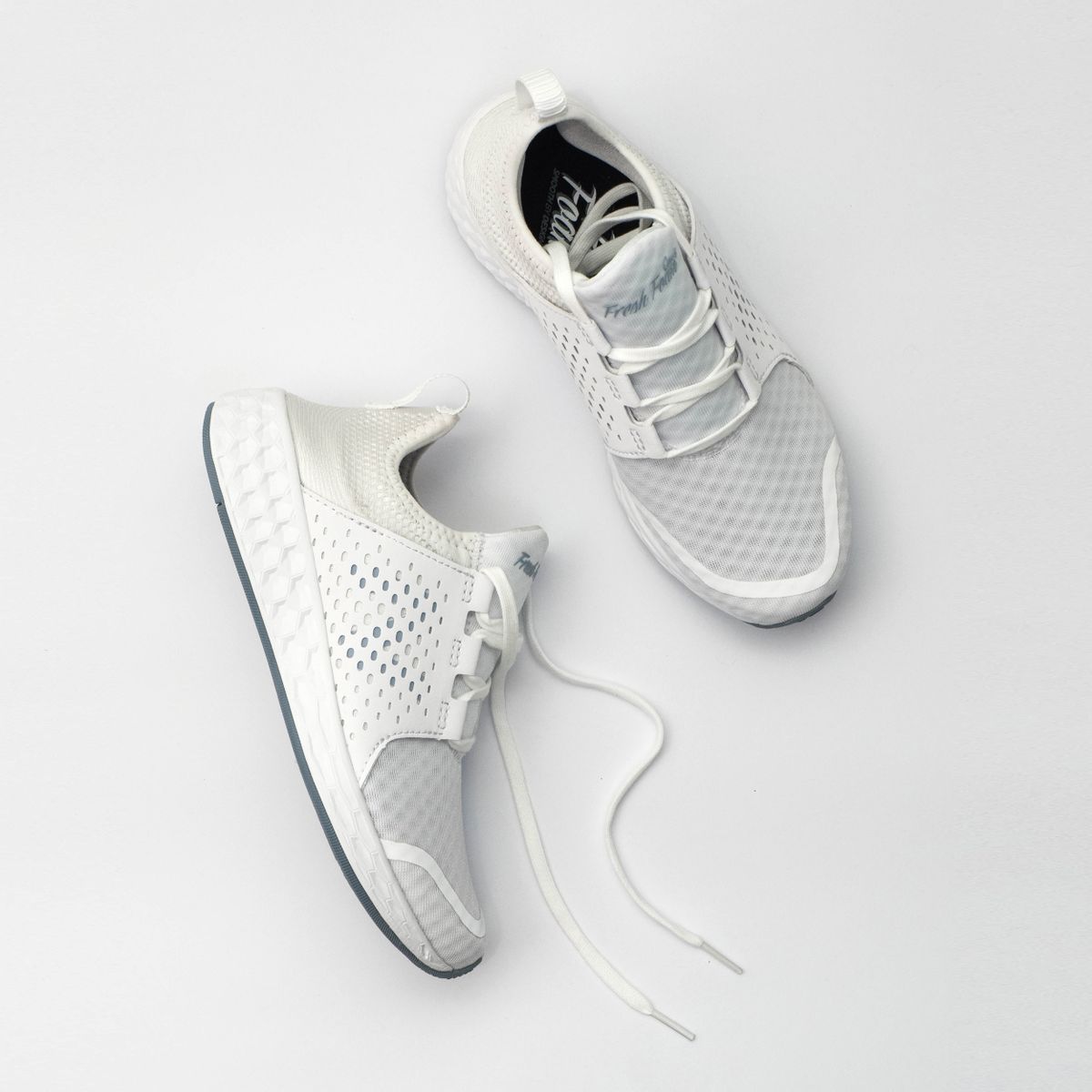
- Leather sole, polished stone: avoid. Highest slip risk of any combination.
- Leather sole, carpet: fine, but the sole wears fast on carpet fibre.
- Rubber sole or rubber insert, any floor: the safe default.
- Rubber top piece on the heel, any floor: the single cheapest upgrade you can ask a cobbler for.
That last one is worth doing before the season starts. A cobbler will fit rubber heel tips for a small fee, and it changes both the grip and the noise. Clicking heels on a hard floor is charming for about ten minutes and antisocial for the next four hours.
Grip, balance, and the wall test
Balance in a heel isn’t only about the sole. It’s about how much of your foot is actually touching the ground, and where your weight sits over the heel.
A thin stiletto has a contact patch the size of a thumbnail. A block heel has one the size of a matchbox. On a hard floor, the block gives you an actual base. That’s why people who say they can’t walk in heels can usually manage a block heel without any practice.
Here’s a quick test you can run at home with any pair you already own. Stand in the shoes, hold a wall with one hand, and lift the other foot off the ground for a slow count of ten. Then swap. If you need the wall with both hands, the shoe isn’t giving you enough lateral stability for a party where you’ll be holding a drink.
Ankle straps help more than people give them credit for. Not because they support the ankle, but because they stop your foot sliding forward, which stops your toes gripping, which is the actual source of most late-night foot pain. A slingback with an adjustable strap does the same job.
What doesn’t help: sizing up. A loose shoe makes you claw with your toes to keep it on, and by hour three your toes have done more work than your legs.
One more thing about grip. Tights and stockings reduce friction inside the shoe as well as outside. If you normally wear bare feet in a pair and then wear them with 40 denier tights, your foot will slide forward into the toe. That’s a fit change, and it’s worth planning for before the night, not during it.
Heel height and how long you can actually stand
There’s no universal number, but there is a pattern I’ve noticed across a lot of pairs and a lot of long evenings.
At 50 to 60mm, most people can stand for hours without thinking about their feet. The pitch is gentle enough that the ball of the foot isn’t carrying the whole load.
By 70 to 80mm, you get about two to three hours before you start shifting weight from foot to foot. That’s the range where a padded insole makes a real difference.
Above 90mm, you’re looking at an hour of comfortable standing, maybe two if the shoe fits perfectly and the floor is carpeted. Past that, you’re managing discomfort rather than avoiding it.
If the invitation says cocktails and canapés, assume standing. If it says dinner, assume sitting with maybe 40 minutes on your feet. Those two sentences should change which pair you pick, and they’re usually in the same message.
A platform changes the math without changing the look. A 90mm heel with a 20mm platform under the toe has an effective pitch closer to 70mm, and your foot can feel the difference immediately.
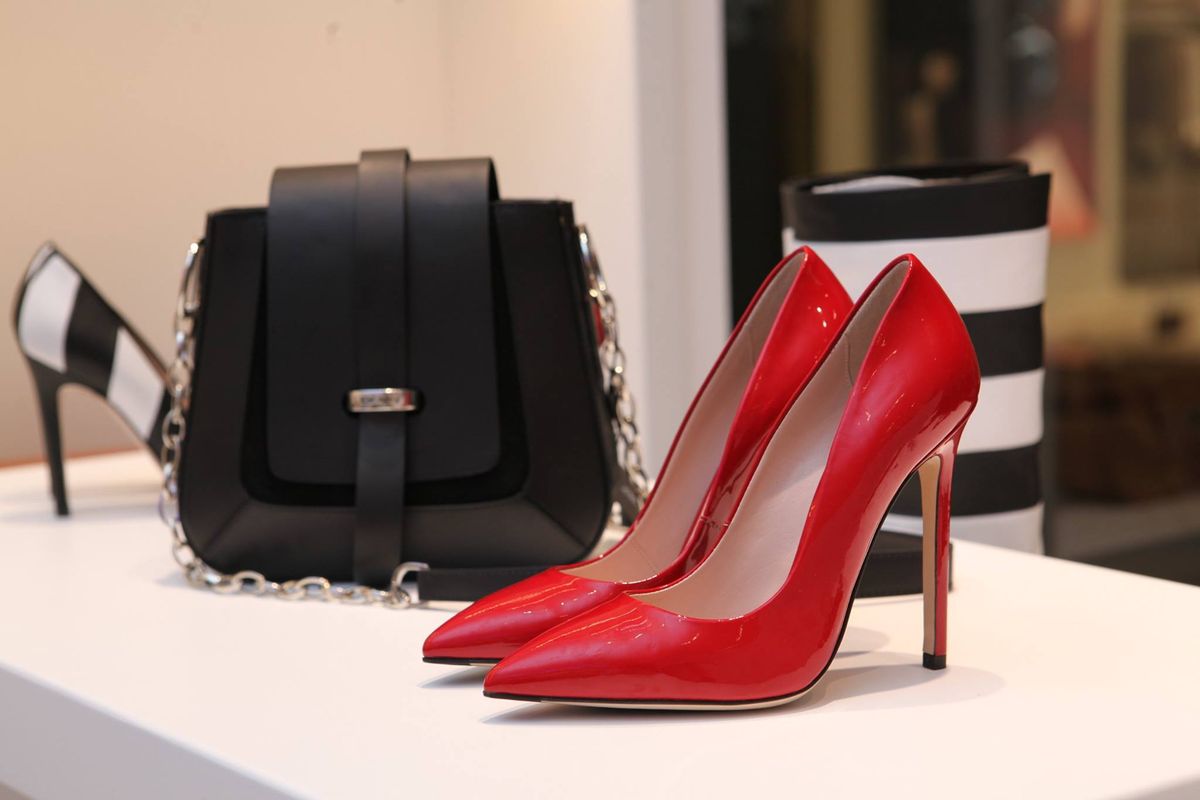
That’s the single most useful trick in holiday shoe shopping, and it’s why pairs with a soft sole and a hidden platform get worn far more often than their heel height suggests.
The flooring matters here too, which is the part people forget when they buy online. A pair that’s fine on carpet can be brutal on marble for the simple reason that hard floors give nothing back.
Tights add half a size, and other fit surprises
Winter holiday dressing means tights for most people, and tights change how a shoe fits in three ways: volume, friction, and the visual line at the ankle.
They add volume. Not much, but enough that a shoe which was snug in September becomes tight across the toes in December. If you’re buying in autumn for a winter event, try the pair on with the tights you’ll actually wear.
They reduce friction. Your foot slides forward more easily, which pushes your toes into the front of the shoe. A strap or a snugger heel counter fixes this. Nothing else does.
Opaque black tights against a pale shoe create a hard break at the ankle. With a dark shoe, the line continues. Neither is wrong, but they’re different outfits.
Then there’s the cold. You’ll arrive with feet that have been in boots, and change into heels in a bathroom or a hallway. Cold feet are slightly smaller than warm ones, so a pair that felt perfect when you tried them on in a warm shop can feel loose for the first hour and tight by the second.
Practical approach: try on any new pair at home, in the evening, with the tights you plan to wear, and walk around for ten minutes. That’s a better test than any shop fitting, because it’s the actual conditions.
If they’re slightly loose with tights, a thin insole at the ball takes up the slack without changing the heel fit. If they’re tight across the toes, no insole will help, and you should return them.
What goes in the bag
Any honest guide to holiday heels for women has to include the bag. Four hours is a long time, and a small kit turns a ruined evening into a manageable one.
- Flat packable shoes. Not for the whole night. For the walk to the car, the taxi queue, and the stairs.
- Fabric plasters. Applied before the rub starts, not after. Put them on the back of your heel at 7pm if the shoe is new. The reason this works is simple: a blister is friction damage, and you remove the friction before it starts.
- A spare pair of heel tips. If your heel tips are the thin plastic kind, one catches in a grate and you’re walking on metal for the rest of the night.
- A folded tote. Small enough for a clutch, big enough for the shoes when you swap.
None of this is glamorous. All of it is the difference between leaving at 11 because your feet hurt and leaving at 1 because you wanted to.
There’s also the anti-kit: don’t bring gel cushions for a shoe you’ve never worn. They change the fit, and a shoe that was fine can become loose at the heel once you add 4mm of gel under the ball. Test the combination at home first.
Three pairs I’d skip this season
Being specific is more useful than being balanced here, so these are the holiday heels for women I’d leave on the shelf.
Brand new patent stilettos, bought the week of the event. Patent doesn’t stretch, and a stiletto on a hard floor is a balance test. If you want patent for the shine, buy it a month early and wear it around the house for twenty minutes at a time.
Anything with a heel so thin the tip is under 8mm wide, unless you know the venue is carpeted. It’s not about skill. It’s about contact area on a polished floor.
Backless mules with no strap, for a standing event. They’re comfortable for sitting and dinner, and they’re a genuine hazard when you’re holding a plate. If you love the shape, a mule with a thin ankle strap solves it.
And one that isn’t about the shoe at all: don’t plan to break in a new pair at the event. Breaking in happens over days, not hours, and the friction that shapes leather is the same friction that makes a blister. Wear them twice at home first, for 30 minutes each time, on a hard floor.
For a wider look at what works across the whole season, from November parties through to New Year’s, there’s a solid breakdown in this piece on women’s holiday heels across the party season. And if you’re picking a metallic, the lessons in this one on silver block heels that survive a nine-hour wedding apply almost word for word to a long party.
If you’re shopping now, start with the wider women’s shoes range and filter by what you’ll actually be doing. And if you want something with a bit of sparkle but a walkable height, these high heeled sandals with a toe cap sit in the middle of that range.
Standing for four hours is the test. Not the mirror, not the photo, not how they look next to the dress. Buy for the fourth hour and the first three take care of themselves.
So which of your three invitations is the standing one, and do your current heels actually pass the wall test?
