

You know the moment: you’re standing in a shoe shop with one foot in a lace-up trainer, holding your breath, because bending down to tie it properly is the whole problem. Maybe it’s a bad back. Maybe it’s a knee that doesn’t fold the way it used to. Maybe you’re seven months pregnant and can’t see your own feet.
Womens velcro walking shoes solve that in about two seconds. Strap, press, stand up, walk. No bow to retie three times a day, no lace end flicking your ankle, no bending.
That’s the sales pitch and it’s true. What nobody tells you is that two straps on a shoe can be brilliant or useless depending on where they sit and how the shoe is built underneath them. I’ve had pairs that held my foot like a hand and pairs that let my heel slide out on every step, both with velcro on the box. So here’s the part that actually decides whether they work.
What a strap does that a lace can’t
A lace tightens the whole shoe at once, from the toe to the ankle, and it tightens unevenly. Pull the top and the bottom loosens. That’s fine for most feet, and it’s why laces have survived four centuries. But it means one tension setting has to serve a foot that changes shape during the day.
A strap tightens one zone and holds it. Set the forefoot strap for the width of your toes, the mid strap for the instep, the ankle strap for heel hold, and each stays where you put it. If your left foot is wider than your right, which is true for most people by a few millimetres, you can adjust each shoe separately without thinking about it.
That’s why womens velcro walking shoes turn up so often in podiatry clinics and so rarely in running shops. Different job.
- Laces: even pressure, endless fine-tuning, useless one-handed.
- One strap: fast, but it only really controls the instep.
- Two or three straps: real zone control, and you can loosen the toe box at 4pm without untying anything.
The mechanic underneath matters more than the strap. A strap over a soft, unstructured upper just squeezes foam. A strap over a firm heel counter and a stiffened midfoot actually holds your foot in place. Flip the shoe over and press the back of the heel. If it collapses under your thumb, no strap on earth will stop the sliding.
There’s a reason the closure is called hook-and-loop rather than by a brand name. The engineering behind hook-and-loop fasteners is genuinely simple: thousands of tiny hooks on one side, loops on the other. It holds well in shear, which is exactly the direction a walking shoe gets loaded.
That last point is why the closure works on a shoe at all. Walking pushes the upper backwards and forwards, not straight up, and hook-and-loop is strongest in that sideways direction. It’s also why it fails when the shoe twists under you on uneven ground, so a pair with a flexible midsole will eat through straps faster than a firm one.
The three-strap mistake
More straps sound better. They usually aren’t. A third strap across the middle of the foot, right where the instep is highest, is the single most common cause of “these felt fine in the shop and terrible by lunch” I hear about.
Here’s what happens. You fasten all three snugly on a cold morning. Your foot swells by mid-afternoon, as feet do, and the middle strap has nowhere to give. You get a numb patch on the top of your foot and a red line you can see for hours. That’s not a sizing problem. It’s a strap in the wrong place.
Two straps is the sweet spot for most women. One wide band across the instep, one at the ankle or just behind it. If a shoe has three and you love everything else about it, run the middle strap looser than feels correct, and check after twenty minutes of walking rather than after two minutes of standing.
Strap width matters too. A 20mm strap digs. A 30mm or wider strap spreads the same pressure over more skin and holds better because it doesn’t have to be as tight. Cheap pairs skimp here, and it’s visible in a photograph before you even try them on.
Also look at where the strap anchors. If the anchor points are stitched to a thin fabric panel, the panel will stretch within a season and the strap will stop doing anything. Anchors set into leather, or riveted through a reinforced layer, last longer and cost more for a reason.
One more thing about the third strap: it often sits on top of a seam. Run your finger along the inside of the upper where the strap passes. If you can feel a hard ridge under it, that ridge will press into your instep once the strap is snug, and no amount of adjusting fixes a seam in the wrong place.
This is also why I’d rather buy womens velcro walking shoes in person than online. The photos never show the seam line, the strap width, or where the anchors sit, and those three details decide everything.
If your feet are wide, half a size won’t save you
Most women with wide feet buy a bigger size, and then wonder why the shoe feels like a boat with a tight toe box. Length and width are different dimensions and no amount of extra length fixes width. A 42 isn’t wider than a 41 in any meaningful way in most women’s shoes, it’s just longer.
Womens velcro walking shoes have one quiet advantage here: the straps let you open the shoe properly, so you can get your foot all the way in and see where it actually presses. With laces you tend to tighten before you’ve checked. With straps you can look first.
Three things to check with a wide forefoot:
- Stand up and spread your toes. If the little toe is pressed against the side wall, it’s too narrow, whatever the label says.
- Look for a wide or extra-wide fitting, not a bigger size. It’s a different last, not a different length.
- Check the strap still closes with room to spare. If you’re on the last centimetre of hook material, there’s nothing left for a swollen afternoon.
Toe box shape matters as much as width. A rounded, tall toe box gives room without looking like a medical shoe. A shallow, tapered one will press on the big toe joint, and that’s the pressure that aggravates a bunion over years rather than days. The Mayo Clinic overview of bunions is clear that footwear doesn’t create the underlying mechanics but does decide how much they hurt.
One honest note: if you have significant neuropathy or a foot that changes shape, a strap you fasten yourself is safer than a slip-on, because you can see and feel the fit. But don’t buy online without trying the exact width. I’ve returned three pairs that way and I’m not proud of it.
There’s a workaround if you can’t get to a shop. Order two widths, try both on carpet for ten minutes, and send one back. Slightly wasteful, considerably cheaper than a pair you can’t wear.
How the closure actually fails
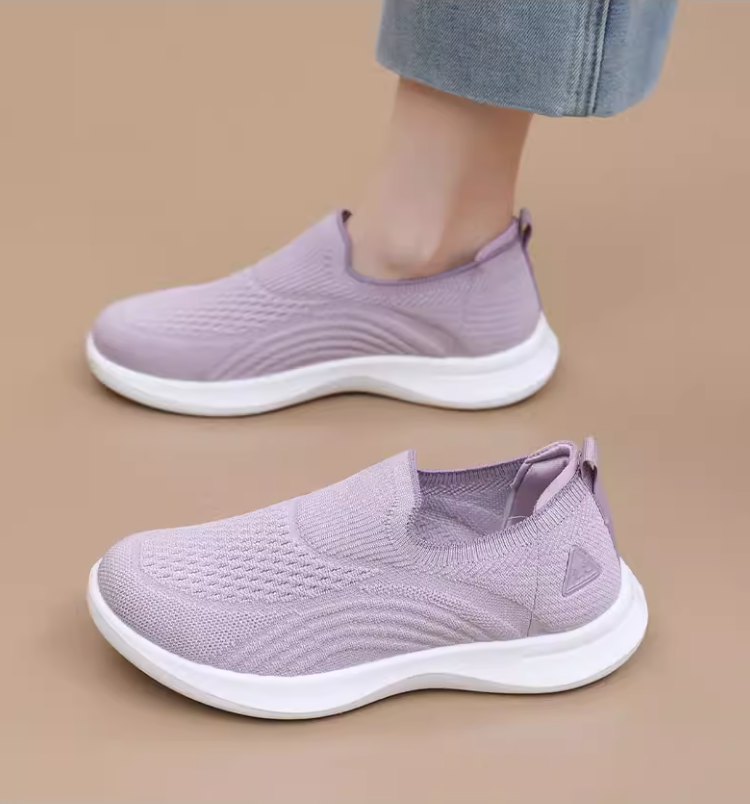
Velcro dies in a specific order. First the loops fill with lint and hair, and holding strength drops by maybe a third. Then the hook side gets flattened by repeated pressing and stops grabbing. Then the strap curls at the tip because it’s been peeled back from the same corner two thousand times.
All three are fixable or preventable, and none of them require a cobbler. Clean the loops with a stiff brush or a fine comb every few weeks. Pick out the lint, don’t wash it deeper in. That single habit is the difference between a strap that lasts two years and one that lasts eight months.
Peel from the tab, not the corner. Strap tips curl because people grab the nearest edge. If the shoe has a pull tab, use it. If it doesn’t, start the peel with a fingernail in the middle of the tip.
Then there’s the honest failure: the strap itself. On cheap pairs it’s a single layer of stiffened nylon that cracks where it bends. You’ll see a white line across the strap about 10mm from the buckle. Once that appears, the strap has months left, not years. It’s also the one part of a walking shoe that’s genuinely hard to replace, so check it before you buy.
Warranty claims usually fail here too, because strap wear is classed as normal use. Which is fair, and annoying, and worth knowing before you spend £120.
The other slow failure is the sole, and it’s easy to miss because it doesn’t look like damage. Press your thumb into the midsole under the ball of your foot at month six and again at month twelve. If it’s gone from springy to flat, the shoe has stopped absorbing anything and every step is going into your knee instead.
There’s an argument that womens velcro walking shoes are more repairable than lace-ups, and I think that’s backwards. The closure is the most durable part of a decent pair. The upper and midsole are what die first, and neither is worth repairing on a shoe in this price band.
So treat the strap as a wear indicator, not a weak point. When it starts curling and the loops are clean, that’s usually a sign the midsole has done its miles as well. Replace the pair. Don’t spend £40 mending a £90 shoe.
Where they look wrong, and how to work around it
Let’s be straight. Womens velcro walking shoes look like what they are. The strap breaks the line of the shoe, the upper tends to be wider and flatter, and there’s a specific “sensible” energy to them that no amount of styling fixes entirely.
You can soften it. A monochrome pair in black, navy, or bone reads as intentional rather than medical. Avoid contrast stitching and contrast straps, which draw the eye straight to the closure. And keep the sole slim, because a thick white rocker sole plus straps is the combination that tips them into orthopaedic territory.
What works, in my experience:
- Straight-leg jeans that cover the top strap. The shoe reads as a plain trainer.
- Wide trousers in a heavy fabric, which balance the shoe’s width.
- Anything cropped at the ankle, if the shoe is dark and the sole is thin.
What doesn’t: midi skirts with a slim hem, which make the shoe look enormous, and tailored trousers with a sharp crease, where the contrast is too loud.
If you need something for a wedding or a work presentation, these aren’t it, and pretending otherwise wastes your money. Buy them for the 6,000-step days and keep a second pair for the 400-step ones.
Colour does more work than shape here. Bone and taupe blend into a bare ankle in summer and read as deliberate. Black is the safest option with trousers and the worst with pale dresses, because the contrast turns the strap into a graphic detail.
One styling trick that genuinely works: match the sock to the shoe, not to the trouser. A dark shoe with a dark ankle sock makes the whole foot look longer and the strap disappears into the line. Pale shoe, pale sock, same effect. It’s the single change that made me stop feeling self-conscious in mine.
And if a colleague asks whether they’re comfortable, which they will, the honest answer is yes, and that’s the entire reason you bought them.
Five minutes in the shop, in this order
Try them on late in the day, with the socks you’ll actually wear. Then run this sequence. It takes five minutes and it catches almost everything.
Stand up and roll your weight forward and back. You’re checking whether the toe box bends where your foot bends, not a centimetre behind it. If the crease lands on your toes, the shoe is too long or the flex point is wrong.
Then walk fast for twenty steps. Not a stroll. A pace that feels slightly silly in a shop. Heel slip shows up here and nowhere else. A little movement is fine. Your heel lifting clear of the sole is not.
Next, undo and refasten each strap while standing. If you have to sit down, the strap is either too short or badly placed, and the whole point of the closure was to avoid that.
Finally, stand still for two minutes and pay attention to the top of your foot. Pressure there doesn’t hurt immediately. It goes numb slowly, and you’ll notice it on a train two hours later, which is too late to return them.
If the shop has a slight slope, walk up it and down it once. Downhill is where your foot slides forward into the front of the shoe, and with straps you’ll feel it immediately as pressure on your toes. That’s the fit problem that causes lost toenails on long walks, and it’s much easier to spot in a shop than on holiday.
Then do the one thing nobody does: keep them on for ten minutes while you look at something else. Stand in the queue, read a label, send a text. Fit problems that hide behind concentration show up when you stop thinking about your feet, and that ten minutes is the closest you’ll get to a normal day.
If you want a starting point, this flat-soled breathable walking shoe has the wide, simple upper that suits a strap closure, and the soft leather sports style is the smarter-looking option if you need one pair for both.
Two minutes of care that doubles their life
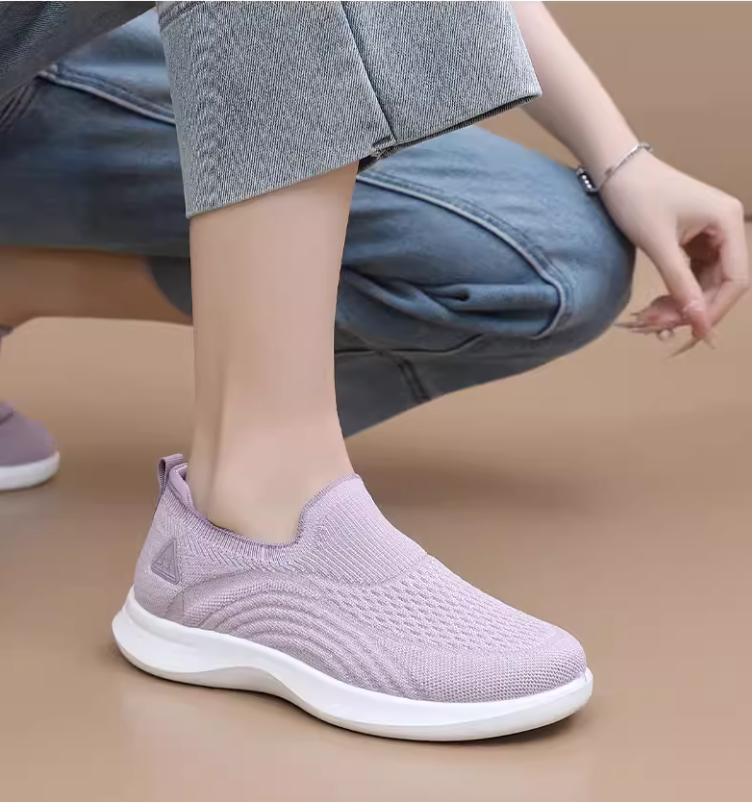
Shoes like this don’t wear out from walking. They wear out from being wet, being stored squashed, and having dirty closures. Three habits cover it.
Dry them at room temperature, stuffed with newspaper, never on a radiator. Heat warps the midsole and shrinks the upper, and a warped midsole is what makes an otherwise fine shoe start rolling your ankle inward at month eight.
Brush the loop side of each strap once a fortnight. It takes about forty seconds per shoe and it’s the highest-return maintenance task in your wardrobe.
Store them with the straps fastened, not hanging open. Fastened straps keep the upper’s shape and stop the hook side grabbing whatever’s next to it in the cupboard, which is usually a knit that will not survive the encounter.
If they get soaked, which happens in October, rinse the closures with clean water before they dry. Grit trapped in the hooks is what kills holding power, and it’s much easier to remove wet.
Replace the insole at the first sign of flattening, usually around month ten with daily wear. A £10 insole buys another year from a shoe that still has structure, and it’s the cheapest fix in this entire article.
If the straps start feeling loose even when fully fastened, check the loops before you blame the shoe. Nine times out of ten it’s lint, and the tenth time it’s a stretched anchor panel, which means the pair is done.
For more on picking a walking pair that survives real mileage, the walking shoes category is the place to browse, and if you’re packing for a trip, this piece on walking shoes for travel covers the airport side of the same problem. There’s also a useful read on shoes for treadmill walking if most of your miles happen indoors.
Buy the pair you can fasten standing up in the dark, at 6am, without thinking. That’s the one you’ll still be wearing in November.
