

You bought them because of the photo: thin straps crossing the instep, a heel that looked elegant from the side. Three hours into the evening, the strap behind your ankle has sawed a line into your skin and the toe strap is pressing on your little toe. Sound familiar?
Strappy heels women keep wearing long-term share a few measurable qualities, and none of them are about looking delicate. Strap count, strap width, buckle placement, and heel height decide whether you can walk to the car or not. Here’s how to judge a pair before it costs you an evening.
Strap count is the first decision, not the last
More straps look better in photos and behave worse on your foot. That’s the trade you’re making, and it helps to know it going in rather than discovering it at 10pm on a dance floor.
A single wide strap across the instep holds the foot with one broad contact patch. Two thin straps distribute the same force over less surface, so each one presses harder. Four or five thin straps look like jewelry and function like a cage, which is fine for a 90-minute dinner and miserable for anything longer.
Here’s the practical rule. The thinner the straps, the fewer of them you want, and the shorter the event should be. If you’re choosing one pair for a wedding that runs from ceremony to last dance, a two-strap design beats a five-strap one every time, even if the five-strap pair looks better on the shelf.
Strap placement matters as much as the count. Straps that sit across the widest part of your forefoot, right at the metatarsal heads, will cut in when your foot spreads under load. Straps positioned slightly behind that point, closer to the arch, stay comfortable because the foot doesn’t widen there.
Look at where the straps attach to the sole, too. Straps sewn directly into the insole edge pull tight when you walk and lift the footbed. Straps anchored into a slightly thicker midsole hold their shape and keep their tension without digging.
There’s a seasonal angle too. Summer feet swell more than winter feet, and a five-strap design has almost no room to give when that happens. If you’ll wear the pair in July heat, subtract one strap from whatever you were considering. Your ankles will thank you around 9pm, and so will the person who has to walk beside you on the way home.
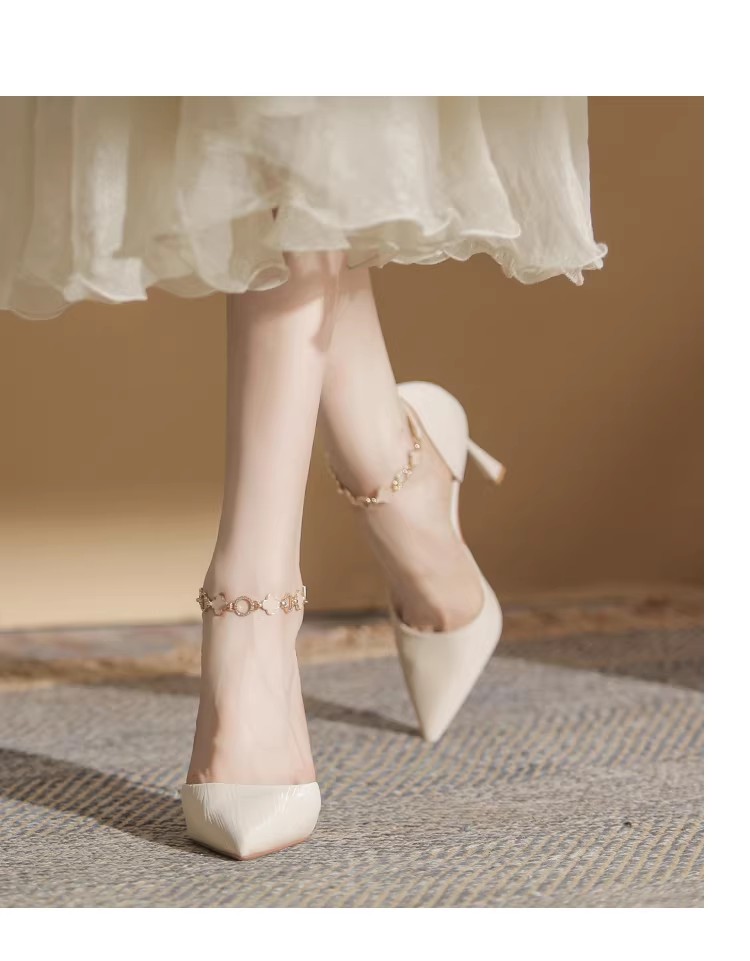
Ankle straps: where they sit decides how long you can walk
An ankle strap is the single most useful piece of hardware on a strappy heel, and the single most common source of blisters. The difference is about 8mm of placement.
A strap that sits right on the ankle bone will rub that bone raw within an hour, because there’s no padding between strap and skin. A strap that sits just above the bone, in the soft hollow, stays put and stops your heel from lifting out of the shoe.
Heel lift is the thing you’re actually buying with that strap. Without one, a pump at 80mm lets your heel rise 5mm or more with each step, and the shoe slaps. With a well-placed strap, the heel stays seated, your toes do less gripping, and your calves work less over the evening. That’s why strappy sandals often feel easier than closed pumps at the same height.
Check the strap’s angle, not just its height. A strap that runs straight horizontally is comfortable. One that angles up toward the Achilles tendon will dig in when you flex your foot, which is exactly what happens on stairs.
Elastic helps, up to a point. A strap with a hidden elastic insert accommodates swelling over a long evening, and swelling is real: feet can gain close to half a size by midnight. Fully elastic straps, on the other hand, lose tension after a season and stop doing their job. Look for a fabric-covered elastic section rather than a stretchy strap end to end.
Sizing a strap is a different exercise from sizing the shoe. The strap should be snug enough that you can just slide a fingertip under it, and no looser. Any more slack and it slides down over the heel all evening. Any tighter and you’ll feel your pulse in your ankle after two hours.
Width matters more than number
A 6mm strap and a 12mm strap are different shoes, even if the photos look similar. The narrow one concentrates pressure on a strip of skin. The wider one spreads the same load and shows no mark at the end of the night.
Measure the strap with a ruler if you’re shopping in person. Anything under 5mm is decorative. Between 6mm and 10mm is the usable middle for most people. Above 12mm you’re into a different look, closer to a mule or a caged sandal, and comfort improves accordingly.
Leather straps soften and mold to your foot over two or three wears. Synthetic straps with a coated edge often don’t, and the coating is what creates that sharp line on your skin. If a strap looks plasticky and has a hard sealed edge, expect it to stay exactly as sharp in June as it was in the box.
Here’s a counterintuitive detail. Round-profile straps, the kind that look like cord, dig in more than flat ones despite feeling softer in your hand. Flat straps with a slightly rolled edge distribute pressure better, and they also stay in place instead of rolling on the instep.
One more thing to check: does the strap have a lining, or is it the same material on both sides? Unlined straps stick to skin in humidity, then chafe. A soft leather or fabric lining is a small detail with a big effect on how the shoe feels after 8pm.
Width also interacts with sock choice, which people forget. Thin nylon liners reduce friction under a strap more than bare skin does, and they add almost no bulk. On a first wear, that combination is often the difference between a pair you keep and a pair you resell in September. Keep the liners thin, replaceable, and cheap, because you’ll go through a few pairs a summer.
The buckle you’ll actually reach
Most strappy heels are lost to a buckle that takes two hands and a good mood. If you can’t fasten it standing up in a dim hallway, you’ll stop wearing the shoes.
Two designs work. A buckle on the outside of the ankle is reachable with one hand, and a hidden hook-and-eye under a decorative buckle is even easier. A buckle on the inside of the ankle, close to the other foot, is a small daily annoyance that adds up.
Test it in the shop the way you’d actually do it. Stand up, reach down with one hand, and fasten the strap without looking. If that takes more than five seconds, the shoe will end up in the back of the closet by August.
Also check the hole spacing. Straps with only three holes give you about 6mm of adjustment, which isn’t enough for a foot that swells. Five holes over 15mm lets you loosen the strap after dinner without changing shoes, and that’s the difference between leaving at 10pm and leaving at 11. Three holes look cleaner on the shelf, which is exactly why so many brands use them.
Buckles that sit against the ankle bone are worth avoiding for another reason. Even a smooth metal buckle creates a hard point, and hard points plus friction equals a blister. Look for the buckle to sit slightly to the side of the ankle rather than directly over the bone.
Metal finish is a small thing that ages fast. Antiqued brass and matte finishes hide scratches from keys and bag clasps. Polished silver shows every scuff, and a scratched buckle is the first detail anyone notices when they look down at your feet at a dinner table. Matte finishes also photograph better under warm indoor light, which matters if there will be pictures.
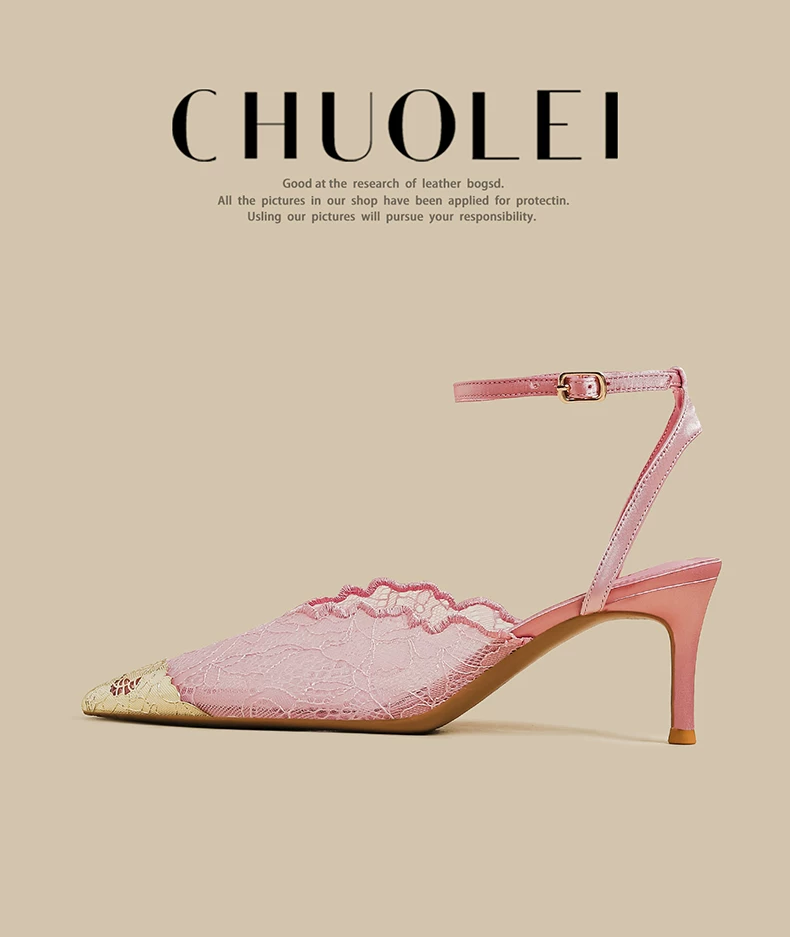
Toe straps and the little-toe problem
If a strappy heel hurts, it’s usually the toe strap and usually on the little toe. That’s a fit issue, not a toughness issue.
The toe strap should cross your foot at the base of the toes, not across the joints themselves. When it sits forward, over the joints, every step pushes your toes into it. When it sits back, the strap holds the midfoot and the toes stay free.
Width plays a part. A narrow toe strap on a wide forefoot means the outer edge of your foot hangs over the sole, and the strap cuts into the fifth toe. If your forefoot measures wide, choose a wider strap, a rounded toe shape, or a design where the strap splits into a Y and spreads the load.
Blisters from strap friction are common enough that they’re worth planning for rather than hoping against. The mechanics of blister formation come down to friction plus moisture, which is exactly what a thin strap on a warm foot produces. A dab of anti-chafe balm on the strap’s inner edge, applied before you put the shoe on, prevents most of it.
Give the strap a break-in period at home, too. Twenty minutes around the house in thin socks stretches leather straps slightly and shows you exactly where they’ll rub while you can still return the pair. If you feel heat rather than pressure, that spot will blister. Heat is the warning sign that most people ignore because it doesn’t hurt yet.
If a strap still bites after that, a cobbler can stretch it on a proper last for a few pounds. That works on leather and does nothing for synthetic, which is one more reason to check the material label before you fall for the color. Ask the shop to stretch the specific strap that bites, not the whole shoe.
Heel height for a strappy shoe: go lower than you think
Open shoes change the comfort math. A strappy heel at 90mm feels harder than a closed pump at 90mm, because there’s no upper to hold your foot and your toes do more work to keep the shoe on.
For most people, 60mm to 75mm is the range where a strappy sandal stays wearable for a full evening. Above 85mm, the toe strap starts doing structural work it wasn’t designed for, and that’s when the little toe complains.
Heel shape matters here. A slim stiletto at 75mm concentrates load on a tiny point, so it sinks into grass and wobbles on uneven pavement. A slightly tapered or flared heel at the same height is far more stable outdoors, and it doesn’t look any less elegant with thin straps above it.
The history of the sandal is mostly a history of straps and soles, and the modern version hasn’t changed the basics. What holds the foot on is tension. What makes it hurt is too much tension in too small an area.
If you’re set on height, buy a pair with a small platform under the toe. Even 10mm of platform reduces the effective pitch and takes pressure off the ball of your foot, which is where a high strappy sandal hurts first. It also lets you keep a heel height you already like instead of trading it away. The platform shows less than you’d think in a strappy design, since the straps draw the eye anyway.
Heel height and event length should be planned together. Two hours standing at a reception is roughly equivalent to four hours sitting at a dinner, in terms of what your feet remember the next morning. Pick the height for the standing portion, not the seated one. If the plan is a ceremony, photos, then a seated meal, the photos are what your feet will remember.
Try-on test: 40 steps and a squat
Five minutes in a shop tells you almost nothing. Here’s a test that takes four minutes and predicts most problems.
- Walk 40 steps on a hard floor, not carpet. Listen for slap at the heel.
- Squat down and stand back up. The ankle strap should stay put, not slide toward your heel.
- Stand on tiptoe for ten seconds. If the toe strap digs in, the fit is wrong.
- Step on a slight incline, like a stair edge, and check whether your foot slides forward.
- Fasten the buckle one-handed, standing, without looking. Note how long it takes.
Then look at your foot. Red marks that fade within a minute are normal. Marks that stay, or any spot that feels hot, will become a blister on a real evening out.
If the pair passes all five and still feels tight across the instep, try a half size up rather than a wider width, since strappy shoes have so little material that length is often what’s actually missing.
One last check that most people skip: walk on tile. Marble and tile are the two surfaces where cheap soles announce themselves, and a strappy sandal with a hard sole will click and slip in a way that ruins the entrance. Tile also shows every scuff, so look at the sole edge before you commit. Ask for a second pair in the same size if the first one feels loose, because two units of the same model can differ noticeably in fit.
Bring your own thin insole if you know your arch needs support, and check that it doesn’t show at the edges. A tan leather insole under a black sandal looks like a mistake. Trim-to-fit versions in a neutral shade solve that in about two minutes with scissors, and they cost less than a coffee.
What to wear them with, and when to leave them home
Strappy heels are the easiest shoe to style and the hardest to schedule. They work with almost everything and survive almost nothing outdoors.
Good pairings are simple: cropped wide trousers that stop above the ankle, a slip skirt, a midi dress with a slit, straight jeans rolled once. The strap detail is the interest, so avoid hems that fight it. A long gathered skirt that covers the straps wastes the shoe entirely.
For a specific pair, a two-strap sandal with a covered toe area pairs well with tailored shorts and a linen shirt for warm evenings, and there’s a solid option among the toe-cap sandals with a slim heel. If you want something sharper for a dinner, the pointed-toe strappy sandal reads dressier without adding height.
Leave them home for anything involving gravel, grass, or a long walk between venues. A thin sole under a thin strap has nothing to protect you from a stone path, and no amount of styling compensates for that.
Weddings are the tricky case, because the ceremony is usually outdoors and the reception isn’t. If you know the grounds are grass, bring a second pair and switch after the photos. Everyone who has done this once does it again, and nobody at the reception cares what you’re wearing by then.
And if your feet are narrow, read this guide to narrow heels that hold the foot without squeezing before you shop, because strap tension behaves differently on a slim foot. Strap direction also changes the whole line of the leg, which is what the piece on T-strap placement and leg line covers. Browse the rest of the heel range by height and shape if you’re still deciding.
Pick the pair you can fasten one-handed and walk 40 steps in without thinking about your toes. That’s the whole test. The rest is styling, and styling is the easy part.
