

In a shoe shop, the returns counter tells you more than the sales floor. The pair that comes back most often isn’t the ugliest or the cheapest. It’s the slip-on that felt fine standing still and then slid off the heel on the third step. Nine times out of ten the customer says the same sentence: “It fit in the shop.”
That’s the whole problem with casual slip-on shoes for women. There’s no lacing to take up the difference, so the fit has to be right at the last, the instep and the heel, all at once. Casual slip-on shoes for women live or die on three measurements, and only one of them is the length you’d normally check.
What the returns counter sees
The first pattern is heel slip. A slip-on holds your foot with the vamp, the part across the top, and the heel counter at the back. If the vamp is loose, your foot slides forward on every step and the heel lifts. If the vamp is tight, the shoe holds but presses on the instep after an hour.
The second pattern is a shoe that’s half a size long. People size up in slip-ons because they’re worried about getting the foot in, and then spend the next month walking out of them. A 6mm gap at the heel is enough to cause it.
A too-soft sole is the third pattern. Soft soles feel wonderful in the shop and give nothing back after two hours on a hard floor. Shops see this one less at the returns counter and more in reviews six weeks later.
None of these are quality problems. They’re fit problems, and every one of them is visible before you pay if you know what to look at.
The heel slip test, and what counts as normal
A lower-cut vamp helps if your instep is high, because there’s less material pressing across the top of the foot. The shallow-cut pair with the softer vamp is cut that way, and it’s the shape to look for even if you buy a different brand.
Put the shoe on without socks, then walk ten steps on a hard floor. A little lift at the heel is fine. Slip-ons need some movement or they’ll rub. What isn’t fine is the heel coming up more than about a centimetre, or the whole shoe feeling like it’s steering you rather than following.
Then try the same shoe with the socks you’d actually wear. A 3mm sock changes the fit of a slip-on more than it changes a laced shoe, because there’s no adjustment to compensate. If the shoe only works barefoot and you wear socks eight months a year, it’s not the right shoe.
A useful trick from the trade: stand on tiptoe and see whether the heel stays seated. If the shoe drops off at the back when you rise, the vamp is too loose and it will only get looser as the leather softens.
Fitters also check the width at the ball of the foot by pressing down on the upper. If the leather touches the top of the toes immediately, there’s no room for the foot to spread when you walk. Slip-ons don’t have laces to open up, so the width is fixed from day one.
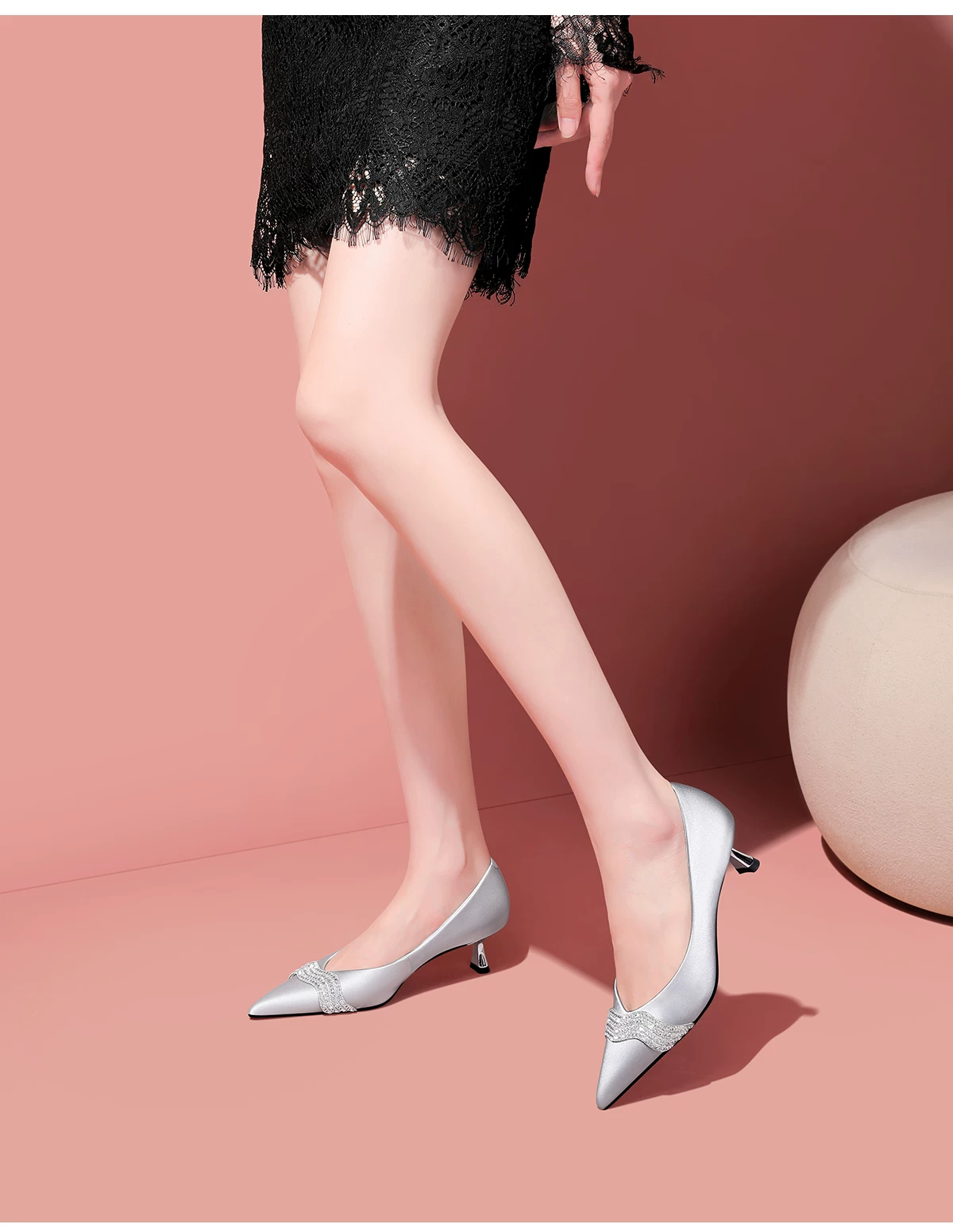
Materials, and how each one behaves after a month
Four materials cover almost every casual slip-on on the market, and they age in completely different ways.
Knit. Soft from the first minute, breathes well, and holds nothing. Knit slip-ons tend to lose their shape at the heel within a few months, and the toe area stretches where the foot flexes. They’re the best choice for warm weather and the worst for structure.
Canvas. Cheap, breathable and hard-wearing, but it has no give, so the fit you buy is the fit you keep. Canvas also shows dirt permanently, and washing them shrinks the upper by a few millimetres, which is enough to change the fit.
Suede. Softer than leather, moulds to the foot, marks in rain. Suede slip-ons are the most comfortable option for the first six months and the scruffiest after a year, unless they get brushed regularly.
Smooth leather. Takes two weeks to break in, then holds its shape for years. The heel counter stays firm, which is exactly what a slip-on needs. Leather is the material that keeps the shoe on your foot rather than the other way round.
For anyone shopping knit, the breathable mesh walking shoe is the shape to copy: a soft upper over a sole with enough substance to handle a pavement.
The insider summary: knit for summer, canvas for the price, suede for comfort, and leather if you want the pair to last. Slip-on shoes have been made in all four for decades, and the pattern of complaints hasn’t changed much in that time.
Pet hair, lint, and which finishes hide it
Anyone with a cat or a light-coloured dog knows the test that never appears in reviews. Some shoes collect hair like a lint roller and some shrug it off, and the difference is the surface texture.
Knit and canvas are the worst. Both have a woven surface with tiny gaps that hair works into, and once it’s in, a brush only gets the top layer. Suede is bad in a different way: the nap grabs hair and holds it, but a suede brush does lift most of it out.
Smooth leather is the easiest to clean, because hair sits on the surface and a damp cloth takes it off in one pass. Patent and coated finishes are even better, though they look wrong for a casual shoe.
A few practical notes from people who live with this daily:
- Keep a rubber glove or a damp sponge by the door. Both lift hair off suede faster than a brush.
- Dark soles hide hair. Cream or gum soles show every strand.
- Open-weave mesh is a trap. It looks breathable and it holds everything.
- If you have two pets and a cream sofa, buy leather.
Worth knowing that leather isn’t one material. Corrected-grain leather, the kind with a printed surface, wipes clean but doesn’t breathe at all. Full-grain leather breathes, softens with wear, and is the version that lasts a decade if you look after it. In a house with pets, full-grain is also the one you can wipe with a damp cloth without leaving a mark.
That last point isn’t a joke. The most common regret in this category is a pale knit slip-on bought for comfort in a house with animals, and the shoe is never quite clean again after the first month.
Buying a used pair: what actually matters
Slip-ons are one of the better categories for resale, because there are no laces to replace and the shape is simple. They’re also one of the riskier ones, because a worn heel counter can’t be fixed and it’s the part that decides whether the shoe stays on.
Inspect these in order:
- The heel counter. Squeeze it. If it folds flat, the shoe is finished. A firm counter is the whole mechanism of a slip-on.
- The insole. Lift it if it comes out. A dark compressed patch under the ball of the foot means a lot of miles.
- The sole at the toe. Wear there is normal. Wear through to the midsole is not.
- The vamp creases. Deep cracks in leather creases mean the material is drying out, and it will split.
- The smell. Not a joke, and not fixable if it’s in the lining rather than the insole.
A pair with a good counter and a worn sole is worth buying, because a cobbler can re-sole it for about £35. A pair with a soft counter and a perfect sole is worth nothing, because there’s no repair for that.
Second-hand also solves one problem outright: the break-in. Someone else has already done the two weeks of stiff leather, which is why used leather slip-ons often feel better on day one than new ones.
Soles, repairs, and the point of no return
The sole is where a slip-on quietly fails. Rubber soles wear at the outer heel first, because that’s where the foot lands. Once the wear reaches the midsole, water gets in and the shoe starts to feel dead underfoot.
What’s fixable: heel tips, full soles, a stretched lining, a split seam at the vamp. What isn’t: a collapsed heel counter, a sole that’s bonded and peeling at the toe, and any synthetic upper that has cracked at the flex point. A cobbler will tell you which is which in about ten seconds, and it’s worth asking before you spend money on a repair.
The economics are simple. A £90 leather slip-on that gets a new sole at year two and a heel tip at year three will run about £130 across four years. Three £35 canvas pairs over the same period cost £105 and none of them will be comfortable by year three. The cheaper route is more expensive per wear, which is the one bit of maths most people skip.
One caveat, and it’s the honest one. If you change shoes twice a day or walk more than 10,000 steps, a slip-on isn’t the right primary shoe. The lack of fastening means your foot works harder to keep it on, and that shows up as tired arches by the afternoon. It’s a good second shoe, a good commuting shoe, and a poor choice for a job on your feet all day. The notes on what survives a ten-hour day cover the alternative properly.
Where slip-ons win outright is the 90-second exit. School run, airport, supermarket, the walk to the coffee shop. No laces, no bending, no hands. That’s worth something, and it’s the reason the category keeps growing even though the fit is harder to get right.
Sizing across brands: the numbers lie
Casual slip-on shoes for women have the worst size consistency of any category in the shop, and the reason is structural. Without laces, the fit depends on the last, and every maker uses a different one. A 38 from one brand can be a 39 from another in the same season.
Anyone who sells casual slip-on shoes for women will say the same thing privately: the label is a suggestion. The numbers to ignore: the size on your old pair, the size your friend wears, and the size in the review that says “true to size”. The numbers to trust: your own foot in centimetres, and the maker’s own chart.
Measure once and write it down. Heel against a wall, longest toe marked, length in centimetres. Most people are surprised by the result, because they’ve been buying the size they were at 22 for twenty years while their feet spread a little each decade.
Width is the second number nobody measures, and for slip-ons it matters more than length. A shoe that’s 5mm too long still works if the width is right. A shoe that’s the correct length and 3mm too narrow will press on the little toe all day and never let up.
There’s also a seasonal factor. Feet swell by up to half a size in warm weather and by less in winter, and the same pair can feel different in July and January. If you’re buying in summer for year-round wear, take the measurement in the afternoon and add a couple of millimetres.
Breaking them in without wrecking them
Slip-ons don’t need much breaking in, and the temptation to force it is what damages them. The upper will soften on its own in about two weeks of normal wear.
What actually helps: wear them for an hour at a time for the first three days, always with the socks you plan to use, and always indoors. The leather moulds to your foot faster when it’s warm, so put them on after a shower rather than first thing in the morning.
What doesn’t help: stretching spray on a shoe that’s the wrong size, wet socks overnight, or a hairdryer. All three soften the material in a way it doesn’t recover from, and the heel counter is usually the first thing to give. Once that goes, the shoe stops holding your foot and no repair brings it back.
If one spot rubs, deal with that spot rather than the whole shoe. A suede heel grip, a thin insole under the ball of the foot, or a plaster on your heel for the first week will usually solve it. Blanket stretching is a big hammer for a small problem.
Half sizes are the other quiet fix that shops rarely mention. Plenty of slip-ons are only made in whole sizes, and a thin insole is what turns a 38 into a 38.5. It’s cheaper than a custom stretch and it also gives you something to take out in summer when your feet swell.
One more habit worth stealing from the trade: try the pair on at the end of the afternoon, after you’ve been walking. Casual slip-on shoes for women are usually bought in the morning on a Saturday, which is the exact moment your feet are at their smallest. That’s how a shoe that fit in the shop becomes a shoe that doesn’t fit by Tuesday.
The one exception is a leather slip-on that’s tight across the instep. That can be stretched by a cobbler for about £12, and it’s worth doing in the first month rather than living with it for a year.
What to look at before you pay
Five checks, in this order. for a £40 pair and a £180 pair. Heel counter firm when squeezed. Less than a centimetre of lift when you walk. Toe box wide enough to spread your toes. Sole thick enough to feel the floor without feeling every grain of it. Vamp snug across the instep without pressing.
If all five pass, buy them in the size you measured, not the size you usually take. Casual slip-on shoes for women run inconsistently between makers, sometimes by a full size, and the label is the least reliable piece of information on the box.
Cheap doesn’t have to mean disposable, either. A flat pair with a thick sole, like these thick-soled flat slip-ons, handles a full day of errands without the sole folding under your arch.
Then wear them around the house for an evening before you commit to a full day out. Twenty minutes on carpet tells you nothing. Two hours on a hard floor tells you everything, and it’s a lot easier to return a pair that’s only been worn indoors.
The wider range of women’s shoes is worth a look if you want to compare cuts side by side, and a lower vamp usually suits a higher instep better than a deep one. One more thing: if the shop only has one width and it’s tight across the top of your foot, no amount of wear will fix it. Walk away and find a different last.
And keep the box for a week. Not because you’ll return them, but because a pair that lives in its box stays in shape, and the shape is what makes a slip-on stay on your foot.
