

You’re standing in a shop holding a blue shoe that looked good online and now looks like a school uniform. That’s the usual failure with blue casual shoes for women. The colour is right in the photo and wrong under the lights, and no amount of outfit planning fixes a blue that turns grey.
Three things decide whether a blue works on your foot: the amount of grey in it, the finish of the upper, and how much white sits next to it on the sole or the laces. Get those right and blue becomes the easiest colour you own. Get them wrong and the pair sits in the cupboard until a charity bag arrives.
Below is the order I’d check them in, with the numbers that matter and the cases where blue is the wrong answer.
First, sort the blues into three groups
Blue isn’t one colour any more than tan is. For buying purposes there are three groups, and each behaves differently against skin and against denim.
Navy is the safest. It reads almost black under artificial light, it doesn’t show scuffs, and it works with grey, cream, camel and black. A navy casual shoe is the closest thing to a neutral that still has some colour in it.
Denim blue, the mid-tone that matches a washed jean, is the risky one. If the shoe is within two shades of your trousers, the outfit looks like a uniform. If it’s four shades off, it looks deliberate. There’s no middle ground, which is why so many of these pairs come back.
There’s a fix for that, and it costs nothing. Take a photo of your three most-worn trousers, then look at the shoe photo next to those on a screen at half brightness. Screens are roughly as forgiving as office lighting. If the blue merges into the denim in that comparison, the shoe will only work with a different bottom half, and you’ll end up buying trousers to match a shoe, which is the wrong order of events.
Powder blue and pale sky are the third group. They read fresh in spring, they make a pale foot look warmer, and they show dirt within a week. On a pale leg they look clean. On a tanned leg in August they can look like a hospital shoe, which is a risk nobody mentions in the product copy. Colour systems exist precisely so that two factories can agree on what “pale blue” means, and the science of colour appearance explains why the same swatch changes with the light around it.
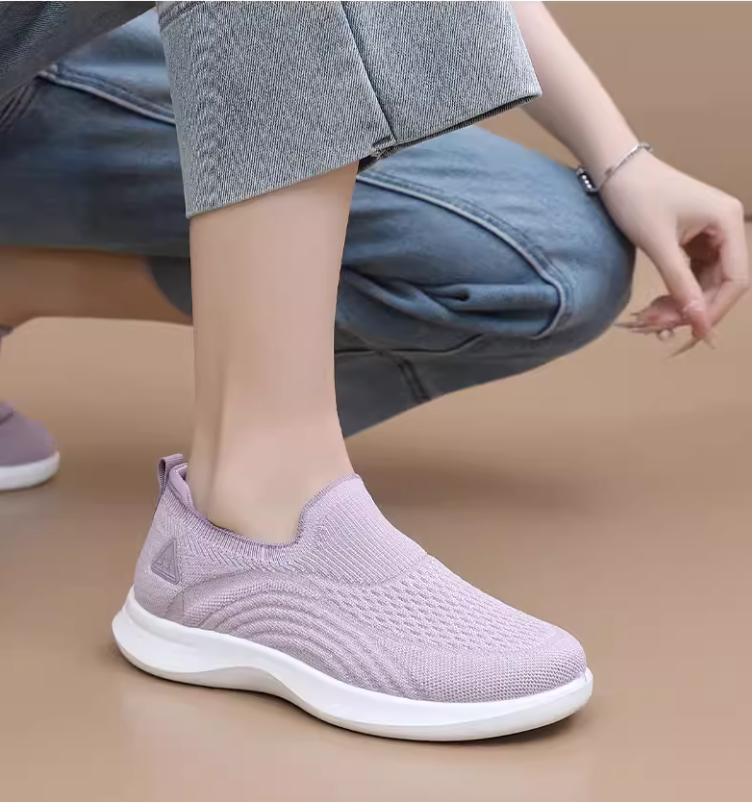
Take the shoe to daylight before you commit. Shop lighting adds roughly 300 to 500 kelvin of warmth, which pushes blue towards grey. If the shoe looks slightly duller in daylight than on the shelf, that’s normal. If it looks greener, walk away, because green-blue against most skin tones is the hardest combination in this category.
The white trim rule, and why it decides everything
A blue shoe with a bright white sole looks sporty. A blue shoe with a gum or cream sole looks softer and more expensive. Same upper, different shoe. The trim is doing more work than the colour.
Here’s the rule I’d give you. If the upper is dark, keep the sole dark or cream. If the upper is pale, a white sole is fine and often better, because a pale shoe with a dark sole looks like it’s floating. The exception is pale blue with a gum sole, which reads like a summer shoe and works with linen.
The laces follow the same logic. White laces on a navy shoe create a hard graphic line that draws the eye down to the foot. Navy or tonal laces make the shoe recede, which is what you want if you’re wearing them to work.
- Navy upper, cream sole, tonal laces: safe for work and weekends
- Mid blue upper, white sole: strictly casual, best with shorts or cropped jeans
- Pale blue upper, gum sole: summer only, and only with light trousers
Check the edge of the sole while you’re looking at trim. On a cheap pair there’s a visible line of glue, often slightly yellow. On a good pair the join is tight and the same colour as the sole. That line shows up in photographs more than any other detail.
Eyelets are the second tell. Metal eyelets in silver or brass look deliberate on navy and busy on pale blue. Painted eyelets that match the upper look clean until the paint chips, which happens at the top pair first, where the lace rubs. If the eyelets are plastic and the shoe is priced like leather, that tells you something about the rest of the construction.
Fit: where blue is less forgiving than black
Light and mid blues show creasing more than navy, and they show a stretched upper across the toe. If the fit is 3mm too small, you’ll see it as a bright crease line within a fortnight.
Go through four measurements. Length: a thumb’s width in front of the longest toe. Width: no pressure at the outside knuckle when you stand. Heel: less than 5mm of lift when unlaced. Instep: no red line across the top of the foot after five minutes.
Then do the test most people skip, which is walking on a hard floor for two full minutes. Carpet hides a sole that flexes in the wrong place. A blue shoe that bends at the arch rather than the ball will crease across the vamp and stay creased, and on a light colour that crease is permanent.
If you’re between sizes, go up rather than down for mid and pale blues, and down for navy. Navy hides half a size of extra length. Pale blue doesn’t. That isn’t a rule about quality, it’s a rule about what shows.
Socks change the number, so bring the pair you’ll actually wear. A thin cotton no-show takes up about 1mm. A wool crew sock takes 4mm to 5mm, which is most of a half size. If you plan to wear these through winter with thick socks, buy the size that fits with the socks on and accept they’ll be slightly loose in July.
Orthotics add another 4mm and move the heel position, so take them out of your current pair and into the shop. A blue shoe with a glued insole can’t take an insert without ruining the fit, and you can check that in five seconds by pressing a thumbnail under the heel.
Materials, and what blue does to each one
Mesh in mid blue looks sporty and holds its colour well. It also picks up grey dust in the weave, and dust on blue reads as dullness rather than dirt. A soft brush after every second wear keeps it looking new. Skip that for a month and the shoe looks two years old.
Nubuck and suede in blue are the prettiest version and the least practical. Blue suede goes patchy when it gets wet, and the patches dry lighter than the original colour. If you want suede, buy navy rather than mid blue, because navy patches are almost invisible.
Leather in blue is durable and slightly formal. It creases in a hard line at the flex point and polishes unevenly, which on navy is fine and on a bright blue is obvious.
Canvas is the cheapest option and the one that fades most attractively. A canvas blue shoe after one summer looks washed and softer, which is the intended look. It also has no structure, so it won’t support a foot that needs support.
My order of preference for a daily pair: mesh for summer, leather for the rest of the year, navy suede if you want something for dry weather only. Canvas only if you’re replacing them every second summer anyway.
Lining is the part nobody looks at, and it decides how the shoe feels in the third hour. A cotton lining breathes and pills. A synthetic lining is smooth and gets clammy. A leather lining costs more and is worth it if you wear the pair barefoot, and the tanning and finishing of leather is worth understanding if you want to judge it by eye rather than by price. Turn the shoe over and look inside the heel. If the lining is thin enough to see the upper through it, the pair won’t last a full summer of daily wear.
Care: keeping blue from going grey
Blue fades towards grey, not towards white. That’s the most useful thing to know about maintaining these shoes. Sunlight and washing both pull the colour towards grey, and once it’s gone you can’t bring it back with polish.
So dry them in shade, never on a radiator and never in direct sun. Wash mesh and canvas by hand in cool water with a drop of mild detergent, rinse properly, and stuff with newspaper. A machine cycle takes about 30% of the colour out in one go, and the midsole comes out looking like a wet biscuit.
For leather and nubuck, a brush and a neutral protector spray once a month is enough. Don’t use coloured polish on blue unless you’ve matched the exact shade, because a slightly wrong blue leaves a patch that catches the light.
Store them away from a window. I’ve seen a pair of mid-blue canvas shoes go two shades lighter on one side only, because that side faced a balcony door for a summer. It’s a slow change you don’t notice until a photograph shows it.
Insoles are the other thing to pull out and dry separately. They hold sweat for about three times as long as the upper, and a damp insole is where smell starts. Two sets rotated through the week solves it, and spare insoles cost less than the bottle of spray that never quite works.
If the pair does get soaked, don’t put them near heat. Stuff with newspaper, change it after two hours, and let them dry at room temperature for a full day. Leather that dries too fast hardens at the flex point, and a hardened flex point on blue leaves a crease that’s both permanent and lighter than the rest of the shoe.
Price, and where blue stops being worth it
At the bottom of the market, blue is applied as a surface coat over a grey base. You can test it. Scuff the side of the toe with a fingernail. If a pale grey line appears and doesn’t rub away, the colour is a coat, and it’ll wear through at the flex point within a season.
In the middle band the upper is dyed through and the sole is moulded rubber. That’s the band worth buying in, and it’s where most of the range sits. Above it, you’re paying for the last shape and the finishing rather than for the colour.
Cost per wear is the honest measure here. A mid-range pair at 70 worn three times a week for two years works out at about 22p a wear. A cheap pair at 30 worn for one season works out at roughly the same, and it looks worse for the whole second year of its short life. The cheap pair isn’t cheaper, it’s just paid for in smaller amounts.
Resale barely exists in this category, so don’t count on it. What does exist is the second-life value of a pair you can hand to a friend, which requires the shoe to still hold its shape after a season. That’s the practical argument for the middle band, and it’s the argument that holds up when the colour is a risk.
One trade worth naming: a pale blue pair costs the same as a navy pair and lasts about half as long in visible terms, because every mark shows. If you want one pair only, buy navy. If you want the colour to lift a summer wardrobe, buy pale blue and accept that it’s a two-season shoe.
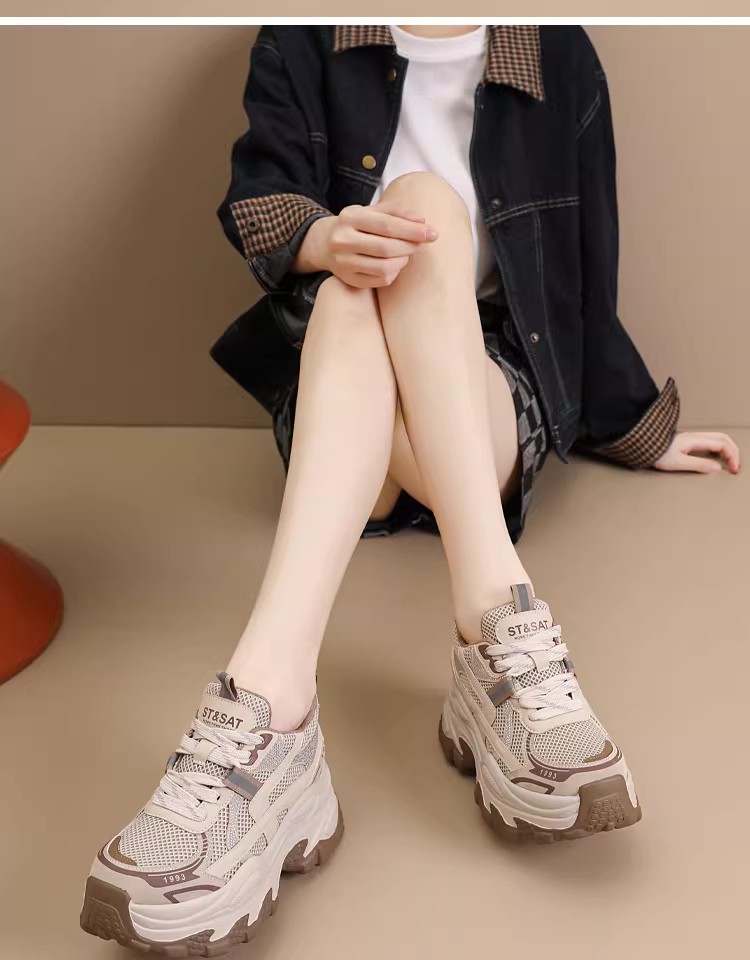
For a pair that takes the pavement miles without costing much, these thick-soled casual sports shoes with a hidden lift sit at the darker end of the range and hide scuffs better than anything pale. If you’d rather keep it flat and light, these breathable flat casual board shoes are the version I’d wear with cropped trousers. More shapes in the same palette sit in the women’s shoes collection.
Where blue casual shoes for women stop working
They stop working at a formal event, and they stop working with a black tailored outfit above the ankle, where the contrast reads as a mistake rather than a choice. They also stop working if your wardrobe is mostly warm browns, because blue and brown only agree when the brown is tan or camel.
They work almost everywhere else. Navy with grey wool, pale blue with cream linen, mid blue with white denim and a striped shirt. Two colours, one neutral, and the shoe does the rest.
The practical version: buy navy first, pale blue second, mid blue only if you already know your denim shade. Check the sole trim before you check the price, walk two minutes on hard floor, and keep them out of direct sun. That’s the whole method, and it holds whether the pair costs 40 or 140.
Three outfit formulas that work, and one that doesn’t
Navy shoe, grey trousers, white shirt. Nothing to argue with, works at any age, and the shoe looks deliberate without asking for attention. If you only try one combination, try this.
Pale blue shoe, cream linen trousers, tan belt. This is the summer version and it depends on the belt. Without a warm brown somewhere in the outfit, the pale shoe floats and the whole look reads cold.
Mid blue shoe, dark indigo jeans, striped tee. The trick is the gap between the two blues. If your jeans are dark and the shoe is mid, there’s enough separation to read as two pieces rather than a set.
The combination that fails is a mid blue shoe with light blue jeans and a pale blue shirt. Three blues in three slightly different tones is the hardest thing to pull off, and it’s the outfit the product photos usually show. Photographers get away with it because the lighting is controlled. On a Tuesday morning at a bus stop, it just looks undecided.
One more rule that saves time: match the shoe to your bottom half, not to your top. Trousers and shoes sit in the same visual zone, so a relationship between them reads as intentional. A relationship between shoe and shirt reads as an accident, because the eye has to travel past everything in between to find it.
Then wear them. A blue shoe that stays in the box because you’re waiting for the right outfit is a shoe you didn’t need.
