

Every November the same thing happens in shoe shops. Women come in looking for business casual shoes, try on something cute, walk four steps to the mirror, and buy it. Then January arrives and they’re back, asking for something with grip.
I’ve watched that cycle for years, first from behind a counter and now from the other side of it. The shoes that look right for the office in October are rarely the ones that get you there in February. You don’t need a bigger wardrobe. You need to shop for the commute and the desk separately, then check that one pair can do both.
That’s what this is about: how to find the most comfortable business casual shoes for women when the walk to the station is cold, the pavement is wet, and you still have to look like you belong in a meeting at nine.
Why winter changes the business casual maths
In summer, a business casual shoe only has to survive air conditioning and a car park. In winter it has to deal with three things at once: cold, water, and grip.
Cold matters more than people expect. A thin sole transmits the temperature of the pavement straight into your foot, and after twenty minutes of standing at a bus stop your toes go numb. That’s not a comfort preference. It changes how you walk, and how you walk changes how your knees feel by Friday.
There’s a test for it that costs nothing. Hold the shoe against the inside of your wrist for a minute in a cold shop doorway. If you can feel the cold coming through the sole, it’ll feel worse on concrete at 4°C, because concrete pulls heat out faster than any shop floor.
Water is the second problem. Most business casual uppers are leather or suede, and neither enjoys a wet commute. Leather can be treated. Suede mostly can’t, not really, and the salt stains that show up in January are almost impossible to lift out once they’ve dried in.
Salt is worth a paragraph of its own. Councils grit the pavements and stations, and that grit ends up on your shoes within a week. On smooth leather it wipes off with a damp cloth and a drop of vinegar. On suede it’s permanent. If you live somewhere that salts its roads, buy smooth leather for winter and keep the suede for dry days.
Grip is the one nobody checks in the shop. Turn the shoe over. If the sole is smooth and hard, it will be a skating rink on wet tile, and station concourses are all tile.
There’s also the small matter of how the shoe handles stairs. Most commutes include at least one set, usually wet, usually in a hurry. A 60mm heel with a narrow tip is genuinely dangerous on a wet stairwell, and that’s before anyone has run for a train. It’s the sort of thing you only think about after the first near miss.
The three-part test: pavement, platform, office
The mistake almost everyone makes is testing the shoe in the place where it will spend the least time. You’ll wear it for forty minutes outdoors and eight hours indoors. Test it in that ratio, or as close as you can get.
Part one is the pavement. Walk outside for ten minutes on a hard surface. Not carpet, not the shop floor. Watch for heel slip and listen for the “clack” that means a hard sole with no cushioning.
The platform comes next. Stand still on tile for five minutes. This is where you find out whether the sole grips or slides, and whether the arch is doing anything.
Then the office. Sit for half an hour, then stand and walk. That transition is where cheap insoles fail, because the foam has already compressed under your weight while you sat.
Do all three and you’ll eliminate about half the pairs you were considering. Annoying, but cheaper than a return in February.
Test with the bag you actually carry, too. A tote that swings against your heel changes the way you walk, and a pair that felt fine empty can start rubbing after twenty minutes with 3kg on your shoulder. It’s a small thing, and it’s caught two pairs for me.
If you can only do one, do the pavement test. It catches the worst offenders: soles with no tread, heels that wobble, and uppers that crease straight across the toe joint where your foot bends.
What shops get wrong every November
The pattern I see is that shops stock for the look of the season, not the weather of it. Window displays are full of ballet flats and pointed courts in September, and by the time the cold actually arrives, the useful pairs are sold out or pushed to the back.
There’s a commercial reason. Suede and smooth leather photograph better than rubber-soled walking shoes, and photographs sell. The trainers with the chunky tread sit on the bottom shelf until someone’s mother asks for them.
You can use that to your advantage. Ask for the pairs that came in for the autumn walking market and got marked down because they weren’t photogenic. They’ll usually have a better outsole, a wider toe, and a removable insole. Those three things are what actually make the most comfortable business casual shoes for women, and none of them show up in a product photo.
The other thing shops get wrong is sizing advice. Staff will tell you a pair “runs true” because that’s what the label says, when what they mean is it runs true for the average foot, which is narrower than most. If your foot is wide, ask whether the pair comes in a wide fit before you ask about the size.
One honest caveat: the most comfortable pair is not always the most formal. If your office is strict about dress codes, you’ll be choosing between a shoe that passes and a shoe that feels good, and you’ll need to compromise somewhere. For most business casual workplaces, a clean leather sneaker or a low block heel passes fine. The working definition of business casual is broad enough to cover trainers in most offices, and narrower in a few.
Heel height, sole thickness and cold ankles
Three numbers decide whether a pair works from November to March: heel height, sole thickness, and shaft height. Get the first two right and the third becomes a style question.
- Heel 20 to 40mm. Low enough to walk in, high enough to keep the heel off cold pavement.
- Sole 15mm or more. Anything thinner lets the ground temperature through.
- Ankle coverage. Not required, but a shoe that covers the top of your foot keeps more warmth in than a ballet flat does.
Above 60mm, the shoe stops being a commuting shoe for most people, no matter how well it’s made. You can still wear it, but you’ll be carrying a second pair in your bag by January. I’ve done that for years and it’s a fine system if you have somewhere to leave the spare pair.
Ankle coverage is the variable most people ignore. A shoe that comes up over the top of the foot holds warmth noticeably better than a ballet flat, and a bootie beats both. If your office is warm, that’s a problem, because the same coverage that keeps you warm outside makes you overheat at your desk. The compromise is a shoe with a closed toe and a low vamp, plus socks you can take off.
Platform soles deserve a mention here. A 60mm heel on a 20mm platform only tilts your foot as much as a 40mm heel would, and the extra sole thickness does the insulation job for free. The trade-off is weight, and weight matters on a long walk. I’ve worn platform pairs that felt fine for a ten-minute commute and heavy by the end of a kilometre.
Waterproofing: what actually holds
Very few business casual shoes are genuinely waterproof. The ones that are tend to look like hiking shoes, which is not the brief. What you can do is make a water-resistant pair behave better.
If the forecast is genuinely awful, rubber overshoes cost about $20 and fold flat in a bag. They look ridiculous and they work. I keep a pair in my desk drawer from December to February and I’ve never once regretted the $20.
Wax or cream on smooth leather works. Spray on suede helps for about three wears, then needs redoing. Neither will survive stepping in a puddle up to the welt, and nothing short of a rubber overshoe will.
Treat the pair twice before the season starts and once a month after that. Ten minutes with a cloth on a Sunday is the difference between a pair that lasts two winters and one that looks tired by February. It’s also the cheapest maintenance you can do on the most comfortable business casual shoes for women you already own.
What I’d avoid: any shoe with a stitched-through sole and visible thread on the bottom. Water wicks along the stitches and you get a damp sock by the time you reach your desk. A glued sole with a rubber outsole isn’t elegant, but it keeps your feet dry.
Also check the lining. A leather lining handles damp better than a synthetic one, which starts to smell after a few wet commutes. If you’re spending $80 or more, leather lining is a reasonable thing to insist on.
And look at the welt, the join between upper and sole. A stitched welt on a leather sole looks lovely and leaks in wet weather. A rubber sole bonded to the upper is uglier and drier. For a winter commuting pair, take the uglier one.
Tights, socks and the half-size rule
This is the detail that causes the most returns, and it has nothing to do with quality. A shoe that fits over a 40-denier tight will not fit the same way over a wool sock. The difference is roughly half a size, sometimes more.
If you plan to wear the pair with thick socks from December, try it on with thick socks. If you’ll wear it with tights, try it on with tights. Sounds obvious. Almost nobody in a shop does it, because it means carrying a spare pair of socks around all afternoon.
My rule: buy for the thickest thing you’ll realistically wear with that shoe, then use a thin insole to take up the slack in warmer months. It’s easier to fill space than to create it.
There’s a second-order effect too. Thick socks change where your arch sits against the insole, and a shoe that supported you in October can feel flat by December. If you notice that happening, swap the insole before you blame the shoe. A $12 insert solves it more often than a $120 replacement.
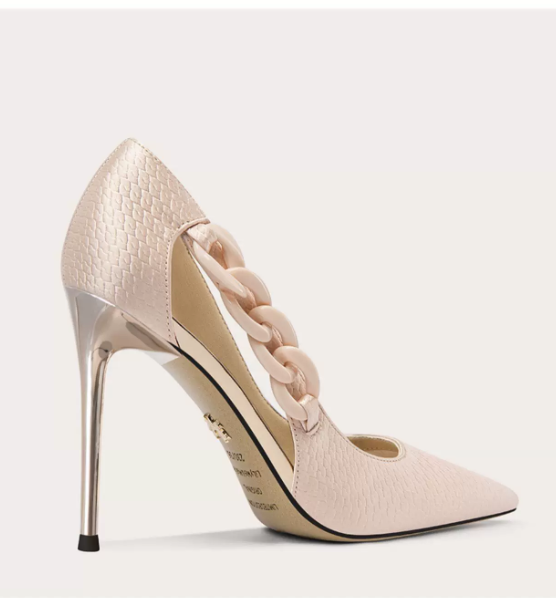
Three pairs that survived a wet commute
Over the last two winters I’ve kept three pairs in rotation, and each one earns its place for a different reason.
Office days: a block heel. A smart block heel cut for professional commuting at $130. The 40mm heel and the rubber tip are the two things that make it work outdoors. It’s not waterproof, but it dries overnight without marking.
Short trips: a white low-profile pair. A white kitten heel with a soft square toe at $78. This is the one I wear when the commute is short and mostly indoors. White in winter is a gamble, and I wouldn’t wear it in slush, but it handles dry cold fine.
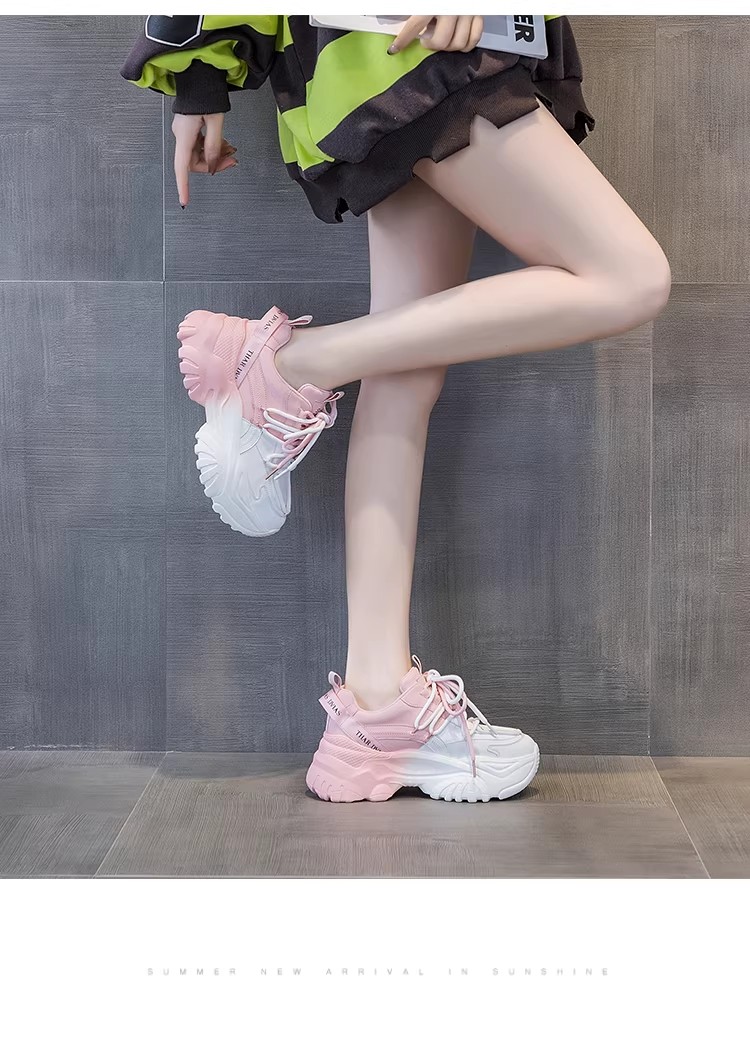
Rain: a chunky sole. A casual dad shoe with a 6cm platform sole at $67. Least formal of the three and the only one I’d trust in actual rain. The thick sole keeps cold off, and the tread grips wet tile.
If you want one pair to cover the whole winter, take the chunky sole and dress it up. If you want one pair to cover meetings, take the block heel and keep a spare in your desk drawer.
Between the three, the block heel gets the most wear, perhaps four days out of five. The dad shoe comes out when the forecast is grim. The white pair mostly lives under my desk for the walk to lunch. That distribution tells you something useful: the most comfortable business casual shoes for women are usually the boring ones you forget you’re wearing.
What I’d skip: the pointed court in soft leather with a 5mm sole. It’s the pair that sells out every September and it’s the pair that gets returned every December. It looks sharp under a suit and it has no idea what to do with a wet pavement.
What to check before you pay
- Sole flex. Bend the shoe at the ball. It should flex there and stay stiff in the middle.
- Tread. Run your thumb across the bottom. You want resistance, not a smooth slide.
- Heel tip. Rubber, not bare plastic. Plastic tips are the first thing to wear and the loudest thing on tile.
- Lining. Leather if the budget allows. Synthetic if not, but expect a shorter life.
- Toe space. 8 to 10mm in front of the longest toe, measured with the socks you’ll actually wear.
One more thing worth doing: buy in the afternoon. Feet swell over the day, and a pair bought at 10am can be tight by 5pm. A pair bought at 4pm fits at 8am the next morning with room to spare.
And if you’re shopping online, order two sizes, wear both indoors for an hour, and return the one that presses anywhere. The return postage on one pair is cheaper than a pair you never wear, which is the real cost of getting this wrong.
How to make a summer pair last through winter
You don’t have to buy new shoes every November. A few small habits stretch a pair you already own.
Rotate them. Wearing the same pair five days straight gives the insole no time to recover, and damp leather never fully dries overnight. Two pairs worn alternately last more than twice as long as one pair worn daily.
Dry them properly. Stuff with newspaper, keep them away from radiators. Heat cracks leather and shrinks the lining, which is how a comfortable pair becomes a tight one by February.
Treat the upper before the first wet week, not after. A tin of wax costs about $8 and does more for winter life than any insole you can buy. Do it on a Sunday, let it sit, buff it off.
And keep a spare pair under the desk. It’s the least glamorous advice in this piece and the one I follow most often. When the weather turns at 4pm, you’ll be glad of it.
One last thing about timing. The best month to buy winter business casual shoes is late October, before the first cold snap empties the shelves of anything with a rubber sole. If you’re reading this in January, you’ll pay full price for whatever’s left, and what’s left is usually the pairs that nobody wanted in November. That’s not always bad. Sometimes it’s a pair with a proper outsole that just wasn’t photogenic.
Either way, don’t buy four pairs in a panic. Two good pairs, rotated, will outlast five cheap ones and take up less space in the hall. The most comfortable business casual shoes for women I’ve owned were also the least interesting to look at, which is probably the whole lesson.
