

You buy them at 11 a.m. under a spotlight that makes the suede look warm and deep. You get them home, hold them by the window at 4 p.m., and they’ve gone grey. By evening, under a lamp with a warm bulb, they’re almost orange. Same shoes. Three colours. Nothing has changed except the light.
Brown suede women’s shoes are the most light-sensitive common footwear there is, and it’s also the one people buy fastest because it looks so good in the shop. So here’s the practical version: judge the colour in daylight before you pay, decide the shade by what you’ll wear it with rather than what the label calls it, and accept that suede needs ten minutes of care a month.
What “brown” is actually covering
Walk into any shop and count the browns. Half of what gets sold as brown suede women’s shoes is really four different colours with the same label. Tan, cognac, chestnut, chocolate, taupe, mushroom, tobacco. They’re all “brown” on the box, and they behave completely differently against your clothes.
Tan and camel read warm and light. They work with denim, cream, olive and rust, and they show every mark. If you wear a lot of dark denim, tan suede is the one that looks best and ages worst.
Chestnut and cognac sit in the middle. They’re the safest browns, because they read as brown under almost any light and they work with navy, grey and black. If you’re only buying one pair, this is the band to shop in.
Chocolate and espresso are the most forgiving. Marks disappear. They also disappear against dark trousers, which is the trade-off nobody mentions. A very dark brown shoe with black trousers looks like a mistake at a distance.
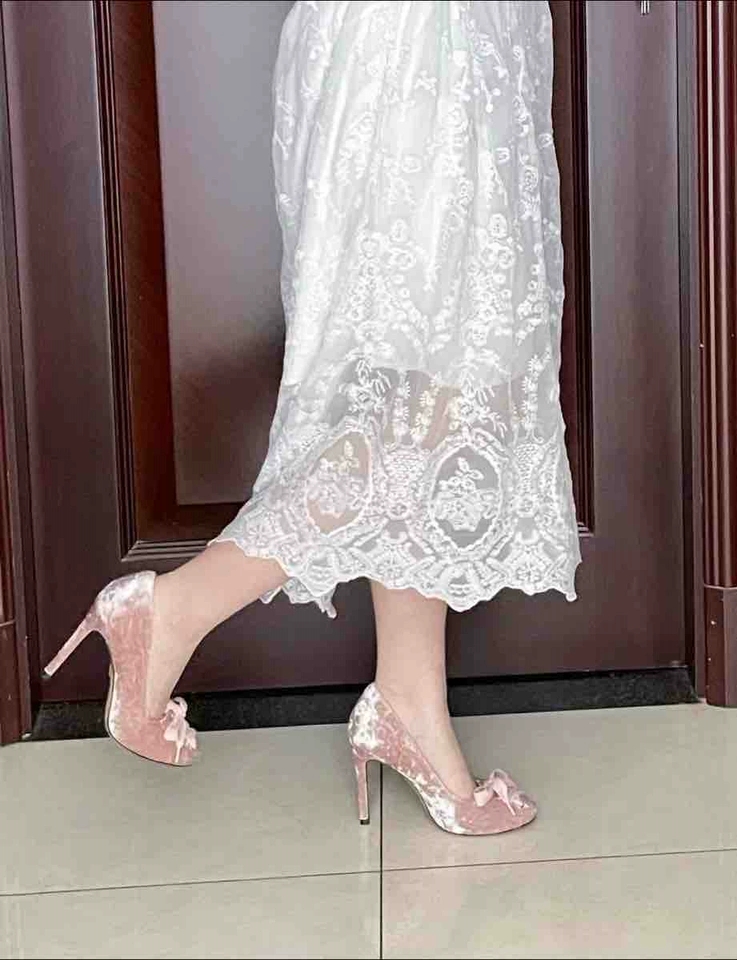
Taupe and mushroom are the tricky ones. They’re brown-adjacent, they photograph beautifully, and they can look grey or pink under fluorescent office light. If you work under tubes, try them in that light, not just by the window.
The three-light test, five minutes, no equipment
This is the whole thing, and it takes less time than trying on a second size.
- Shop light. Look at the shoe where you picked it up. Note the colour in one word.
- Daylight. Walk to the door or a window. If the shop has no window, use your phone torch at arm’s length, which is closer to daylight than a spotlight.
- Warm light. If there’s a lamp or a warm bulb anywhere in the shop, stand under it. Failing that, look at the shoe through a photo with the phone’s warm filter off.
If the colour shifts more than one step between those three, it will shift against your wardrobe too. Warm browns with a red base tend to go orange under warm bulbs. Cool browns with a grey base go ashy in daylight. Neither is wrong. You just need to know which one you’re buying.
The fastest version of this test is to hold the shoe next to something neutral, like a white shirt cuff or a paper receipt. Your eye adjusts to colour fast, and a neutral reference resets it. I’ve caught two pairs this way that were much redder than I thought.
Suede’s real trade-offs, said plainly
Suede is leather with the grain sanded, which is why it feels like velvet and why it marks. The structure of suede, which starts as tanned hide before the surface is sanded means the surface is made of loose fibres rather than a sealed skin, so water and dirt get into the fibres instead of sitting on top.
What this means in practice:
- Light rain is survivable if you let them dry away from heat. Heavy rain is not.
- Salt stains in winter are the real enemy, and they set within a day.
- Scuffs brush out. Oil does not.
- Colour transfer from dark denim is common on light tan suede, and it’s hard to remove.
The counter-argument is comfort. Suede is softer than calf leather from the first wear, with no break-in period and no stiffness at the heel. If you have sensitive skin at the back of your ankle, suede is the material that stops rubbing on day one rather than day fourteen.
That trade is worth making. You just have to decide if you’re the kind of person who’ll brush them once a week. If the answer is no, buy the leather version and save yourself the guilt.
Pairing: what brown suede does to what you already own
Brown suede women’s shoes are easier to wear than black ones once you stop treating the material as a special occasion thing.
With blue denim. This is the pairing that works best and gets overlooked. Mid-wash or dark indigo with a tan or chestnut suede shoe reads relaxed without being sloppy. Avoid raw denim for the first few wears, because the dye transfers.
With navy. Cognac and navy is the oldest combination in menswear and it works just as well the other way round. Warm brown against navy gives contrast without a clash. Very dark brown against navy is muddier, so go lighter here.
Grey is the taupe case. This is where taupe and mushroom earn their place. Grey trousers with a taupe suede shoe look deliberate. Grey with a warm orange-brown can look like two different outfits sharing a body.
Black is the hard one. Brown with black is a deliberate choice, not a neutral one. It works when the brown is dark and the black is matte. It looks accidental when the brown is light and the black is shiny.
Fit notes specific to suede
Suede stretches more than smooth leather across the width and less at the toe. That single fact changes how you should buy.
Buy snug across the middle of the foot, not tight. Snug means your foot is held without pressure on any one spot. Tight means you can feel the edge of the shoe pressing somewhere, and in suede that pressure line will still be there in three months, just slightly softer.
Never buy suede a size down hoping it’ll give. It will give about half a size in width and essentially nothing in length. If your toe touches the front in the shop, it will touch the front forever, and the toe box is the one part that doesn’t relax because it’s reinforced.
The heel is the other spot to check. Suede linings grip, which reduces slip, so a suede shoe can feel tighter at the heel than the same size in leather. Give it a week before you decide it’s wrong. If it’s still slipping after a week, a suede heel grip costs about £4 and fixes it.
One more thing for anyone buying online. Suede photographs darker and richer than it looks in real life, because the fibres catch light. Whatever you see on a screen, expect it to be one shade lighter and slightly less saturated when it arrives. The retro suede heel with the rounded toe is a good example: beautiful in the photo, and noticeably softer in daylight.
Where brown suede works, and where it doesn’t
Most people file brown suede women’s shoes under daytime only, and that’s a shame, which is a shame because it handles an evening better than people expect. The limit isn’t the colour, it’s the wear.
Where it works: office days with a 5cm or lower heel, lunches, gallery afternoons, autumn weddings where you’re a guest rather than the bride, and any job where you’re standing but not running. It also works well for travel, because a chestnut pair with a soft sole packs flat and goes with everything you’d take for four days.
Where it doesn’t: anywhere wet, anywhere salty, and anywhere with a polished concrete floor and no mat. Suede on wet polished concrete is a slip hazard, and no amount of grip spray fixes that properly. If your commute involves a 15-minute walk in a city that rains sideways, don’t make suede your main pair.
One more limit worth stating. Brown suede with a very light outfit can look heavy. Cream linen and a tan suede shoe is a nice combination on paper and can read as an accidental mismatch in real light, because the tan goes warm and the cream stays neutral. If you wear a lot of cream, buy the shoe a shade darker than you think you want.
The practical answer for most people is two pairs of suede shoes over a decade rather than one pair every other year. The colour holds better than the shape, and the shape is what dates.
What £60 buys, and what £160 buys
There’s a visible difference between cheap suede and good suede, and it shows up in three places: the nap, the lining, and the heel.
Cheap suede has a short, flat nap that goes shiny in the spots where your foot flexes. Good suede has a longer nap that recovers when you brush it. Run your finger across the surface in the shop. If the mark stays and won’t brush back with your thumb, the material is thin.
The lining is the part nobody checks. Leather lining breathes and moulds to your foot. Synthetic lining makes your foot sweat, and on suede the moisture shows through from the inside as a dark patch that doesn’t brush out. If you can only check one thing, check the lining.
The heel is the third signal. A cheap suede shoe usually has a plastic heel with a thin toplift. That toplift wears through in about four months of daily wear, and then the heel itself starts to go. A £160 pair has a stacked or leather heel with a replaceable tip, which is why a cobbler can keep it alive for years.
My honest read: spend between £80 and £150. Below that, the material is thin enough that the first wet day ends the shoe’s life. Above that, you’re paying for a name on the insole.
Buying online without getting the colour wrong
Almost every complaint about brown suede comes down to the same thing: it arrived a different shade. Screens are warm, studio lighting is warm, and suede picks up both. There are four ways to reduce that risk without much effort.
- Look for a photo taken in daylight. Not a white-background studio shot. A shot with a shadow in it usually means real light.
- Check the product name for a shade word. “Cognac”, “chestnut” and “chocolate” tell you more than “brown” ever will.
- Ask the shop for a daylight photo. A decent shop will send one. If they won’t, that tells you something too.
- Buy from somewhere with free returns, and decide in daylight. Open the box by a window, not under a bulb.
The one thing not to do is judge the colour from a screenshot on your phone at night. Every screen is warm at night because of the blue-light filter, and a warm filter turns chestnut into orange in about four seconds.
Fit is the other online risk. Suede doesn’t stretch in length, so measure your foot rather than trusting the size on your old pair. Stand on a sheet of paper, mark the longest toe and the back of the heel, and measure in centimetres. Compare that to the brand’s own chart, not to a generic one, because a 38 from one maker is a 39 from another.
If you’re between sizes, go with the larger one for suede. It’s the only material where sizing up is almost always right, because a snug suede shoe doesn’t improve with age the way a snug leather one does. And if the pair arrives and the toe touches, send them back the same day. Don’t convince yourself they’ll give.
Ten minutes a month keeps them alive
You don’t need a kit with fourteen bottles. You need three things: a suede brush, a protector spray, and a cloth.
Brush when dry, always in one direction, and only when the nap looks flattened. Spray protector once a month in the first year, then every two months after that. Blot water with a cloth and let them dry at room temperature, stuffed with paper, away from radiators. That’s it.
What to skip: washing machines, soap and water, and anything labelled “leather cleaner” unless it says suede on the bottle. Soap strips the oils and leaves a patch that never quite matches again.
Salt stains need a mix of water and white vinegar, applied sparingly, then brushed out once dry. It works about 70% of the time. The other 30%, you live with it.
Store them with the shape held. Paper stuffed into the toe stops the vamp collapsing, and a shoe tree does the same job with less faff. Never store suede in a plastic bag, because it traps moisture and the nap goes flat in a way that brushing can’t fix. A cotton dust bag is fine, a cardboard box is fine, a sealed plastic tub is not.
I’ve had one pair of chestnut suede shoes for four years. They’ve been caught in rain twice, brushed maybe thirty times, and sprayed about a dozen. They look worn in a way I like. The pair I didn’t look after lasted eleven months.
What I’d buy, and the pair I’d leave on the shelf
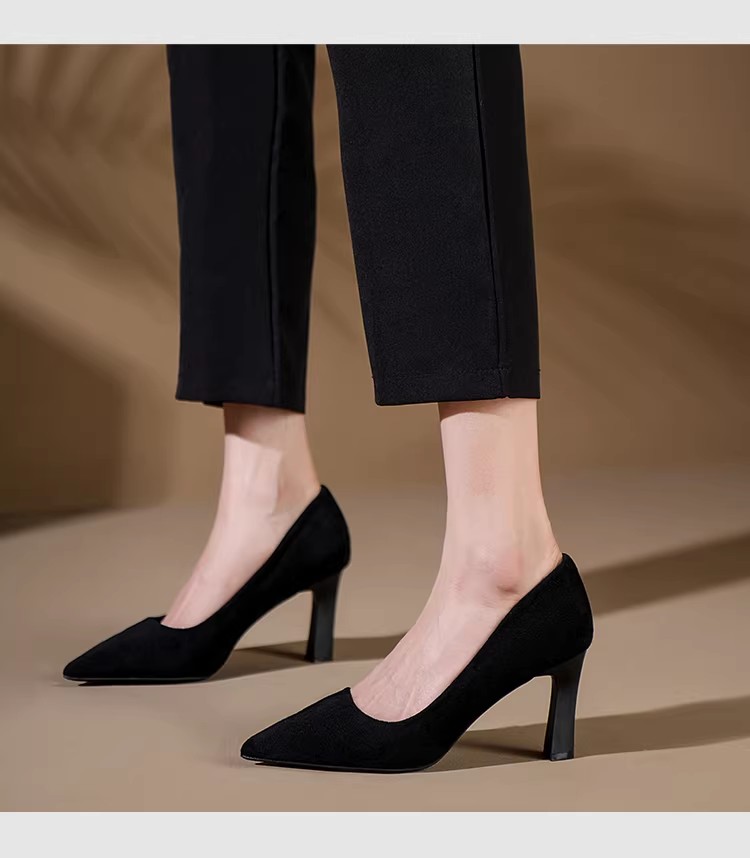
If you want one pair of brown suede women’s shoes that works with most of a wardrobe, buy chestnut or cognac, with a 5cm to 7cm heel or a flat. That combination handles denim, navy and grey, and it’s the one that survives bad lighting. The soft-soled suede commuter shoe comes in brown as well as black, and the padded insole is the reason it works for a long day rather than just an evening.
The pair I’d leave: pale tan suede in a light colour with a thin sole and no heel structure. It’s the one that photographs best and lives shortest, especially if you wear dark jeans. Also skip anything in suede with a very pointed toe unless you know your forefoot is narrow, because the toe won’t stretch and the pressure point is exactly where you don’t want it.
And if you’re worried about stains before you’ve even bought them, the honest answer is that suede isn’t for you. There’s a piece on the stains nobody warns you about on light shoes that covers the same ground for sneakers, and the logic transfers.
If you’re packing for a trip and only taking one pair, the notes on four days with one carry-on are a useful counterweight to everything above.
Browse the full women’s shoe collection if you want to compare shades side by side, but do it in daylight with the brightness on your screen turned down. That’s as close as you’ll get to the three-light test without leaving the house.
Then take one photo of the shoes by a window before you wear them out. Six months later, when you’re wondering whether they’ve faded or you’ve just got used to them, that photo settles it.
