

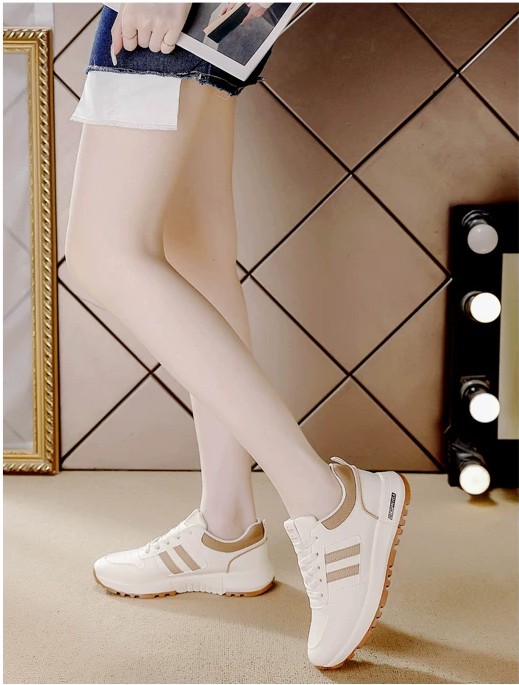
You’ve found a pair of beige sneakers for women that looks warm and expensive in the product photo, and you’re about to spend money on a colour that ages faster than any other neutral in your wardrobe. Before you do, there are four things worth checking, and the first one has nothing to do with the shoe.
Beige is the hardest neutral to buy in footwear, because it has no margin for error. Black hides scuffs. White looks deliberate when it gets grubby. Beige just looks tired. The difference between a pair that still looks good in month six and one that looks like a garden shoe in week three is mostly decided before you leave the shop.
Here’s the order to check things in, and the honest list of when beige is the wrong choice no matter how good the pair is.
The stain list, in order of how badly it ends the shoe
Not all marks are equal on a light neutral. These are the four you’ll actually meet, ranked by how much damage they do.
- Rain spots on suede. The worst. One shower leaves a ring of darker dots that water alone won’t lift, and cleaning them often spreads them. Suede beige is a commitment, not a shoe.
- Denim transfer. Indigo rubs off raw and dark denim onto the collar and the side of the shoe, and on a beige upper it reads as a blue-grey smear along the seam. It sets in after two or three wears and needs a suede brush or a leather cleaner to shift.
- Coffee and wine. One splash on the vamp, and on a woven textile it wicks along the fibres. Leather gives you about thirty seconds to blot it. Mesh gives you none.
- Grey scuffing on the midsole. The most common and the least serious. Escalators, kerbs, and car pedals put a grey film on a pale rubber midsole, and a melamine sponge takes it off in about a minute.
One stain that doesn’t appear on most lists is sun fade. A beige upper left on a windowsill or worn on a long drive will lighten unevenly, and on a pale shoe the difference between the top of the toe box and the side panel becomes obvious after two summers. Store them away from direct light and you won’t see it.
There’s a reason the midsole takes so much abuse. It sits at the exact height of kerbs, stair nosings, and the metal strip at the bottom of a car door, and it’s the part of the shoe that meets every one of them. Cleaning the midsole is the cheapest maintenance you can do on any pale sneaker, and it takes less time than finding a parking space.
The pattern is worth noticing. The upper material decides how bad each of these is, and the midsole decides how often you’ll be cleaning. A pair with a pale leather upper and a gum midsole will look better after a month than a pair with a pale mesh upper and a white midsole, even if the second pair cost twice as much.
If you’re buying beige for a season and you accept that it’s a seasonal shoe, none of this matters much. If you want three years out of it, the stain list is the whole decision.
Pick the right end of the beige range
Beige runs from a cool, almost grey stone to a warm, almost tan sand. The two ends behave differently against skin, against denim, and against dirt.
Cool stone beige. Grey undertone, low saturation. Looks modern, photographs well, and hides grey scuffs because the shoe and the dirt are the same family of colour. The risk is that it reads grey next to warm cream clothing and looks like a mismatched pair of neutrals.
Warm sand beige. Yellow or peach undertone. Flattering against most skin tones, especially in summer light, and it pairs easily with denim and white. The problem is that it shows orange-toned stains, including coffee and some fake tan, much more than cool beige does.
Greige and taupe. The middle, with a little brown in it. This is the most forgiving option and the easiest to wear across seasons. If you want one pair and you can’t decide, buy here.
Oat and cream. Almost white with warmth. Beautiful in photographs and a full-time job to keep clean. Treat these as a white shoe with better manners, not as a beige one.
Wear also changes beige in a way it doesn’t change black. A light neutral develops a patina: the collar darkens where it rubs, the toe softens, and the creases take on a slightly deeper tone. On leather that looks good after a year. On synthetic it looks like dirt. That’s the single biggest argument for spending more on the material and less on the design.
There’s a practical test for undertone. Put the shoe on a plain white sheet of paper by a window. A cool beige will look grey next to the paper. A warm beige will look yellow. A neutral will look like a slightly darker version of the paper. Whichever one you pick, check it next to the trousers or skirt you plan to wear, because beige against beige is where most outfits go wrong.
Upper material: the decision that actually matters
This is where I’d spend the money. The colour you can live with. The material determines whether you can live with the colour.
Smooth leather. The best option for beige. It wipes clean, holds its shape, and takes a cream polish that restores the colour after scuffs. It creases in a predictable place, and on a light shoe a soft crease looks like wear rather than damage. Expect to treat it twice a season.
Nubuck and suede. Beautiful, soft, and the worst choice for a beige shoe you plan to wear often. Nubuck has a shorter nap than suede and takes a brush better, but both materials stain permanently with water. Suede as a material is essentially leather with the grain sanded, which is why it absorbs everything. If you buy beige suede, buy it for a specific outfit and a specific season.
Woven textile and mesh. Light and breathable, and the fastest to show dirt. A woven beige upper collects dust in the weave and needs a soft brush weekly. It also stretches, so a beige mesh pair that fits perfectly in May will feel loose by August. A brown and white leather-look pair holds its shape far better over a summer than any mesh equivalent, at the cost of being warmer.
PU and synthetic. The cheapest and the least repairable. It doesn’t absorb stains so much as trap them under the surface layer, and when it cracks, the crack shows white or grey. On a beige shoe, a crack is very visible. If the price is under $50 and the material is described as synthetic, plan for one season.
The tongue is worth a look too. A padded tongue on a pale shoe holds sweat and goes yellow at the edges, and the yellow doesn’t wash out. A thinner, unlined tongue stays clean longer but presses on the instep. If you have a high instep, pick padding and accept the discolouration. If you don’t, pick the thinner tongue.
One more material note: lining. A light beige upper with a dark lining will show a dark rim at the collar as the shoe wears in. Check the collar edge in the shop. A tonal lining looks cleaner for longer.
Fit checks for a light-coloured shoe
A pale shoe shows every fit problem. A crease that would be invisible on black reads as a fold line on beige, and a foot spilling over the sole edge looks like a mistake rather than a snug fit. So the fit checks matter more here, and there are four.
Toe room. About 10mm past your longest toe when you’re standing. Less than that and the toe box creases sharply on every step, and on a light upper that crease is permanent within a fortnight.
Width at the ball. Look down. Your foot should sit inside the sole. If the upper bulges over the edge, size up or choose a wider last. A beige shoe with an overhang looks a full size too small.
Heel counter. Press the back of the shoe with your thumb. It should resist. A soft counter lets the heel slide, and a sliding heel rubs the collar, and a rubbed collar on a light shoe goes dark within weeks.
Collar height. Low collars free the ankle but show more of the sock. High collars hold the foot but rub the Achilles for the first three wears. Neither is wrong, but if you wear cropped trousers, the collar is the part of the shoe people actually see.
Lacing is the adjustment most people never make. A beige sneaker laced to the top eyelet pulls the quarters together and narrows the fit across the instep, which on a light shoe shows as a bulge at the side. Skip the top eyelet and the fit opens up by a few millimetres without the shoe looking loose. It also stops the lace ends from darkening the top of the tongue.
Try them at the end of the day, with the socks you’ll really wear. Feet swell by around half a size over a working day, and a beige sneaker that fits at 9am will press at 6pm.

What beige does to an outfit, and what it can’t do
Beige sneakers are not a neutral in the way a white pair is. They sit in a specific register: warm, relaxed, slightly retro. That’s useful in some wardrobes and useless in others.
What works. Denim in every wash, especially mid-blue and grey. Olive and khaki. White and cream, if the beige is warm. Navy, which is the safest pairing of all because the contrast flatters the shoe. Linen in summer, wool in winter.
What fights. Black, especially a black suit or black leather jacket. The contrast is too harsh and the shoe looks like an afterthought. Bright primary colours, which make beige look muddy. Very pale pastels, which make beige look dirty by comparison.
The trouser length matters as much as the colour. A cropped wide-leg trouser that ends above the ankle puts the whole shoe on display, which is fine if the shoe is clean and less fine if the midsole is grey. A full-length trouser covers the top of the shoe and leaves only the toe visible, which is the most forgiving way to wear a light sneaker.
Socks decide whether the outfit reads intentional. A hidden liner sock keeps the ankle clean and works with cropped trousers. A visible cream or oatmeal sock with a beige shoe is a deliberate styling choice, and it only works if the sock is lighter than the shoe. A darker sock under a light shoe cuts the leg at the ankle and makes the whole outfit look shorter.
If you want a reference point for how a pale pair shifts an outfit, the cream sneaker sizing notes cover the same problem in a lighter shade, including how the shoe changes the apparent length of the leg.
Cleaning routine that keeps beige wearable
Two things make the routine easier. Keep a cloth and a small brush by the door, so the wipe happens before the shoes go in the cupboard rather than a week later. And buy the polish when you buy the shoes. A tin lasts years, costs less than a coffee, and the only reason people don’t use it is that they never got round to buying it.
Ten minutes a week is the difference between a beige shoe that lasts two summers and one that lasts two months. This is the routine, in order.
After every wear. Wipe the midsole with a damp cloth. Grey scuffing takes ten seconds to remove while it’s fresh and about five minutes once it’s set.
Weekly. Brush the upper with a soft shoe brush, dry. Dust sits in the weave and on the surface, and a light brush keeps the colour even.
Monthly. Clean leather with a saddle soap or a dedicated leather cleaner, then condition. A neutral cream polish restores the colour after scuffs and adds a layer that makes the next stain easier to remove. Leather care is mostly about keeping the material supple, because dry leather cracks at the flex point and a crack on beige can’t be hidden.
Never. Washing machine, tumble dryer, or a hot radiator. Heat breaks down the adhesive at the toe and shrinks the lining, and a beige shoe that shrinks is a beige shoe you can’t wear.
Drying matters as much as cleaning. Never leave a damp beige shoe in a cupboard, because the lining grows mildew and the mildew stains through to the upper. Stuff the toes with newspaper, leave the pair in a dry room with airflow, and give them a full day. If the midsole is still damp at the seam, the shoe will crease differently on the next wear.
For suede, add a protective spray before the first wear and reapply monthly, and keep a suede eraser for marks. Even with all that, expect water stains. That’s the material, not the care.
When to skip beige entirely
Beige sneakers for women solve a specific problem and create a specific set of others. Three cases where I’d walk away.
If you commute by bike or on foot in bad weather. A light neutral upper plus road spray equals permanent grey speckling. Buy a darker pair and keep beige for dry days.
If you want one pair for everything. Beige won’t work with black tailoring, it won’t work in rain, and it won’t look right at a formal event. It’s a second or third pair, not a first.
Hard wear habits. If you kick them off under a desk, walk through kerbs, and never clean anything, buy black or grey. Beige will show every one of those habits and you’ll resent the shoe rather than the habit.
There’s also a fit case. If you have a wide forefoot or a high instep, a beige upper will show the strain at the widest point more than a dark one, because the material stretches and lightens as it does. Look for a round toe and a soft edge over the joint, and try before you buy.
The pair I’d actually recommend for most people is a smooth leather or leather-look beige with a gum or grey midsole, in a size that leaves a thumb’s width at the toe, bought with a tin of neutral cream polish in the same order. That combination handles the stain list, survives a summer, and still looks deliberate in September.
Before you pay, do the paper test by a window and the thumb test on the heel counter. Two minutes, and it tells you more than the reviews will. The sneaker category is the place to compare the beige shades side by side, and comparing a cool beige with a warm one in the same photograph is the fastest way to see which one belongs in your wardrobe.
