

Last February a woman came back to the shop where I work holding one shoe in each hand, and asked whether we had sold her a mismatched pair. We hadn’t. She had bought a cobalt blue sneaker at seven in the evening under warm shop light, then worn it to a north-facing office the next morning and spent the whole commute convinced the left shoe was a different colour from the right. It wasn’t. The light had changed, and her eyes had not been given a chance to catch up.
In this trade you see the same thing every season, and it’s rarely about money. People don’t regret a blue sneaker because it cost too much. They regret it because the blue they carried home in their head was never the blue in the box. So before you pay, do one thing: take the shoe to a window and look at it against real daylight, not the ceiling. That single move settles more returns than any size chart.
Shop light lies, and it lies hardest about blue
Retail lighting is built to make product look warm and expensive. Warm light pushes reds and yellows up and pulls blue down, which is why a navy sneaker on a shelf reads deeper and richer than it will in your hallway at 8am. Then you walk outside, the colour temperature jumps from around 3000K to 5500K or higher on an overcast day, and the same shoe shifts toward grey.
Your eyes do part of the damage too. Chromatic adaptation means your brain keeps adjusting its white balance for a minute or two after you leave a room, so your first impression outdoors is not reliable either. Give it three minutes before you judge.
Here’s what I tell people at the counter: if the blue only works under the shop’s light, it doesn’t work. You don’t live under the shop’s light. You live under a bus shelter in November.
The practical version is dull but effective. Walk to the door, hold the shoe at chest height, and look at it three ways. Once facing the window, once with the window behind you, once at a shallow angle so the surface catches a reflection. Same shoe, three different blues. Whichever one you like least is the one you’ll be wearing most often, because most of your day is not flattering light.
Time of day matters more than people expect. A west-facing shop in the late afternoon is doing something completely different from the same shop at ten in the morning, and if you buy at sunset you’re effectively buying a shoe you’ve never seen. Shop for colour in the morning if you can. Your commute happens in the morning.
There’s a cheaper version of the test, too. Take a photo of the shoe with your phone, outdoors, with no filter, and then look at it on a screen you trust. Phones exaggerate saturation, but they’re consistent, and consistency is what you want when you’re comparing three pairs on the same afternoon.
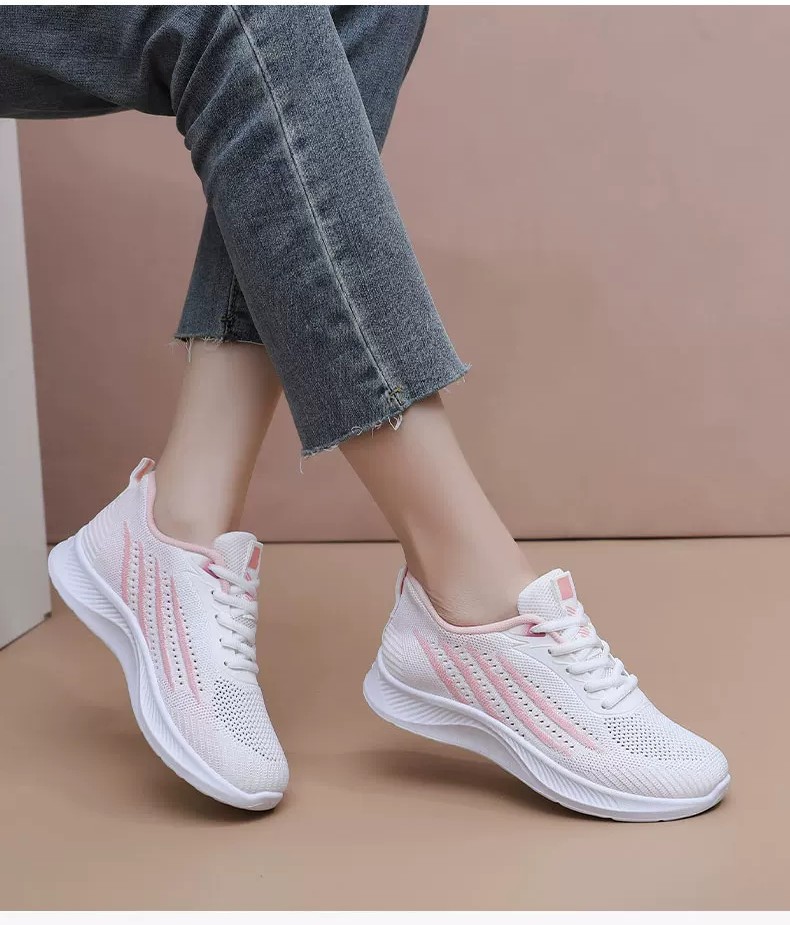
Three blues that hold up outside, and the one that doesn’t
Not every blue fails the window test. Three families come out of it well, for reasons that have nothing to do with branding.
- Navy and dark indigo. Deep enough that a shift toward grey still reads as blue. This is the forgiving one, and it’s why navy survives a decade of trend cycles.
- Dusty or steel blue. Already desaturated, so there’s little saturation left to lose. On a grey pavement it looks deliberate rather than washed out.
- Cobalt with a matte finish. Bright, but the matte surface refuses to throw highlights that read white and break the colour up.
The one that fails is that saturated electric blue in a glossy or patent-like finish. Indoors it’s the most exciting shoe on the shelf. Outdoors, at an angle, it turns into a series of white streaks with blue showing through the gaps. You’ll notice it in every photo and in no mirror.
If you want the brighter end of the range without the streak problem, look at how the material handles reflection rather than how the colour looks on the box. A suede or nubuck in cobalt keeps its depth because the nap eats the light instead of bouncing it. A smooth coated upper in the same dye behaves like a curved mirror.
Fast way to sort the three groups on a shelf:
- Look at the sole. A white sole makes any blue look brighter and, unfortunately, cheaper as it yellows.
- Look at the trim. Blue plus tan leather ages gracefully. Blue plus silver hardware ages like a gym membership.
- Look at the collar. A padded collar in the same blue hides scuffs. A white collar shows every one.
None of that is about taste. It’s about which combination still looks intentional after a year of real pavement, which is a different question from which one looks best on day one.
One more thing worth knowing: blue dyes are among the least stable in ordinary daylight, which is not new information. Indigo has been documented as a dye that fades and crocks since long before anyone was putting it on sneakers, and the chemistry hasn’t changed much. The history of indigo dyeing is essentially a long record of people trying to stop blue from migrating onto everything it touches.
What the label claims about the dye, and what your hand says
Labels tell you almost nothing useful about colourfastness. “Dyed” is not a standard. “Garment dyed” suggests the whole shoe went into the bath after construction, which usually means a softer, more mottled colour and more chance of transfer at the collar. “Solution dyed” applies mostly to synthetic yarns, where pigment goes into the fibre before it’s spun, and that is genuinely more stable.
Your hand knows more than the label does. Rub the upper with a dry white tissue for ten seconds, firmly, in one spot. If the tissue picks up blue, that’s dye sitting on the surface rather than locked into it, and it will find your socks, your ankles, and the pale trousers you like best.
Then press your thumbnail into the material and release. A good upper springs back with only a faint mark. A heavily coated one shows a pale crease that stays. That crease is where the coating has separated from the base, and it’s the first place a blue sneaker starts looking tired.
None of this is a laboratory test. It’s five seconds of pressure and a tissue, and it catches maybe 70 per cent of the pairs that end up coming back. Fair enough if you feel awkward doing it in a shop. Do it at home within the return window instead, on a day when you haven’t worn them outside.
One more label habit worth dropping: don’t trust a colour name. “Ocean” and “midnight” and “denim” mean whatever the brand decided they mean this season. Two pairs of “denim blue” from two labels can be six shades apart. Look at the shoe, not the word.
And check the sole edge where the dye meets the rubber. If blue has bled onto a white midsole in the box, it’s been sitting somewhere warm and damp, and it’ll keep bleeding. That’s a genuinely useful thing to spot, because it tells you about storage as well as chemistry.
The sock test that predicts a grey ankle in August
Here’s the failure mode nobody warns you about: a blue sneaker that looks fine for six weeks and then starts leaving a soft blue shadow on the top of your foot where the tongue rubs. It happens with dark linings, with unlined suede, and with cheap mesh that has been dyed after weaving.
Test it before you commit. Wear a white ankle sock, walk for twenty minutes indoors, then look at the sock where it meets the collar. Any blue transfer at all means the lining is going to keep doing that, and it’ll be worse in heat when your feet sweat.
If you’ve already bought them and the transfer has started, you’re not stuck. A spray-on protector applied to the inside of the collar, two thin coats, dried overnight, slows it down considerably. It won’t stop it. Nothing stops it completely on an unlined dyed suede.
This is also the reason I steer people away from very pale blue linings in a dark shoe. The contrast is what makes the transfer visible. A blue shoe with a blue or grey lining hides its own sins for years.
If your feet run hot, plan for it. The lining on a synthetic mesh shoe gets damp within an hour in summer, and damp plus dye plus friction is the exact recipe for transfer. A leather lining behaves better because it doesn’t hold moisture the same way, but it also makes the shoe heavier and warmer, so you’re trading one problem for another.
For anyone who wears these without socks, which is most people in July, the answer is a thin no-show liner and a shoe with a smooth, tightly finished collar. Not glamorous. Works.
Mesh, leather, suede: how each ages in blue
Material decides the ageing curve, and blue makes the differences obvious.
Mesh is the most colour-unstable. The weave scatters light, so the same panel can look bright from one angle and dusty from another. It also holds dirt in the gaps, and dirt on blue reads as grey. Expect a visible shift after four to six months of regular wear, sooner if you live somewhere with wet winters.
Smooth leather holds its colour well and cleans up easily, but it creases across the toe box, and a crease in dark blue catches light and turns pale. That’s not a defect. It’s just what a crease does. Still, if you’re picky about the toe box looking uniform, leather will annoy you before mesh does.
Suede and nubuck are the most forgiving in colour and the least forgiving in weather. The nap hides scuffs and creases beautifully. One wet walk, though, and you get water marks that dry into a slightly different shade, and no brush fully removes them.
For a pair you’ll actually wear rather than admire, mesh with a leather toe bumper is the practical compromise. The bumper takes the scuffs, the mesh keeps the weight down. If you want to see what that looks like in practice, our soft-soled women’s mesh sports sneakers are the version I point people toward when they say they want something light they won’t baby.
Cleaning decides more of the ageing curve than material does, and blue is unforgiving about it. Wash a mesh upper with a coloured cloth and you’ll transfer lint into the weave. Use a brush that’s too stiff and you’ll fuzz the surface, which then catches light differently from the rest of the panel and reads as a pale patch.
The routine that actually works is boring: cold water, a soft brush, a tiny amount of pH-neutral soap, blot rather than scrub, dry away from direct heat. Never radiators. Heat sets creases and can shift dye, and a blue shoe dried on a radiator has a particular dulled look that never comes back.
Suede needs the opposite approach. Brush dry, brush one direction, then protect before the first wear rather than after the first mark. Retroactive protection on a stained nubuck traps the stain under the coating, which is worse than leaving it alone.
Photographs, video calls, and the blue that reads black on camera
Cameras compress colour, and blue is one of the first casualties. A dense navy often lands as black in a phone photo taken indoors, which matters more than it used to now that half of us see our outfits through a screen before we see them in a mirror.
If you want a blue sneaker that still looks blue in a photo, go one step lighter than you think you want. The shade that looks correct to your eye in a dim room will photograph nearly black. The shade that looks slightly too light in the shop is usually the one that reads right on camera.
White balance does the rest. Phone cameras auto-correct skin tones and will happily drag a cool blue toward neutral to do it. Shoot a photo next to something you know is white, and you’ll see immediately whether your blue is holding or drifting.
This is also why the primary colour on your outfit matters. A cream knit next to a cobalt sneaker makes the blue look stronger. The same sneaker next to a white shirt looks softer and greyer. You’re not choosing a colour in isolation, you’re choosing a relationship between two things.
Two quick rules I’ve watched hold up across a lot of outfits. Pair a mid blue sneaker with navy trousers and it reads as one column, which makes you look taller. Pair it with black and it reads as a deliberate accent, which is more interesting but harder to repeat three days running.
If your trousers are cropped and your ankles are on show, the shoe is doing more work than usual, because there’s nothing between it and your skin to break the colour up. That’s when a slightly softer blue pays off. Bright cobalt with cropped black trousers and bare ankles looks like a costume. Steel blue in the same outfit looks like a decision.
The blues we send back most, and who should buy them anyway
The highest return rate in this category is not a bad shoe. It’s a good shoe in the wrong blue for the person’s wardrobe. Three patterns come up again and again.
Bright cobalt with a white sole goes back when people realise their wardrobe is mostly black and grey, and the shoe now looks like it belongs to someone else. If that’s your closet, buy the navy version and stop fighting it.
Pale powder blue goes back when it picks up denim dye from cropped jeans within a fortnight. Light blue and indigo denim are a bad pair, physically, not just visually.
Two-tone blue with a contrasting stripe goes back when the second colour is white, because white trim on a sneaker yellows at the edges as it ages, and a yellowed edge next to blue looks dirty even when it’s clean.
There is one group who should ignore all of this: people who already own a blue shoe and know exactly how it ages on them. If you’ve worn a navy pair to death, you’ve already run the experiment. Buy the same family again and stop reading.
There’s also a size trap specific to blue, oddly enough. Pale and mid blues make a shoe look wider than it is, because light surfaces read bigger. If you’re between sizes, or you have a wide forefoot, a pale blue pair will feel more generous than the same last in navy, and you may size down when you shouldn’t. Judge fit with your foot, not your eye.
And if you’re buying online, ask for a photo in daylight before you pay. Any decent shop can take one. A shop that won’t is telling you something about the colour.
For everyone else, the decision is simpler than the shelf suggests. Pick the blue that still looks like blue when you hold it at the door of the shop, rub the upper with a tissue, walk twenty minutes in a white sock, and buy the pair that survives all three. Skip the ones that only look good under the ceiling. They’ll look great in the shop and forgettable on your feet, and you’ll be the one carrying two shoes back a week later.
If you’re still narrowing it down, the women’s blue sneaker range is sorted by shade, and our 2026 sports and leisure sneakers come in the kind of white and brown neutrals that let a blue pair do the work. Worth reading next: which blues read cheap and which don’t, and if you’re pairing blue with a second colour, the two-colour buying rule. For the science of why blue shifts so much under different light, Britannica’s entry on blue is a decent five-minute read.
