

A pair of dark grey sneakers is the least dramatic thing a person can put on, which is exactly why it gets worn more than anything else in the cupboard. Navy reads formal, black reads deliberate, white reads like an outfit decision. Grey sits in the middle and asks nothing of the rest of the clothes, and that quality is worth more than any single styling trick.
The limit shows up quickly, though. The same grey pair worn three days running starts to look like the same outfit three times, and the wearer usually blames the shoes. Most of the time it’s not the shoes. It’s that nothing around them changed, so the eye has nothing to hold onto except repetition.
Four swaps fix that, and only one of them involves buying anything. The rest are things already in the wardrobe, moved from one outfit to another. The shoe stays grey and stays on.
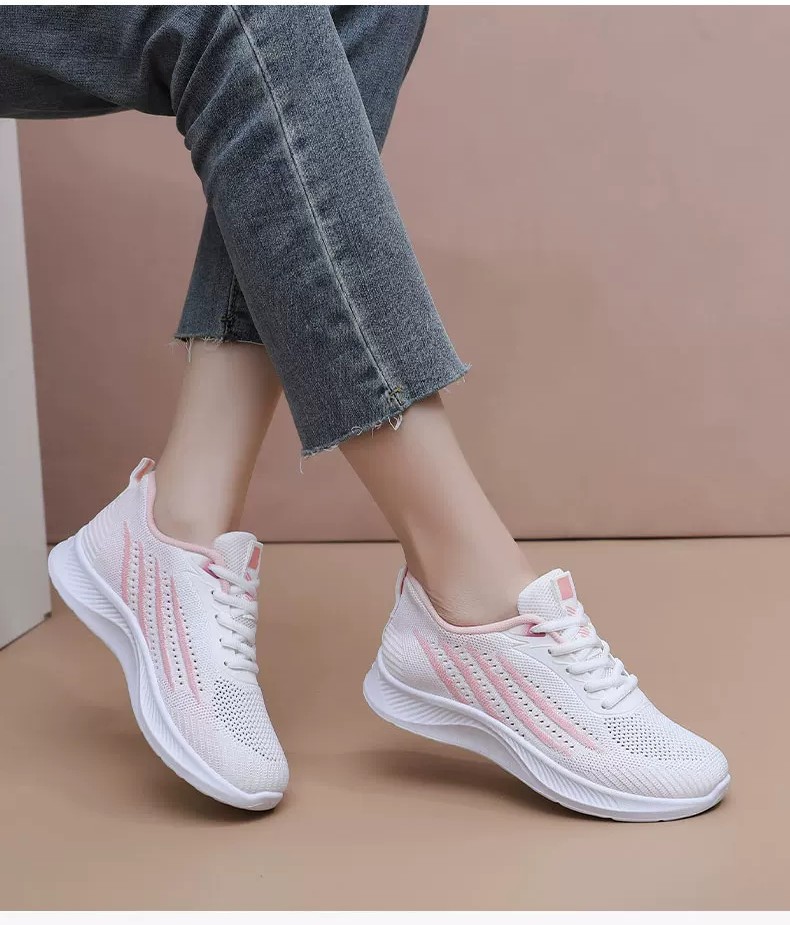
Three outfits, one grey pair, starting from what’s already hanging up
Start with the weekday version: straight-leg dark trousers, a knit in a tone near the sneaker, and nothing else competing. Grey against grey works when the two greys are far enough apart to read as a decision. A charcoal trouser with a mid-grey sneaker separates clearly. Two mid-greys at the same value look like a uniform that hasn’t been finished.
Outfit two is the weekend version: blue jeans, a plain white tee, and the same grey sneakers. This is the combination that makes grey look its best, because denim gives the eye a colour to rest on and the sneaker becomes the quiet element instead of the whole story.
The one people forget is a skirt or a dress. A grey sneaker under a knitted midi skirt is not a compromise, it’s a deliberate contrast, and it works because the shoe is neutral enough not to fight the fabric. The failure mode is a very formal skirt with a very sporty shoe, which reads as two different outfits sharing a body.
Length decides whether it works. A midi that stops just below the knee keeps the outfit balanced, because there’s enough fabric between the hem and the shoe for the eye to travel. A mini plus a grey sneaker is a much louder proposition, and it only reads well if the rest of the outfit is deliberately plain.
Those three cover a weekday, a Saturday, and something that has to look considered without looking effortful. Nothing exotic. What makes them feel different is what happens at the edges, which is where the swaps come in.
Before you start swapping, check one thing in the mirror: whether the grey of the shoe is cooler or warmer than the grey of your trousers. Cool grey next to warm grey looks like a near-miss, and it’s the reason some outfits feel slightly wrong without anything being visibly broken. Hold the shoe against the trouser in daylight and you’ll see it in about four seconds.
If your wardrobe is mostly black, don’t fight it. Grey sneakers against black trousers read as a soft edge rather than a contrast, and that’s a genuinely useful trick when you want an outfit to look less severe without adding colour.
Swap one: change the trouser before touching the shoe
The single most effective change is the one that alters the silhouette rather than the colour. Replacing a straight leg with a wide leg changes how the grey sneaker reads more than swapping it for a different grey ever would.
- Straight leg, hem just above the collar. Clean, slightly austere, reads as workwear.
- Wide leg, hem covering the collar. Softer, more current, makes the shoe look smaller and the leg longer.
- Tapered, cropped at the ankle. The sporty option. Shows the shoe fully and puts all the attention down there.
Worth knowing why this works. A dark grey sneaker has low contrast against most trousers, so the eye reads the leg and the shoe as one continuous shape. Change the shape of the trouser and the whole line changes, even though the colour relationship hasn’t moved at all.
This is also the cheapest fix for anyone who feels their grey sneakers look boring. A second pair of trousers costs less than a second pair of shoes, and it produces a bigger difference in how the outfit reads.
One warning about wide legs. If you go too wide and too long, you’ll cover the shoe completely and lose the reason you wore it. Leave a centimetre of collar visible, or accept that the sneaker has become a sock with ambitions.
For a tapered crop, watch where the hem lands. If it stops at the widest part of your calf, you’ve created a horizontal line exactly where you don’t want one. Two centimetres higher or lower usually fixes it.
Easiest way to test the whole thing without buying: take the trousers you already own and pin the hem by eye at two different lengths in front of a mirror. Pinning is faster than altering, and it tells you which length is worth paying for.
Swap two: the sock line decides which season it is
Socks do more work than most people give them credit for, particularly with a low-cut grey sneaker. The strip of visible sock is the only place where the outfit can quietly change register without any other element moving.
A no-show sock makes the shoe read as summer and casual, and it exposes the ankle, which is the detail that makes a grey sneaker look light. A crew sock in a matching grey makes the same shoe read as autumn and deliberate. A crew sock in a contrasting colour, whether cream or a dark burgundy, turns the whole thing into a styled outfit rather than a default one.
The mistake to avoid is a sock that’s almost the same colour as the shoe but not quite. Two greys a shade apart at the ankle look like a laundry error. Either match closely or contrast clearly; the middle ground is where outfits look accidentally unfinished.
If you only own one visible pair of socks, make them charcoal. Charcoal sits between a grey shoe and a dark trouser without drawing attention, so it works with almost everything in these three outfits and buys you time on a bad morning.
There’s a practical argument too. Grey mesh and grey knit both show sweat marks less than pale colours, but a light sock against a grey collar will pick up dye over a summer, and that’s the one place where dark grey is less forgiving than it appears. If you notice a grey shadow on your ankle after a warm day, that’s the lining, and a spray protector on the inside of the collar slows it without stopping it.
Season changes are easiest to handle here. The same shoe carries you from June to October if you swap a hidden sock for a crew sock in September, and the outfit updates without anything else being replaced. That’s the whole point of a neutral shoe, and it only works if you actually use the sock as a variable rather than a default.
Swap three: one layer changes the whole register
The third swap is the layer above the waist, and it does the work of an entire outfit change. Grey sneakers under a blazer read as a person who has decided the dress code is negotiable. The same sneakers under an oversized cardigan read as a Sunday.
What matters isn’t the garment so much as its structure. A structured shoulder makes the sneaker look intentional and slightly rebellious. A soft shoulder makes it look comfortable and unremarkable. Neither is wrong. They’re different messages from the same shoe.
Knitted layers are the middle case, and the one that causes the most doubt. A fine knit over a grey sneaker reads tidy. A chunky knit over the same shoe reads weekend, even if the trousers didn’t change. When an outfit feels too casual and you can’t work out why, the knit weight is usually the answer.
Colour does less work here than texture. A pale layer over grey sneakers reads calm, a dark layer reads sharp, and neither changes the formality much. If you want the outfit to shift register, change the weight of the fabric rather than the shade.
For anyone trying to make grey sneakers work in an office that expects something smarter, the practical formula is: structured layer on top, dark trouser, grey sneaker, no visible sock. Three of the four elements are formal, one is not, and the eye forgives a single exception far more easily than a mixed message.
If your office is stricter than that, you already know this doesn’t apply, and the honest answer is that no amount of layering hides a sneaker in a room full of leather soles. Wear it on the days that allow it and stop trying to convert the ones that don’t.
\n\n
The reverse also holds. If the outfit is entirely casual, a structured layer is the thing that stops it looking sloppy, and the grey sneaker is what keeps it from looking stiff.
Swap four: the bag, and why it fails half the time
The bag swap is the one that most often goes wrong, because a bag introduces a colour the rest of the outfit has to answer to. Grey sneakers with a black bag is fine. Grey sneakers with a tan bag is fine. Grey sneakers with a bright bag is a choice that has to be supported by something else in the outfit, or it looks like the bag arrived separately.
A dark grey sneaker is unusually tolerant here, because grey doesn’t compete. That tolerance disappears the moment the bag is a strong colour and nothing else in the outfit repeats it.
Size matters too, in a way that’s easy to miss. A large tote with a slim grey sneaker makes the shoe look small and slightly lost. A small crossbody with a chunky grey shoe makes the shoe look heavy. Matching the visual weight of bag and shoe is more useful than matching the colour.
If only one swap is possible on a given morning, this is the one to skip. It changes the least for the most effort, and it’s the most likely to introduce a problem rather than solve one.
Where the bag swap does earn its keep is travel. A single grey sneaker plus a single neutral bag means every outfit in the suitcase works, because you’ve removed the two elements that usually clash. Pack the trousers and the layers, and let the shoe and bag be the constants you don’t think about.
For everyday use, one bag that matches the shoe in visual weight covers the whole rotation. Two is a wardrobe. One is enough, and it leaves the outfit room to change.
If the outfit still looks off after all four swaps, the problem is usually the trouser length rather than anything above the ankle. Go back one step and check the hem.
What stays constant, and what to refuse to change
Four things should not move between outfits, and each of them is about fit rather than style.
The hem length relative to the collar stays constant, unless the change is deliberate. A hem that sits exactly at the collar on Monday and halfway down the shoe on Wednesday means two different leg lines, and only one of them was chosen.
The sock tone relationship stays constant. If the outfit works with a hidden sock, it doesn’t automatically work with a visible one, because the visible sock is a new element with its own colour.
Trouser width can change, but not within a single day’s outfit. Half a wide leg and half a taper is just a bad hem.
And the shoe itself should not be asked to do two jobs. A grey sneaker worn for a wedding and for a supermarket run is one shoe in two contexts, and no amount of swapping makes the second context feel like the first. That’s fine. It’s what a neutral shoe is for.
What you can do is decide which job it’s for this season. A grey sneaker committed to weekdays behaves differently in the wardrobe from one committed to weekends, because you stop trying to make it work for both and start dressing it properly for one.
What to refuse outright is the temptation to buy a second grey pair in a slightly different shade to solve the repetition problem. It won’t. Two mid-greys create the exact problem described at the start, only with more cupboard space used. Buy a different silhouette, or a different colour entirely, or change the trousers.
One more thing worth keeping constant: the condition of the shoe. A scuffed grey sneaker reads as a work shoe, and a clean one reads as a choice, and the difference is about ninety seconds with a brush once a week. This is the least interesting advice in the article and the one that changes the most outfits.
The morning version of all this
Stand in front of the wardrobe with the grey sneakers already on the floor, and pick the trouser first. Then the sock, based on the weather rather than the outfit. Then the layer. Leave the bag alone unless something looks off.
Most people do this backwards. They choose the top because it’s the part other people compliment, then find a trouser that works, then discover the shoe doesn’t fit the result. Working from the floor up takes the same ninety seconds and produces an outfit that holds together at the ankle, which is where the eye spends most of its time when a shoe is pale or neutral.
That order matters, because it works from the largest visual block to the smallest, and it stops the mistake of building an outfit around an accessory. Four decisions, ninety seconds, and the same pair of shoes doing three different jobs across a week.
Repeat the whole rotation for a fortnight and the repetition problem disappears without a single purchase. That’s the part worth remembering: a dark grey sneaker isn’t limited by its colour, it’s limited by how many variables you’re willing to move around it.
If the grey pair is the one thing being replaced rather than styled, our leather women’s sports sneakers take a darker tone well because the surface is smooth rather than textured, and the 2026 sports and leisure pair in white and brown is the version that swaps most easily for a grey one in the same outfits. The full women’s grey sneaker selection is sorted by shade, and the wider sneaker range is worth a look if the silhouette is what needs to change rather than the colour.
Two things worth reading next: what 40 days in one pair of dark sneakers actually did, and the ankle trade-off that comes with a higher collar. For why grey behaves so well next to almost everything, the neutral position of grey in colour theory is a quick read, and the broader principles of colour relationships explain the same-value problem in more detail.
