

It’s 7:38 on a Tuesday, the coffee is going cold, and you’re standing in front of the shoe rack doing maths. The pointed pair pinches at the little toe. The trainers squeak on the office lino. The loafers are somewhere under the bed. You pick the least bad option, walk out, and by four in the afternoon you’re calculating how long it takes to get your feet out of them.
That’s the problem work shoes for women actually have to solve. Not how they look in a photo at nine in the morning. How they feel at four, after the meeting, the commute, the sprint for the bus and the two hours you spent standing because someone took your chair.
You don’t need a bigger shoe collection. You need one pair that survives a full working week without wrecking your feet or your outfit, and a second pair that splits the load. That’s a much smaller problem, and it’s solvable once you know which numbers matter.
The 4pm test beats the mirror test
Most people buy work shoes the way they buy a jacket: they check the look, the price, and whether the shop lighting flatters them. Feet don’t work like that. A shoe that photographs well can be unwearable by lunchtime, and a plain pair can carry you through nine hours without a single complaint.
Run three checks before you spend money.
- Standing tolerance. Can you stand in them for twenty minutes without shifting your weight from foot to foot? If you’re fidgeting in the shop, you’ll be miserable at your desk.
- Walk distance. Most office days hide a surprising amount of walking: platform to lift, lift to desk, desk to canteen, desk to the far meeting room. Some people clear 3,000 steps without leaving the building.
- Meeting visibility. A shoe that reads sharp under a boardroom table but behaves like a slipper is the ideal combination. Nobody sees the insole.
The order matters. Comfort first, visibility second, trend third. Flip that order and you end up with a shelf of shoes you only wear on days you’re feeling brave.
You’ll also notice that the clock is honest in a way the mirror is not. Feet swell through the day, roughly half a size by late afternoon for a lot of people, which is why a pair that felt fine at 10am can feel tight at 3pm. Shop in the afternoon if you can. It’s the cheapest fitting trick there is.
Heel height, in millimetres rather than adjectives
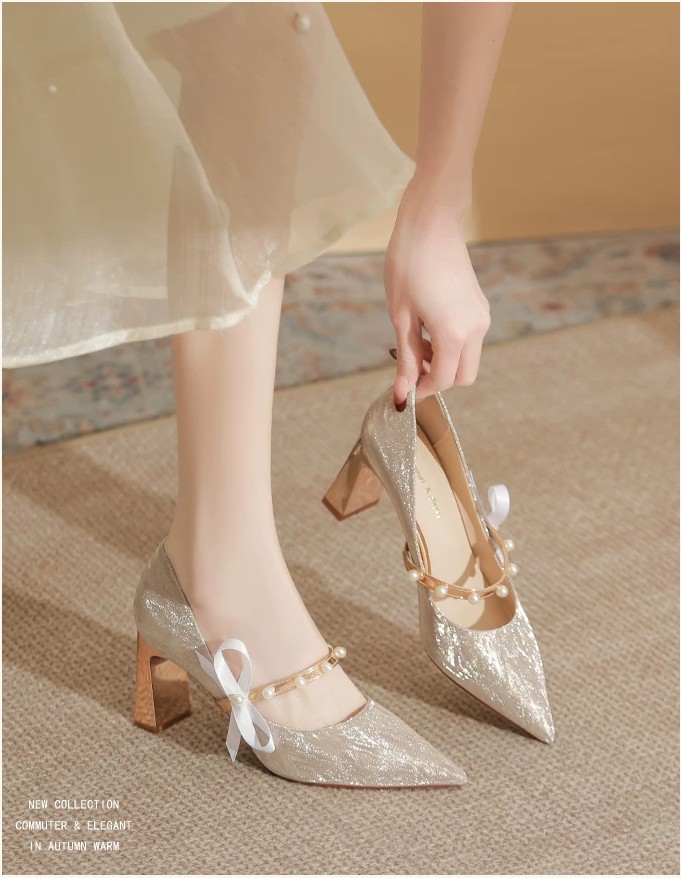
Words like “comfortable” and “walkable” tell you nothing. Numbers do. A heel in the 30mm to 50mm range keeps the foot close to flat, and most people can wear that height for a full shift without thinking about it. A block heel at 50mm is the safest bet for anyone who stands a lot. You get a bit of lift, a wider contact patch, and no wobble on polished floors.
At 70mm the maths changes. A thicker heel still works, but thin stilettos start asking for shorter days. This is where the shape of the heel matters more than the height itself. A 70mm block spreads the load across a wider area than a 70mm pin, and the difference in how your calves feel at six in the evening isn’t subtle.
Above 80mm, treat the shoe as an event item, not a work item. You can absolutely wear a 90mm pointed heel to a client lunch. You can’t wear it to a nine-hour audit day and expect your feet to forgive you. The history of the high heel is a long one, but the biomechanics have not changed: the higher the heel, the more of your body weight moves onto the ball of the foot.
One more number worth knowing: heel width at the base. Anything under about 8mm of contact width is a balancing act on carpet, and genuinely risky on wet tile. If your workplace has marble floors and a polished lobby, that matters more than the colour of the upper.
So the practical rule is simple. Buy your working height, not your aspirational height. If you want the look of a taller heel for meetings, keep a 50mm pair in your bag or under the desk and swap. Your feet won’t care about the inconvenience, and your back will thank you on Friday.
Leather, suede, patent or knit: what survives a five-day week
The upper material decides how the shoe ages, and how much of your week it can handle.
Smooth leather is still the most reliable choice for daily wear. It holds its shape, wipes clean with a damp cloth, and stretches slightly to your foot rather than staying rigid. A pair of woven real leather heels in white will take a scuff and come back from it, which is more than can be said for most finishes.
Patent looks sharp and wipes down in seconds, but it doesn’t breathe and it doesn’t stretch. If you’ve a wide forefoot, patent will tell you about it within an hour. It’s also the finish most likely to show a crease across the toe box after a month of desk work.
Suede is the one to think about twice. It’s soft, quiet underfoot, and looks expensive in a way smooth leather sometimes does not. But one wet commute and you’re googling how to revive it. If your walk to work involves a crossing with no shelter, suede is a gamble, not a plan.
Knit and stretch fabrics are the wildcard. They feel like slippers for the first fortnight, then often go soft and shapeless around the heel. Great for a desk job where you barely walk. Bad if you’re on your feet and need the shoe to hold your foot in place.
There’s a trade-off nobody mentions in the shop: the softer the upper, the more the shoe relies on its last and its insole to support you. Soft leather plus a decent footbed beats stiff leather plus a flat cardboard base every time. Press your thumb into the insole. If it doesn’t give at all, walk away.
The five-day rotation that stops one pair from dying
Wearing the same pair five days straight is the fastest way to destroy it. Shoes absorb sweat, and a damp shoe that never dries out loses shape, smells, and breaks down at the lining. Two pairs worn alternately will each last noticeably longer than one pair worn daily, which is the rare case where buying more actually saves money.
Here is a rotation that works for most office jobs.
- Monday: the structured pair, because Monday is the day you see the most people. Block heel, leather, dark.
- Tuesday and Thursday: the workhorse. This is the pair you should be able to walk a mile in without noticing. A thick-heeled pair built for long days earns its place here.
- Wednesday: swap in something softer, ideally a lower heel, to give your arches a break mid-week.
- Friday: whatever your workplace allows. Many offices are looser on Friday, and that’s the day to let your feet breathe.
If two pairs is all you have, rotate them and let each one air out for a full day with shoe trees or rolled newspaper inside. Cedar helps with moisture. So does simply not stuffing them back into a dark cupboard while still warm.
Cost per wear is worth doing the maths on. A pair at 115 euros worn three times a week for a year lands around 1.40 euros per wear. A pair at 45 euros that falls apart in six weeks and gets worn twice a week lands at roughly 3.75 euros per wear. The cheap option isn’t cheap. The expensive option isn’t expensive. It depends entirely on how many days the shoe survives.
One thing to keep in mind: if your week includes a lot of outdoor walking, a slingback style can be the best compromise, sitting between a court shoe and a sandal. Our guide to slingback kitten heels that go from office to dinner covers that case in more detail.
Fit rules that matter more at a desk than in a shop
Fitting a work shoe is a slightly different exercise from fitting a going-out shoe. You aren’t checking whether it looks good in three steps. You’re checking whether it’ll still be tolerable after nine hours in a chair.
Start with the toe box. Your toes should not touch the front, and the widest part of your foot should sit at the widest part of the shoe. If the shoe’s widest point is behind your joint, the upper will press on the outside of your foot all day. That’s the source of most “these shoes hurt and I don’t know why” complaints.
Then the heel. A small amount of lift at the back is normal for a court shoe. More than about 5mm and your heel will slide with every step, which means blisters by Wednesday. Heel grips can fix a marginal fit. They can’t fix a shoe that’s genuinely too long.
Width is the number most people never check, and it’s the one that decides whether a shoe gets worn. If you’ve a wide forefoot, look for rounded or almond toes rather than sharp points, and accept that you may need to size up half a size and add an insole. For anyone with a narrow foot, the opposite applies: a pointed toe actually helps, because the shoe holds the foot instead of letting it slide forward.
A useful sanity check: walk on a hard floor in your socks, then in the shoe. If the shoe changes how your knee tracks, it’s too high or too soft. Browse the full range with those criteria in mind rather than scrolling by colour.
And be honest about the first ten minutes. If something is rubbing in the shop, it’ll be a blister by Friday. Shoes break in at the upper and across the sole flex point. They don’t break in at a seam that’s already digging into your heel.
What goes wrong by Wednesday
Nearly every work shoe failure follows one of four patterns, and knowing them saves you money.
Start with the shoe that gives too much. It feels wonderful on day one, then the heel counter collapses and your foot slides forward until your toes are jammed against the front. Usually a soft, unlined upper with a cheap heel stiffener.
Sole separation at the toe comes next. Look at where the sole meets the upper near the front. If the join is a thin glued edge with no stitching, it’ll open up, especially if you walk a lot on rough pavement. Stitched soles aren’t automatically better, but the join is a decent proxy for how the shoe was built.
Creases are the third pattern. Patent and corrected-grain leather crease sharply across the vamp within weeks, and once a crease digs in, it presses on the top of your foot with every step. Supple full-grain leather creases softly instead. This is why footwear coverage in the fashion press keeps returning to leather quality rather than colour trends.
Then there’s the smell, and it’s almost always a rotation problem rather than a hygiene problem. One pair worn daily never fully dries. Give it a day off and the issue usually disappears without powders or sprays.
There’s one more failure worth naming, because it’s common and rarely admitted: the pair that fits perfectly and matches nothing you own. Fit’s not enough. Before you buy, picture three outfits you already wear to work. If you cannot, the shoe will sit in the cupboard and you’ll be back to the pinching pair by next Tuesday.
What cheap pairs actually sacrifice
Two pairs can look identical on a shelf and behave like different products after a month. The differences are in places you have to feel for.
Start with the insole. Cheap pairs use a thin foam layer bonded to a cardboard board. That foam compresses within weeks and never comes back, so the shoe gradually loses the cushioning you thought you were buying. Better pairs use a moulded footbed with a slight arch, which keeps its shape through a full season of desk work.
Lining is the next thing to feel for. Unlined shoes are cheaper to make and feel soft on day one. They also let your foot slide against the upper, which is exactly what causes the rubbing you blame on the toe box. A leather lining grips slightly and wicks moisture, and it is the single most underrated thing to look for in a work shoe.
Heel stiffener is the third, the hidden cup inside the back of the shoe. the hidden cup inside the back of the shoe. Press it with your thumb. If it folds in half, the shoe will collapse at the heel and your foot will slide forward all day. If it holds its shape, the shoe will keep your foot where it belongs.
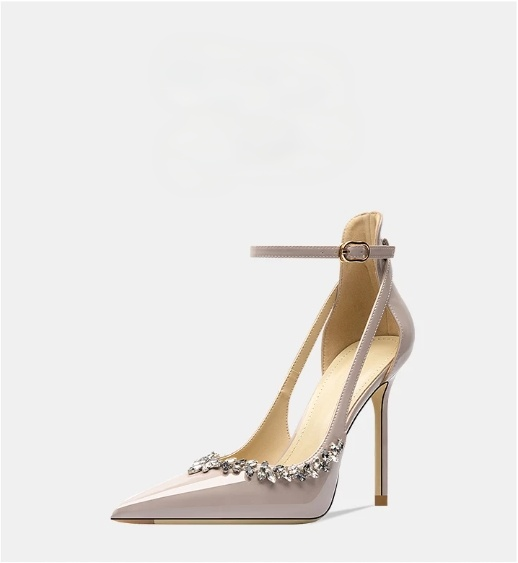
None of this means you have to spend a fortune. It means the money should go to construction rather than decoration. Embroidery, crystals and a designer name on the box do not make a shoe wearable for nine hours, and a plain pair with a good insole and a firm heel will beat a decorative pair every time. If you want the decorative version for events, keep it separate from your working rotation.
The one thing cheap pairs do better is letting you experiment. If you have never worn a 60mm heel to work, a lower-cost pair is a reasonable way to find out whether that height suits your commute before you commit serious money. Just don’t expect it to be the pair you still own in two years.
A buying checklist you can run in a shop in four minutes
Next time you’re standing in a shoe shop with a pair in your hand, run this in order. It takes about four minutes and will save you a season of regret.
- Press the insole with your thumb. It should give a little, not feel like cardboard.
- Check the heel base width. Under 8mm is an event shoe, not a work shoe.
- Try them on at the end of the day if possible, and stand for two full minutes before deciding.
- Walk on the hardest floor in the shop. Listen for slipping and feel for heel lift over 5mm.
- Look at the sole join near the toe. Stitching or a thick welt is a better sign than a thin glued edge.
Then ask one question about your actual week: how many hours will these be on your feet, standing included? If the answer is more than six, buy the lower heel. Every single time.
Work shoes for women don’t need to be exciting. They need to be the pair you reach for without thinking at 7:38 on a Tuesday, the pair that’s still fine at four, and the pair that’s still in one piece in March. Get the heel height and the width right, give them a day off between wears, and the rest is detail. The mirror can wait.
