

Your hotel is eight minutes from the metro. On paper that’s nothing. On day three in Rome, with a blister on your right heel and a flight home in four days, those eight minutes turn into a small negotiation with your own feet: do you take the short cut over the cobbles, or the long way round on asphalt?
Most people pack the wrong pair for a reason that has nothing to do with taste. They buy for the photo, the outfit, or the first thirty seconds in the shop. A Europe trip asks a different question. It asks what happens at step 9,000, on stone that has been polished smooth by two thousand years of traffic, in weather you didn’t plan for.
This is a buying guide, but it’s a picky one. Below are the checks worth doing before you spend money on good women’s walking shoes for Europe, in the order that actually matters: fit, then sole, then break-in, then packing. Skip to the end and you’ll find the two categories I’d leave on the shelf, plus the cases where none of this advice applies.
What “good” means on 2,000-year-old pavement
European city walking is not a nature trail. The surface is hard, often wet, frequently uneven, and sometimes slick in a way that flat pavement never is. Cobblestones in Prague, basalt setts in Lisbon, polished marble in Italian piazzas: each one rewards a different property, and no single shoe is best at all three.
Start with grip. A shoe with a shallow, hard rubber outsole slides on wet stone in a way you’ll feel in your hip before you feel it in your foot. Deep lugs aren’t the answer either, because they wear fast on pavement and catch in the gaps between setts. What you want is a soft-ish rubber compound with a tread pattern of medium depth, plus small sipes, the thin slits that let the rubber splay and bite.
Next, torsional stiffness. A shoe that folds in half like a slipper gives your foot almost no support across a full day. A shoe that refuses to bend at all will fight your toe-off on every step, and your calf will pay for it by the evening. The middle ground is a shoe that bends at the ball of the foot and stays firm through the midfoot. You can test that in ten seconds, and I’ll show you how further down.
Then there’s volume. City walking means swelling. Your feet measurably gain volume over a long day, more in heat, and that’s before you add a flight. If your shoes fit perfectly at 8am with thin socks, they will pinch by 4pm. The fix isn’t to buy a size up across the board. It’s to buy enough room in the toe box and to lace so the volume can be adjusted.
One detail worth knowing: the human foot has 26 bones and more than 100 ligaments, and it changes shape under load rather than staying a rigid lever. That’s why a shoe you judge standing still tells you maybe 60% of what you need.
Fit comes before cushioning: three measurements to take
If you only do one thing before buying, do this. Measure your foot at the end of the day, standing, with the socks you’ll actually wear. Most people have never done it and most people are wearing the wrong width.
- Length plus 8 to 10mm. Your longest toe should sit roughly a finger’s width from the front of the shoe when you stand, not when you sit. Sitting shortens the foot by a few millimeters and flatters the fit.
- Width at the ball. Measure across the widest part of the forefoot while standing. If the number sits near the top of a brand’s width range, go wide. Women’s shoes are often made on a narrower last than the same brand’s men’s styles, and sizing up to gain width also gains length you don’t need.
- Heel hold. With the shoe unlaced, push your foot forward until your toes touch the front. If you can slide a finger behind your heel with room to spare, the shoe is too long for your heel shape, and no amount of lacing will fix the slip.
That third check catches more problems than the other two combined. A heel that lifts a few millimeters with every step creates friction, and friction creates blisters, and blisters end sightseeing days early. If you already know your heels slip in everything, read all-day walking shoes with a narrower last in mind and try a heel-lock lacing pattern before you give up on a pair.
Instep height is the measurement nobody talks about and the one that decides whether a pair feels locked in. Run a finger under the laces when the shoe is tied loosely. If the tongue presses down on the top of your foot, you have a high instep and this last is too shallow for you. Sizing up won’t help, because it adds length at both ends rather than height over the arch. Look for a shoe with a gusseted tongue or a wider lace panel instead. If the laces close down until the two sides touch, the opposite is true: the shoe is too deep, and your foot will slide forward on every downhill stretch, which in a city with hills means every afternoon.
Width deserves its own paragraph because it’s where European sizing trips people up. An EU 38 is not a US 7.5 in every brand, and the same labelled size can differ by nearly a centimeter across makers. If you’re ordering online from outside Europe, convert by measured centimeters, not by the number on the box. Our breakdown of where the extra room actually comes from in wide widths covers how brands add volume, because some add it at the ball and some only at the instep.
Stack height and drop: why 8mm behaves differently at step 9,000
Stack height is how much material sits between your foot and the ground. Drop is the difference between the heel and the forefoot. Neither number is good or bad on its own, but both change how your lower leg works over a long day.
A typical city walking shoe runs 20 to 30mm of stack at the heel with an 8 to 12mm drop. That wedge prepositions your ankle slightly downward, which shortens the range your calf moves through on each step. For most people this is comfortable and unremarkable. For someone with a tight calf or a history of Achilles trouble, it can mean the difference between a pleasant evening and a stiff morning.
Lower drop, closer to 4mm or flat, restores range but asks more of the calf and the small muscles around the arch. It’s not superior. It’s a different distribution of work. If you’re switching from a 10mm shoe to a 4mm shoe two weeks before a trip, you are scheduling a training load in the middle of your holiday. My advice is blunt: don’t. Make that switch at home, with eight weeks to spare, or don’t make it at all this year.
Toe spring is the upward curve at the front of the sole, usually 8 to 12mm on a walking shoe. It exists to smooth the transition from heel strike to toe-off, and a little of it saves energy over a long day. Too much and the shoe feels like it’s walking for you, which is fine on flat pavement and awkward on stairs. Check it by setting the shoe on a table and looking along the sole from the side. A gentle curve is right. A ski jump is a red flag for anyone who spends time on steps.
Cushioning softness matters less than people expect. Softer foam feels lovely in the first hour and packs down under a full day of load. A medium-firm midsole with a slightly rockered forefoot usually holds up better over 15,000 steps than a marshmallow one. If you want to compare feel in the shop, stand on one foot for thirty seconds in each pair. The one that lets your arch collapse is the one that will tire you out.
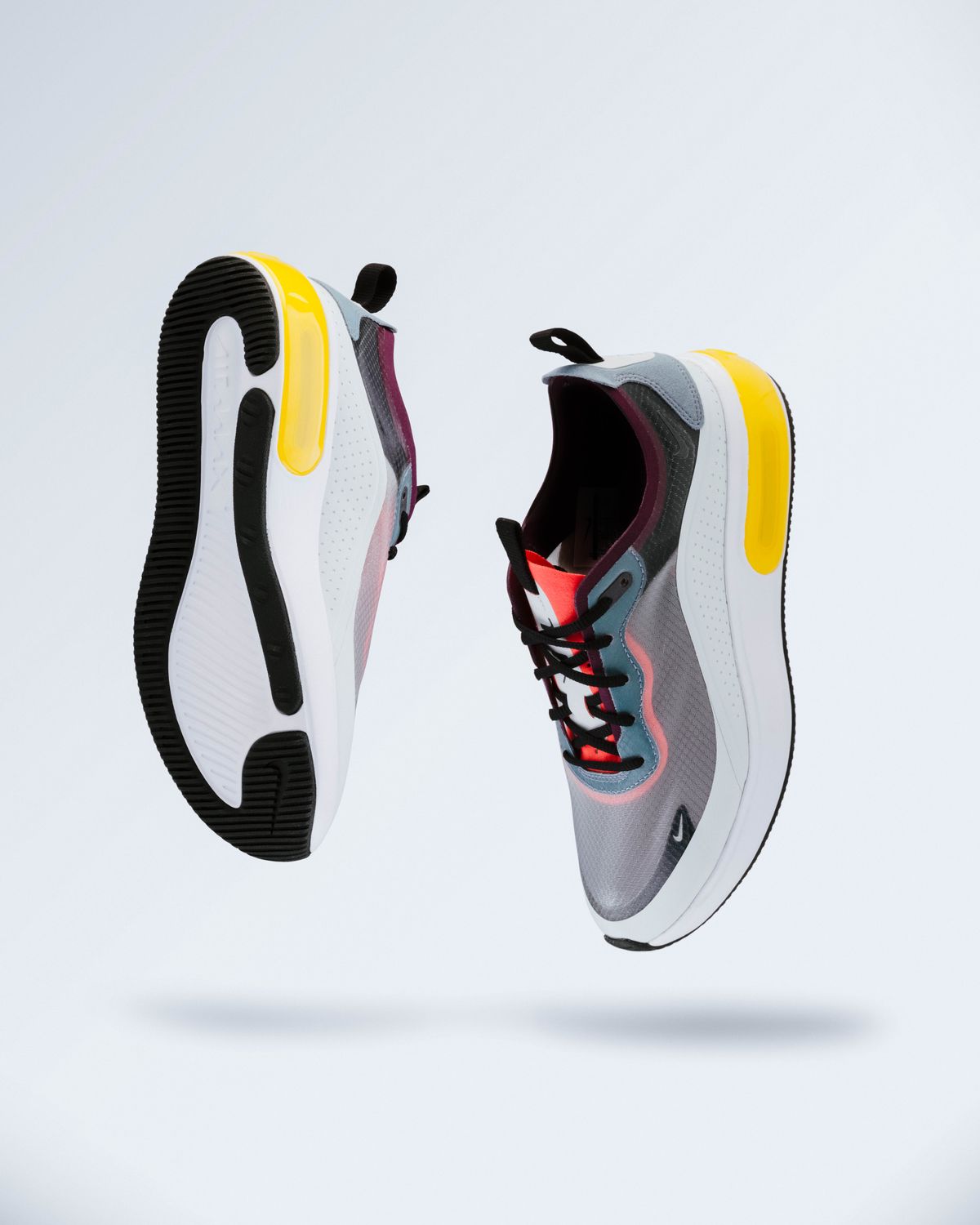
The shop test: bend, twist, and the wet tile trick
You can learn a lot about a walking shoe without walking in it. Three tests take about two minutes and they’ll save you a return.
Bend it at the ball. Hold the heel in one hand and the toe in the other, then push the ends together. The shoe should fold where your toes bend, roughly a third of the way back from the tip. If it folds in the middle like a taco, there’s no shank and your arch will do all the work. If it won’t bend at all, you’ll be fighting it uphill.
Twist it lengthwise. A little torsion is fine. A shoe that twists like a wet towel has no torsional stability, which is the property that stops your foot rolling inward when you push off uneven stone. Some flexibility helps on cobbles; total floppiness doesn’t.
Press the heel counter. Squeeze the plastic or leather cup at the back. It should resist your thumb. A soft, collapsible heel counter is comfortable for about an hour and then lets your foot drift, which is the origin of most “the shoe felt fine in the shop” complaints.
Try shoes on at the end of the day, in the afternoon if you can manage it, and try both sizes either side of your usual one. Feet swell by a few millimeters over a day of standing, and a pair that fits at 10am can be a different shoe at 6pm. Wear the socks you plan to travel in. Shops will hand you a thin nylon sock that makes everything feel roomier than it will with a wool blend.
The wet tile trick is the one nobody does. Most shops have a tiled floor, and a damp paper towel from the bathroom is enough. Wet a patch, put the shoe down, and push it forward with light pressure. If it glides, that outsole will be interesting on wet stone. Not dangerous, just interesting. Save yourself the experiment in Lisbon in November.
Ask about the rubber compound if the staff know. Soft compounds grip better and wear faster. Hard compounds last seasons and feel slick when wet. For a two-week trip, err toward grip. For a daily commuter shoe you’ll replace in a year anyway, either is fine.
Break-in: a two-week schedule that fits in a carry-on
Very few shoes need breaking in. Plenty of shoes need to be tested, which is a different thing. Leather uppers stretch and soften; knit uppers mostly don’t. The risk isn’t that the shoe will change shape. It’s that a seam, a stiff heel counter, or a slightly narrow toe box will only announce itself after 8,000 steps.
Here’s the schedule that works, and it doesn’t require a gym membership.
- Days 1 to 3, indoors and short errands. Wear them for an hour at home, then a 2,000-step walk. Check for hot spots at the heel and the little toe. A hot spot on day one is a blister on day five.
- Days 4 to 7, one long walk. Do your normal daily mileage, ideally on hard pavement. This is the test that finds seam problems. If something rubs, address it now with a heel patch or a different sock, not at the airport.
- Days 8 to 14, load them. Wear them for a full day with the bag you plan to carry. Weight changes your gait more than distance does, and a daypack shifts pressure forward.
If a pair needs more than two weeks to stop hurting, it isn’t your shoe. That’s the honest version. I’d rather you return a pair than spend a holiday managing it.
Socks are part of the fit. Thin cotton socks feel cool and slide inside the shoe, which causes friction at the heel. A merino or synthetic blend with a slightly cushioned sole holds better and dries overnight. Bring three pairs, wash one a day, and you’ll never think about socks again.
One more thing about the first long walk: do it at home, not on arrival. Landing in a new city with a fresh pair and 12 hours of travel in your legs is the worst combination available. If the shoes are new, wear the old ones on the plane.
One pair plus one dinner pair, without the extra bag
Most women I know pack two pairs for a trip like this: something for the day and something for the evening. That’s reasonable. The mistake is packing two day pairs and one evening pair, then carrying all three.
Pick your walking pair for the worst surface you’ll meet, not the average one. If your itinerary includes old town centers, that means grip first. If it’s mostly museums and shops, comfort and low weight win. Then add one pair for dinner that packs flat: a low block heel or a mule in a neutral color. Two pairs total is enough for ten days, and you’ll still have room for the jacket you bought on day six.
If the evening pair needs to work with the same outfits as the daytime one, keep it simple. Our commuting block heels that fold into a tote are the kind of thing that earns its space because they read as dinner shoes and weigh almost nothing. A suede pair like these retro suede heels for evening switching works too, though suede and rain are not friends, so check the forecast before you commit.
Weight is the other constraint. Every 100g on your feet costs more energy than 100g on your back, and you’ll feel it in the last two hours of a long day. The World Health Organization’s physical activity guidance treats brisk walking as moderate exercise, which is a polite way of saying that 20,000 steps is a workout, not a stroll. Pack accordingly.
What I’d skip, and who this advice doesn’t fit
Two categories I’d leave alone for a Europe trip. The first is a very soft, heavily cushioned trainer marketed for “all-day comfort.” It feels wonderful in the shop and compresses to nothing by evening, and the wide, flexible platform gives you little control on uneven stone. The second is a brand-new minimalist shoe with almost no stack. Great for the right person after eight weeks of adaptation, a poor choice for a trip that starts on Tuesday.
There’s also a group this advice doesn’t serve well. If you have plantar fasciitis that’s currently active, or a diagnosed issue with your Achilles, the fit rules above are necessary but not sufficient. Start with a fit check written for that condition, like this guide to walking shoes for plantar fasciitis, and treat the shoe as one part of the plan rather than the whole plan.
And one unpopular opinion. Price correlates with materials and construction, not with whether a shoe suits your foot. A 90 euro pair that fits your width beats a 190 euro pair that doesn’t, every single day of a two-week trip. Spend the money on fit and grip, and save it on branding.
So: measure at the end of the day, test the sole in the shop while the floor is damp, walk 8,000 steps at home before you fly, and pack one evening pair that weighs nothing. Do those four things and the eight-minute walk to the metro stops being a negotiation.
