

It’s 7:52 on a Tuesday. You have one shoe on and the other in your hand, because yesterday’s pair left a red mark the size of a coin on your heel. The smart shoes hurt. The trainers look wrong with these trousers. So you put the scuffed ones back on and promise yourself you’ll sort it out at the weekend.
Casual office shoes for women are meant to end that loop. Most of them don’t. They survive about three weeks of real commutes, then quietly become the pair you kick off under the desk by 11am.
Here’s what actually separates the keepers from the mistakes, including checks you can run in a shop in under a minute.
Work out which kind of office you actually walk into
“Casual” means at least four different things, and the wrong read makes you either overdressed or the person someone emails HR about. Ignore the policy document and look at feet instead. Nobody reads the policy document anyway.
If most people wear clean trainers with chinos, you can wear almost any flat with a closed toe. If the room is mostly leather loafers and dark denim, a loafer or a low block heel fits right in. If half the team is in heels at 9am, casual for them means no stiletto, and a 40mm block sits safely in the middle. In a studio where people pad around in socks, none of this applies and you should buy for the commute instead.
There’s an old formula that still shapes what reads as a work shoe to a manager’s eye: closed toe, low heel, dark colour, no visible logo. The history of dress codes is looser now than it was in 1995, but that four-part recipe still governs how a shoe gets read across a meeting table.
One shortcut that works better than any guide. On your first day, stand in the lift and count how many people are wearing something you’d also wear to a barbecue. That number is your real dress code, and it will tell you more than the onboarding pack did.
Keep that answer in your head when you shop, because it’s the filter to run every pair of casual office shoes for women through before you pay. A shoe that passes your office’s version of casual is a shoe you’ll wear on a Wednesday, not one you’ll admire in the box and then hide in a cupboard.
There’s one more thing to check, and it has nothing to do with the shoe. Look at what your colleagues wear on the days they have a client meeting. That’s the ceiling. Anything above it is wasted money, and anything well below it will make you feel underdressed in a room where everyone else made an effort. Aim for the middle of that range and you’ll never have to think about it again.
The 4pm test: buy for the foot you have at the end of the day
Your feet swell. Not a little. On a warm day, after six hours of standing and walking, most people’s feet are measurably bigger than they were at 8am. That’s why the pair that felt fine at 11am is unbearable by the time you get home, and why so many people blame the shoe for something their own foot did.
So try shoes on late. If you can only shop at lunch, walk for ten minutes first and don’t sit down before you try them. When you’re between sizes on a closed shoe, take the larger one. Slightly long is a minor annoyance. Slightly short will rub the same two toes for a year, and no insole fixes that.
Three checks while the shoe is on your foot:
- Toe room. Press the upper above your longest toe. You want a gap, not a toenail.
- Heel hold. Walk five steps. If your heel lifts more than a couple of millimetres, the shoe will eat your sock and then your skin.
- Width at the widest point. The upper shouldn’t push your foot sideways. If it does, don’t gamble. Leather stretches along the length far more than across.
If a pair passes all three at 5pm on a Thursday, it will probably work for the next year. If you’re testing at 9am on a Monday, you’re testing the wrong foot and the wrong shoe.
This is also the only test that reliably predicts how a pair of casual office shoes for women will feel in week two, which is when most returns happen. The shop floor is flat and air-conditioned. Your office has a lift, a kitchen, a car park, and a set of stairs you’ll climb eleven times a day. Buy for that building, not for the carpet you’re standing on.
One practical note on timing. If you work five days in the office, your feet are at their most swollen on Thursday afternoon. Shopping on a Saturday morning gives you the smallest version of your foot and the biggest chance of buying something too tight.
Flats, loafers, low block heels: what each one is like at 4pm
Every shape has a failure mode. Knowing it before you pay saves you a return.
Ballet flats. Light, quiet, easy to keep under a desk. But most have a sole thin enough that you feel every paving slab, and the elasticated back gives up after a season. If you walk more than 3,000 steps a day on hard floors, they’re a two-hour shoe pretending to be an eight-hour one.
Loafers. The best all-rounder for a desk job, as long as the vamp isn’t cut too low. A penny loafer with a rubber sole and a slightly thicker heel will do a full day and still look deliberate. They run wide more often than people expect, which is good news for a broad forefoot and bad news for a narrow one.
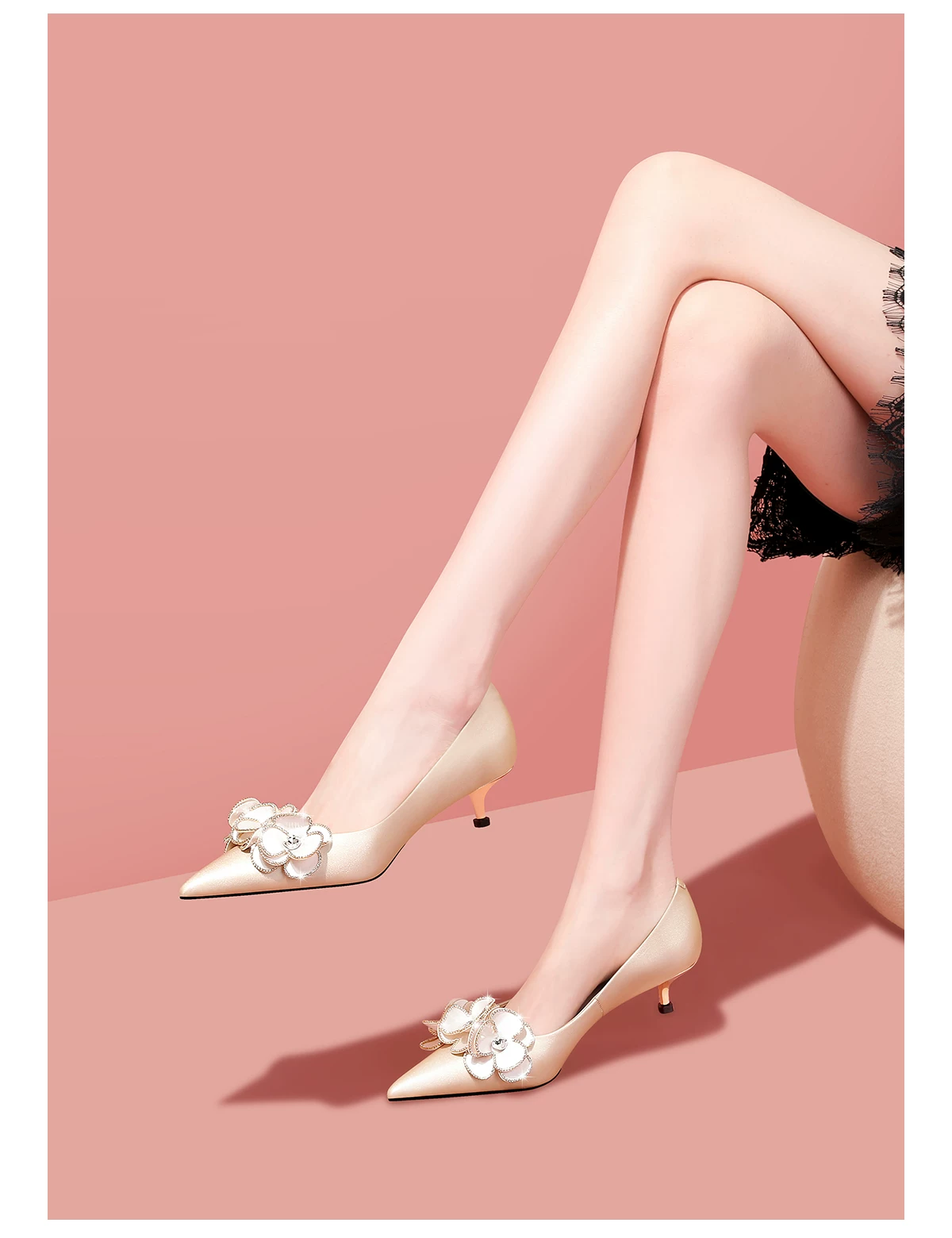
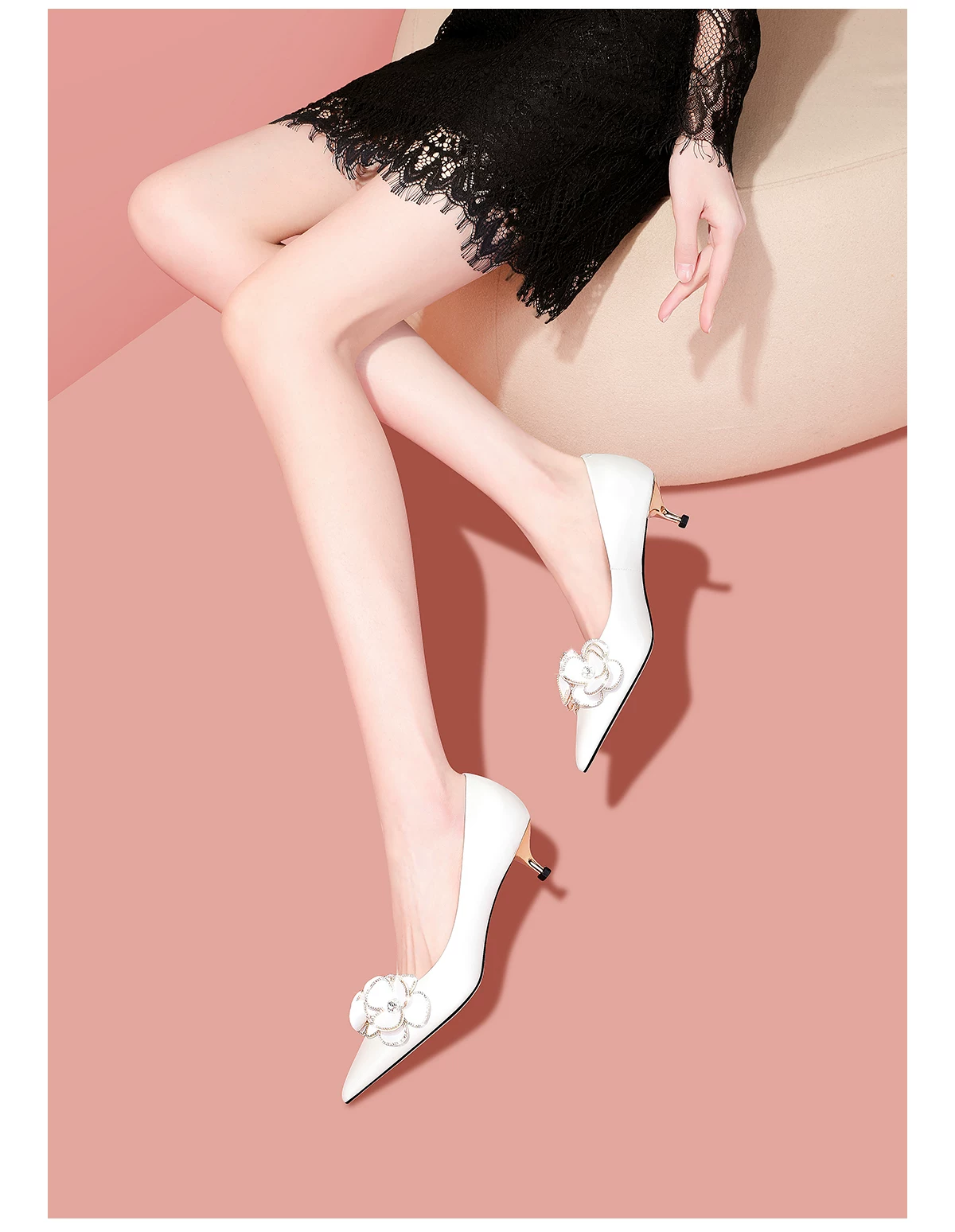
Low block heels, 30 to 50mm. These read formal and feel close to flat, because the load travels through the whole heel instead of one point. If you want a single pair for meetings that turn into drinks, this is it. Block-heel commuting shoes with a bit of design handle that double shift better than a plain pump, mostly because a wider heel doesn’t sink into pavement grates on the walk between the two.
Slip-on sneakers. Fine in a creative office, risky in a bank. The ones worth buying have a removable insole and a sole that doesn’t flex like a sock. A soft sole feels lovely for a week, then starts to ache through the arch, and by week three you’re back to the scuffed pair.
My own ranking after five years of office jobs: a loafer first, a 40mm block second, a ballet flat third, a slip-on sneaker last. The loafer wins because it survives rain, hides a thin insole, and looks intentional even when you’ve clearly given up on the day.
Sole depth matters more than heel height
People fixate on the heel. The number that actually decides whether your day hurts is how much material sits between your foot and the floor.
A 5mm sole on a flat transmits almost all the impact of walking into your heel pad, your arch, and your knee. A 15mm sole with a bit of give absorbs a decent share of it. That’s why a cheap flat can hurt more than a well-made 40mm block, and why “flat equals comfortable” is one of the most expensive myths in office dressing.
Press your thumb into the sole under the ball of the foot. It should give slightly and spring back. Rock hard means it will feel like walking on a board by mid-afternoon. Soft enough to fold in half means no support at all, and your arch will spend the day doing the work the shoe should be doing.
Then look under the heel. Plenty of office flats have a heel that’s just the same thin sole extended backwards, which is exactly where the impact lands first. Heel pain after long days on hard floors is common enough to have its own clinical name, and footwear is one of the first things the guidance on plantar fasciitis asks you to examine. Swapping a paper-thin flat for something with 12mm of cushioning under the heel fixes a surprising amount of it.
You don’t need a podiatrist for this. You need to press a thumb into a sole before you hand over a card.
Most casual office shoes for women are built on a 5mm to 8mm sole because it keeps the price down and the silhouette slim. That’s a fair trade for a shoe you wear twice a week. It’s a bad trade for the pair you wear forty hours a week for two years, which is the actual job description of an office shoe.
Materials after 80 wears: leather, suede, and knit
Shop lighting flatters everything. The real question is what the material looks like in week twelve, after a hundred walks to the kitchen and back.
Smooth leather creases where your foot bends, and those creases are permanent. That’s not damage, it’s the material doing what it does, but it does mean a pale pair will look worn sooner than a dark one. The upside is structure. Leather holds its shape, so the shoe still supports you at month six instead of collapsing sideways.
Suede goes soft faster than anything else and scuffs if you look at it wrong. A grey or taupe suede office shoe looks expensive for a month and tired by the third unless you brush it weekly. Suede commuter shoes with a soft sole are the version worth the upkeep, because the material is doing real comfort work rather than just sitting there looking nice.
Knit and mesh breathe better than both, which matters in a warm building with bad air conditioning. They also stretch, and stretched knit never comes back. Buy knit snug rather than roomy and expect to replace them inside a year.
Whatever you choose, spray it before the first wear, not after the first scuff. That’s the entire trick and almost nobody does it.
One material warning that only shows up after a month. Cheap casual office shoes for women often use suede that’s been sanded so thin it feels like felt. It looks the same in the shop as a proper split suede and it pills along the flex point within weeks, leaving a bald patch right where your foot bends. Rub the surface with your thumb in the shop. If fibres come away on your skin, walk out.
Leather has a similar tell. Real leather wrinkles when you press it and springs back slowly. Coated leather creases like plastic and stays creased, and once that coating cracks there’s no polish in the world that hides it.
The colour question, and where this category goes wrong
Black is the safe answer and the boring one. It also shows every scuff as a pale line, which makes a cheap shoe look cheaper than it is.
If your work wardrobe runs on navy, charcoal, and denim, a dark grey or taupe shoe matches more outfits than black and won’t read as interview footwear at 3pm. Brown leather works with navy in a way that surprises people who were told otherwise, and nobody has ever been marked down in a review for taupe loafers. For a first pair, match your bag and your belt, then stop thinking about it.
Now the mistakes. The first is buying a shoe that’s comfortable standing and terrible walking. Standing comfort comes from cushioning. Walking comfort comes from the shoe staying attached to your foot, which depends on the heel counter and the fit across the instep. Test by walking the length of the shop, not by bouncing on your toes in front of a mirror.
The second is treating one pair as five pairs. A single shoe worn five days a week absorbs sweat and never fully dries, and damp leather breaks down roughly twice as fast as leather that gets a day off. Two pairs in rotation outlast three pairs worn to death, which makes the stingy strategy the expensive one.
And a third, which I’ll own: don’t buy the pair that’s almost right because it’s reduced. The almost-right shoe is the one that never leaves the box, and it costs more per wear than the full-price pair you actually like. I’ve done this twice. Both times the sale shoe lost.
If it’s the heel height that’s keeping you on the fence, the low options in the block heel range are easier to judge in a photo than a flat, because you can see the heel width and guess how it will land on a pavement.
Five days, one pair: a rotation that works
If you want to spend once and be done, buy two shoes and split the week. Monday and Wednesday for the leather pair, Tuesday and Thursday for the softer one, Friday for whatever survived the week. Give each pair 24 hours between wears with newspaper or cedar inside, and both will last years instead of months.
Wipe the sole edges once a week. It takes fifteen seconds and it’s the entire difference between a shoe that looks maintained and one that looks tired. Keep a spare pair of thin liners in your desk drawer, because the day you need them is always the day you forgot them.
If you’d rather buy once than rotate, spend the money on the pair you wear on Mondays. That’s the day with the longest gap between leaving the house and getting back, and it’s the day a bad shoe punishes you hardest. The Thursday pair can be the cheaper one, because Thursday is already a lost cause.
Two pairs of casual office shoes for women, bought well and alternated, will outlast a single expensive pair worn daily. That’s not a theory, it’s just how leather dries. Damp leather loses shape, and shape is the only thing separating a work shoe from a slipper.
For a wider spread of shapes to compare, the full range of women’s shoes on the site is a faster browse than a mall on a Saturday, and the twelve-hour work shoe test covers what happens when one pair has to survive the school run and a dinner afterwards.
Start with the foot you have at 5pm, not the one you have at 9am. That’s the whole method. Your heel will stop sending you reminders.
And if you only take one thing from all of this: walk ten minutes before you try anything on, then walk ten more while you’re wearing it. Everything else is detail.
