

You order a pair from a German shop because the price is better and the colour is nicer than anything local. Size 38, same as always. They arrive, you put them on, and they’re too short by about 5mm. Not enough to send back immediately, enough to make you wonder every time you wear them.
That’s the European sizing trap, and it catches almost everyone the first time. European walking shoes for women aren’t just labelled differently. They’re built on different lasts, with different width assumptions, for a different average foot.
Here’s what actually changes between an EU 38 and a US 7.5, how to convert properly, and which parts of the fit you can fix after the parcel arrives.
EU 38 is not US 7.5. It’s closer to a 7.
Most conversion charts say EU 38 equals US 7.5. That’s a rounding decision, not a measurement. In practice, an EU 38 usually measures 24 to 24.5cm of internal length, which sits between a US 7 and a 7.5. If you’re a true 7.5, you’ll often want a 39.
This gets worse because shoe sizing systems were standardised at different times using different reference points. The EU system (properly called Paris point) counts two-thirds of a centimetre per size. The US system uses barleycorns, which is one-third of an inch. Neither one is a measurement of your foot. They’re both measurements of a last, and lasts vary by brand.
So the chart is a starting point at best. What you want is the internal length in millimetres, which most European brands publish, and most US-facing shops hide.
Here’s a rough working table for women’s walking shoes, based on internal length rather than label:
- 23.5cm internal → EU 37 / US 6.5
- 24.0cm → EU 38 / US 7
- 24.5cm → EU 38.5 to 39 / US 7.5
- 25.0cm → EU 39 / US 8
- 25.5cm → EU 40 / US 8.5
Measure your foot the way I described in the narrow-fit guide, standing, end of day, longest toe. Add 10mm for toe room. That number is your target internal length. If a shop can’t tell you the internal length, ask. A good one will email the factory spec.
Two more things shift the number. Socks change your effective foot length by 2 to 3mm. And walking shoes usually run a half size larger than dress shoes from the same brand, because the last is built with more volume.
European lasts are narrower, and that changes everything
This is the part the size chart never mentions. European walking shoes are generally built on a narrower last than US equivalents, sometimes by 4 to 6mm at the ball of the foot.
If you have a medium or wide foot, that means the EU 39 that matches your length will feel tight across the forefoot. You size up to a 40, the length is now 5mm too long, and your heel starts lifting. That’s the loop people get stuck in.
Italian shoes tend to be the narrowest. Spanish and Portuguese makers sit in the middle. German and Scandinavian brands often run wider, and Dutch brands are wider again, which makes sense given the average foot they’re designing around.
Don’t take that as a rule. It’s a tendency, and individual lasts vary more than national averages do. But it’s useful when you’re choosing between two pairs you can’t try on.
Width also gets labelled differently. EU shoes rarely use letter widths at all. Instead the fit shows up in the last name, which is usually a number or a word in the product description. A “comfort last” is wider. A “slim last” is narrower. If the listing doesn’t say, assume medium and prepare to return.
One practical workaround: buy from a European brand that also sells in the US and read the US reviews. American reviewers will tell you immediately whether the shoe runs narrow, because they’re comparing it to what they normally wear. That’s more useful than any conversion table.
What European walking shoes do better
There are real reasons to buy across the border. It’s not all sizing pain.
First, the leather. Italian and Portuguese tanneries still produce a large share of the smooth calf leather used in mid-range shoes, and European brands tend to use it at lower price points than US brands do. You notice it in how the upper creases: fine lines rather than deep folds, and it softens instead of cracking. If you want to know what you’re actually buying, this explainer on how leather is tanned and finished is worth ten minutes.
Second, repairability. A lot of European walking shoes are stitched rather than glued at the sole. That means a cobbler can resole them, which doubles the life of the shoe for about a third of the purchase price. Glued soles can’t be repaired economically, so they go in the bin when the tread wears through.
Third, sizing consistency within a brand. Once you know your size in one European label, it tends to hold across their range. US brands are less consistent because they outsource production to more factories.
The downside is returns. Sending a pair back to Europe costs 15 to 25 euros, and some shops don’t cover it. Factor that into the price before you decide the deal is good.
Also worth knowing: European walking shoes often have a lower stack height than US counterparts. A 12mm heel stack is common, where a US walking shoe might sit at 20mm. That’s better for stability on cobbles, worse if you want plush cushioning for long pavement walks.
Reading a European product page properly
Most of the information you need is on the page. It’s just not in the place you’d look first.
Check the last width before the size. Look for words like “regular”, “comfort” or “wide” in the description, and for a last name in the spec table. If the page lists “Leisten: Comfort” you’re looking at a wider build.
Check the heel stack and drop in millimetres, not the marketing language. A shoe described as “light cushioning” in European copy usually means 10 to 14mm. “Maximum cushioning” means 25mm and up.
Weight per shoe matters more on stairs than on flat ground, and European brands publish it more often than US ones. Under 280g for a size 38 is light. Over 380g and you’ll feel it.
Check whether the insole is removable. This one matters more than it sounds, because a removable insole is your only volume adjustment if the width is slightly off.
And check the returns policy in your own language, not the translated version. Machine translation regularly turns “return shipping at customer’s expense” into something softer.
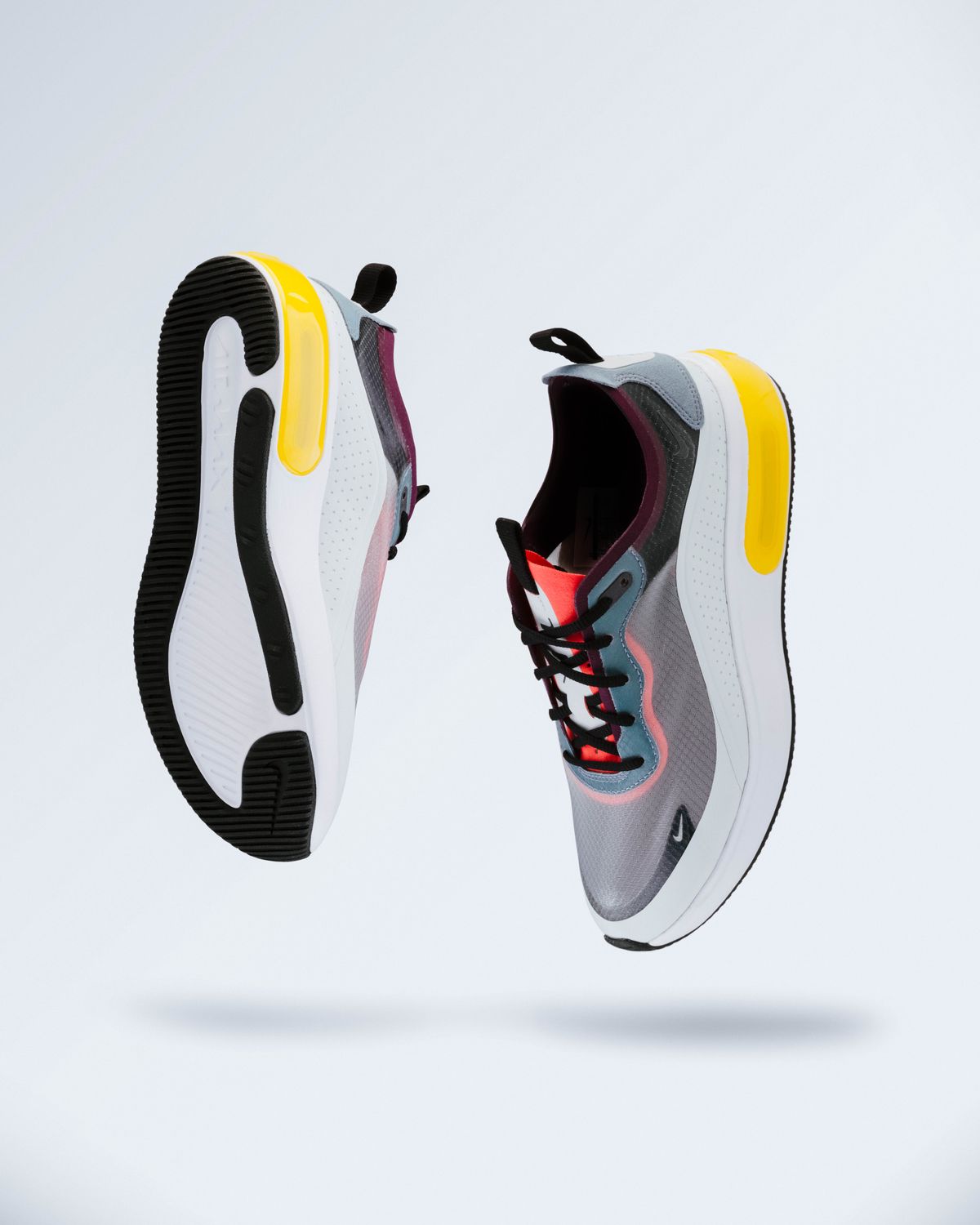
If the page is in German or Italian, put the model name into a search engine along with “Erfahrungen” or “recensioni”. You’ll find local reviews with fit comments, which are far more reliable than the shop’s own size guide.
Fixing a pair that arrived slightly wrong
Most sizing misses are 5mm, not a whole size. Those are fixable, and it’s usually cheaper than a return.
If the shoe is too long, a 3mm felt insole at the heel takes up the length and stops your heel sliding forward. It’s not elegant. It works.
A tight forefoot is fixable. A shoe stretcher left in overnight with the toe widened by one turn will buy you 2 to 3mm on a leather upper. It does nothing for synthetic or knit, so check the material first.
Pressure on the top of your foot needs a lacing change, not a stretcher. Switch to a window pattern and skip the eyelet directly over the highest point of your instep. That alone relieves most of it.
When the heel slips because the shoe is a half size too big, heel lock lacing will hold it. If it still slips after that, the shoe is wrong and you should return it. Don’t wear it for a month and then try.
Wear them indoors for an hour before deciding. Most European shops accept returns on unworn shoes with the box, and “unworn” usually means no marks on the outsole. Walk on carpet, not pavement.
What doesn’t work: thick socks to fill a big shoe. You’ll end up with a shoe that fits in winter and swims in summer, and the sock will bunch at the heel and rub.
Breaking in a European leather upper without wrecking it
European leather uppers break in differently from the soft synthetics most of us are used to. They start firm, they mould over about 40 kilometres, and they hold that shape for years. The trick is getting through the first week without a blister.
Wear them for 20 minutes on day one. Not an hour. Leather softens with heat and flex, and your foot produces both. Twenty minutes, indoors, then take them off. Repeat for three days.
On day four, do your normal short walk but stay under 3 kilometres. If you feel a hot spot on your heel, stop and put a plaster on before it becomes a blister. A hot spot takes 20 minutes to turn. A blister takes a week to heal, and you’ll be back to square one.
By day seven you can usually do the full commute. By day ten the shoe should feel like it was made for you, which is the entire point of buying leather in the first place.
Three things can go wrong in that first week.
- Waterproofing spray on day one. It seals the leather before it’s moulded, and it traps the factory finish in. Wait two weeks.
- Wearing them in the rain before they’re broken in. Wet leather stretches unevenly and dries hard.
- Heating them with a hairdryer to speed things up. It works for five minutes and then the adhesive around the sole gives up.
If the shoe is still tight across the ball after a week, stop. That’s a width problem, not a break-in problem, and no amount of walking will fix it. Return them if you still can, or take them to a cobbler who can stretch them properly. A cobbler has a proper stretcher and gets 3 to 4mm. A home stretcher gets about 2mm and only if you leave it in for 24 hours.
One more thing: European leather shoes often arrive with a hard factory polish that makes them look better on the shelf and feel stiffer on your foot. A wipe with a damp cloth removes most of it, and the leather softens faster without it. Sounds odd. Try it on one shoe and compare after three days.
Where to buy, and what to avoid
If you’re in the UK or US and buying European, three routes work.
Buy from a local stockist of the European brand. You pay more, but you can try the fit and return for free. For a first purchase from a new brand, this is the sensible route.
Buy from a European shop with a local returns hub. Some German and Dutch retailers have UK return addresses now. Check before you order, because it changes the economics completely.
Ordering two sizes and returning one stings for a week and saves you a month of guessing. Do this only with a shop that offers free or cheap returns.
What I’d avoid: buying from a marketplace listing with no width information and a 30-day return window that requires shipping to Asia. The saving disappears the moment you return one pair.
One honest caveat about European walking shoes: they’re often designed for city walking on paved surfaces, not for trails. A “walking shoe” in German retail usually means a low-profile city shoe with a leather upper. If you want grip on wet grass or gravel, you’re looking at a different category entirely, and the European city models won’t cut it.
If you’d rather skip the conversion headache, a flat-soled breathable walking shoe is cut closer to a true-to-size last, and a pair of soft leather sports shoes for women will give you the leather upper without the EU sizing gamble. Both are easier to size from a chart than a German comfort last.
And if width is the thing you’re struggling with rather than length, the guide to narrow walking shoes that don’t slip at the heel covers the fit tests in more detail. If the problem is keeping a light-coloured pair clean instead, this piece on white walking shoes that survive daily wear has the cleaning rules. For the full range in one place, the women’s shoe collection is organised by style rather than by country of origin, which is honestly more useful.
Measure your foot in centimetres, add 10mm, and buy the internal length rather than the label. That one habit is what stops the parcel going back.
