

You tried the pointed pair on in the shop, walked six steps to the mirror, and knew. Your toes were stacked on top of each other like a drawer that won’t close. You put them back on the shelf and told yourself heels just aren’t for your feet.
They might be. You were probably wearing the wrong toe shape.
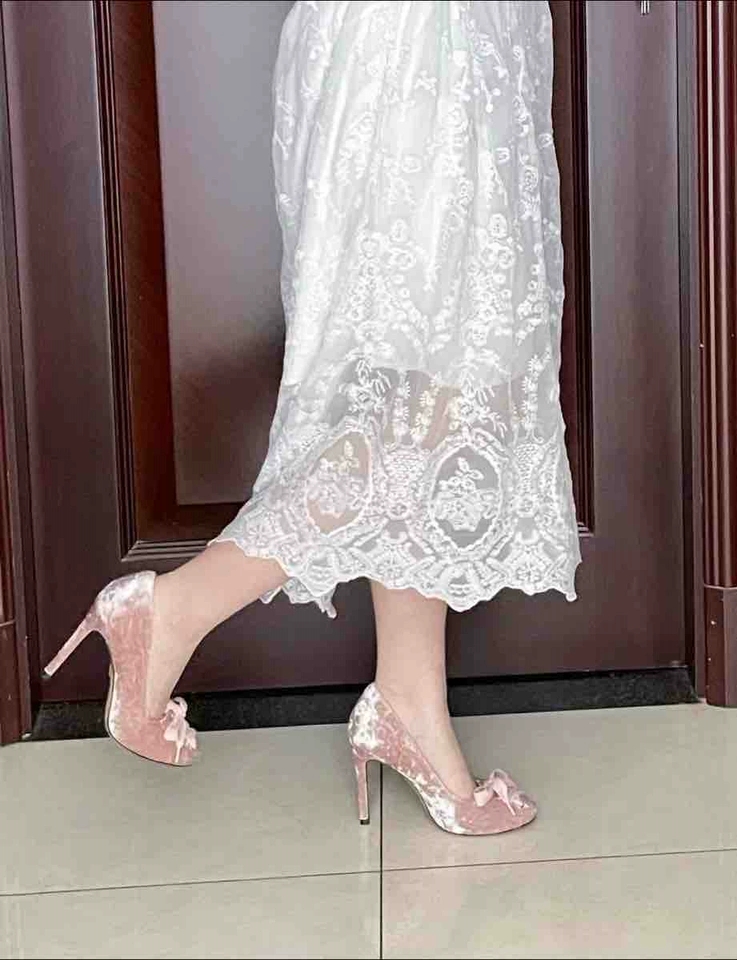
A round toe gives your forefoot the space that a pointed or almond toe borrows and never returns. It’s the least fashionable option on the shelf and the one most likely to still be comfortable at 6pm. If your toes have been objecting for years, womens round toe heels are worth one proper try before you give up on the category entirely.
Round toe doesn’t mean what you think it means
Nobody sells a literal circle. A round toe is a toe box with a curved outer edge and enough depth at the front that your toes can lie flat instead of curling. That’s the whole specification, and it varies enormously between brands.
Three shapes get called round, and they behave differently. A true round toe looks slightly old-fashioned and gives the most room. An almond toe is a round toe that’s been narrowed slightly at the tip, which is the version most modern brands sell. A soft square toe is wider still, with corners rounded off.
The number that actually matters isn’t the name, it’s the internal width across the ball of the foot and the height of the vamp. Two “round toe” shoes can differ by 8mm in width, which is the difference between fine and unbearable by midday. Measure the old pair that works, inside edge to inside edge at the widest point, and take that number shopping with you. It’s a more reliable guide than any size label, and it explains why womens round toe heels from one brand fit and another’s don’t.
There’s a trade-off you should know about before you fall in love with a picture. Round toes make the foot look shorter and slightly wider from above. On a 90mm heel that’s rarely noticeable. On a flat or a low heel it can read as a school shoe, which is why the shape has a reputation problem it doesn’t entirely deserve.
Fashion history explains where that reputation came from. The rounded toe dominated women’s shoes through the 1930s and 1940s, went narrow in the fifties, came back in the nineties, and has been treated as the safe option ever since. Safe isn’t a compliment in shoe design, which is how a shape that fits most feet ended up in the discount bin.
Who should look at this shape first
If any of the following sounds familiar, start here rather than with a pointed toe.
Bunions are the big one. A bony bump at the base of the big toe joint is made worse by any shoe that presses the toes together, and the shape of the shoe does more damage over ten years than the height of the heel. The clinical picture of a bunion is mostly a story about footwear, which is why the toe box matters more than the heel. The Mayo Clinic’s guidance on bunions says the same thing in plainer terms: a wide toe box reduces pressure on the joint, and tight shoes accelerate the deformity. That’s the argument for a round toe in one sentence.
Morton’s neuroma, the burning pain between the third and fourth toes, behaves the same way. Squeeze the forefoot and it flares. Give it room and it often settles.
Long toes need depth as much as width. If your second toe is longer than your big toe, a shallow pointed vamp will press down on it with every step, and you’ll feel it as a bruised nail after a long evening. A round toe with a taller vamp solves a problem that no amount of sizing up will fix.
Wide feet get the obvious benefit. So do people with a high instep, because a rounded toe box usually comes with a slightly higher cut across the top of the foot.
Age matters here more than most people expect. Feet spread through adulthood, and by 50 many women are half a size wider than they were at 25, even if the length hasn’t changed. Women who wore a pointed 38 at thirty often need a round-toed 39 at fifty. Buying the same size out of loyalty is the most common reason people conclude that heels stopped fitting them.
Pregnancy does the same thing faster. Relaxin loosens the ligaments in the foot along with everything else, and a percentage of women keep the wider size permanently afterwards.
Where round toe heels look wrong
Honesty first: this shape is not universally flattering, and pretending otherwise gets you a pair you never wear.
With a sharply tailored suit, a round toe can look soft and slightly dated, like a shoe from a different decade than the jacket. With a very short hemline it can read girlish. And on a slim, narrow foot, a wide round toe can look like you borrowed someone else’s shoes.
The shape also fights certain fabrics. Stiff patent in a round toe looks like a uniform shoe. Soft suede, grained leather and matte finishes all soften the silhouette and make it look intentional rather than sensible.
Then there’s the colour problem. A pale round toe draws attention to width, and a very dark round toe under a dark trouser can look heavy. Mid-tones work best: tan, taupe, oxblood, navy, and the deeper greens that photograph well without going black. Texture helps too, since grain and suede break up the surface so the toe doesn’t read as one flat shape.
One more limitation worth naming. Round toes don’t elongate the leg the way a pointed toe does, so if you’re short and wearing a midi skirt, expect to lose a little height in the visual sense. A slightly lower vamp and a bit of visible ankle compensates for most of it.
What to do instead depends on the outfit. If the rest of the look is sharp and minimal, go pointed and accept the narrower fit. If the outfit is soft, textured or layered, a round toe is the shoe that matches it. Very few wardrobes need only one of the two, which is why so many people end up owning both and wearing the round pair four days out of five.
For the opposite approach, this piece on square toe heels and how they treat wide feet covers the shape that gives away the most room of all.
Which heel heights work with a round toe
Heel height changes the whole read of the shoe, and the pairing isn’t arbitrary.
At 30 to 50mm, a round toe is the most useful shoe in a wardrobe. It works with trousers, it works with tights, and it survives a full working day. This is the version to buy first. Suede finishes look best at this height because the softness stops the shoe reading as orthopedic.
At 70mm, the shape starts to look deliberate rather than plain. The foot arches, the toe box lifts, and the round front balances the height without the aggression of a pointed stiletto. For a wedding where you’ll be standing for hours, this is the sweet spot.
Above 85mm, a round toe gets tricky. The higher the heel, the more your weight slides forward into the toe box, and the space you gained at the front fills up with your own foot. A round toe at 100mm is often less comfortable than a pointed toe at 100mm, because the foot slides forward into a wider space and the heel slips out.
That last point surprises people. Width isn’t comfort on its own. What you want is width plus a heel counter that holds your foot back, and an ankle strap does that job better than anything else.
Platforms change the arithmetic again. A 90mm heel on a 20mm platform is really a 70mm drop, and the round toe becomes far more workable because your foot isn’t sliding downhill all day. If you love the look of a high heel but the toe box keeps failing you, a platform is the honest compromise.
One thing to ignore: the height printed on the product page. Brands measure from the floor to the top of the heel block, not the actual drop your foot experiences. Measure your own pair when it arrives and you’ll find most are 5mm off in one direction or the other.
What to check in the toe box before you pay
Four checks, all doable in thirty seconds with the shoe on your foot.
Toe wiggle. Stand up and try to lift each toe individually. If you can, the box has enough depth. If your toes are pinned, size up or walk away, because no amount of breaking in creates space that isn’t there.
Ball alignment. The widest part of the shoe should sit under the widest part of your foot, roughly at the joint of the big toe. If the shoe’s widest point is an inch forward of yours, the shoe is too long and the toe box will crease across the wrong place.
Vamp pressure. Press a finger under the top edge of the shoe across your instep. If it digs in, the cut is too low for your foot, and you’ll get a red line across the top of your foot within an hour. That mark takes days to fade.
Heel slip. Walk ten steps. More than 5mm of vertical lift at the heel means the shoe will rub, and a round toe makes it worse because there’s nothing at the front holding your foot forward.
Leather stretches about 2mm across the width over three months. If the shoe is painful in the shop, it will be painful in October too. Buy for the foot you have at 5pm, not the one you have at 9am, because feet swell through the day and the swelling is permanent after about age 40.
Try the pair on with the socks or tights you’ll actually wear, and then again barefoot. If barefoot is comfortable and with tights it isn’t, the shoe is half a size too small and you’ll only find out in November.
Returns policies matter more for this shape than for any other. Round toe sizing varies between brands by up to a full size, so buy from somewhere that allows a return, and keep the box until you’ve worn them indoors for an hour.
Styling them so they don’t look like school shoes
Three moves do most of the work.
Show ankle. A cropped trouser or a midi hem that stops above the ankle bone breaks the line between shoe and leg, and that gap is what makes a round toe look intentional rather than institutional.
Match the shoe to your tights rather than to your outfit. A taupe round toe over grey tights extends the leg; a black round toe over grey tights cuts it into three pieces. If you’re wearing no tights at all, pick a shade within two steps of your own skin tone and the shoe will read as part of the leg rather than a block at the end of it.
Add one sharp element elsewhere. A structured bag, a crisp collar, a slim belt. The shoe is soft, so the rest of the outfit needs something with an edge to stop the whole look going shapeless.
Trouser length is the detail that decides whether the whole thing works. A straight-leg trouser should break just above the shoe, not pool on it. When a wide hem covers the top of a round toe, you get a solid block of fabric from waist to floor and the shoe stops contributing anything.
An ankle strap helps more with this shape than with a pointed one. It visually separates the foot from the leg, which counteracts the shortening effect of the round front. Womens round toe heels with a thin strap tend to look more deliberate than the slip-on versions, and they stay on your foot better when you’re walking.
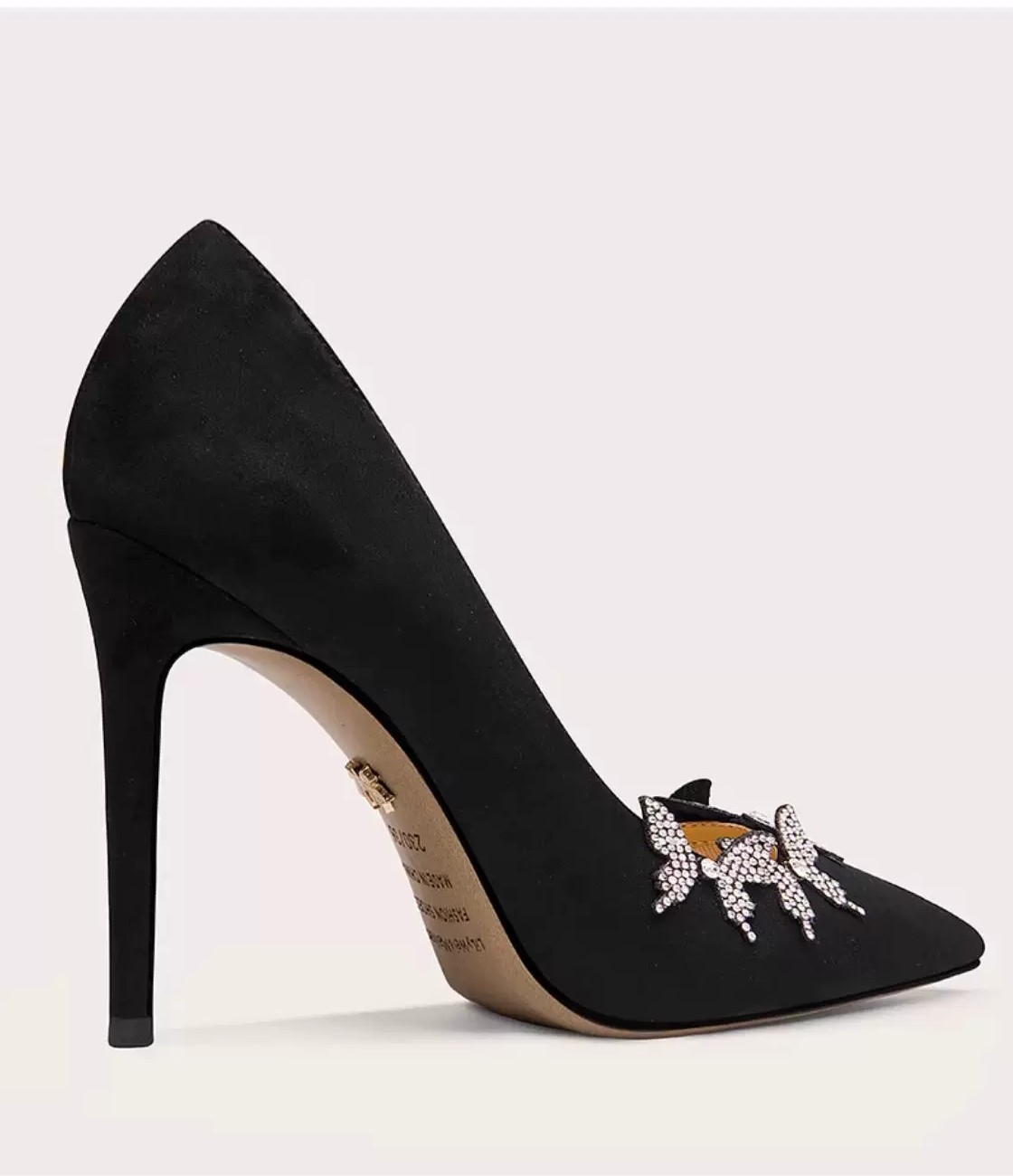
For product starting points, this pair of suede retro heels with a softer toe shape shows how the finish changes the read, and the Hepburn-style heel with a rounded front is the version that works with tailoring. Both sit in the wider heels collection if you want to compare heights side by side.
Creasing, and how to slow it down
Round toe shoes crease across the vamp faster than pointed ones, because the leather has more surface to fold. That’s not a defect. It’s what leather does.
Slow it with shoe trees, inserted while the shoe is still warm from your foot, and keep them in until the next wear. Cedar absorbs moisture and holds the shape of the vamp. Rolled newspaper works in a hotel room and nowhere else.
Condition the vamp every couple of months with a neutral cream, working it in with a cloth rather than a brush. Dry leather cracks along the crease line and once it cracks, no product repairs it. You can only slow it.
Store them lying flat rather than heel-down if you have the shelf space. Heels take the weight of the shoe overnight, and over years the angle changes slightly.
Winter is where suede versions lose their advantage. Road salt leaves white tide marks that set into the nap, and once they dry the only fix is a suede brush and a lot of patience. Treat new suede with a protector spray before the first wear, reapply every few weeks, and keep a brush by the door. Smooth leather round toe heels need less attention but show scuffs more clearly on the toe, because that’s the part that hits every step and every car door.
If you’ve been avoiding heels because every pair you tried pinched at the front, try one round toe pair at 50mm before you write off the whole category. The case for a 45mm heel over a flat covers why the height matters as much as the shape, and if you’re deciding between a round and a pointed front for a specific event, the notes on what each heel shape does to your foot will save you a return.
Your toes have been giving you the same message for years. It’s worth listening once.
