

You bought a pair of burgundy shoes in October, wore them twice, and now they’re sitting by the door waiting for a reason. That’s not a colour problem. It’s a pairing problem, and it’s fixable in about ten minutes.
Burgundy is the most useful dark colour nobody reaches for. It does the job black does, holds up better against denim, and looks deliberate instead of default. It also goes wrong faster than black, because there are at least four shades hiding under the same word.
So let’s sort the shade first, then the styling, then the boring part about dye transfer that will save your pale tights.
Why burgundy gets worn more than black does
Black shoes with blue jeans create a hard line at the ankle. Burgundy doesn’t. The red undertone sits closer to indigo than pure black does, so the transition from denim to shoe stops shouting.
That’s the practical argument, and it holds up. If you wear jeans four days a week, a burgundy heel will get more use than the black pair you already own.
There’s a second reason, and it’s about looking like you chose something. Black heels disappear into an outfit. Burgundy reads as a decision, even when you made it in ninety seconds.
What burgundy does badly: it competes. Put it next to a red dress, a pink coat, or a bright printed scarf and the whole thing turns muddy. Black never has that problem. If your wardrobe is loud, burgundy is a harder sell.
Four shades, and only two of them are safe
The word covers a wide range. Burgundy as a colour sits around a deep red with a purple lean, but shops use the label loosely and you’ll get everything from brick to near-black.
Here’s the working breakdown.
- Oxblood. Dark red with brown in it. The easiest to wear, the closest to black, the best for offices.
- Wine. Purple-leaning and cooler. Great with grey, tricky with warm browns.
- Maroon. Flatter and browner. Reads more casual, works well with knitwear and denim.
- Cherry or crimson. Bright, high saturation. Fun, and the hardest to wear twice a week.
If you want one pair that works with most of your wardrobe, buy oxblood. It’s dark enough to pass as a neutral on a Tuesday and warm enough to look intentional on a Saturday.
The same shade logic applies across the colour wheel. If you’ve read how to pick a light blue shade you’ll actually wear, the rule transfers directly: buy the version with the most grey in it, wear it far more often, and add the loud one second.
What to wear it with, in order of how well it works
Navy is the best pairing and it isn’t close. Deep blue and deep red sit at similar values, so nothing jumps. A navy suit with oxblood heels looks more expensive than the same suit with black.
Camel and tan come second. The red warms up the beige instead of fighting it. This is the combination that makes burgundy look like a plan.
Grey is the sleeper. Charcoal, specifically. Wine heels on a grey trouser is one of those combinations that looks styled without effort, and it works in an office where a red shoe would raise eyebrows.
Denim is the everyday answer. Dark wash, straight leg, oxblood block heel. It’s a Tuesday outfit that photographs well, which is more than most Tuesday outfits manage.
What to avoid: any red within two shades of your shoes, bright pink, and pure white. Skip the all-burgundy look unless the pieces are different textures, because a matte shoe with a matte bag in the same dye reads as a uniform.
Bag and belt: matching without going full set
You don’t need to match. Matching shoe and bag in the same burgundy is the fastest way to make an outfit look bought as a set, and sets date badly.
Pick one burgundy item and let the other stay neutral. Shoe in burgundy, bag in black or tan. That’s it. If you want a second hit of the colour, use a belt or a scarf, not both.
Texture does the work that exact colour matching can’t. A suede shoe with a leather bag in a different red reads as styled. Two identical matte finishes read as a uniform.
One practical note about bags. If you carry a light-coloured tote and change into heels at the office, keep the shoes in a cloth bag inside it. Burgundy dye plus cream canvas is a stain you’ll be looking at for years.
Jewellery is the other easy lever. Gold warms up oxblood and maroon. Silver pulls wine and cherry cooler. Neither is wrong, but mixing both metals in the same outfit makes the shoe colour look accidental rather than chosen.
Heel height matters more than colour here
Burgundy is a statement colour, and statement colours get bought in heights people can’t wear. Then they sit by the door. You already know how that ends.
Buy the height you’d wear on a normal Wednesday, not the height you’d wear to a party. For most people that’s 50 to 70mm.
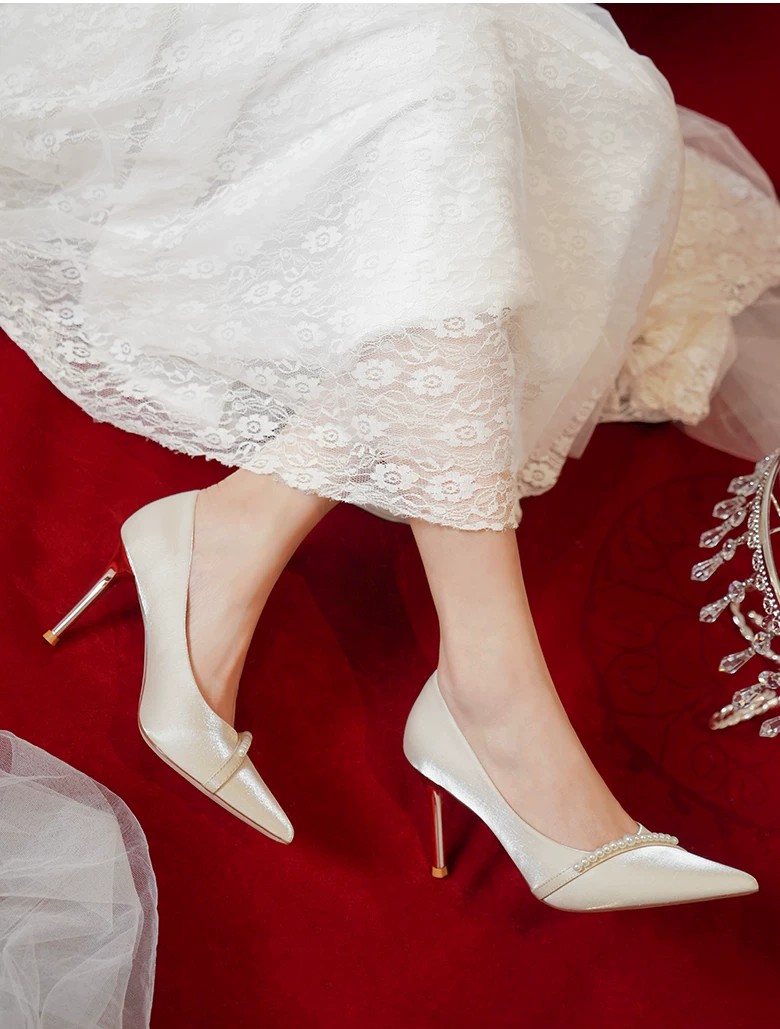
At 70mm and under, a burgundy shoe works with trousers, jeans and midi skirts. At 90mm and above, it only works with short hemlines and evenings, and the wear count drops to a handful per year.
Shape follows the same logic. A pointed toe in burgundy looks sharper than it does in black, which is good if you want that and bad if you’re already wearing a sharp outfit. A round or square toe softens it and makes it wearable at 9am. If your feet are wide, the wider toe shapes are worth the hunt; square-toe cuts that forgive wide feet tend to run truer than pointed ones.
Stiletto, block, or kitten: which shape the colour suits
Burgundy behaves differently depending on the shape it’s cut into. Worth knowing before you spend.
Stiletto. The most striking version of the colour, and the least forgiving. A thin heel in dark red draws the eye down to the smallest point in the outfit, which is flattering in a photograph and miserable on a cobbled street. Keep this shape for evenings and indoor floors.
Block. The version you’ll actually wear. A wide heel makes the colour look grounded rather than theatrical, and it survives rain, gravel and train platforms. If you only own one burgundy pair, this is the shape.
Kitten. The one people overlook in this colour. A 45mm heel in oxblood looks like a shoe your grandmother wore well, which is a compliment. It also solves the statement problem: you get the colour without the attention, so it works in offices where a bright shoe would be a conversation.
Platform and wedge. Burgundy in a chunky platform reads very Sixties, very deliberate. Great if that’s the goal, odd if the rest of your outfit is minimal. Wedges in this colour look best in suede, which brings its own weather problems.
My ranking for a first pair: block, then kitten, then stiletto. The reverse order is how people end up with shoes they photograph once.
Leather, suede, or patent: pick by weather, not by mood
This is the decision that determines whether the shoes survive a winter.
Leather is the safe default. It takes polish, handles rain with a wipe, and creases in a way that looks like use rather than damage. Goat and calf both work. Expect 2mm of give over the first month.
Suede is the one people regret. It looks richer in burgundy than any other material, and one wet commute will leave water marks that never quite lift. If you buy suede, buy a protector spray the same day and reapply monthly. Suede’s nap structure is why it stains rather than beads.
Patent handles rain perfectly and shows every scuff. It also doesn’t stretch at all, so buy it snug or don’t buy it.
My ranking for a first pair: leather, then patent, then suede. Suede is the reward for already owning a leather pair.
The dye transfer problem nobody warns you about
Dark red dye moves. It moves onto pale tights, onto cream socks, onto the inside of a light-coloured bag if you carry a spare pair.
This isn’t a fault in cheap shoes. It happens with expensive ones too, especially in the first few wears.
Two fixes. Spray the inside of the shoe with a fabric protector before the first wear, and wear dark tights or no tights for the first three outings. After that the excess dye settles and the problem mostly stops.
If you’ve already got a stain on a pale skirt, cold water and a drop of washing-up liquid, blotted rather than rubbed. Warm water sets it.
Also check the sole edge before you buy. Cheap burgundy shoes often have a brown plastic sole edge that reads orange in daylight and ruins the colour. Hold the shoe at arm’s length near a window. If the sole looks warm orange next to the upper, it will look worse outdoors.
Where these shoes actually earn their keep
Office days: oxblood leather, 60mm block, closed toe. It reads conservative from three metres and interesting from one.
Wedding guest: wine or cherry, 75 to 90mm, pointed. Skip white and skip black, which is why burgundy is the standard answer for autumn weddings. If the wedding is indoors with a long standing reception, put comfort first; pairs with a soft insole and a lower pitch will outlast a sharper shoe by about three hours.
Evening: satin or suede, 90mm, whatever toe you like. This is the pair that gets worn eight times a year and is worth every one of them.
Weekends: maroon or oxblood, 40mm or flat, with denim. If you want the shape that survives a standing shift, copy the geometry of thick-heel styles built for long standing hours: wide base, low pitch, room across the toes.
Four pairs is the honest maximum. Most people need two.
Fit checks that matter more in a dark colour
Dark shoes hide fit problems. A black or burgundy upper won’t show the bulge where your toe presses, so you have to feel for it instead of looking.
- Press the toe box from the top. If you can feel your longest toe against the leather, it’s too short.
- Walk ten steps. Your heel should lift under 5mm.
- Stand still for ten seconds. If your toes curl to hold position, the pitch is wrong.
- Check the instep. Red dye on a tight vamp will mark your foot for a day.
Buy at the end of the day. Feet swell about 4% by evening, roughly half a size, and a shoe bought at 9am can be tight by dinner.
One more thing. Burgundy leather shows creasing across the vamp more than black does, because the colour shifts where the leather folds. That’s normal. It’s also why you should avoid buying a pair that’s already creased on the shelf, since it means someone else has walked in them.
A care routine that takes four minutes a month
Wipe with a damp cloth after a wet day, let them dry away from a radiator, then polish with a cream in the matching tone. Clear polish works but leaves a haze on dark red.
Store them with a shoe tree, or rolled newspaper if you don’t own trees. The point is keeping the vamp from collapsing, which is what makes a leather shoe look old before its time.
If the colour fades at the toe, which happens after a year of commuting, a cream polish in oxblood brings it back in one pass. Don’t use a red polish on a wine shoe. It’ll go pink.
If you’re buying one pair this month
Oxblood leather, 60mm block heel, round or soft square toe. That pair works with jeans, navy, grey and camel, and you’ll wear it twice a week without thinking about it.
The cherry satin pair can wait until you’ve got a reason. It’ll still be there in spring.
And if you’re standing in a shop right now deciding between burgundy and black, ask yourself which one you’d reach for on a wet Tuesday. That’s the one to buy.
