

Two Years in Burberry Heels, and What Held Up
My first pair of Burberry heels arrived in a box heavy enough that I assumed the courier had doubled up someone else’s order. I wore them that week to a dinner in an apartment with broken January heating, walked home eleven blocks, and ended up with a blister the size of a pea on my right heel. Nobody puts that part in the campaign photos.
Two years and roughly ninety wears later, they’re still the pair I grab when I need to look like I know what I’m doing. So this isn’t a love letter. It’s a wear report, annoyed parts left in.
What you’re actually paying for
Most people assume the money covers the check. It doesn’t, or not much of it. On my pair the check only shows on the lining and a hairline trim near the sole, and you can’t see either while the shoe is on your foot.
The real cost sits in the last, the form the shoe gets built around. Burberry’s run narrow through the toe box and place the arch further back than most Italian houses do. That single decision explains almost everything people report about fit. Wide across the ball? You’ll feel the squeeze by hour two and start eyeing the door. High arch set forward? They’ll feel close to custom, and you’ll spend the first month wondering what everyone else is on about.
Leather grade matters, though less than the internet claims. Fine-grain calfskin creases and softens within a few weeks. Heavier corrected grain takes a full season. Burberry leans toward the finer stuff, so break-in is short and the shoe bends where your foot bends. Suede is the weak spot. Lovely nap, but it scuffs at the toe the first time you brush a curb, and brushing never brings that back.
Care is where most people give up early. A protector spray every couple of months, shoe trees while they cool down, and a wipe with a damp cloth after rain will add years. Skip the spray and a winter of sidewalk salt will do more damage than a decade of walking.
Sizing runs consistently across seasons, at least in the styles I’ve tried. I’m a 39 in their pumps and a 39 in their boots, which is more than I can say for brands that shift half a size every time a factory changes. If you’re between sizes, go down. The leather gives, and a heel that’s slightly snug at 10am fits fine at 6pm.

Where the heel does its work
Pitch matters more than height, and no product page mentions it. A 90mm heel carrying weight toward the back feels steadier than a 70mm pitched forward. Burberry’s block heels sit back and stay wide enough to stand through a two-hour reception without shifting foot to foot every thirty seconds. The slingbacks are a different animal. The elastic on mine relaxed by month eight, and the strap now slips off my heel when I walk fast.
My cobbler sorted that for $22. The brand’s repair desk quoted more than double before they’d even ship it.
Worth saying plainly: the most expensive pair I own isn’t the one that lasted longest. A $180 pair of plain leather pumps from a department store has outlasted two designer pairs, because the heel tip was replaceable and nobody minded resoling them. Check that yours can be repaired before you fall for anything.
And they’re loud. On a wood floor at 7am they sound like a metronome, which is charming in a restaurant and less charming in a shared office. I keep a second, quieter pair under my desk for exactly that reason.

Why they still read as grown-up
Any noir film will teach you that a heel announces a person before her face reaches the screen. Burberry has leaned on that association for decades, mostly by shooting campaigns like film stills. The practical version of the trick is that their shapes are conservative. A pointed pump, a slingback, a low block. None of it will look dated in a photo from 2019 or 2029, which is the entire point.
Colour does more work than the logo. Black is the safe answer, and the boring one. My second pair is a mid tan that matches nothing in my closet except a wool coat, and somehow that pair gets worn more, because it reads softer next to denim and saves me the “is this too formal” calculation every morning. If you’re only buying one, go medium before you go black.
Texture is what changes season. Suede in winter, grained leather for slush, satin only if somebody is driving you somewhere.
One thing I got wrong for a whole year: tights. A leather lining plus wool tights means your foot slides forward until your toes jam against the toe box. A thin sock or a suede-lined pair fixes it. Cheap fix, but you have to know it exists.
What doesn’t work, in my experience: a skinny stiletto with wide-leg trousers. The hem swallows the shoe and the whole point of the heel disappears. Save the stiletto for hems that stop above the ankle.
What other people say, and what it’s worth
Stylists on YouTube will pull a pair apart on camera and point at the welt and the heel cap, and that’s more useful than most magazine spreads. Trade editors tend to write about wearability, which is the word they use when a shoe can survive a fashion week schedule. Both are worth reading, with one caveat. Nobody with a sponsorship is going to tell you the slingback elastic stretches.
Brand statements are the least useful input. Every house says it makes pieces that become part of your life. Judge the shoe instead. Put your weight on the ball of your foot in the shop and see whether the sole flexes. If it doesn’t, walk away, whatever the label says.
The resale market tells you something too. Search the style you want on a secondhand site and count how many are listed with “worn twice” in the description. A high number usually means people bought the trend and hated the fit. A low number means owners keep them.
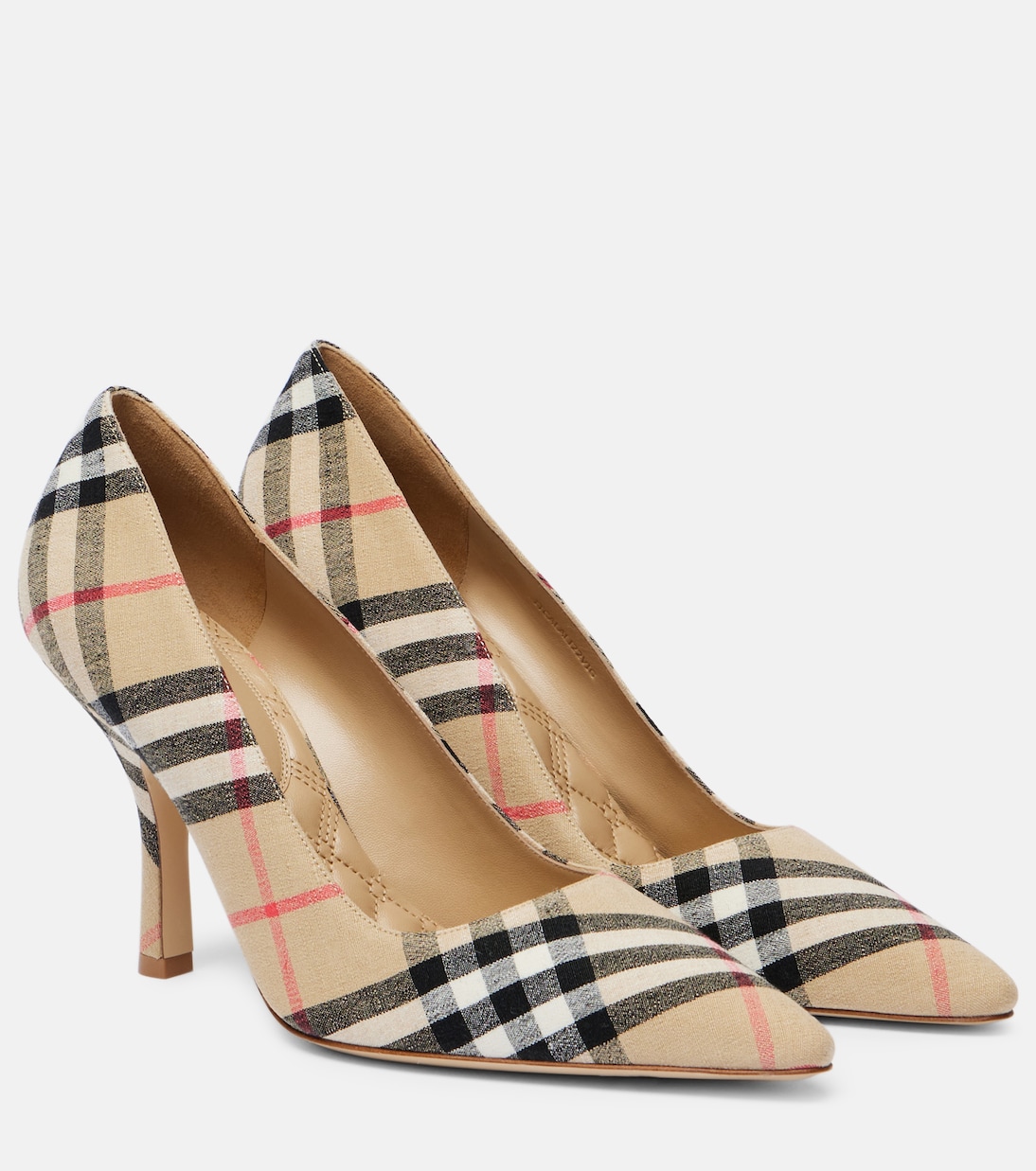
How to buy a pair without overpaying
Timing beats discount hunting. Burberry’s own end-of-season markdowns land in late January and late July, and the classic pumps usually get cut rather than the seasonal colours. Authorised retailers such as Mytheresa and Net-a-Porter discount on a slightly different schedule, so if you miss one window you can catch the other a few weeks later.
Try before you buy online, at least once. Order your usual size and a half size up, wear both around the house on carpet for twenty minutes, then send back the loser. Carpet won’t tell you everything, but it will tell you whether the toe box is going to be a problem, and that’s the question worth answering.
Resale is where the real savings sit. A pair worn twice goes for roughly half of retail, and heel tips are cheap to replace. Check photos of the toe and the inside heel, since those show age first. Ask for a picture of the sole tread as well; a seller who won’t send one has something to hide.

Buy them for the years you’ll actually wear them, not for the box. Mine have a scuff on the left toe I’ve stopped hiding, a $22 strap repair, and about ninety wears behind them, and I’d buy the same pair again. If you want one pair of heels to survive a decade of weddings and bad weather, start with the mid-tan block and leave the slingback until you know your size. That’s what I’d tell a friend, and it’s what I’d have wanted to hear two years ago.
