

How I Wear Burberry Heels From April to February
I bought my first pair of Burberry heels in a grey January, on sale, convinced they’d fix my whole wardrobe. They didn’t. I wore them twice that year, both times with the wrong trousers, and spent one long dinner wishing I’d brought flats. What changed wasn’t the shoes. It was learning which months they belong to and what they should sit next to.
Here’s what I’ve worked out since, season by season, including the parts where these shoes don’t earn their price.
What you’re actually buying
Burberry started in 1856 as a practical business. Thomas Burberry invented gabardine, a breathable cloth that shed rain, and the trench coat followed from that. The check came later, in the 1920s, first as a lining you only saw when the coat opened. That history matters when you’re standing in a shop holding a pair of heels, because it tells you what the house is good at: hard-wearing pieces with a quiet logo, built to be worn in weather.
You can feel it in the heel. Most pairs sit on a chunky block or a sculpted column rather than a needle, and the leather is usually thick enough to hold its shape after a winter of wear. What you can’t feel in the shop is the break-in. Mine took about a week and one blister on the right heel, and I’d rather tell you that than pretend they were soft from day one.
Sizing is worth a word, because it trips people up. Go with your usual European size unless the style has a pointed toe, in which case try a half size up. Pointed toes cut width at exactly the spot where your little toe sits, and no amount of breaking in fixes a shoe that’s too narrow at the joint. Wide feet, narrow feet, a high instep: all of it changes which pair works, and none of it shows up in a product photo.

Spring: the check, minus the costume
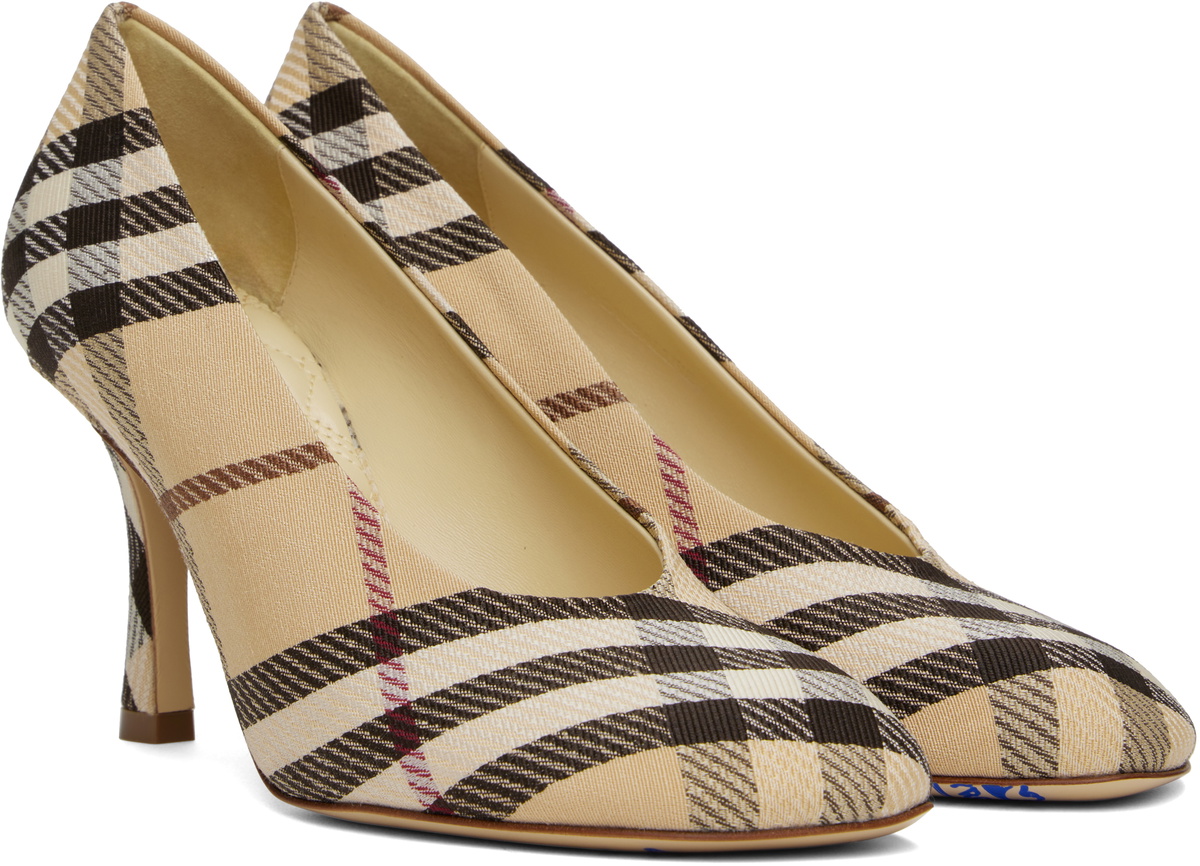
April is where the check earns its keep, as long as you let one thing do the talking. A checked slingback with a modest block heel works with a stone linen dress and nothing else loud. The mistake I made the first year was adding a checked scarf and a trench. Three checks in one outfit and you look like a shop window, not a person.
Suede in beige or pale grey is the safer spring buy. It sits well with a light wool blazer and picks up the softness of a silk scarf, and it doesn’t fight a floral midi. Practical note: suede and April showers don’t get along. Keep a cloth in your bag and don’t wear them on the day the forecast says 80% rain, because a soaked toe box never quite comes back.
Summer: bare legs and a block heel
June to August, I switch to sandals and mules, and the wider the heel the better. This isn’t a style opinion, it’s what your feet tell you after 8,000 steps on pavement. A block spreads the pressure; a stiletto concentrates it on a spot the size of a coin. If you’re going to be out from lunch until midnight, take the block.
My summer uniform is an ivory wide-leg jumpsuit with a heeled sandal, or tailored knee-length shorts with a plain tank and a kitten-heel mule. Both look deliberate with almost no effort, which is the only kind of getting dressed I have patience for in July. Two things fail here. Pointy stilettos on cobblestones, which is a sprained ankle waiting to happen, and anything with a closed toe once it’s above 30 degrees.
Light leather needs more looking after than people expect. Sweat marks show up as dark patches on pale sandals by August, and once they dry in, they stay. Wipe the footbed with a damp cloth after a long day, let them air out overnight instead of shoving them back in the box, and rotate two pairs if you can. Rotating sounds precious. It’s the difference between a sandal that lasts four summers and one that smells like a gym bag by September.
Autumn: suede and wet pavements
October is the season these shoes were quietly designed for. A burgundy or deep tan suede pump with camel wool trousers and a cream silk shirt looks expensive without shouting, because the warm tones sit together and the textures do the work. A pointed toe in black leather under a heavy tweed midi is the other reliable pairing, and the block heel keeps the fuller skirt from swallowing you.
Here’s the contrarian bit. The most expensive pair is not automatically the most comfortable. I’ve had a £600 pair rub worse than a £180 pair, because price pays for leather, lining and where it was made, not for the shape of your particular foot. Try both on, walk to the end of the shop and back, and buy the one that doesn’t need a plaster.
One autumn detail I got wrong for years: tights. A black pump with sheer black tights is fine until the sun hits and your legs look grey. Thick opaque tights in the same depth of black as the shoe fix it, and so does matching your tights to your skirt rather than your shoes. Small thing, big difference in photos.

Winter: boots, or the pump-and-tights trick
From November I mostly wear the boots. A knee-high pair with a low heel goes over skinny jeans or under wide wool trousers, and it handles a wet platform at 7am without drama. For evenings, the trick is a black pump with thick opaque tights and a short dress under a big coat. You get one flash of ankle and a lot of leg, and you don’t freeze on the walk from the taxi.
Two boring things that matter. Check the sole before you commit, because smooth leather on ice is a genuine hazard, and wipe salt off the moment you get home. Salt dries white and eats stitching, and by February the damage is permanent. I keep a pair of foldable flats in my bag from December to March. Not glamorous, but neither is limping home.
One uniform, fewer decisions
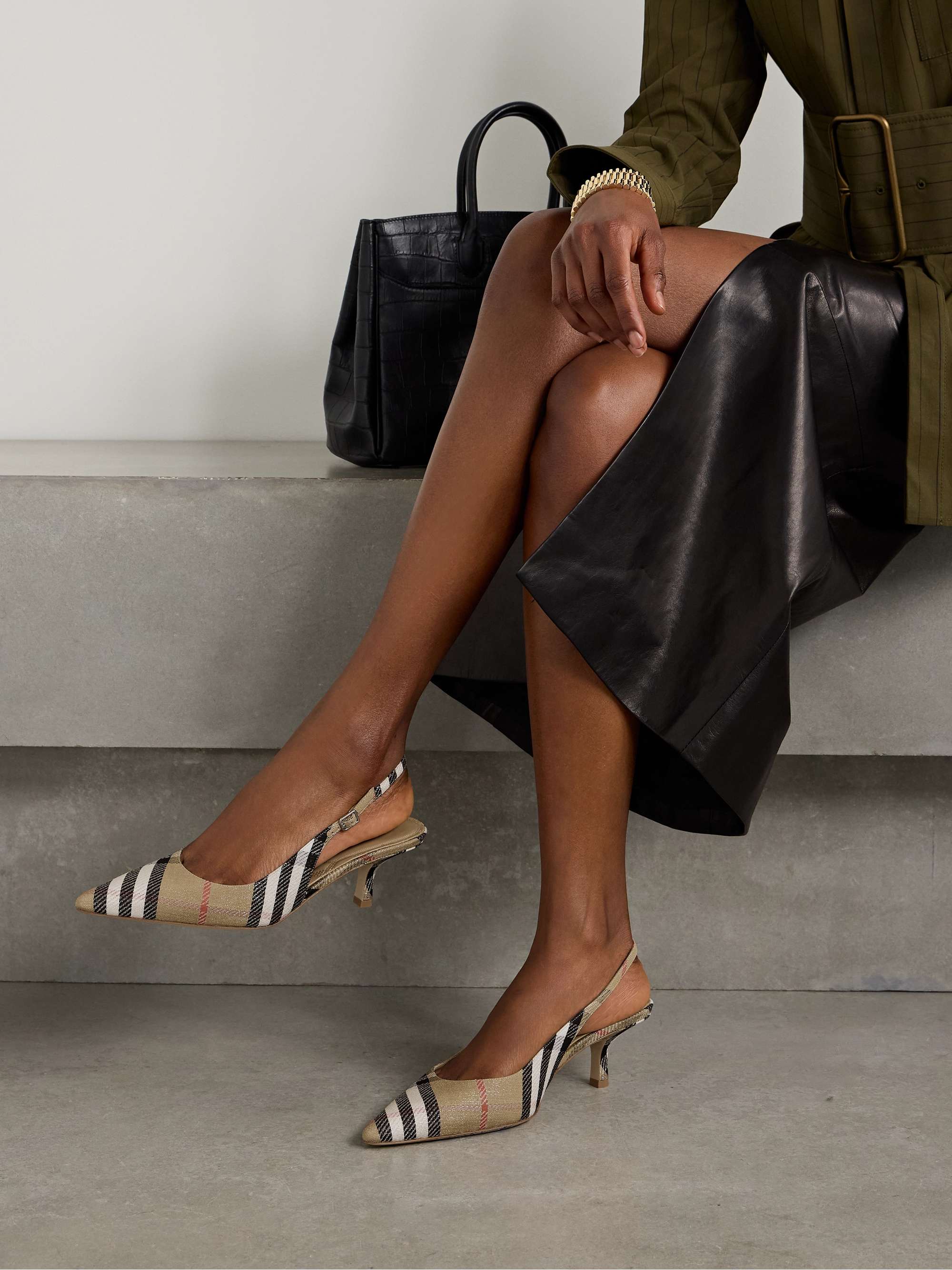
After a few years of buying and returning, I’ve settled on three pairs and stopped shopping. A neutral pump for work, a heeled sandal for warm evenings, and a boot for the cold months. Everything else is a bonus I don’t need. It sounds dull written down. In practice it means I get dressed in four minutes and I’m rarely wrong.
Pick your three by looking at your actual week, not your imagined one. If you’re in an office five days out of seven, the pump is your workhorse and deserves the budget. If your calendar is mostly dinners and gallery openings, put the money into the sandal. Then wear them until they look used, because a scuffed heel reads better than a box-fresh pair that clearly never leaves the house.
The last thing I’d say is this: these shoes are tools, not trophies. Buy the pair you can walk in, wear it in the rain when you have to, and stop saving it for a better occasion. The better occasion is a Tuesday.
