

How to Style These Wildly Chic Shoes
I bought my first pair of cheetah print heels on a Tuesday, at a sample sale, for $60. I wore them to work the next day and two people asked if they were vintage. They weren’t. They were just good, and the print did all the talking while the rest of my outfit stayed quiet.
That’s the whole trick, really. Everything below is detail.
What the print is actually doing
Cheetah spots started as camouflage in the actual wild. On a human foot in an office, they do the opposite job. They make you visible. There’s a small joke in that, and it’s been running for sixty years.
The print went from trophy to trendy around the 1950s, when Dior and Norman Norell put it on the runway and Hollywood wore it to lunch. Since then it’s gone in and out maybe four times. When it comes back, it comes back because it’s the cheapest possible way to make a plain outfit look like it was planned.
One thing matters more than anything else when you’re shopping: the scale of the print. Real cheetah spots are small and irregular, with dark rings and a solid dot in the middle. A lot of cheap fabric just throws large brown blobs onto cream, which reads as sofa, not shoe. If the spots are bigger than your thumbnail, put it back.
Shape of the shoe changes how big the print looks, too. A pointed toe stretches the pattern out along the foot and hides the repeat. A round toe or a chunky platform makes it look bigger and more cartoonish. That’s why the same fabric can look expensive on a stiletto and awful on a boot.
Forget matching your bag to it. Nothing looks more dated faster than a spotted shoe with a spotted bag. A plain leather bag in black or brown, or nothing at all, is the better call.
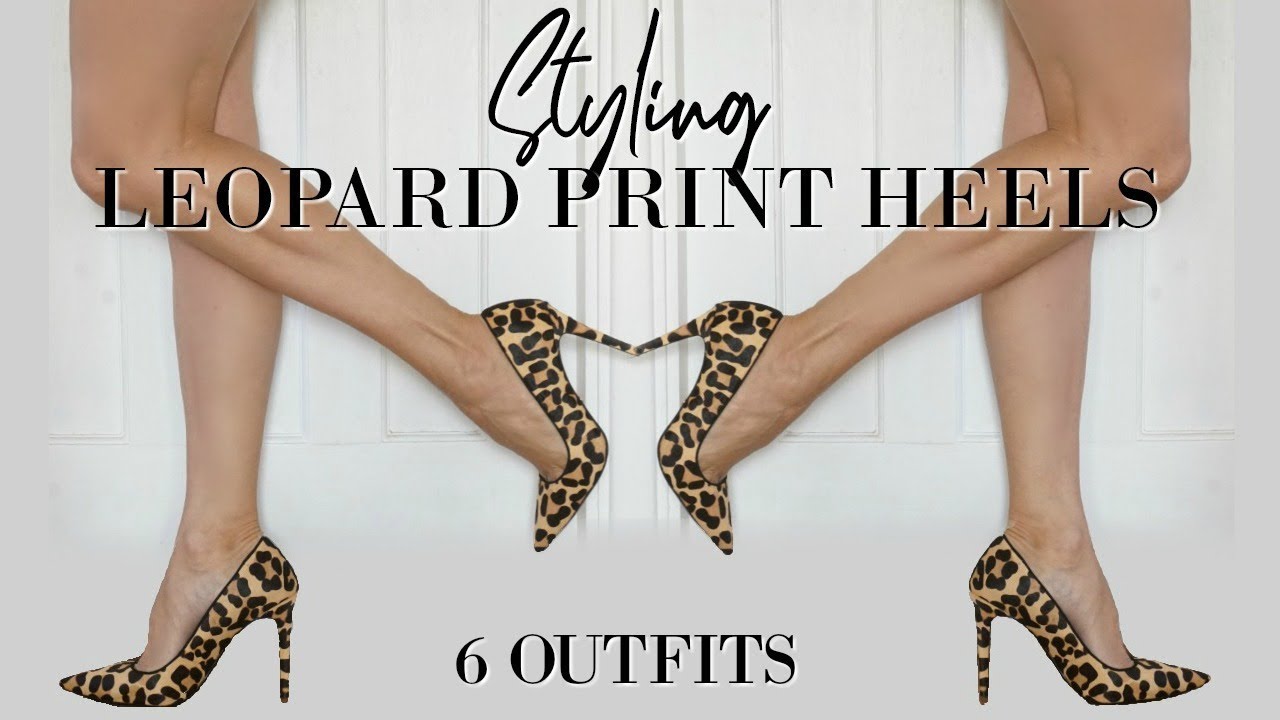
Rule one: everything else stays solid
If you take one thing from this, take this. One print, one. Black trousers and a black knit, cheetah heels, done. Black sheath dress, same shoes, done. The outfit shouldn’t have a second conversation going on.
My default is dark denim and a white shirt. The print gets to be the only thing anyone notices, which means I can wear the same pair four times in a week and nobody comments on the repeat.
Full black works better than people expect. A black outfit makes the tan and gold in the print glow, and it hides the fact that you’re wearing the loudest thing in the room. Cream or camel works too, if you want a softer version.
Rule two: pull one color out of the spots
Once you’re bored of black, pick a color that already exists inside the print. Those spots contain ochre, caramel, dark brown and a bit of cream. Burgundy works. Olive works. Rust works beautifully, and so does a deep green.
What doesn’t work is a color that fights the print. Bright pink, acid yellow, royal blue. I’ve seen it styled well in editorials and I’ve never seen it work on a real person on a Tuesday.

Day to night without changing shoes
Daytime is where most people get nervous, and it’s the easier half. Grey blazer, plain silk shell, wide-leg trousers, cheetah heels. It reads as someone with a sense of humor about their job, which is a good thing to read as in a meeting.
I’d avoid wearing them to a first interview. Not because of the shoes, because of what an interviewer might decide about you in four seconds. Save them for week three, once people know you can do the work.
Evening is simpler. Black slip dress, gold hoops, no necklace. The shoes carry the outfit and you don’t have to think about anything else. This is genuinely the fastest getting-ready I do all month.
There’s one place I won’t wear them: a wedding where I’m not the main character. Animal print pulls the eye, and pulling the eye at somebody else’s wedding is a bad look even when the shoes are perfect. Save them for the after-party if you’re invited to that.
One wardrobe note: these are not commuting shoes. A 90mm stiletto on a wet platform at 8am is a bad idea, and I’ve tried it. Wear flats to the office and keep the cheetahs in a bag under the desk.
Texture is what separates good from cheap
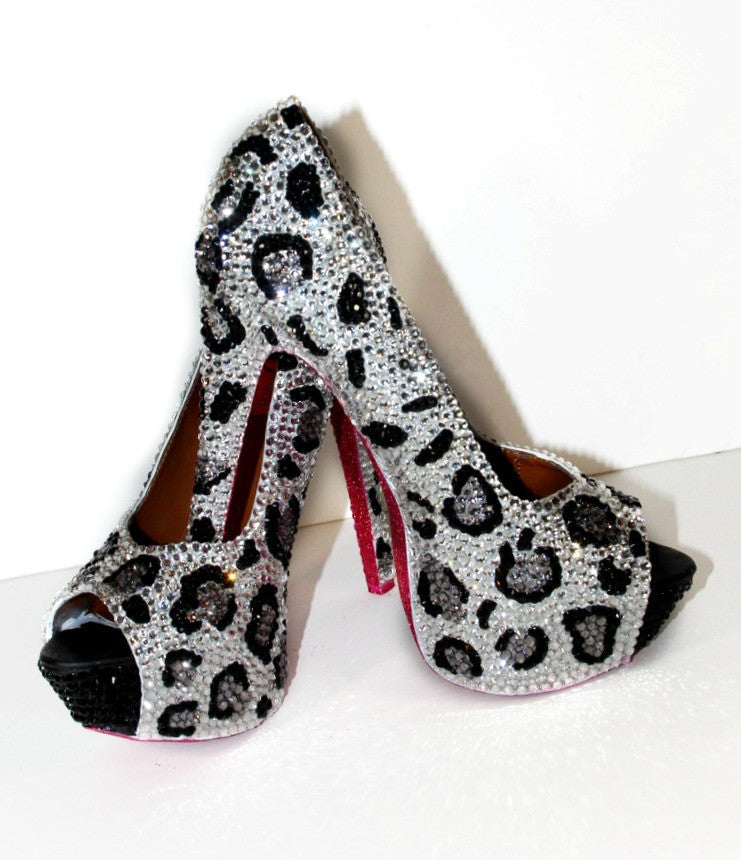
Two cheetah heels at the same price can look ten years apart, and the difference is usually the material around them. Hair-on calf hair looks rich. Smooth leather printed with spots looks flat. Patent looks slightly costume-y but works if the outfit is simple.
Pair the shoe with something with texture and the whole thing lifts. A chunky knit. Raw denim. A satin skirt. Anything that isn’t flat cotton. My favorite combination is a cream cable sweater, dark straight jeans, and the heels, which sounds boring on paper and works every single time.
The one pairing I’d skip is head-to-toe shine. Patent cheetah heels with a satin dress with a metallic bag is three finishes competing, and it’s the reason some people think animal print looks cheap. It’s not the print. It’s the company it keeps.
Should you mix them with other prints?
Honestly? Usually no. Print mixing looks incredible in photographs and takes a very specific eye to pull off in a kitchen at 7am. I’ve done it twice and got it right once.
If you want to try, the rule that works is scale and shared color. Cheetah goes with thin stripes, because the lines are a totally different shape to the spots. Cheetah goes with a tiny floral, for the same reason. Cheetah does not go with another big animal print, and it does not go with large gingham, which is a scale fight nobody wins.
Start with an accessory rather than a garment. A striped scarf, a polka dot bag, something small. If that feels good after a week, try a print top. If it feels like a costume, stop there and nobody will know.
One exception worth trying: wide-leg trousers long enough to cover most of the shoe. You get a flash of spots at the hem and none of the commitment, which is the gentlest way to wear a print this loud if you’re not sure about it yet.
What to pay, and what to check
You don’t need to spend $700 on these. The print hides construction flaws better than any solid color, which means a mid-price pair does the job of an expensive one in photos.
What I’d check, in order:
- Spot size and shape. Small, irregular, with visible rings.
- Whether the pattern is printed on the surface or woven in. Printed fabric scuffs white at the toe within a month.
- Heel height. 70 to 90mm is the usable range. Above that they’re furniture.
- Heel tip condition, if you’re buying secondhand. Fifty cents of rubber is a $15 repair.
Secondhand is the smart move here, more than for most shoes. Animal print is exactly the kind of thing people buy, wear five times, and sell. My current pair came from a resale app for $45 with the original box.
Care is easy until it rains. Calf hair and suede versions water-stain, so spray them before the first wear and don’t wear them in a downpour. Printed leather is the low-effort option and needs nothing but a wipe. I learned this the hard way in a November drizzle, and the toe has never quite been the same.
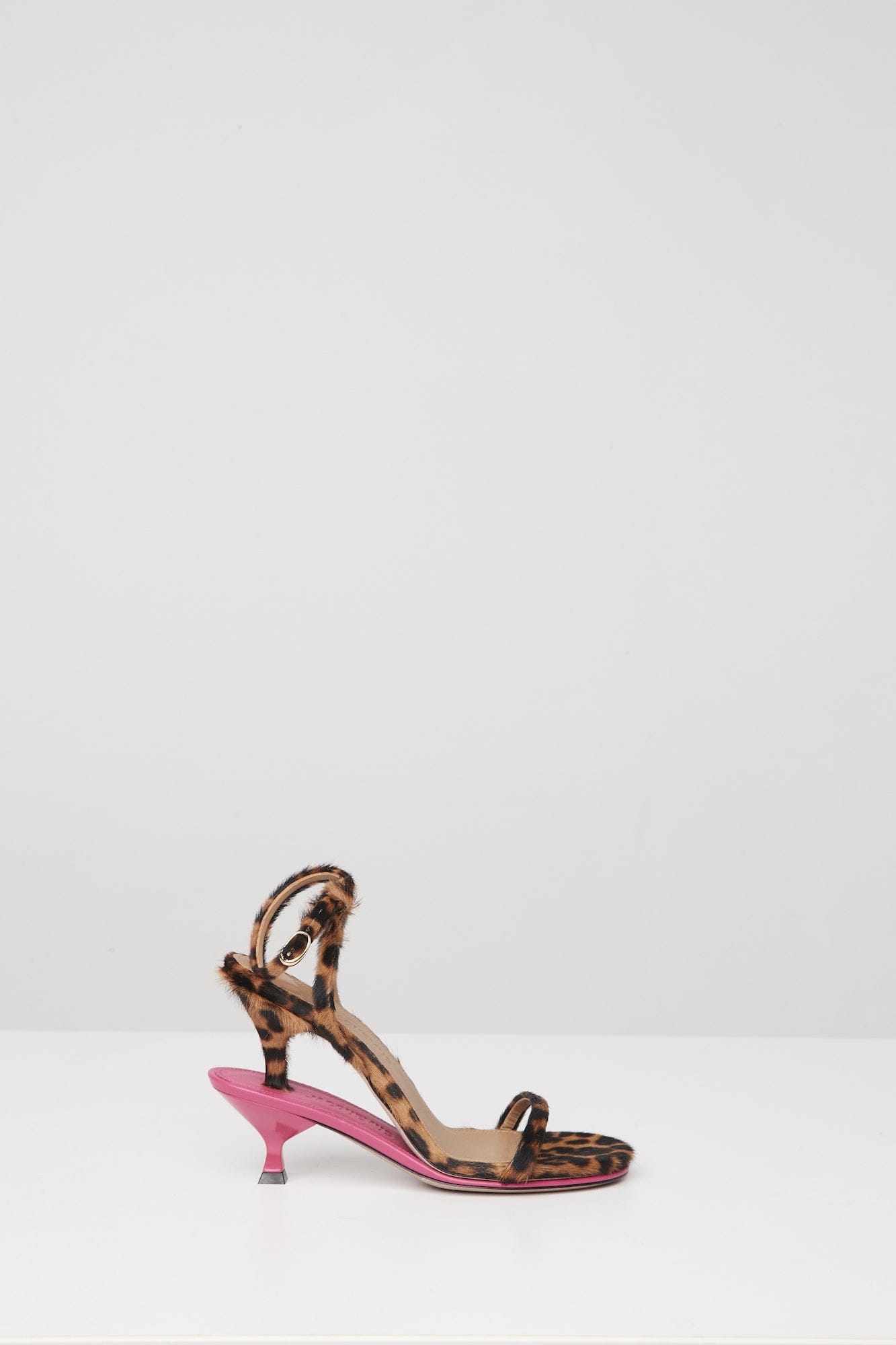
Wear them once and you’ll notice something: nobody compliments a black pump. Everybody has an opinion about a spotted one. That’s the trade you’re making, and it’s a fair one.
