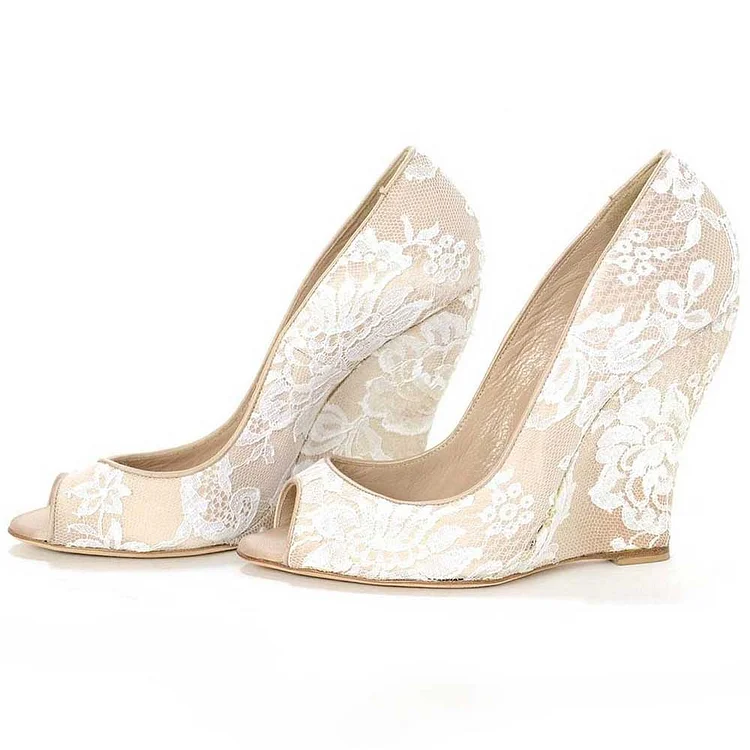
Nude Bridal Heels: Matching the Shade to Your Skin
Most brides choose the gown first, then grab whatever beige pump is left in their size. I get it. By then you’ve spent four months making decisions and you have no patience for one more.
But the shoe is the one part of the outfit that changes how tall you look in every single photo. Ten minutes of thinking about the shade pays off better than another hour in a fitting room.
Here’s how to get it right without buying five pairs and returning four.
Why the shade matters more than the height
Put on a black pump and your leg visually ends at the ankle. Put on a nude that actually matches your skin and the leg keeps going down into the shoe, so the whole line reads longer. That’s the trick, and it’s not fashion magic, it’s just how your eye handles contrast.
Which means nude isn’t a colour. It’s a match. A soft blush that vanishes on a fair bride reads like a plaster on someone with deeper skin, and the rich caramel that looks stunning on her will come out almost chocolate brown against pale legs. Neither is wrong. They’re just two different shoes that happen to share a label.
Do this before you buy: take three pairs to the shop window at midday and hold each one against the inside of your wrist. The wrist is a better stand-in for a winter leg than your hand is, and the light there is honest. Spotlights make every shade look a half-tone warmer than it does outside, which is how people end up with a nude that photographs orange.

A quick history of “nude”, and why the shade range got strange
For most of the last century, nude meant one specific pale beige. Which is a polite way of saying it only ever matched one kind of person. Open a magazine from 1962 and you’ll see the same shoe on the same three models, page after page.
That shifted in the 2010s. Designers started running whole ladders of tone, from porcelain to espresso, and the word stopped describing a colour and started describing an idea. Your nude, not the nude. It’s a better system, but it does mean you can’t shop by name any more. You have to hold the swatch against your own foot.
Good news for brides with deeper skin, who spent decades being told nude meant beige, quietly ignored it, and wore silver instead.
Match the heel to the dress, not the other way round
You’re not really shopping for a shoe. You’re building one continuous line from your shoulders to the floor. Three calls that hold up in practice:
- Column or slip dress: pointed toe, 70 to 90mm. Nothing interrupts the vertical.
- Ballgown or tulle: keep it plain. The skirt is already doing the talking.
- Lace or bohemian: block heel or a low sandal. Gravel and lawn are unforgiving.
A column gown is where a stiletto earns its keep, because there’s nothing to hide a clumpy base behind. With a ballgown, honestly, nobody sees your feet until you sit down, so buy the pair you can stand in for six hours.
Straps, T-bars, and when embellishment earns its place
Strappy sandals in nude are the closest thing to bare feet you can wear with a heel, and they look lovely in detail shots when the light catches your ankle. The catch is that thin straps dig into a slightly swollen foot by hour four. Plan for a mark or two if your ceremony is outdoors in August.
A T-bar or a Mary Jane in nude suede gives you a vintage shape without tipping into costume, and the strap does actual work: it keeps your foot from sliding forward when you walk an aisle with a train pulling behind you.
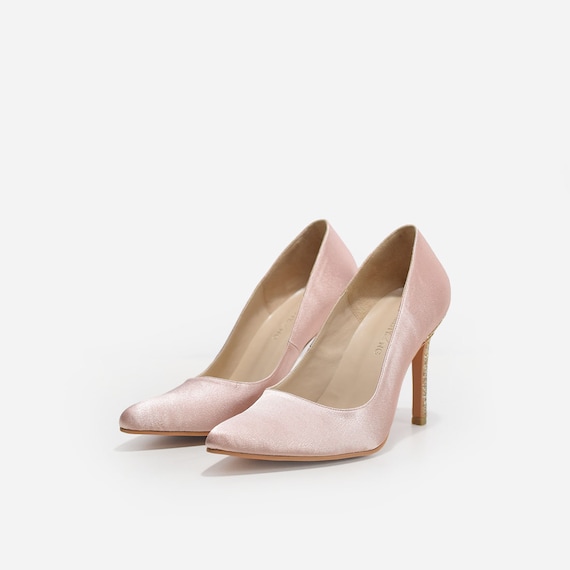
Crystal or pearl detail at the heel is where I’d spend a little extra. From the front it’s invisible. In the detail shots it’s the thing that makes the shoe look chosen rather than borrowed.
Two warnings that rarely make it into the buying guides. Dyed satin linings can leave colour on a bare foot after a hot afternoon, so wear the pair twice around the house first. And if your hem finishes just above the shoe, a scuff on the toe will show in every seated photo, so keep a travel leather wipe in the same little bag as your powder.
Buy for hour nine, not hour one
The heel you try on at 11am in a carpeted shop and the heel you’re wearing at 11pm are basically different objects. Four minutes of standing tells you almost nothing. Try this instead.
Wear them around the house for two hours on a weekday evening, on hard floor, after you’ve already been on your feet all day. Your feet are at their widest then, which is exactly the state they’ll be in at the reception. If something rubs at 8pm on a Tuesday, it will rub at 5pm on your wedding day, and a plaster won’t fix it.
Padding matters more than height. A soft footbed and a slightly wider heel base will do more for a long day than another 20mm ever will. A £90 block heel with decent padding beat a £400 pair of needle-thin pumps for the dancing part of the night, and I’ve watched the same thing happen at three weddings now.
While you’re trying them on, sit down and cross your legs. If the ankle strap digs in at the front in that position, it’ll dig in at dinner, and dinner is most of the reception.
Heel caps are what die first. Half an hour on a gravel driveway wears that little plastic tip through, and then the leather at the base starts to go with it. Ask a cobbler for rubber caps before the big day. It costs about the price of a coffee and takes fifteen minutes.
What I’d skip
Satin. It looks like a dream in the box and then stains the moment someone spills a glass of red two tables away, and it doesn’t wipe clean. Suede is the same story with a different villain: damp grass. If your venue has a lawn, pick leather or accept a scuff you’ll see in every close-up.
Also skip anything that needs breaking in. You don’t have six weeks. You have one morning, and it starts early.
The pair you want is the one you’ve forgotten about by the time the cake comes out. Bring a flatter second pair for the last hour and don’t apologise for it. Half the brides in the photos you’ve saved did exactly the same thing.