

Chocolate Brown Heels: Why They Beat Black in Fall
Every October I watch the same thing happen. Shops fill with brown boots and brown bags, and then everyone keeps wearing black shoes with them, because black is what’s already in the cupboard. It works, mostly. But put a chocolate brown heel next to a black one on the same outfit and the difference is obvious. The black one stops the outfit. The brown one carries it.
That’s the whole argument, really. Brown is warmer and less final.
Why brown sits so easily in autumn
Chocolate brown is the colour of soil, tree bark, and roasted cocoa, which is why it never looks out of place between September and December. Colours that sit near each other on the wheel tend to look calm together, and brown’s neighbours are rust, mustard, olive, and the deep reds of fallen leaves. You can put any of those next to it and nothing clashes.
Black has no neighbours in that palette. It’s a hard edge against rust and mustard, and the contrast can look cheap in daylight even when the clothes are expensive. For a wedding last October I wore a black heel with a camel dress and spent the whole afternoon feeling like I’d borrowed the wrong shoes.
Suede, leather, and what each one does to the colour
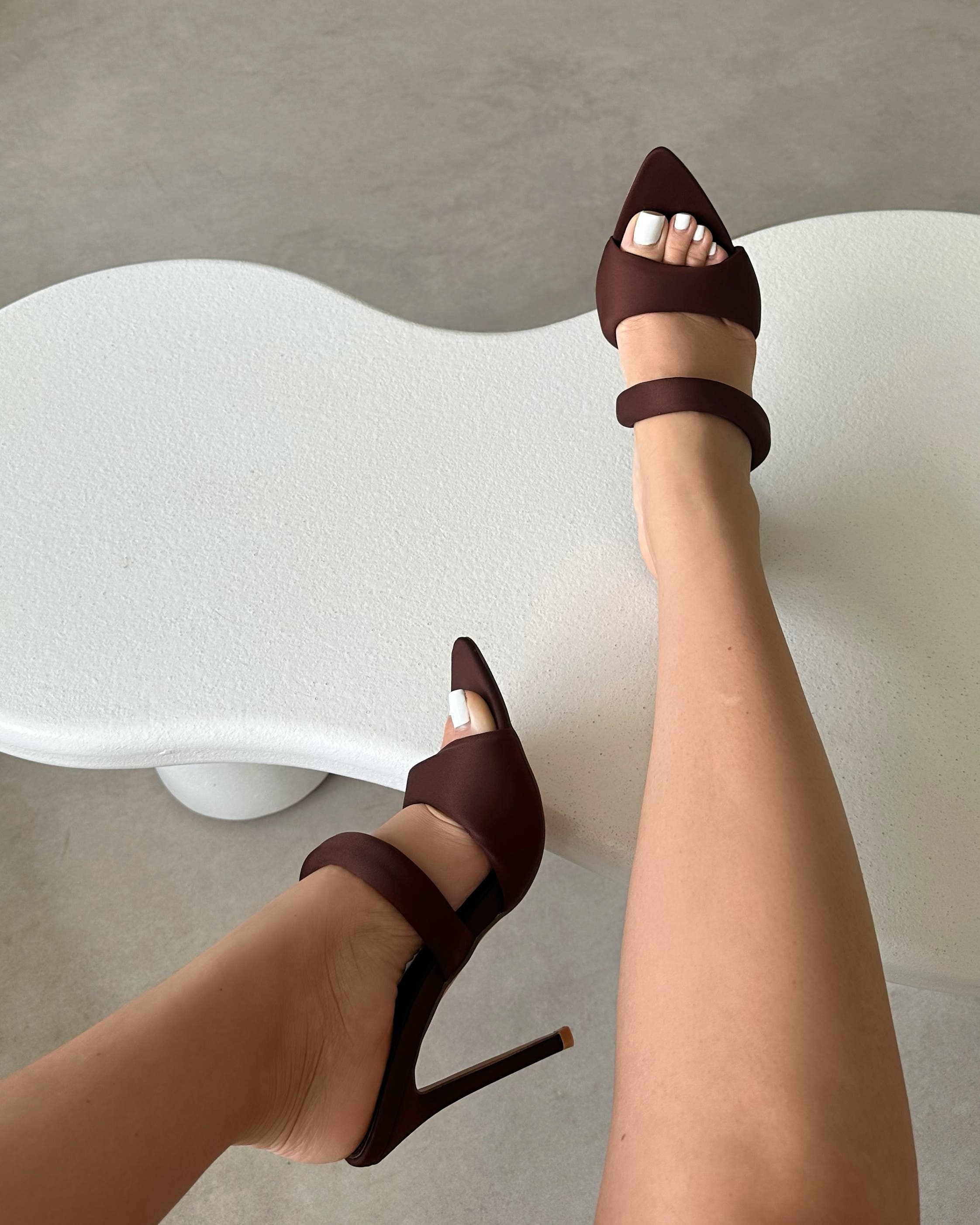
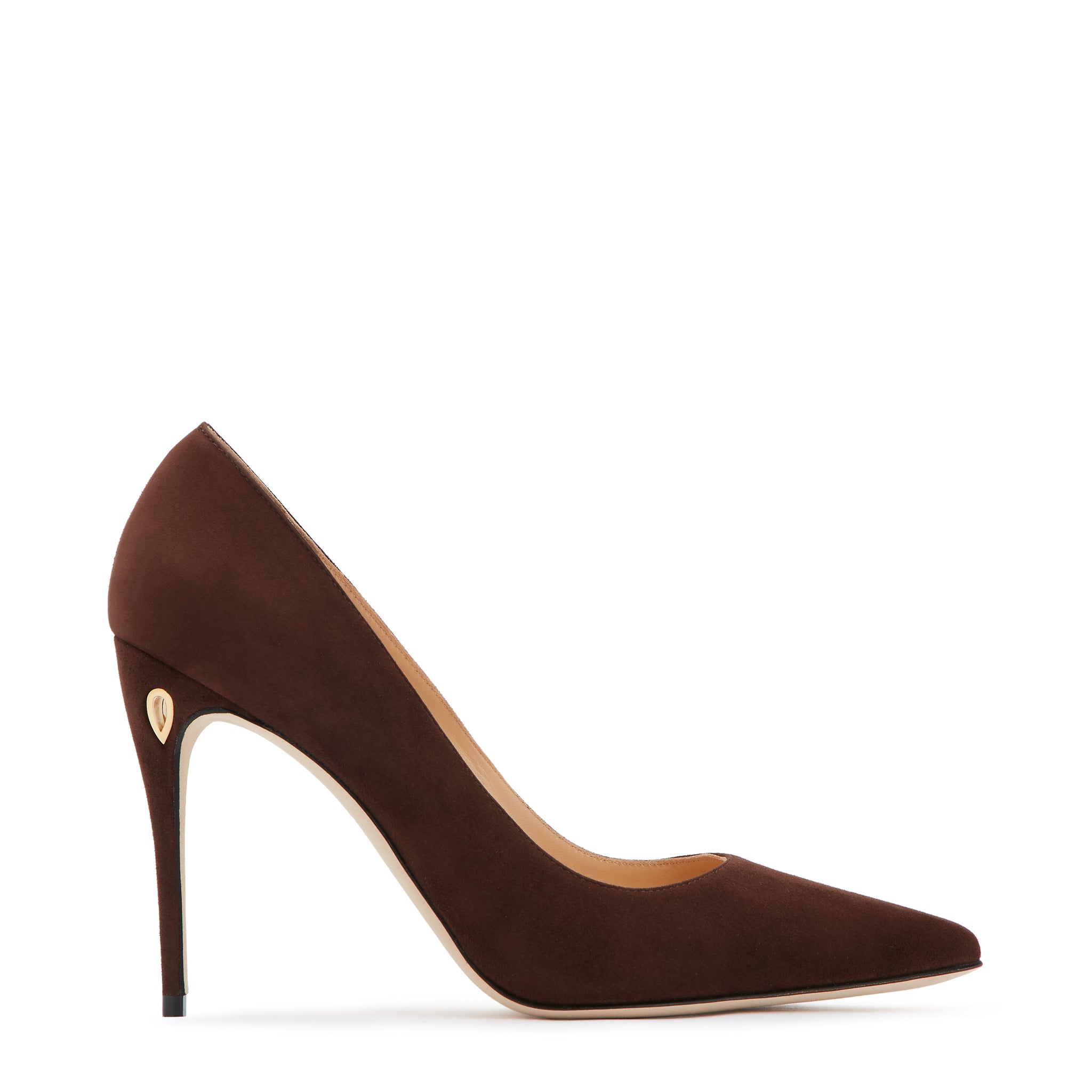
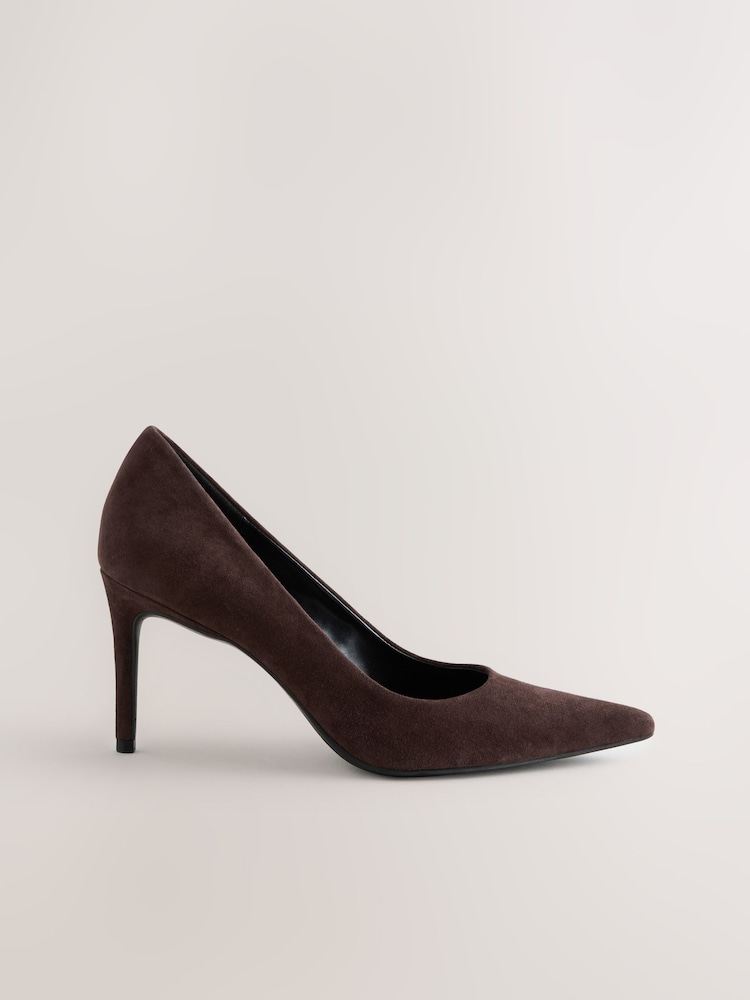
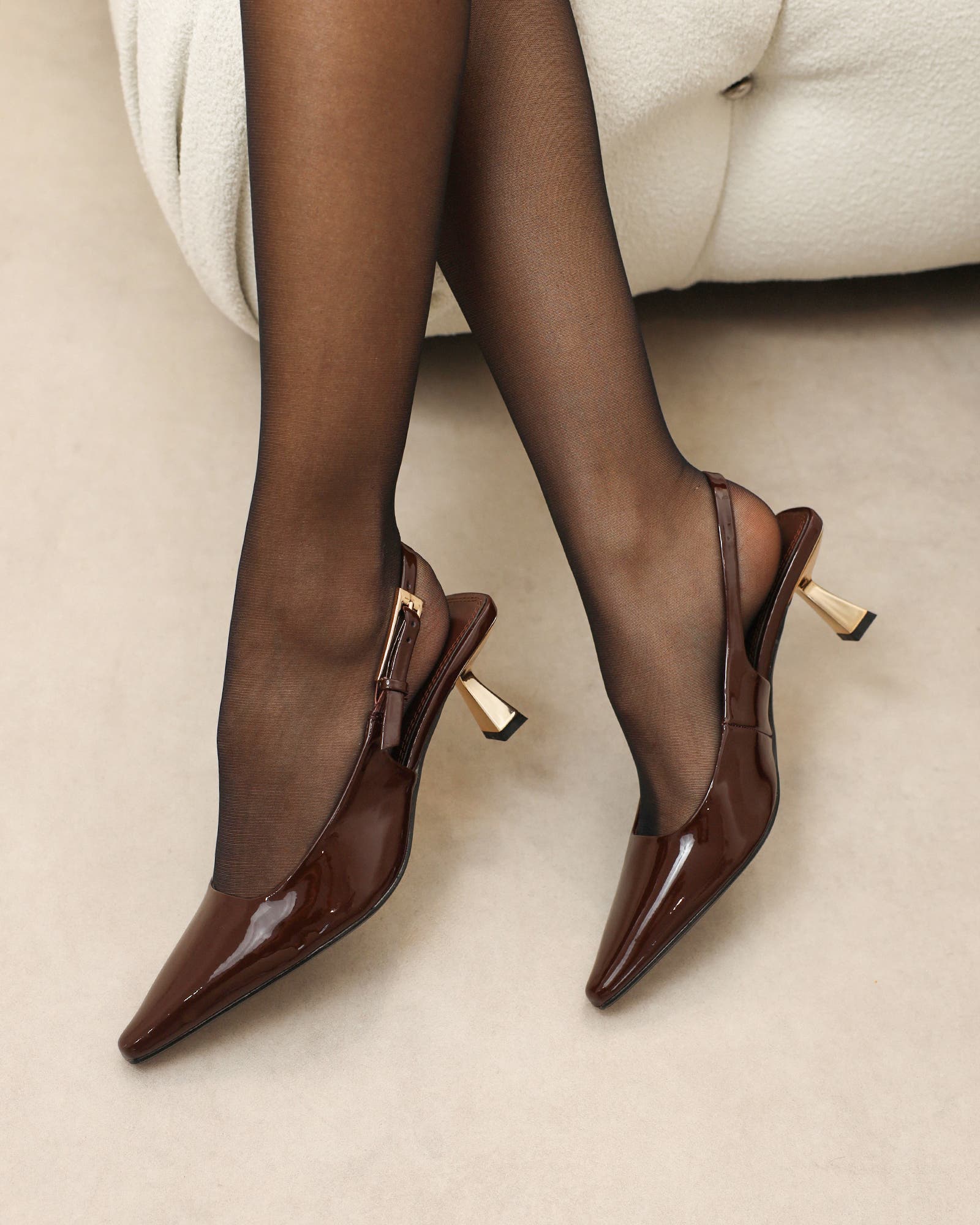
The material changes the shade more than you’d think. Suede has a nap that swallows light, so a chocolate suede heel reads deeper and softer than the swatch you saw online. Leather reflects, so the same colour looks glossier and slightly lighter, and patent pushes it further into something closer to coffee.
Suede is the one that feels most autumnal, and it’s also the one that will betray you. I wore a suede pair home from a dinner in Manchester in light drizzle, twenty minutes at most, and they dried with a tide line across the toe that never fully came out. If you live somewhere wet, buy the leather version. It will outlive the suede by years.
Depth is the other thing brown gives you for free. A dark brown surface shows texture, so grained leather or brushed suede looks more expensive than the same shoe in flat black. That’s not a trick you can buy. It’s just how the colour behaves under a lamp.
What it goes with, in practice
Cream knit dress, chocolate heels. That’s the easiest outfit in this palette and it works at almost any dress code. Dark denim and a white shirt with brown heels looks intentional in a way the same outfit with black heels doesn’t, because the shoes pick up the warmth in the indigo.
Be careful with black next to it. Chocolate brown and black denim can look muddy, like two dark things fighting each other. If you want brown shoes with dark trousers, make the trousers navy or charcoal instead, or break the two up with a lighter top so there’s some air between them.
Brown tights are a different question. Match them closely to the shoe and it lengthens the leg. Get them two shades off and it looks like a mistake you can’t correct, especially in photographs.
Coats are where brown really pays off. A camel coat with black heels is a classic combination, but a chocolate heel with the same coat looks softer and more considered, and it stops the outfit reading as office wear. Olive or dark green wool works even better, because green and brown are the two colours you see in a wood in November, and the pairing always looks like you meant it rather than grabbed what was by the door.
The bridge between summer and winter
This is where brown earns its place over both black and white. In September, brown heels still work with a linen dress and bare legs. In November, the same pair works with wool and thick tights, and nothing about the change looks forced. A white shoe is finished by October. A black one was too heavy in September.
It’s a warm neutral, which means it does the job black does, defining your foot against the floor, while adding a bit of heat. That heat is why brown shoes photograph better than black ones in low autumn light. Black goes flat and the detail disappears. Brown keeps its shadows.
You’ll reach for them more than you planned, because they never create a problem. Every morning you pull them out and they fit whatever else you’ve chosen. That’s worth more than a pair that only works with one coat.
A shorter history than people assume
Brown shoes in the first half of the twentieth century were mostly for the country, and black was for town. That’s why old photographs of offices are a wall of black oxfords. The brown heel as a city or evening shoe is a later idea, pushed along by the sixties and then by seventies tailoring, when brown suede became a whole look.
By the time film characters were wearing brown boots with flared trousers, the colour had stopped meaning “outdoors” and started meaning taste. There’s a reason costume designers put a rich brown shoe on characters who are meant to seem smart rather than rich.
Heel shape matters more than the shade
A 70 to 80mm block heel is the version most people can wear all day, and it looks right with wool trousers and a midi skirt alike. It also survives cobblestones and gravel, which matters if your autumn involves a wedding in a field, and it usually does.
An almond-toe pump in chocolate brown is the safer option for anything with a dress code. The pointed version is sharper and more current, though the toe takes scuffs first, and brown scuffs are paler than the leather, so they show from across a room.
A brown heeled ankle boot is the third option and the one I’d buy if I could only have one. It handles rain, it works under trousers, and it doesn’t ask you to think about tights.
What to check before you pay
Full-grain leather or a dense suede, a heel that’s stacked or screwed rather than glued, and an insole with some give. Press your thumb into the ball of the foot. If it’s hard as a board, you’ll feel every paving slab by the end of the evening.
The pitch matters too. A high heel with a low platform puts all the load on the ball of your foot, which is why some 90mm heels are agony and others aren’t. Try them on a hard floor and stand still for a full minute. If you’re shifting your weight, they’re the wrong pair.
Prices vary wildly for what is essentially a colour. You can spend £60 on a high-street pair that lasts two seasons, or £400 on something repairable that lasts ten years. Work out the cost per wear before you decide. A £400 pair worn twice a week for three years costs less than three £60 pairs.
One drawback worth saying out loud: chocolate brown doesn’t suit every skin tone equally. On very pale skin some browns turn muddy and make the foot look bruised, and the fix is to go two shades lighter, towards tan, rather than darker. Try them against bare legs in daylight before you commit, not against the shop’s grey carpet.
If they work on you, they’ll work for years. I’d start with a 75mm leather pair in the shade of a good dark chocolate bar, wear them through one autumn, then add suede if you still like them by February.
