

Nude Bridal Heels: How to Find Your Actual Shade
I spent a Saturday in three shoe shops with a bride who brought a fabric swatch, a pair of ankle socks, and a lot of patience. She tried eleven pairs. The one she bought was the fourth nude she picked up, not the one that looked best on the shelf, and the difference between it and the runner-up was barely visible until she stood by the window.
That’s the trouble with nude heels. Bronze and beige both look fine in a box. Only daylight and your own ankle tell you the truth.
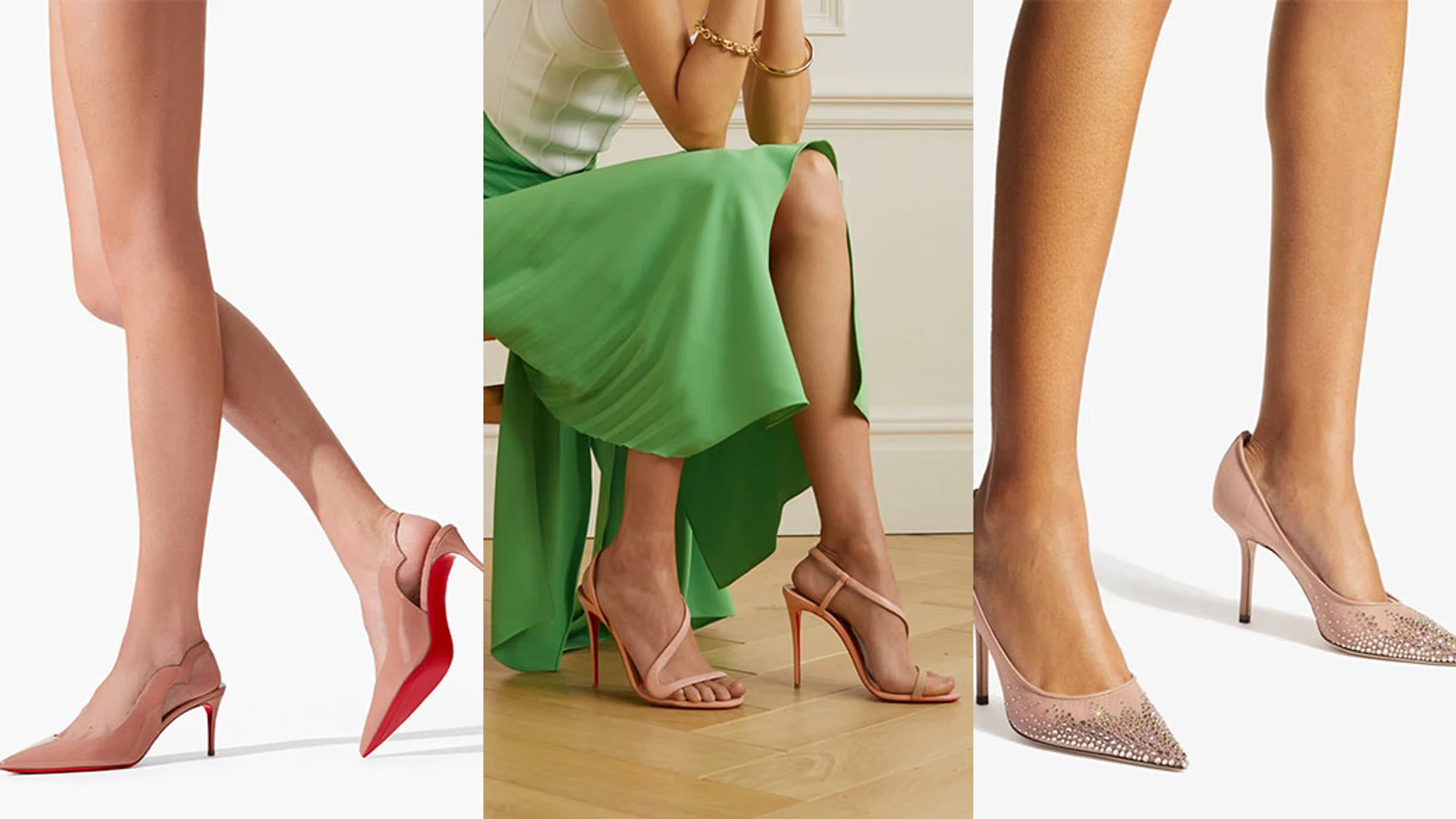
Why a matching shade makes your legs look longer
When the shoe is close to your skin tone, the eye reads leg and foot as one line instead of two. That’s not a myth invented by stylists. It’s the same reason a monochrome outfit looks taller than a colour-blocked one. The line runs up instead of stopping at the ankle.
Get the shade wrong and you’ve drawn a stripe across your foot. A nude that’s two shades too pale makes your ankle look dirty. One that’s too dark looks like a tan line in reverse. Both are more noticeable in photographs than in the mirror, which is the worst possible time to find out.

How to test a nude properly
Hold the shoe against the inside of your ankle, not the top of your foot, in daylight or next to a window. Ankles are paler than feet and closer to what a photographer will see. Then look at your hand beside it. If the shoe looks pink against your ankle and yellow against your hand, it’s not your nude.
Most brands now run at least five shades within the same style, and the names don’t help. “Almond” in one brand is “blush” in another, and both can be nothing like the actual colour. Ignore the label and look at the leather.
If you’re between two, go with the one that’s slightly darker. Pale nudes photograph almost white under flash, which flattens the leg line you were trying to build.
One pair for more than the ceremony
Most weddings involve at least two outfits, and often a change of shoes somewhere after the cake. A nude heel moves between a white gown, an ivory dress, and whatever you change into for the evening without needing to match anything. That saves you buying a second pair you’ll wear once.
It’s also the shoe you can wear again. I know several people who’ve taken their wedding heels to job interviews and other people’s weddings, which is more than can be said for a dyed satin sandal with a crystal bow.
Hemline matters more than brides expect. A floor-length gown hides almost all of the shoe until you walk, so what people actually see is the toe shape and the top line. A soft almond toe photographs gentler than a sharp point, and a slingback gives a flash of heel as you turn. Ask whoever is taking the photos to shoot one frame of your feet before the ceremony, because that’s when you’ll spot a shade that’s off while there’s still time to change.
Match the shoe to your skin, not to the dress. A champagne gown with a champagne shoe makes your feet look like they’re cut from the same fabric as the skirt, which isn’t the effect you want. The dress provides the colour. The shoe provides the line, and the line only works when it continues your leg.
The part nobody warns you about: eight hours standing
A wedding day is roughly four hours on your feet before dinner and another four after, and the last two include dancing. That’s not a normal shoe test. It’s closer to a shift.
Look for a platform under the toe, even a small one, because it takes pressure off the ball of the foot. A padded insole helps for the first three hours and then stops mattering. A strap across the instep or around the ankle does more for you than cushioning, because it stops your foot sliding forward and crushing your toes.
Width of heel beats height of heel. A 90mm stiletto on grass is a tent peg. An 80mm with a slightly thicker heel will get you down the aisle and across a lawn without anyone holding your arm, and you’ll still have the height you wanted in the photographs.
Break them in at home for a week, twenty minutes a day, with thin socks. If a seam rubs your heel at that stage, it’ll rub it raw by the speeches. Take a spare pair of flat shoes for later and don’t feel guilty about changing. Every bride I know who did this danced longer than the ones who didn’t.
Plain, or something on it
A nude base gives you room to add one detail without the shoe fighting your dress. A slim crystal strap, a small buckle, a metallic heel, a lace overlay. One detail, on a neutral background, reads as deliberate.
Two details start to look like a sample sale. If your dress has beading or lace, keep the shoe plain, because both shouting at once is what makes wedding photos look dated in five years.
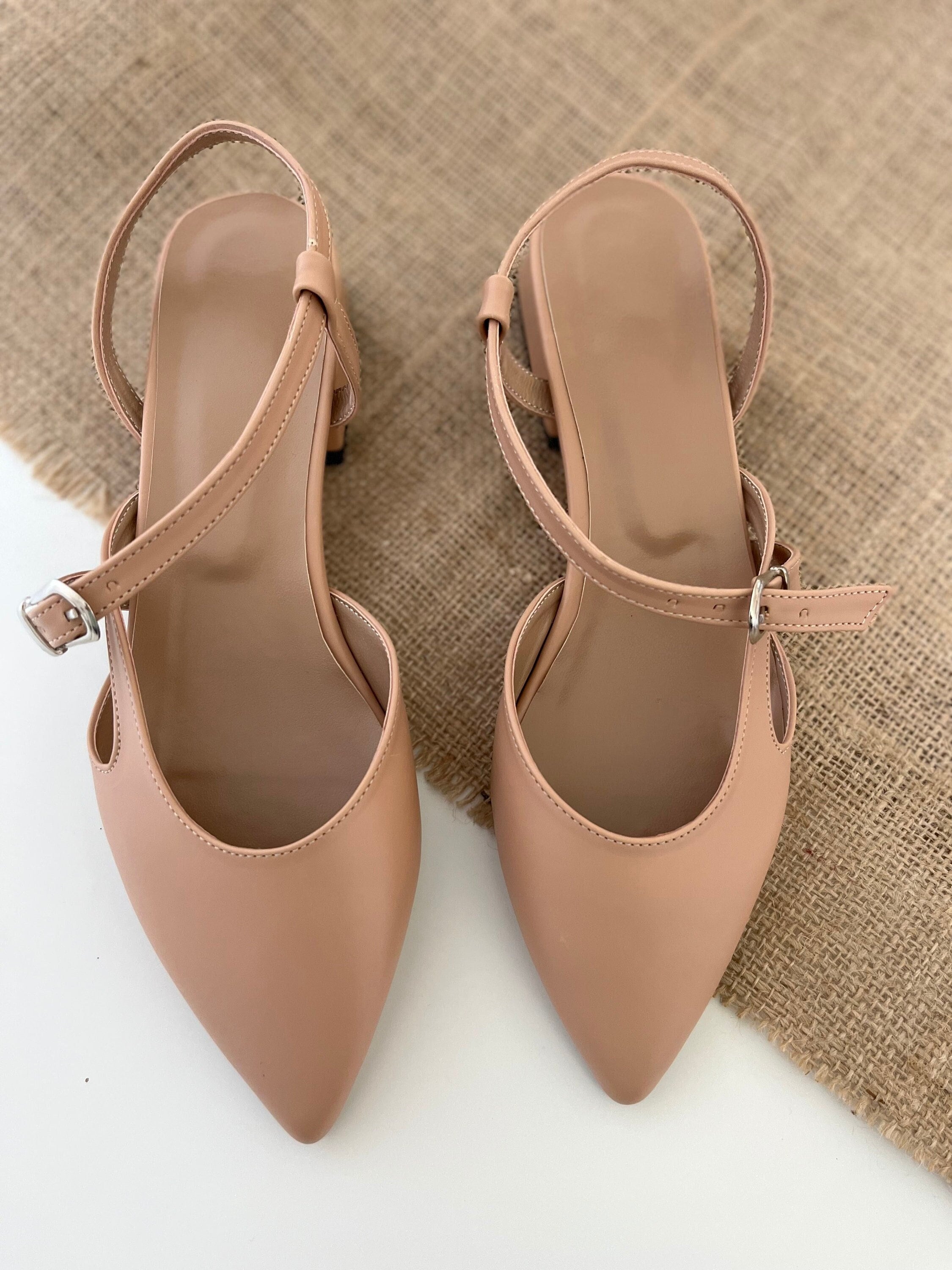
Texture is the cheaper way to add interest. Satin for a classic look, suede for autumn and winter weddings, patent for something sharper. Patent nude is the least forgiving of the three, because it creases across the toe where your foot bends and the creases catch the light. Suede scuffs in a way that a suede brush can usually fix. Satin stains, and one drop of red wine at the reception is the end of it.
Buying without paying bridal prices
The word “bridal” adds about 30% to the price of an identical shoe. Search for “nude pointed court shoe” instead of “bridal heel” and you’ll see the same shapes for less. Shop in the late afternoon, when your feet have swelled to roughly the size they’ll be on the day, because a pair that fits at 10am will pinch by the time you’re standing at the front of a church at 3pm.
Work out what you need before you shop: heel height, an ankle strap or not, and the shade. Then look at high-street brands, outlet sites, and last-season stock, because nude never dates and a discontinued shade is often the closest match to your skin anyway.
Secondhand is worth a look too. Bridal resale sites are full of shoes worn for six hours, and a good cobbler can replace a heel tip for a few pounds. Check the insole for the shape of someone else’s foot, though, because a moulded imprint doesn’t flatten out.

One thing to accept: no nude is invisible on everyone. If your legs are a different tone from your feet, which is true for most people in summer, the line will break somewhere. Pick the shade closest to your ankle and stop worrying about it, because nobody at a wedding is studying the join.
Buy the pair you can stand in for eight hours, in the shade that matches your ankle by daylight, and wear them around the house for a week before the day. That’s the whole job. Everything else is decoration.
