

You’ve found the silver pair, it fits at the heel, and the strap hangs a hole too loose. The instinct is to return it and start again. The cheaper answer is usually a cobbler: 12 dollars and two days, versus another month of searching.
Before you decide, work through three questions in this order. Can the problem be fixed with material? Can it be fixed without changing the shape? Is the fix cheaper than the difference between this pair and a better one? Most silver heels fail at question one or two, and the ones that pass are almost always worth keeping.
What follows is the decision framework with real prices, the three alterations that actually work on a metallic pair, and the two that ruin the finish.
What a cobbler can genuinely fix
Silver has a thinner finish than most colors, so the list of safe alterations is shorter than on black or brown. Anything that involves heat, solvent, or stretching the upper is out. Anything that works on the strap, the sole, or the heel block is in.
The in-list, ranked by value:
- Strap shortening. Moves the buckle or punches a new hole. 8 to 15 dollars.
- Heel tip replacement. New plastic or rubber tips before the block wears. 8 to 12 dollars.
- Sole grip. A thin rubber pad on a slick leather sole. 15 to 20 dollars, and it stops the slip that makes people stop wearing a pair.
- Insole replacement. Swap the 3mm foam for a 4mm leather one. 10 to 15 dollars including the insole.
Those four cover the problems that show up in maybe 80 percent of fit complaints. None of them touch the silver finish, which is why they’re safe.
Ranking them by how often they actually solve the complaint: strap first, tips second, sole grip third, insole last. People tend to ask for the insole because it sounds like comfort, and it’s the one that changes the fit most, so it belongs at the end of the list rather than the start.
Two things to confirm before you hand the pair over. Ask whether the cobbler has worked with coated or metallic leathers, and ask what happens if the strap punch cracks the finish. A good answer names a fallback. A vague answer means you’re the first metallic pair they’ve seen this month.
The $12 strap fix that solves most silver heel problems
A strap that closes on the last hole has no adjustment left, and it will slip within a month as the leather relaxes. Moving the buckle back by 8 to 10mm gives you the middle hole, and the middle hole is what keeps a slingback or ankle strap on the foot.
The measurement that matters: with the shoe on, you should be able to slide one finger under the strap and no more. If two fingers fit, it’s too loose and no amount of walking will fix it. If the strap leaves a red line after five minutes, it’s too tight and will not stretch enough to compensate.
Cost check. A strap shortening runs 8 to 15 dollars at a high-street cobbler, or free if the shop does repairs. Compare that with the price of returning the pair, waiting for a refund, and restarting the search, which is usually three weeks and one more disappointing delivery.
One detail that decides whether the fix looks tidy: ask for the buckle to be moved rather than an extra hole punched. A punched hole on a silver strap leaves a raw edge that catches the light, and on a metallic finish it’s visible from a metre. Moving the buckle keeps the line of the strap clean.
What this fix does not do is change the width or the length. If the shoe is also tight across the ball, the strap is the smaller problem and you should be looking at a different last, not a different hole.
Heel tips, sole grips, and the numbers
Silver heels tend to have slim heel blocks, and slim blocks wear through faster than wide ones because the same body weight lands on less material. Check the tips every two months. Once the plastic is gone, the block grinds, and rebuilding a silver-wrapped heel block costs more than the shoe is worth.
A rough cost table, based on standard high-street prices:
- Heel tip: 8 to 12 dollars, one day.
- Sole grip (pair): 15 to 20 dollars, two days.
- Strap shortening: 8 to 15 dollars, one day.
- Insole swap: 10 to 15 dollars, same day.
- Full reheel with new block: 35 to 50 dollars, and rarely worth it on a coated upper.
The sole grip deserves a note because it changes how often you wear the pair. A leather sole on a polished floor is a genuine hazard, and people quietly stop wearing shoes that slip. Twenty dollars converts a pair you admire into a pair you use, which is the only metric that counts.
One caution on the insole. On a silver heel with a shallow toe box, a 4mm insole steals depth you may not have. Test with a cheap 2mm foam pad first, wear the pair for an afternoon, and only then commission the leather version. The shoemaking reference on construction methods explains why depth varies so much between lasts, if you want the longer version.
There’s one more number worth knowing: the number of wears before the tip needs replacing. On a slim silver heel worn twice a week, that’s roughly 40 to 50 wears. On a wider block, closer to 90. Count backwards from your diary rather than guessing, and the timing stops being a surprise.
What can’t be altered, so don’t try
Widening is the big one. A cobbler can stretch leather by about 2 to 3mm, and on a coated metallic upper the finish usually cracks before the leather gives. If the shoe is tight across the ball, the answer is a different shoe.
Shortening a silver heel is the second. Taking 10mm off the heel changes the pitch, which changes where your weight lands, and the shoe stops working. The heel height on a pair is a design decision, not a trim.
Re-dyeing is the third. Silver is a coating, not a dye, and no cobbler can reproduce it. A scuffed silver toe can be touched in with a matched metallic cream, but a full recolor is a different shoe.
If a repair quote comes back above a third of what you paid, stop. That threshold isn’t arbitrary. Above it, the money is better spent on a pair that fits without intervention, and there’s usually one available in the same silver heels range.
The silver finish: what kills it and what doesn’t
Metallic finishes are a thin foil or a coated film over the leather, usually under 0.1mm. That thinness is why silver looks so bright and why it fails so fast at the edges. Understanding what attacks it tells you which repairs are safe.
What kills it: solvent-based cleaners, heat guns used to stretch, acetone in nail polish remover, and any abrasive on the toe. What doesn’t: water on a cloth, neutral cream polish, wax on the sole edges, and a rubber sole pad. The line is between chemicals and mechanics.
Finish safety is one place where a standard helps. The OEKO-TEX leather standard covers what’s allowed in the finishing layer on consumer leather goods, and the restricted-substance list is a decent proxy for what won’t attack a coating you already own.
Touch-ups work better than people expect if the shade matches. A metallic cream in the right tone, applied with a fingertip and buffed after ten minutes, blends a scuff well enough that nobody sees it at a metre. Match in daylight, not in the shop, because silver shifts between warm and cool depending on the light.
Where it fails completely is at the flex point across the vamp. Once a metallic coating cracks along that crease, no cream hides it, because the crack catches light at a different angle than the surrounding surface. That’s the point where the pair becomes an evening shoe with a known flaw, and that’s a fine outcome if the rest of the shoe fits.
Measure before you go
Arrive with three numbers and the visit takes ten minutes instead of thirty. Strap length needed in millimetres, current heel tip diameter, and the gap at the ball of the foot when standing.
Measure the strap with the shoe on and the strap closed on the hole you currently use, then measure how much shorter it needs to be to reach the middle hole. Write it down. Cobblers work fast and a verbal “a bit tighter” gets interpreted in whichever direction is easier.
For the ball gap, stand on a piece of paper, trace the widest part of your foot, then lay the shoe over the tracing. Any overhang tells you the shoe is narrow, and that’s a return, not a repair.
Bring the pair in a bag, not on your feet, if you can. Repairs get queued and you’ll want them back for a specific date, which brings up the practical bit: ask for a collection date and don’t accept “next week”. Two days is standard for tips and straps.
If the quote sounds high, ask what’s included. Some cobblers price a strap shortening per strap, others per pair, and the difference doubles the bill. The same applies to sole grips, which are sometimes quoted as one pad when a pair needs two.
A care kit for under $30
Four items cover everything a silver pair needs, and the total stays under 30 dollars. Neutral cream polish, a soft cloth, a rubber brush for the sole edge, and a spare set of heel tips. Nothing in that list touches the metallic surface with a solvent, which is the whole point.
The routine is monthly, not weekly. Wipe with a dry cloth after each wear, buff with cream once a month, and check the tips every two months. That’s roughly four minutes a month per pair, and it’s the schedule that keeps a coated upper from developing the haze that makes silver look dull.
Skip the sprays sold for metallic shoes unless the label says it’s for coated leather. Most general protectors are formulated for suede and leave a film on a foil finish that dulls it permanently. If in doubt, use nothing and rely on the cloth.
When replacing beats repairing
The decision rule is simple enough to apply in the shop. If the repair costs under 25 dollars and the pair otherwise fits, repair it. If the repair costs more than 40 dollars, or the pair also needs a width change, replace it.
There’s a middle case that people get wrong. A pair that fits but looks tired is usually worth a full service: tips, sole grips, a polish, and a strap adjustment, all for under 50 dollars. That’s a third of a new pair and it buys another two years. A pair that doesn’t fit is never worth the service, because every dollar goes into a shoe you’ll still avoid wearing.
For a first silver pair, the arithmetic favours buying slightly above the cheapest option and skipping the repairs entirely. A fine-heeled silver leather pair with a proper leather insole and a strap that closes on the middle hole tends to need nothing for the first year, and that’s cheaper than a bargain pair plus three visits.
If the draw is the shine rather than the color, a rhinestone silver pair behaves differently: the crystal surface takes scuffs badly and can’t be touched in, so it’s a pair for seated evenings and short walks. Buy it knowing that, and the repair budget stays near zero.
Whichever way you go, decide within a week of the pair arriving. A shoe that sits in the box waiting for a decision usually ends up returned late or kept and never worn, and both cost more than the 12-dollar fix.
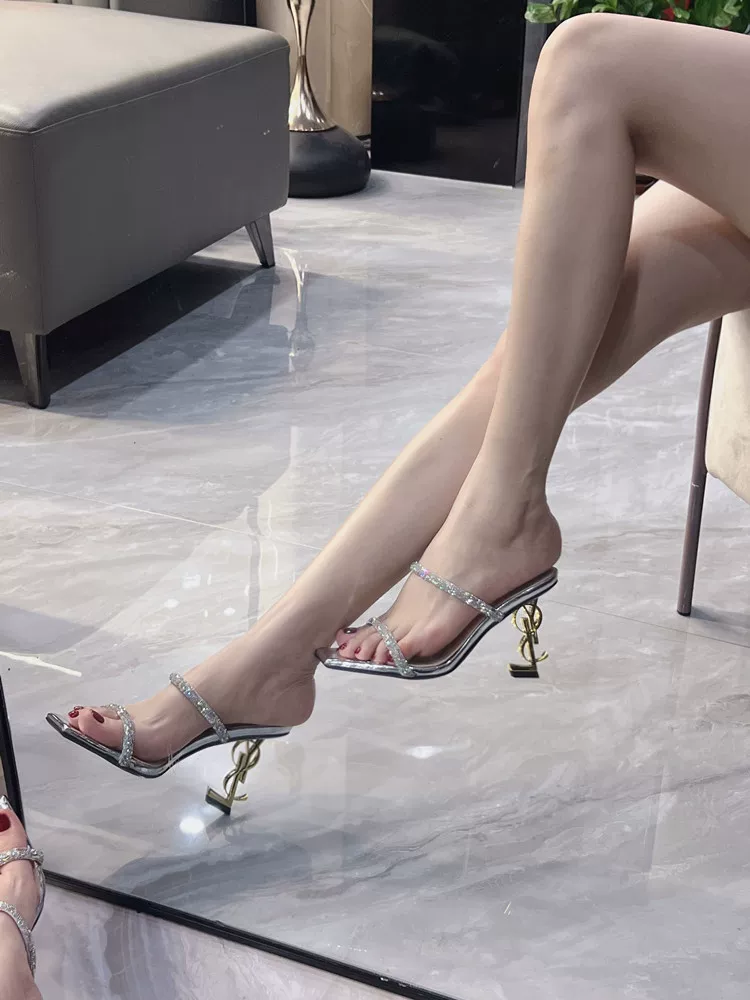

Take the pair to a cobbler with the strap measurement written down, ask for the middle hole, and put the remaining budget into heel tips before they’re needed. That’s a 12-dollar decision that turns a maybe into a pair you’ll wear for years.
