

I bought a pair of women’s pink high heels for a wedding in June and scuffed the left toe on the car door within forty minutes of putting them on. That’s the honest starting point. Everything I know about keeping pink shoes looking like pink shoes came from that afternoon and the two years since, not from a care label.
The wedding was in a hotel with a gravel path between the ceremony and the reception. Nobody warns you about gravel. I did the walk in small steps, holding a glass, and arrived at the reception with three grey marks across the toe box and a heel that had picked up something brown.
What follows is what actually worked when I got home, what made it worse, and what the pair looks like now. If you’re about to spend money on pink heels, the useful part is the section on which shade survives daylight, because that decision is much harder to undo than a scuff.
The first scuff, and the forty minutes that followed
I did the wrong thing first, which was to rub at it with a tissue and spit. That lifted the surface pigment slightly and left a lighter patch around the mark. On smooth leather a dry tissue is basically sandpaper at a small scale.
The right sequence, learned afterwards, is this. Blot, don’t rub. Then let it dry completely before doing anything else, because wet leather marks spread. Then a pH-neutral leather cleaner on a soft cloth, working in circles only over the scuff, not around it.
For a mark that’s transfer rather than damage, which mine was, a pencil eraser works better than any product. The soft white kind, used gently. It lifts rubber and paint transfer without touching the finish. I’ve since used this on three pairs and it’s never failed on a smooth surface.
What it won’t fix is a gouge. If the top layer is gone and you can see a lighter layer underneath, the only real repair is colour touch-up, and on pink that’s genuinely difficult because the shade has to match. This is the argument for buying a pink that comes with a matching cream or a brand that offers a repair service. Nobody thinks about this before the first scuff. I didn’t.
The other thing I learned in that first hour is that the scuff matters less than where it sits. Mine was on the toe box, which is visible when you walk toward someone and invisible when you sit down. A scuff on the heel counter is the reverse: nobody sees it while you’re standing, and everyone sees it from behind. If you have to choose which part of the shoe to protect, protect the back.
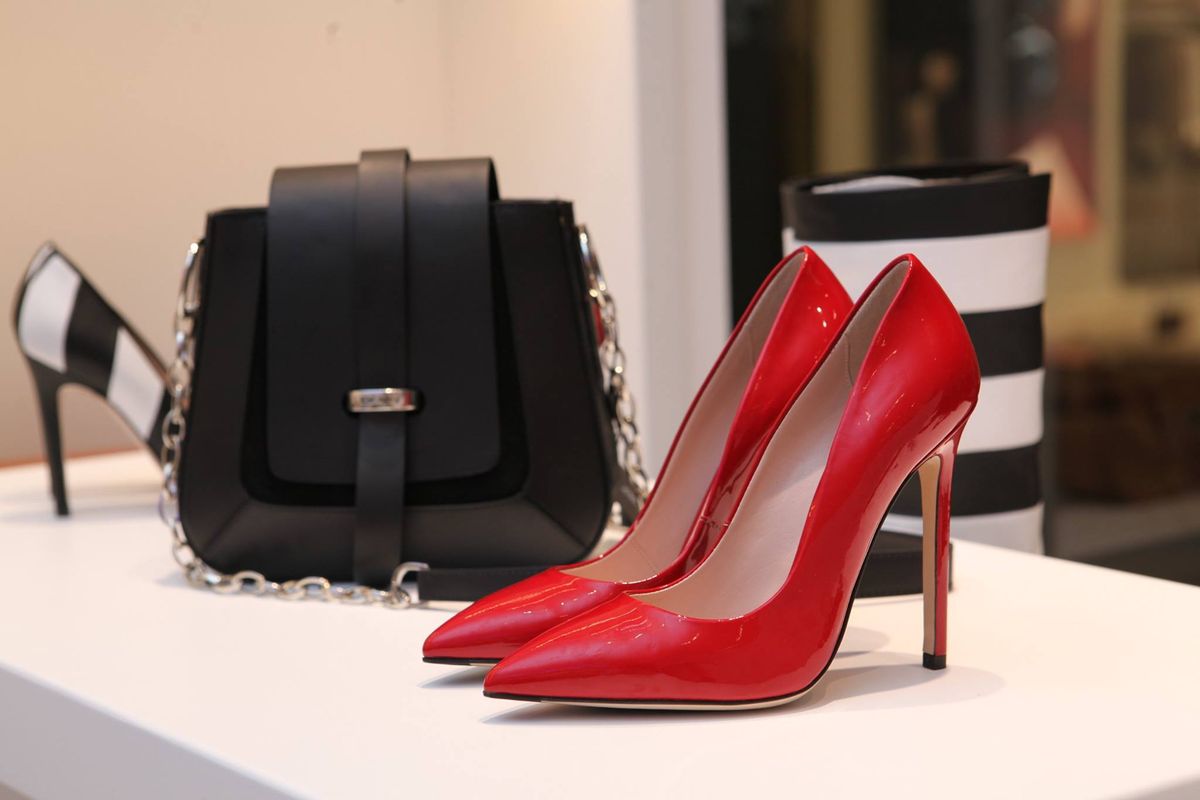
Cleaning pink: what worked, and the three things that made it worse
Pink is the least forgiving colour for cleaning because every product you use has its own cast. A cleaner with a slight blue tone will cool the shade. Something with a yellow base will warm it. Over five or six cleans, the shoe can end up a different pink from the one you bought.
What worked: plain foam from a neutral soap, applied with a soft brush, wiped off immediately with a barely damp cloth, then air-dried away from heat. That’s it. No conditioner on the surface, because conditioner darkens pale leather and you’ll see the patch in daylight.
What made it worse. First, baby wipes. They’re convenient and they leave a film that attracts dirt, so the shoe gets dirtier faster after the first wipe. Second, white shoe polish. On pink it’s chalky and sits in the grain, and it collects in the creases within a week. Third, hot water. Pink dye is not as stable as black, and hot water pulls it.
If the shoe is fabric rather than leather, everything changes. Fabric pink can be spot-cleaned with foam and a cloth, but it will wick, so the wet patch dries a slightly different shade. On fabric, clean the whole panel, not the spot.
One more caution that sounds obvious and isn’t: test on the inside of the heel counter where nobody looks. Pink shades vary enough between dye lots that even the same model in the same size can react differently.
Frequency matters as much as technique. Two light cleans a season beat one aggressive clean a year, because the aggressive version uses more product and more friction. I clean mine after any wear where they got wet or dusty, and otherwise once in spring before the season starts. That’s six cleans over two years on a pair that still looks presentable.
What I stopped doing entirely was cleaning the whole shoe when only the toe was marked. Working a cloth over clean panels just moves dirt from one place to another and dulls the finish in the process.
Satin, patent and matte leather are three different jobs
The care advice you’ll find online is usually written for one material and applied to all of them. That’s how people ruin satin shoes with leather cleaner.
Satin. You cannot clean satin, only manage it. Water leaves rings, rubbing raises the nap, and any product will dull the sheen. The realistic approach is a soft brush for dust and accepting that satin pink has a short, bright life. If you want pink heels that survive two years, don’t buy satin.
Patent. Wipe with a damp cloth and dry immediately. Patent marks easily and cleans easily, which makes it the most forgiving finish for a pale colour. The failure mode is cracking at the flex point over the toes, and nothing prevents that except not buying patent that feels stiff in the shop.
Matte and grained leather. The easiest to live with. It absorbs a small amount of product, hides fine scuffs and responds well to cream. My second pair was grained leather and the difference in maintenance over two years was not subtle.
There’s a fourth material worth naming because it’s sold as leather and isn’t: bonded leather. It’s leather fibres glued into a sheet, and the pink surface layer is a coating that peels rather than wears. You can usually tell by the edge, where bonded leather looks like a sandwich. On women’s pink high heels it’s a common shortcut because pale coatings are cheap to make and photograph perfectly. The definition of bonded leather is worth reading once, if only to see how little actual hide it contains.
Worth knowing what the finish claims actually mean, since labels are vague. The certifications behind leather finishing, such as the OEKO-TEX standard for leather articles, tell you about restricted substances rather than durability, so they won’t help you judge scuff resistance. That one you have to test with a fingernail in the shop.
Rain, gravel and the twenty-minute window
Pink heels and wet pavement are a bad combination for a reason that’s easy to miss. The dye in pale leather is more mobile than in dark leather, so water doesn’t just mark the surface, it can carry colour to the edges of the wet patch. The mark appears as a tide line, and tide lines on pink are close to permanent.
What I do now: if it starts raining, I’m inside within twenty minutes or the shoes come off. Twenty minutes is roughly when the leather is saturated enough for the tide line to form.
Gravel is the other one. Small stones scuff the toe box and the heel counter, and the marks sit low where you can’t see them until you’re in a car. If there’s a gravel path between where you park and where you’re going, walk on the edge of it or on the grass. It sounds ridiculous. It works.
And the heel top piece. On pavement, a slim pink heel wears through its cap in roughly 40 wears. Once it’s through, the pink heel itself starts grinding and the damage is visible from across a room. Ask for replacement caps when you buy, or take them to a cobbler before the season starts. It costs very little and it’s the single best thing you can do for a light-coloured heel.
The other rain problem is the sole edge. Water wicks into the raw edge of a leather sole, and on a pale shoe the edge darkens to a grey-brown band that stays darker than the rest even after drying. If you’re caught out, dry the shoes on their sides with newspaper inside, away from a radiator, and accept the tide line. Radiators bake the mark in permanently.
The strap and the heel go before the leather does
Three pairs in, the pattern is clear. The upper always outlasts the hardware, which is the opposite of what I expected. The leather on my oldest pair is softened and slightly warmer in tone but structurally fine. What failed first was the strap buckle on one and the heel cap on the other.
Buckles fail at the pin. A thin metal pin on a decorative buckle bends, and once it bends the strap won’t sit flat. Replacing a buckle is a five-minute job for a cobbler and almost nobody asks for it, because the shoe still technically fastens. But a bent pin means the strap loosens as you walk, and a loosening strap on a heel is how people twist an ankle.
Heel caps I’ve covered, but there’s a second heel problem on pink specifically. The plastic cap is usually black or tan, and when it wears it shows through at the back edge where the heel meets the ground. On a pale shoe that dark line is very visible from behind. Ask for a pale cap if your cobbler stocks them, and if not, accept the dark one and replace it before it’s worn through rather than after.
The insole is the third part that goes. A leather insole darkens and compresses where your toes sit, which is normal and mostly invisible. A synthetic insole starts to lift at the edge after about twenty wears, and once it lifts it catches your heel every time you put the shoe on. Glue fixes it temporarily. Replacement insoles are cheap and worth doing if the upper is otherwise sound.
If you take one thing from this, take the maintenance order. Caps first, buckles second, insoles third, leather last. Spending on the cheap parts keeps the expensive part in service, and that’s especially true of pale shoes, where a visible hardware failure ruins the look faster than any scuff.
Storage: what bent, what held its shape
I stored the first pair in a box, on their sides, for eight months. When they came out, one strap had a permanent bend and the heel counter on the other shoe had a crease that never came out. Both are visible in photographs. Neither affects wear.
The fix is tissue paper, not newspaper, because newsprint transfers. Roll it into the toe and stand the shoes upright. If they’re slingbacks or strappy, stuff the front and lay them so nothing presses on the strap.
Humidity matters more in a warm climate. Pink leather kept in a damp cupboard for a summer will develop a smell and sometimes a green tinge at the seam. A silica packet in the box handles it, and so does storing them somewhere with air movement rather than sealed in plastic.
Sunlight is the other risk and the one I underestimated. A pair left on a shelf near a window for three months faded visibly, and the fade was uneven because the toe caught more light than the heel. Store pink in the dark. It’s the only colour where I’d say that without hesitation.
Travel is where storage usually fails. A pair thrown loose into a suitcase comes out with a bent heel and a scuff from the zip. A cloth bag costs almost nothing and solves both, and it’s the reason the pair I travel with looks better than the pair I keep at home.
What survived two years, and what I’d do differently
Two years in, here’s the honest state of it. The grained leather pair is still wearable and the colour is slightly warmer than it was, which I prefer. The satin pair is finished: the toes are dull, one heel has a water ring and the strap has stretched enough to slip. The patent pair sits in between, with fine cracks across both toes where the material flexes.
Money-wise the numbers are not as bad as they look. The leather pair cost more than the satin one and has been worn perhaps thirty times, which puts it at a few pounds a wear. The satin pair was cheaper and got four outings. That’s the whole argument for material quality in one comparison, and I only believed it after living through it.
What I’d change if I started again: buy one pair of women’s pink high heels in a material that survives, rather than three in materials that don’t. The three-pair route felt cheaper at the time and cost more over two years.
What I’d do differently comes down to three decisions, none of which are about price.
Choose grained leather over satin if you want a second year. Choose a shade that’s already slightly muted rather than a bright fuchsia, because muted pinks age better and the difference between new and worn is less visible.
And buy the heel height you can actually walk in. This one is unglamorous but it decides how often the shoe leaves the cupboard. A 90mm pink heel worn twice a year stays pristine and useless. A 60mm pair worn twenty times shows wear and earns its place.
If you’re shopping now, the pink princess style heels are the kind of shape that photographs well and needs care at the toe. The pink pair styled for a cheongsam works better in a muted shade for exactly the reason above, and the leather shallow-mouth heels are the closest to the material I’d buy again. More options sit under women’s shoes.
Which pink survives daylight, not shop lighting
Shop lighting is warm and it makes every pink look better than it is. Take the shoe to a window, ideally one facing north, and look at it against your own hand. That comparison is the whole test.
Four shades behave differently in daylight. Bright fuchsia photographs well and reads almost neon outside. Baby pink goes washed out against most skin tones and looks like underwear. Rose, which has a touch of brown in it, holds up best and is the one I’d buy again. Coral pink shifts orange in sunlight and clashes with anything cool-toned in the outfit.
This is the decision I’d spend the most time on if I were buying women’s pink high heels again, more than heel height and more than price. A shade that survives daylight gets worn to daytime events. A shade that only works under warm light gets saved for evenings, and shoes saved for evenings get worn four times a year.
The colour-survival question has a second half: what the pink does to everything around it. Pink heels on a bare leg draw the eye down and shorten the line, which is fine if you’re tall and less fine if you’re not. With a hem that stops above the ankle and a shade that’s close to your skin tone, the effect softens considerably.
If you want to see how much daylight changes a bright colour before you commit, the analysis in which shade survives daylight follows the same logic on a different colour base and the method transfers directly.
One last thing I wish I’d known: pink heels look best when they’re the only bright thing you’re wearing. I spent a year pairing them with a printed dress and wondering why the outfit never settled. It settled the day I wore them with grey.
Would I buy them again
Yes, but differently. Grained leather, rose rather than fuchsia, 65mm, bought in the afternoon with a shop window nearby. And I’d ask for heel caps at the till, which took me two pairs to learn.
The scuff on the left toe from that June wedding is still there. I could have covered it with polish and I didn’t, because a shoe with a mark on it gets worn more casually than a perfect one. That’s not a philosophy, it’s just what happened. The pair I babied stayed in the box. The pair with the scuff went out.
If you’re deciding between two pairs right now, pick the one you’d be willing to scuff. That’s the pair you’ll actually wear.
