

You’re getting ready at 7:40pm. The shoes look great in the hallway mirror, clean and bright under the tungsten bulbs. Then someone takes a group photo with a phone flash, and your feet look like two blue-white rectangles that don’t belong to the rest of the picture. The jacket reads warm cream, your skin reads warm, and your shoes read like a lightbox.
That’s not a selfie problem. It’s a colour problem, and it’s the one thing nobody mentions when you’re choosing between the five pairs of white walking shoes women buy most often. The shop lighting lies, the mirror lies a little, and the camera tells you the truth at the worst possible moment.
Here’s the short version, before the detail: white has a temperature, and phones exaggerate it. A shoe with a cool blue undertone will look crisp in daylight and ghostly in flash. A shoe with a warm cream undertone will look dingy in daylight and lovely at night. If you want one pair that behaves in both, look for a white with a slight grey base, not a blue one.
Below are the tests I use to judge a pair before buying, the specific construction details that decide whether white photographs clean or cheap, and the cases where white is simply the wrong choice.
One housekeeping note before the detail. Everything here is about how the shoe looks on your foot, in real light, after a few weeks of wear. No product page photo will tell you any of it, because product pages are shot in a light tent with a white balance set to make the sample look expensive. You’ve seen the gap between those photos and the pair that arrives. That gap is what this piece is about.
Why white shoes photograph differently than they look in the mirror
Two things happen at once. Your eye adapts to the light in the room and quietly corrects the colour of everything it sees. A camera, especially a phone camera, does its own white balance and then applies a contrast curve that pushes highlights up. Bright white objects sit near the top of that curve, which means a small colour cast in the material becomes a visible colour cast in the photo.
Add the fact that many white shoe materials contain optical brighteners, the fluorescent compounds that absorb ultraviolet light and re-emit it as visible blue-white. That’s why a new pair looks almost unnaturally clean. Under flash, with no UV to work with, the effect inverts and the material looks flat and slightly grey-blue.
What you actually see on screen, then, is a mix of:
- the true colour of the material, usually a warm or cool white;
- the brightener load, which is highest in cheap coated synthetics;
- the phone’s white balance, which is being set by the largest bright object in the frame;
- the ambient light bouncing off walls, which can be yellow, green, or pink.
This is why the same shoe can look perfect in one photo and wrong in the next. It’s also why “white” is the hardest colour to buy online, harder than black, harder than tan, because black hides cast and white amplifies it.
The 30-second flash test you can run in a shop doorway
You don’t need a studio. You need a doorway and a phone.
- Put both shoes on and stand in the shop’s brightest area.
- Turn your phone flash on, hold it at chest height, and photograph your feet from about a metre away.
- Look at the photo, not the shoes. Specifically, look at whether the white reads the same as the white of your socks or the paper tag in your hand.
- Repeat under the shop’s ceiling lights without flash.
- If the two photos tell the same story, the colour is stable. If they don’t, you’ve found your problem before you’ve paid.
Do this in five different pairs and you’ll start to see a pattern within twenty minutes. Cool whites, the ones with a blue undertone, look brilliant in daylight shots and slightly cold in indoor shots. Warm whites look creamy in daylight and yellow under tungsten. Neutral whites with a grey base look boring in both, which is exactly why they work.
One caveat: shop assistants will look at you oddly. Fair enough. You’re the one who has to wear them in someone’s wedding photos.
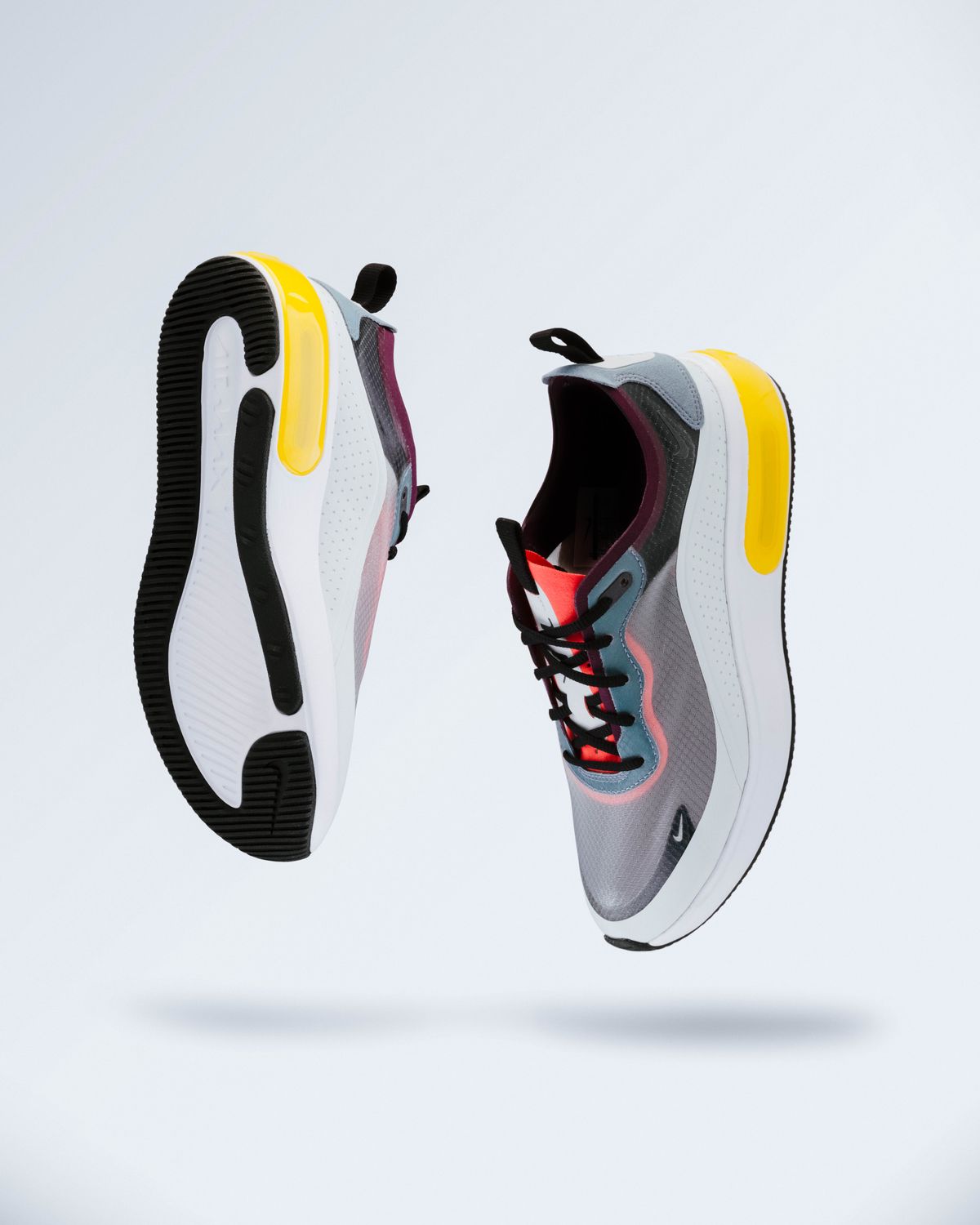
Warm white, cool white, and what the brighteners do
There are really only three whites worth knowing about when you shop for walking shoes.
Cool white has a faint blue or lavender undertone. It looks modern and crisp, it flatters in daylight, and it’s the most common in sporty styles because it reads as performance. In flash it goes ghostly, and against warm skin tones it can make feet look slightly disconnected from the rest of the outfit.
Warm white has a cream or ivory undertone. In daylight it can look faintly yellowed next to a true white shirt, which some people read as “old”. Under indoor light it is the most flattering of the three, and it photographs warmly, which suits most skin tones.
Neutral white has a small grey component. It never looks like the brightest thing in the room, and it never turns blue. If you want one pair to do day and evening, this is the one.
The brightener load matters as much as the base colour. A coated synthetic upper with heavy brighteners will look whiter than white for about three weeks and then start going chalky at the flex points. A leather or dense knit upper with less brightener starts slightly off-white and stays there for years. I’d take the second every time.
If you want the technical background, the chemistry of optical brighteners is worth ten minutes, and the colour rendering index explains why the shop’s lights made everything look better than your kitchen does.
Daylight at 3pm versus 8pm: the same shoe, two colours
I spent a week photographing one pair of white walking shoes at four times of day to see how much the colour actually moved. Same shoes, same wall, same phone. The results were more dramatic than I expected.
- Midday, overcast: the closest to true colour. Slight grey cast, clean edges, easy to match with anything.
- Late afternoon, low sun: warm bounce off pavement turns the white slightly golden. Very flattering, hard to repeat.
- Indoors at 6pm, tungsten: clearly yellow-cream. Fine in person, muddy in photos.
- Indoors at 8pm with flash: blue-white and flat, with the toe box losing all detail.
The practical takeaway for choosing a pair is simpler than the science. If most of your walking happens in daylight, buy the cool white and enjoy how crisp it looks. If you walk in the evening, or you’re buying for dinners and events where photos happen indoors, buy the neutral or warm white.
If you walk in both, accept that you’re choosing which one to compromise on, and pick neutral.
There’s a second variable people forget: the colour of the pavement. White shoes photographed on pale concrete look washed out. The same shoes on dark asphalt or dark wood floors gain contrast and read much cleaner. If you’re taking photos for an event, the surface under your feet is doing as much work as the shoe.
Also worth knowing: your phone’s auto white balance is set by the brightest thing in the frame. If you’re wearing white shoes and standing in front of a white wall, the camera will average everything toward grey and your shoes will look duller than they are. Move one step to the left, put a darker background behind you, and the same shoes light up. That’s not a shoe problem, and it’s fixable in three seconds.
What photographs flat: sole thickness, toe shape, laces
Colour is only half of it. Shape decides whether the shoe reads as a shoe in a photo or as a pale blob.
Sole thickness. A very thin sole, under about 15mm, disappears against pale pavement. A sole in the 25mm to 35mm range gives the shoe a visible platform line, which photographs as structure. This is the single biggest reason chunky white walking styles look better in pictures than slim ones: the sole gives the camera something to draw.
Toe shape. Round toes read soft, almond toes read sharper, square toes read modern but can look heavy from above. For photos taken at chest height, which is most phone shots, a slightly tapered round toe photographs best because it keeps a visible taper in silhouette.
Laces. White laces on a white shoe blur into one shape. A tonal grey or off-white lace, or a lace with a slight texture, keeps the top of the shoe readable. This is a five-minute swap and it changes how the shoe looks more than any cleaning product.
One more: the heel counter. A shoe with a defined heel counter and a slightly raised collar photographs with a clear back edge, which makes your ankle look slimmer. A soft, unstructured back disappears. Try both in the mirror and you’ll see it immediately.
If you’re shopping for a pair with a visible sole line, the white casual walking styles with a 6cm platform sole are the clearest example of that geometry, and they read well in photos for exactly that reason.
The scuff map: where white shows wear first
White walking shoes age in a specific order, and knowing it helps you judge a pair before you buy and predict how it will look in six months.
The order I’ve seen across four pairs:
- The outer edge of the toe box, from catching kerbs and stairs.
- The inner heel collar, from your other shoe brushing it as you walk.
- The flex crease across the top of the toe, where the coating cracks.
- The laces, which grey out faster than the upper and drag the whole shoe down.
- The midsole edge, which yellows from sun and from contact with asphalt.
The toe box and the heel collar are the two that matter, because they’re the ones other people see when you’re sitting down. A pair with a slightly darker toe bumper or a rubber-wrapped toe will look newer for longer than a pair with a clean white toe. That’s a design decision worth paying for.
Laces are the cheapest fix in all of footwear. Four pounds, five minutes, and the shoe looks two years younger. I keep a spare pair of grey laces in a drawer for exactly this.
The care routine that keeps them photographing clean
Cleaning white shoes is mostly about not making it worse. Bleach turns coated synthetics yellow permanently. Hot water softens the glue at the toe. A stiff brush takes the texture off a knit upper.
The routine that works:
- Brush dry dirt off with a soft brush before any water touches the shoe.
- Mix a drop of dish soap in half a litre of lukewarm water. Less soap than you think.
- Use a microfibre cloth, small circles, one panel at a time.
- Rinse the cloth often. Dirty water is what smears grey into white.
- Stuff with paper and air dry away from heat, never on a radiator.
- For the midsole, a melamine sponge works, but only on the rubber, never on fabric.
Do that once a fortnight in summer and once a month in winter, and a decent pair will hold its colour for two or three seasons. Skip it and the grey builds up in the flex crease, where you can’t get it out.
One thing I’d skip: whitening pens and “sneaker white” paints. They cover the surface for a week and then flake in a pattern that looks worse than the original scuff. If a shoe needs paint, it needed replacing.
When white is the wrong call
Three situations where I’d steer you elsewhere, and I say this as someone who owns three pairs of white walking shoes.
Rain and mud season. White plus wet pavement equals a grey tide line around the sole within one walk. If your daily route includes a park or a building site, buy dark grey or navy and save the white pair for dry weeks.
Long days on your feet in summer heat. White reflects light but the coating that keeps it clean doesn’t breathe. On a 30°C day, a coated white upper gets clammy by mid-afternoon. A lighter grey mesh does the same job with less heat.
If you’re self-conscious about foot size. White is the highest-contrast colour against pavement, which makes feet look bigger. That’s not a problem unless it bothers you, and if it does, a white shoe with a darker sole breaks the outline and reads smaller. Honest, if unglamorous.
Wide feet have a related issue. A white shoe on a wide last looks wider than the same shoe in grey, because there’s no shadow to hide the extra volume at the ball of the foot. If width is your main fit problem, read the notes on what the size chart hides about wide walking shoes before you pick a colour at all.
And one more case that isn’t about looks: cleaning time. White shoes cost you roughly fifteen minutes a fortnight if you want them to keep their colour. Dark shoes cost you almost nothing. If your week is already full, that fifteen minutes is the real price of white, and it’s fine to decide it’s not worth paying.
Two pairs that pass the test
If you want a starting point rather than a research project, here’s what I’d look at and why.
For a neutral white that behaves in daylight and in flash, the soft-soled mesh walking shoes are a sensible baseline. Mesh photographs with visible texture, which gives the camera something to work with, and the sole line is thick enough to hold a shape. The trade-off is that mesh holds dirt in the weave, so they need the fortnightly clean.
For something with more structure, and a white that reads warmer, the platform-sole styles in the walking shoes collection photograph better at night because the thicker sole casts a shadow under the shoe. That shadow is what stops white looking like it’s floating.
Both need the same thing from you: a dry day, a soft brush, and the willingness to swap the laces once a year.
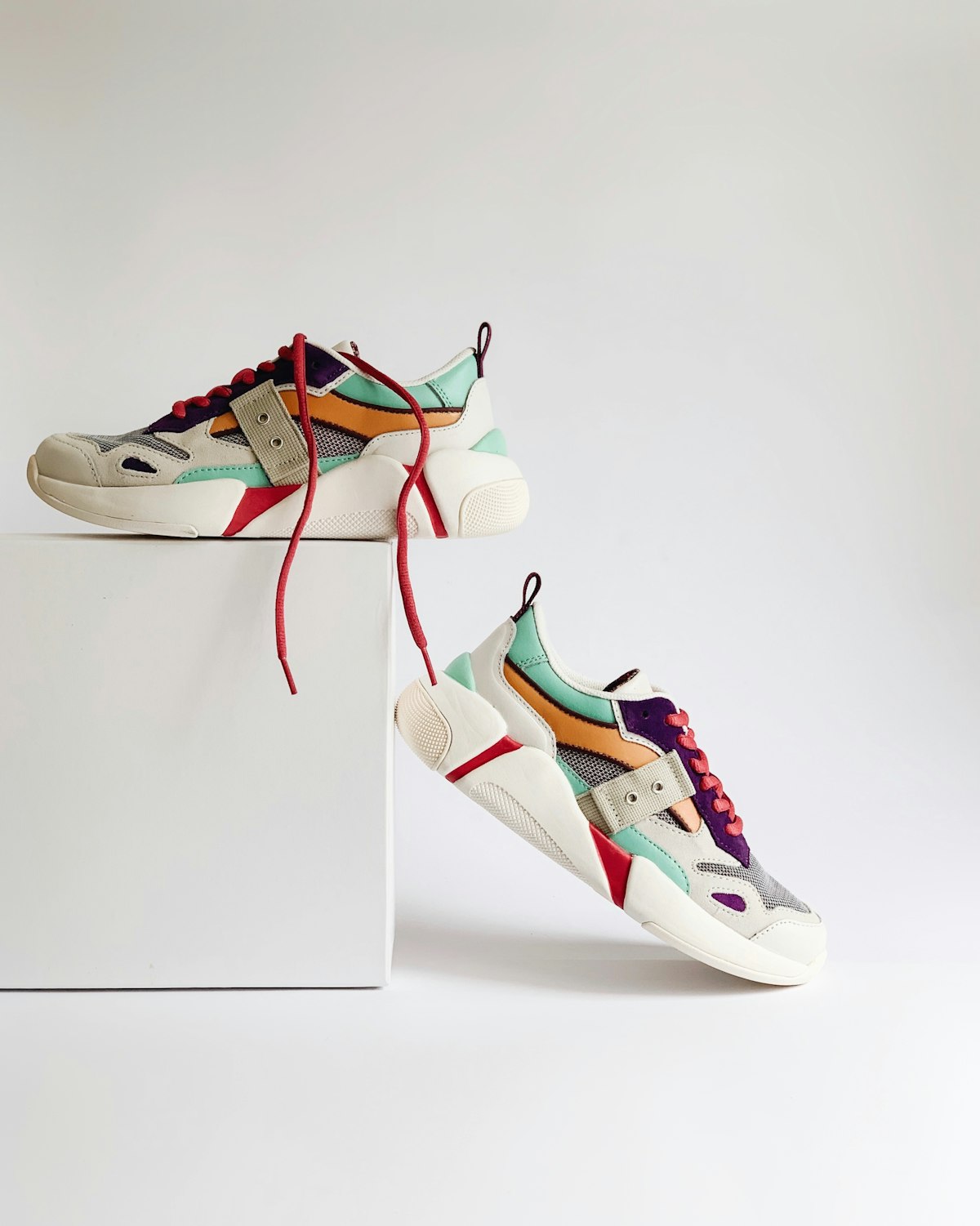
Before you commit, one last practical note on what happens after the first month. White walking shoes show their real quality in the crease across the toe, not on the shelf. If that crease goes grey and stays grey after cleaning, the coating is failing and it will keep failing. If it comes back white with a bit of soap, you’ve bought well.
And if you’re still deciding between white and something else, the piece on why the midsole yellows before the upper explains the one ageing problem you can’t clean your way out of. Worth reading before the return window closes.
Take the photo before you take the receipt. Thirty seconds in a shop doorway tells you more than any product page, and you’ll have the shoes for years.
