

My navy walking shoes were an accident. I bought them because the black pair in my size was gone and the grey looked like a hospital shoe, and I spent the first week convinced I’d made a mistake. Then I wore them with light jeans on a Tuesday and something clicked.
Six months later they’re the pair I reach for when I can’t decide, which is most mornings. So I did the count: three pieces of clothing, nine outfits, one week of getting dressed without thinking about it.
Navy blue walking shoes turned out to be the most useful mistake I’ve made in a shoe shop, and the reason has nothing to do with fashion. It’s about how many outfits one colour can quietly hold together.
This is the version of that math I’d give a friend, including the three combinations that don’t work.
Why navy earns its place next to black
Black is the safe answer and it’s also a slightly lazy one. Navy does something black can’t: it reads as colour without asking for attention.
Part of that is chemistry. Navy blue is a very dark shade built on blue pigment rather than a neutral, and it shifts with light. In flat indoor lighting it looks almost black. In afternoon sun it goes distinctly blue and suddenly matches denim instead of fighting it.
Black doesn’t do that. Black is black under every bulb, which is why an all-black shoe can look like part of a uniform while a navy one looks like a decision.
There’s a practical side too. Scuffs on navy show less than on black in most lighting, because the pigment under the finish is closer in tone. On black leather a scrape leaves a pale grey mark; on navy it leaves a slightly lighter blue one that you have to look for. After a winter of school runs and supermarket floors, that difference is most of what separates a pair that still looks new from one that doesn’t.
The catch is that navy has more than one version. There’s a grey-leaning navy, a true navy, and one that’s almost electric. A grey-leaning navy matches charcoal trousers and looks muddy against denim. A true navy does both. If you’re buying one pair, aim for the middle and check it against a pair of jeans in daylight before you commit.
History nerds will enjoy the trivia: the name comes from the British Royal Navy adopting dark blue for uniforms in the 18th century, which is why the shade sits between a colour and a neutral in most wardrobes.
One warning about judging navy in a shop. Fluorescent tubes push blue toward green, so a pair that looks deep and clean under a shop light can look dull by a window. Take it to the door. If it goes slightly teal, it’s the wrong navy and it will fight every pair of jeans you own.
The three pieces I rotate
The capsule only works because the pieces are boring. Nothing here is a statement, and that’s the point.
Light-wash straight jeans. Not skinny, not wide. Something with a 27cm hem opening, which reads as a straight leg on most builds. This is the piece that makes navy work, because the contrast between faded indigo denim and deep navy is close enough to look intentional and far enough apart to look deliberate.
Charcoal trousers. A wool blend or a heavy cotton, straight or slightly tapered, hemmed to sit 2cm above the shoe collar. Charcoal and navy is the most underrated pairing in a wardrobe. It has more depth than grey on grey and less contrast than navy on black.
A dark midi skirt. Mine is a deep olive, which is the third colour in the palette and the one that stops the whole thing looking like a work uniform. Length matters here: mid-calf, with the hem landing about 10cm above the ankle.
Three pieces, nine combinations, and the shoes don’t change. That’s the entire trick. When one element is fixed, the other three pieces have to earn their place, and these three do.
I tried four pieces first and it turned into a mess. With four, there are twelve combinations I theoretically own and maybe five I actually like, and the extra choices made the mornings longer rather than shorter. Three is the number where every combination works at least once a week, which is the only test that matters.
If you’re starting from nothing, buy the jeans first and the trousers second. The skirt is the one that can wait a season.
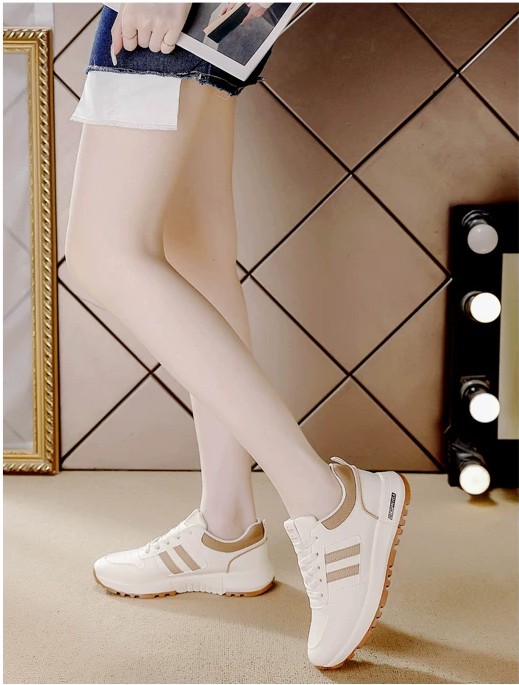
Outfits one to three: the jeans axis
Jeans plus navy shoes is the combination people get wrong most often, usually because they wear a black shoe with jeans out of habit and wonder why the outfit looks flat.
One: jeans, white tee, navy shoes. The most basic version and the one I wear most. The white tee gives the outfit its only brightness, the jeans do the texture, and the navy at the bottom stops it all reading as a jeans-and-tee cliche. A cropped hem helps: if the jeans pool at the ankle the whole thing collapses.
Two: jeans, navy knit, navy shoes. This is the tonal one and it needs a rule. The knit should be at least two shades lighter or darker than the shoes, otherwise you get a block of colour from waist to floor and the eye can’t find an edge. I learned that the hard way at a family lunch where a cousin asked if I was in a jumpsuit.
Three: jeans, striped shirt, navy shoes. The stripe does the work here, and it’s the combination that photographs best of the nine. Thin navy-and-white stripes read as a texture from a distance and as a pattern up close, which gives the outfit somewhere to look without adding another colour.
For all three, the sock matters more than it should. A grey sock breaks the line between hem and shoe and adds a visible edge. A navy sock makes the leg look shorter. I keep four pairs of the same grey sock for this reason alone.
The jeans axis is also where the weather decides for you. In summer the white tee and bare ankles work; by October the same outfit needs a sock and a jacket, and the navy shoes start doing the job a boot would normally do. That’s the advantage of a walking shoe over a sneaker: it can carry a pair of trousers without looking like gym kit.
Outfits four to six: the work axis
Charcoal trousers with navy walking shoes is the combination I expected to fail and didn’t. The reason is contrast: charcoal sits a shade lighter and slightly warmer than the navy, so the shoe reads as a separate object rather than an extension of the trouser.
Four: charcoal trousers, cream shirt, navy shoes. This is the office version. The cream shirt is what makes it look deliberate rather than accidental. Swap in a white shirt and it goes a bit corporate; cream keeps it loose.
Five: charcoal trousers, grey merino, navy shoes. Three neutrals, no accent. It works because the trouser and the knit are different textures even though they’re close in tone. It’s my default for a day of meetings followed by a train.
Six: charcoal trousers, olive overshirt, navy shoes. Olive and navy is a combination that looks wrong on paper and right in daylight. Keep the olive muted. A bright khaki pushes the outfit into safari territory, which is not the goal.
The trousers need a proper hem for this to work. Mine are 2cm above the collar of the shoe, which means you see the top edge of the shoe and the start of the sock. Any longer and you get a break that bunches over the laces, and the whole thing looks like you borrowed someone else’s clothes.
One more note for anyone who walks to work: the charcoal trousers will pick up a shine at the seat after a few months of sitting on a bus. That’s the fabric, not the shoes, and a hot iron with a damp cloth fixes it for another six months.
The work axis is the one that surprised me most, because I assumed a walking shoe would look wrong with tailoring. It doesn’t, as long as the trouser is straight and the shoe is plain. What fails is a cropped, wide trouser with a chunky sole, which reads as two different decades in the same outfit.
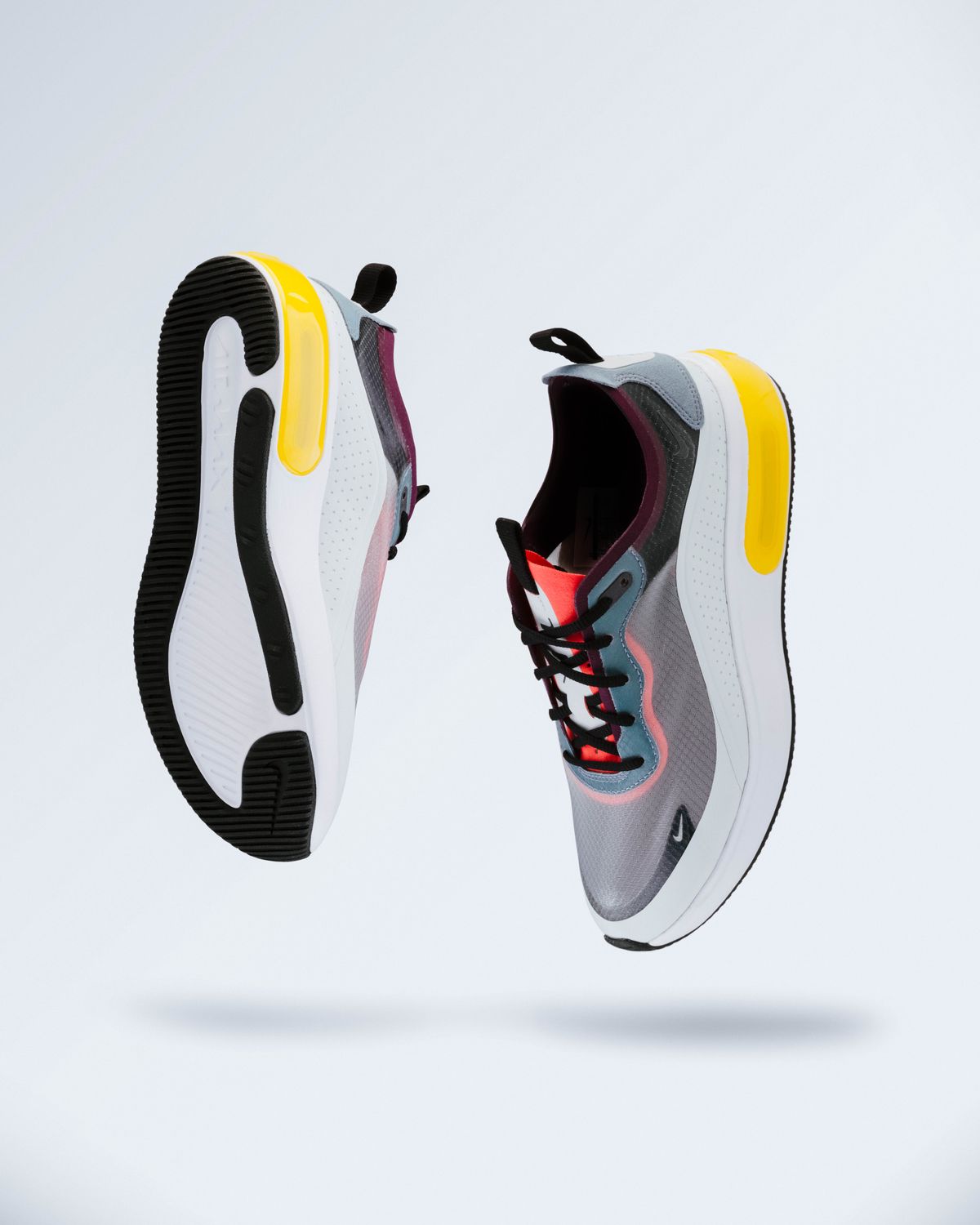
Outfits seven to nine: the weekend axis
The olive midi skirt is the piece that makes the navy shoes feel like a choice instead of a default.
Seven: olive skirt, black turtleneck, navy shoes. Three dark pieces and a shoe that ties them together. The skirt needs to be long enough that there’s a visible gap of leg between hem and shoe, otherwise the whole outfit reads as one column.
Eight: olive skirt, grey sweatshirt, navy shoes. This one is deliberately sloppy and it’s the outfit I wear to the market on a Saturday. A cropped sweatshirt keeps the proportion from going sack-shaped.
Nine: olive skirt, denim jacket, navy shoes. The most photographed of the nine, in my experience. A denim jacket and navy shoes work because the jacket is a lighter wash than the shoes are dark, which gives you two blues at different values instead of a matching set.
All three need one thing: the shoe has to look clean. Navy next to olive shows dust and pale marks much more than navy next to denim does, because the contrast is higher. I keep a cloth by the door and it takes twenty seconds.
The weekend axis is also the least forgiving on comfort, because these are the days I walk furthest. A market run is 6,000 steps on paving, and the pair that felt fine on a carpet feels different by the third kilometre. That’s not a styling problem, and it’s the reason I’d rather have one good walking shoe than three pretty ones.
Where the math breaks
Nine outfits is a nice number and it isn’t the whole truth. Three of the combinations fail, and the failures are worth knowing before you buy navy instead of black.
Same-tone navy is the big one. A navy trouser with navy shoes eats the outfit. The eye needs a break at the ankle, and there isn’t one. If you own a lot of navy clothing, a navy shoe is the wrong purchase; that’s a case where black or grey does more work.
Warm browns fight it. Tan, camel, and rust all pull navy toward grey. Not a disaster, just a slightly wrong feeling you can’t name. A black shoe handles warm brown better, which surprised me.
Formal settings still want black. At a wedding or an interview, navy walking shoes read as weekend shoes no matter how well the rest is put together. Keep a black pair for those days.
The other honest downside is maintenance. Navy suede marks like a magnet for water. One walk through a wet car park and you have a tideline around the toe that won’t brush out. If your pair is suede, spray it before the first wear, not after.
And navy is genuinely harder to match at the sock drawer level. Black goes with everything. Navy needs a grey, an oatmeal, or a lighter blue underneath, and a drawer full of black socks will make the shoes look wrong for reasons you won’t be able to identify at 7:40am.
None of that is a reason to avoid navy. It’s the reason to buy it as a second pair rather than a first. Black earns the everyday slot because it never asks a question. Navy earns the second slot because it makes the outfit look considered, and that’s a different job.
Sizing, and the one thing I’d change
My pair is a 38 and my measured foot is 24cm, which puts me right on the boundary between a 38 and a 39 in most walking shoes. I went down.
That was the mistake. Walking shoes need room at the toe because your foot lengthens when you walk, and a half size too small doesn’t feel wrong for the first twenty minutes. It feels wrong at hour three, when the toe box starts pressing on the longest toe and you begin shortening your stride without noticing.
If I were buying again I’d take the 39 and add a thin insole, which buys the length back without losing the volume. That’s the specific thing I’d change, and it’s the same advice I give anyone buying their first navy pair online.
Two other fit notes from six months of wear. The collar softened after about three weeks, so a slight rub at the ankle in week one isn’t a reason to return. The midsole, on the other hand, has compressed noticeably under the heel, which is normal for foam but means the pair is now a half-step firmer than it was in March.
For care, brush suede in one direction and let it dry away from a radiator. For smooth leather, a neutral cream twice a season is enough. Don’t use black polish on navy. It looks fine for a week and then goes patchy where the pigment sits in the creases.
One last thing about sizing that took me a season to notice: navy shows a tight fit at the toe more than black does, because the crease line runs lighter than the leather around it. If the shoe is too short, you get a pale band across the vamp where the upper folds. It’s the most reliable fit signal I’ve found, and it’s visible from across a room once you know what you’re looking at.
If you’re building the same capsule and want a starting point, I’d look at a leisure walking pair for the jeans days and something softer like this mesh walking shoe for warm afternoons. Both hold up better with a proper hem than with a break.
Nine outfits is enough
The thing I didn’t expect from three pieces and one pair of shoes is how much it shortened my mornings. Nine outfits sounds like a small number until you realise it covers a week of weather you didn’t plan for.
If you try it, start with the jeans. They’re the piece that decides whether navy was the right call, and you’ll know within one wear. The rest of the math follows.
Mine are two years old now and the toe is scuffed in a way I’ve stopped trying to fix. That’s the honest end state of a pair you actually wear, and it beats a pristine pair that stays in the cupboard.
The wider range sits in the walking shoes category, and if you want the colour side in more depth, the history of navy blue explains why the shade behaves differently from black under light. For the fit question rather than the colour question, this piece on how black walking shoes photograph covers the same tests from the other end.
