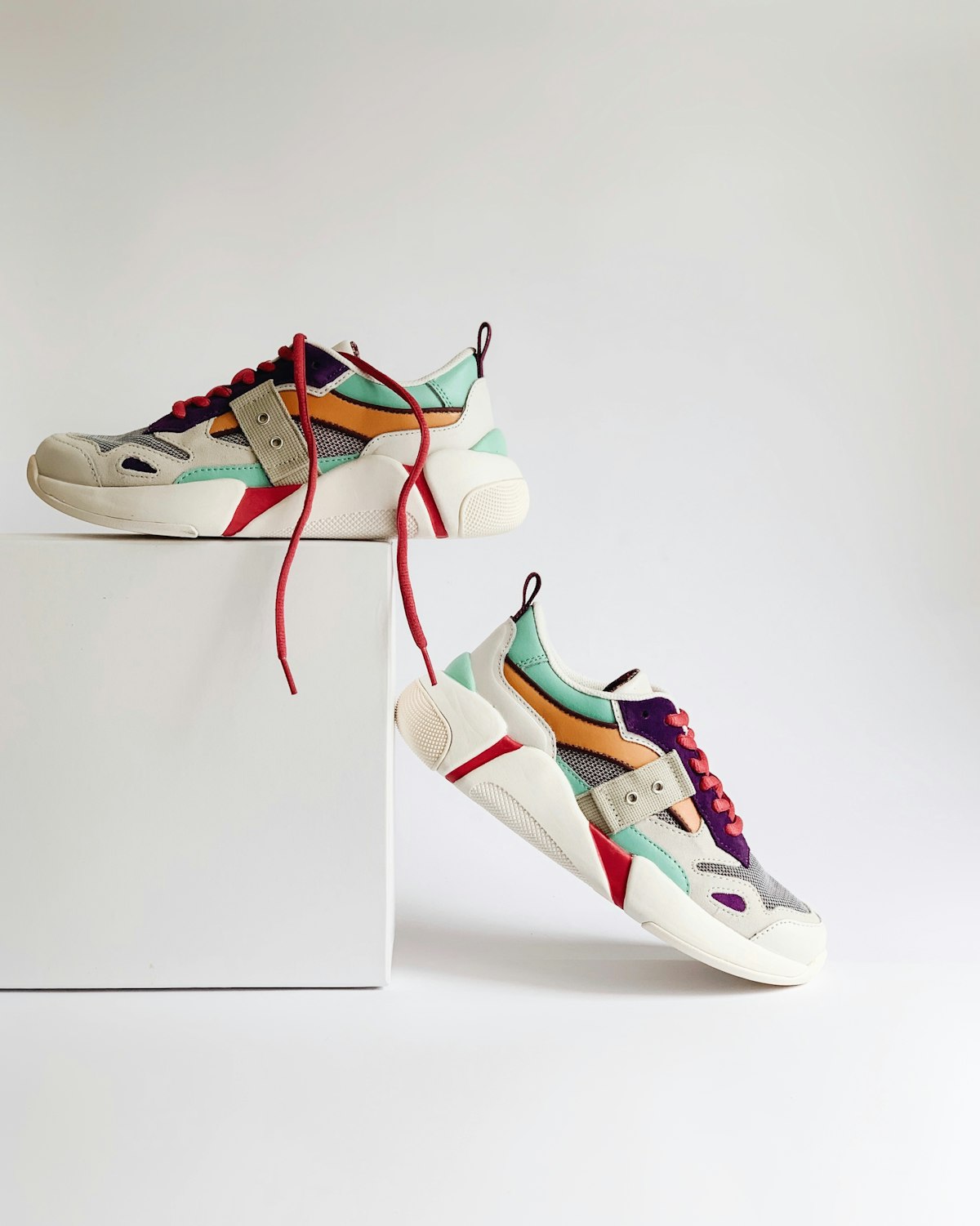
You’re in the shop at 6:40pm, the strip lights are doing something flattering to a pair of pink walking shoes, and you’ve already decided. Then you get home, hold them up to the kitchen window the next morning, and the colour looks like a different shoe. Dustier. A bit salmon.
That gap between the shop and the window is the entire problem with pink. It’s the most light-sensitive colour in the footwear aisle, and it’s the one people buy fastest, because fluorescent bulbs are extremely kind to it and very dishonest about it.
So here’s the short version. Buy the pink you can still live with at 8am on a grey Tuesday, not the pink that looked incredible under a spotlight at closing time. Everything below is about how to tell those two apart before you hand over your card.
Do the window test before you pay
Ask the assistant if you can walk to the door with them. Most will say yes, and the ones who don’t have just told you something about the shop. Hold the shoe at arm’s length in daylight, not down at your feet. Look at the toe box first, because that’s where the colour reads strongest, then tilt it so the side panel catches the light.
Ten seconds at the door beats ten minutes of squinting under bulbs.
What you’re looking for is a shift. Nearly every pink walking shoe goes warmer in daylight and cooler under LED. A shoe that’s dusty rose indoors often turns milky peach at the window. A shoe that’s bubblegum under bulbs usually flattens into chalk outside. Neither is a disaster, but you should know which one you’re buying.
Commercial interiors commonly run lights in the 3000K to 3500K range with a colour rendering index around 80. Daylight on an overcast morning measures closer to 6500K with far better rendering. That’s a big jump, and pink is where you notice it most.
Ask to take them outside. If the answer is no, do the next best thing: hold them near the glass and compare the shoe against your own hand. Skin tone is a decent reference. If the pink suddenly looks like it belongs to a different family than your skin, it’ll do the same thing to your outfits.
Why every pink reads better under shop lighting
Pink sits between red and violet on the visible spectrum, which means it borrows behaviour from both. Warm artificial light pushes the red end forward, so the colour looks richer and more saturated than it is. Daylight spreads the whole spectrum evenly, and the shoe drops back to its true value. That’s the whole trick.
There’s a second effect called metamerism, where two colours look identical under one light source and different under another. Two pairs side by side on the shelf can match perfectly and then fight each other in your hallway. Pink as a colour has an unusually wide range of what people will accept as the same shade, which is why this trips up shoppers more than it does with, say, navy.
Practical consequence: never judge a pink shoe against another pink shoe in a shop. Judge it against your own ankle. Or against the jeans you wore in, if you’re the kind of person who plans ahead.
And don’t trust the product photo on the box either. Studio lighting flattens pink into something closer to beige, and phone screens push saturation up by default. The photo is a rough guide, nothing more.
Three pinks that survive real life
Not all pinks age the same way. Some hold their character for two years of pavement, some look tired by September. Here’s how the usual options break down on a walking shoe specifically, where dirt and creasing hit the toe box first.
- Dusty rose and mauve. The safest bet. Low saturation hides scuffs, reads neutral against denim, and doesn’t scream at anyone in an office corridor.
- Muted salmon and blush. Warmer, more flattering on most skin tones, but it stains visibly if you get caught in the rain on a dusty pavement.
- Hot pink and fuchsia. Great as a second pair. Wears badly as a first pair, because the dye sits higher in the saturation range and any fading is obvious.
If you want one pair that works with everything from linen trousers to a grey sweatshirt, dusty rose is the no-brainer. If you already own a lot of black and white, the muted salmon gives you something to break it up without going full statement.
Hot pink is a bit of a gamble, and I’d say that even though I like it. It photographs brilliantly and then looks like a costume on a Wednesday. Fine if that’s the point.
What pink does to the rest of your outfit
Pink walking shoes are the only pastel that behaves like a neutral when you get the value right. A dusty rose pair with grey wool trousers, a white tee and a navy jacket reads calm. The same pair with a lime green top reads like a mistake. Value matters more than hue here, and it’s worth ten seconds of thought before you commit.
The easiest pairing rule I know: match the shoe’s depth, not its colour. Pale pink goes with pale denim and stone. Mid pink goes with charcoal and olive. Bright pink needs a black base or it starts competing with your own clothes.
Socks are the sneaky part. A pink walking shoe with a white ankle sock looks sporty and young. The same shoe with a black sock looks like a school uniform. If your sock drawer is mostly dark, the pale end of the range is the friendlier choice.
Dark socks, pale shoes. That’s the whole trick.
For a wider read on how colour choice plays out across a whole week of outfits, the piece on wearing one pair for five days at work is a useful reality check.
The scuff problem nobody warns you about
Here’s the part the shop won’t mention. Pale pink walking shoes show scuffs on the outer toe faster than white does, because white at least stays white when it’s scuffed. Pink goes grey at the edges, and grey on pink is visible from three metres.
When you catch your foot on a kerb, you don’t get a mark. You get a small patch where the surface has lost a fraction of a millimetre of pigment, and the whole area around it now reads duller. It’s not a hole, and it’s not fatal, but it’s permanent in a way that a scuff on black leather isn’t.
Two things help. First, pick a shoe with a rubber bumper wrapping the toe rather than a smooth leather or knit toe. The bumper takes the hit and can be cleaned. Second, treat the pair with a water and stain repellent spray before the first wear, when the surface is still clean enough for the spray to bond.
The other honest downside: pink doesn’t hide sweat marks on knit uppers. If you walk 8000 steps in July, the area around the flex point will look damp by the time you get to the office. Darker and more saturated pinks hide this. Pale ones don’t.
If you’ve already bought the wrong shade
Most people reading this have a pair in the hall cupboard right now that looked better in the shop. Before you give up on them, try shifting what you wear them with, because a wrong-ish pink is often a right pink paired with the wrong trousers.
The usual culprit is contrast. A washed-out pink next to a crisp white shirt looks like a mistake. The same shoe next to oat, ecru or warm grey looks intentional. Cool the outfit down and let the shoe be the warm note, rather than fighting the shirt for the same job.
Second fix: change the sock line. A pale shoe that looks sappy with bare ankles usually reads sharper with a visible cream or oatmeal sock. It moves the pink away from your skin, and skin is what makes pale pinks go strange.
Third fix, and this one’s less obvious. If the shade reads too sweet, add structure elsewhere. A straight leg, a heavier jacket, a dark belt. The shoe stops carrying the whole outfit and starts doing a small job, which is what a pink walking shoe is actually good at.
And if none of that works, sell them. Wearing a colour you resent every time you leave the house is a bad deal, and someone else will love them. Better to lose fifteen pounds than three months of low-level irritation.
One thing you shouldn’t do is dye them. Home dyeing knit and mesh uppers comes out patchy, and the mesh takes dye differently from the overlays. I’ve seen it work exactly once, on a smooth leather pair, done by a professional.
How to photograph pink so you see the truth
If you’re buying online, you have a real disadvantage, so build a small test into your routine. Photograph the pair you already own next to a sheet of white paper in three places: by a north-facing window, under your kitchen bulb, and outside at noon. You’ll learn quickly how much your camera lies.
Then when a new pair arrives, do the same thing on day one. Two photos are enough. One by the window, one on the pavement outside. If the colour in photo two makes you wince, return them inside the window, because it won’t improve.
There’s a broader point about fitting and feel here too. Walking shoes live or die on the toe box and the arch, and common causes of foot pain are usually about pressure points, not colour. Buy the colour you like, but only after the fit is settled. Nobody has ever been saved by a nice shade.
One habit worth building: photograph the receipt alongside the shoes. Sounds fussy, and it is, but returns windows are short and you’ll thank yourself in three weeks when you can’t remember which card you used.
Washing, fading, and the two-year question
Pink fades in a straight line, not gradually. Most knit and mesh walking shoes lose noticeable saturation after about eight to ten machine washes on a cool cycle, and the fade lands unevenly, so the toe goes pale before the heel does. That’s the moment the pair starts looking older than it is.
Hand washing in cool water with a mild detergent extends that considerably. So does drying in shade. Direct sun is the fastest way to bleach a pink upper, and a radiator does almost as much damage by cooking the dye into an uneven pattern.
Ask yourself the two-year question before you buy. In two years, will this colour still be the thing you reach for, or will it be the pair at the back of the cupboard? Dusty rose and mauve almost always pass. Bright pink usually fails, and that’s fine as long as you bought it knowing so.
Fading also tells you when to stop. Once the toe box and the heel are visibly two different pinks, the pair is done as a smart option and becomes a garden pair.
If the answer is “probably the back of the cupboard”, spend less. The breathable board shoes with the thick sole come in lighter tones that hold up through a summer of daily wear without asking much of your budget.
The pair you’ll actually wear in two years is rarely the most exciting one on the shelf. It’s the one whose colour still works with the clothes you own on a bad morning, when you have ninety seconds to get out of the door.
So do this: next time you’re in a shop, take the pink pair to the window before you decide. Two minutes, no cost, and it’ll save you the slow disappointment of a shoe that only looked right under someone else’s lighting. If the colour survives daylight, and the toe box doesn’t press on your little toe, buy them. If either fails, walk away and try a deeper shade. You can browse the rest of our walking shoes section while you think about it.
The same logic applies to any pale shoe, which is why the daylight test on white kitten heels is worth reading before your next pale purchase.
One more thing worth knowing. If your feet are wider than average, the leather sports shoes that run narrow will not be your friend, and no amount of pretty pink fixes a shoe that pinches across the ball of your foot after twenty minutes.