

Your ankle wants a better heel counter, not more shoe
Stepping off a kerb should not be a decision. If you’ve rolled your ankle twice in the past year, you know the sequence anyway: the foot tips over, you grab a railing, and then you spend ten minutes pretending it didn’t hurt. Most women hunting for real ankle support aren’t runners. They walk 6,000 steps a day on pavements that tilt toward the drain, they have one dodgy ankle from a wedding three summers ago, and they’d like to stop thinking about it.
The short answer: support in a walking shoe comes from three places, and only one of them shows up in the product photo. A firm heel counter. A wide base under the midfoot. A sole that refuses to twist like a wet towel. Everything else is padding, and padding is not support.
That distinction matters because “ankle support” on a shoebox usually means a padded collar. You can squeeze it with your thumb in the shop and feel convinced. Then you walk 400 metres on cobbles and the ankle still goes.
Three parts of the shoe that actually hold you

Start at the back. The heel counter is the stiff cup around your heel, and it’s the single most useful piece of engineering on a walking shoe. Pinch it between thumb and finger. If it folds flat with no resistance, your heel will slide and the whole leg will drift. A good counter holds roughly 60 to 80 percent of its shape under a hard squeeze. Leather and TPU counters tend to be firmer than mesh-backed ones, which is one reason leather walking styles still sell to people with unstable ankles.
Next, look at the footprint from above. A wide midfoot and a slightly flared forefoot give you a bigger triangle of contact, and a bigger triangle resists tipping. Narrow, tapered walking shoes look neater with trousers. They also tip earlier on uneven ground, which is the trade-off nobody puts on the box.
Third, twist the shoe. Hold the heel in one hand and the toe in the other and rotate. A shoe with decent torsional stiffness gives you maybe 10 to 15 degrees before it fights back. A wet-noodle sole twists freely, and every one of those degrees gets transferred to your ankle joint on a slope.
Those three things are checkable in under a minute, and none of them require a specialist. The anatomy of the ankle joint explains why: the talus sits in a bony socket that is far deeper front-to-back than side-to-side, so it resists rolling forward and backward well and sideways badly. Shoes can only reinforce the weak direction. That’s why lateral stability, not ankle height, is the number to chase.
One more measurement is worth knowing. Put the shoe on a table and look at how much sole sticks out beyond the upper at the widest point of the forefoot. Under 5mm of overhang and the shoe is basically a narrow column with a foot balanced on top. Around 8 to 12mm and you’ve got a base that catches you before your ankle has to.
Stack height changes your balance more than the collar does
Here’s the part that gets ignored. A 38mm stack puts your foot on a platform, and a platform is a lever. The higher your foot sits above the ground, the more leverage your body weight has to tip it sideways when you land on the edge of a paving slab.
For everyday walking, 22mm to 30mm under the heel is the range where most women stop noticing their shoes. Above 35mm you’re trading stability for cushioning. That’s a fair trade on flat tarmac for 10,000 steps. It’s a poor trade if your route includes kerbs, gravel, tree roots, or a station car park that floods.
I learned this the expensive way with a pair of thick-soled dad shoes. Comfortable for the first two weeks. Then I caught an edge on a dropped kerb outside a pharmacy and went down in front of a bus queue. The shoes were not defective. They were just 40mm tall and soft, and soft plus tall is a wobbly combination.
Lower isn’t automatically better either. Below about 18mm, older walkers often feel every stone, and foot fatigue sets in by mid-afternoon. The sweet spot for most people is a moderate stack with a firm lateral wall, so the cushioning compresses vertically but not sideways.
Lacing is the cheapest support upgrade you already own
Before you buy anything, try re-lacing what’s in your cupboard. Most shoes are laced in a flat criss-cross that clamps the middle of your foot and leaves the top of the ankle loose. That’s backwards for stability.
Two changes are worth the five minutes:
- Skip the second-to-top eyelet and run the lace straight up to the top one on each side, then tie. This pulls the heel back into the counter instead of squeezing the instep.
- Use a heel-lock loop on the last eyelet if your shoe has a spare hole. It takes one extra pass and it stops the heel lifting by 5 to 8mm, which is often the whole problem.
You’ll feel the difference in the first 200 steps. If the shoe still feels loose around the ankle after that, the last is wrong for your foot and no lace pattern will rescue it.
Socks matter too, and not in a fluffy way. A thin cotton sock lets your foot slide inside the shoe; a sock with a bit of grip at the heel keeps contact with the counter. It’s a small effect, but it’s free.
Don’t overtighten, though. I did this for a month, cranking the laces until the tongue left a mark, and my ankle felt no steadier. What changed was my arch, which started aching on the outside edge by 4pm. A lace that’s snug at the top two eyelets and relaxed across the middle of the foot is the goal.
Sizing up half a size quietly destroys the heel hold
Half a size sounds harmless. It is roughly 4 to 5mm of extra length, and it moves your heel about 6mm forward inside the counter. Now the firmest, best-designed heel counter in the shop has nothing to grip.
If your toes touch the front, the fix is usually width, not length. A wide fit in your normal size gives the toes room without letting the heel swim. That’s a different purchase from going up a size, and most shop assistants will offer the size first because it’s easier.
Here’s a 20-second test at home. Take the insole out, stand on it, and look at where your longest toe lands. You want a thumb’s width, roughly 10mm, between toe and tip. Then put the insole back, lace up, and try to lift your heel out of the shoe with your hands. If it comes up more than a few millimetres without the shoe following, the size is wrong for your ankle regardless of how the toe feels.
Narrow feet run into the mirror-image problem. A shoe that’s long enough and narrow enough often has a shallow heel cup, and the heel slides up and down with every step. In that case, a tongue pad or a heel grip insert is a legitimate fix rather than a hack. The piece on underpronation and cushioning covers the same fitting logic from the other direction.
One bad ankle is a strength problem as much as a shoe problem
If you’ve sprained an ankle before, your risk of spraining it again is meaningfully higher, and the reason is partly neurological. The ligaments heal with some slack, and the small muscles that catch you when you tip lose reaction speed. Cleveland Clinic’s guidance on ankle sprains is blunt about it: repeated sprains weaken the joint over time, and rehab matters as much as footwear.
So yes, buy a shoe with a firm counter and a wide base. Also do the boring thing. Stand on one leg while you brush your teeth, 30 seconds each side. Then do it with your eyes shut, which feels ridiculous and works. Peroneal strength, the muscles on the outside of your shin, is what catches a roll before it becomes a sprain. Mayo Clinic’s summary of ankle sprain symptoms is useful for one specific reason: it tells you when swelling and bruising mean you should stop walking on it rather than keep testing shoes.
Shoe rotation helps here too. Wearing the same pair every day compresses the same midsole cells in the same places, and by month four the lateral edge of your shoe is visibly lower than the medial edge. That’s an ankle-rolling shoe, whatever the label said when it was new.
Give a pair 24 hours off between wears if you can. Two pairs alternating last about twice as long as one pair worn daily, which is a rare case where spending more saves money.
Rain, worn tread, and the winter ankle
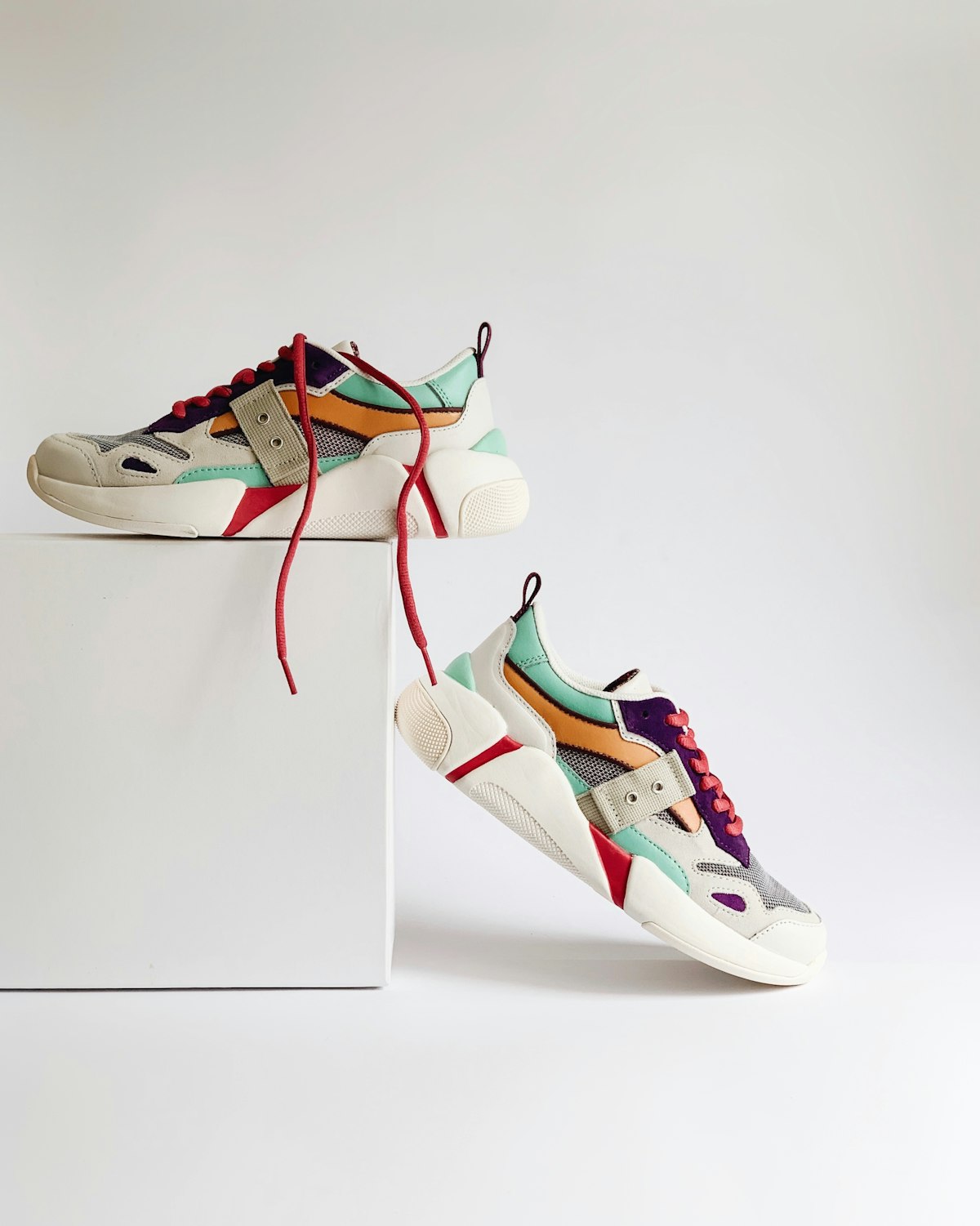
Most ankle rolls I’ve seen happen in the four months when it’s wet, not on dry summer pavements. Wet tarmac drops your friction, wet leaves drop it further, and the outsole is the only thing between you and a bad afternoon.
Look at the tread pattern where your heel lands, because that’s the part that wears out first and the part that matters for a roll. On a pair that’s 18 months old you’ll usually find the outer heel corner rounded smooth while the middle still has lugs. That smooth corner is exactly where a slip starts.
Rubber hardness matters too. Very soft blown rubber grips well on dry concrete and wears to a slick in a season. Hard carbon rubber lasts, but it’s skittish on wet tiles. For city walking, a mid-hardness rubber with a defined heel bevel is the sane compromise.
One thing to skip: waterproof membranes. They keep rain out and they keep heat in, and a hot foot swells, which loosens the shoe. If your feet run warm, a water-resistant upper plus wool socks handles a wet commute better than a sealed bootie.
Also check the midsole for compression lines. If you can see horizontal creases in the foam along the outside edge of the shoe, the lateral side has already collapsed and no lacing trick will bring the support back.
Where “ankle support” shoes get it wrong
High-top walking shoes look supportive. In practice, a collar that comes up over the malleolus mostly limits upward stretch, not sideways roll. The roll happens at the sole. I’m not saying skip high-tops; I’m saying don’t pay a premium for height alone.
The other miss is over-cushioning sold as comfort. A very soft midsole feels wonderful in the shop for the 40 seconds you’re standing on carpet. On a real pavement it lets your foot sink into whatever angle the ground is at, and your ankle spends the day correcting. Firm with a bit of give beats marshmallow.
And a genuine warning: if your ankle instability comes with numbness, tingling, or a foot that drags, that’s not a shoe question. See someone. Footwear fixes mechanics, not nerves.
What to check in the shop in 90 seconds
Go in the afternoon, because feet swell by up to half a size across a day. Wear the socks you actually walk in. Then run this sequence:
- Squeeze the heel counter hard. It should push back.
- Twist the shoe heel-to-toe. You want resistance, not a free spin.
- Stand on one foot and lean 10 degrees to the outside. If the shoe tips with you, walk away.
- Walk 20 paces on the hardest floor in the shop, not the carpet.
For a wide, stable everyday option, the breathable mesh casual walking shoes keep a low stack and a broad footprint, which is the combination that suits most unstable ankles. If you want something you can wear to work without it reading as gym kit, the soft-sole mesh pair is the softer, more forgiving end of the same idea.
For anyone shopping across the whole category, the sneaker section of the shop is organised well enough to filter by shape rather than guesswork. And if your problem is the opposite one, a foot that slips sideways because the shoe is too roomy, the piece on what a 4E width number really measures is the honest place to start.
Bring your old pair to the shop if you can. The wear pattern on the outsole tells the assistant more than any description you’ll manage. If the outer heel is worn to a slope, say so out loud. It changes which shoes get put in front of you.
One last thing worth knowing: support fades. A good counter stays firm for roughly 500 to 800 kilometres, and the midsole foam gives up before the upper does. If your current pair is two years old and the ankle rolls started this spring, the shoe might be the culprit and not your joint.
Go squeeze a heel counter this week. It takes ten seconds, and it tells you more than the box ever will.
