

It shows up around 4pm. You’ve been on your feet since 8, nothing dramatic happened, and suddenly there’s a dull ache across your lower back that wasn’t there at lunch. You sit down, it eases, you stand up, it comes back. By the time you get home you’re blaming your desk chair.
The chair might be part of it. So might your shoes. Walking sends a shockwave up through your heel, ankle, and knee with every step, and a pair of shoes that’s too flat, too soft, or too heavy changes how that load reaches your spine. The best walking shoes for women’s lower back pain aren’t magic, but they can remove one daily irritant that adds up over 8,000 steps.
What actually helps, in order of impact: a 6-10mm heel-to-toe drop, a midsole that absorbs impact without collapsing, a heel counter that holds your foot steady, and low weight. What doesn’t help: any shoe marketed as “orthopedic” with no numbers behind it.
Why your lower back notices your shoes at 4pm
When you walk, the force through your leg at heel strike is roughly 1.2 to 1.5 times your body weight. For a 65kg woman that’s about 80-100kg of load per step, arriving in under 50 milliseconds. Your foot arch, ankle, knee, and hip all absorb some of it. Whatever’s left travels up to the lumbar spine.
Stiff, thin soles pass more of that load upward. Very soft soles absorb the peak but let your arch collapse, which changes the angle at the hip and makes your pelvis tilt. Both extremes push work onto your lower back. The comfortable middle is a midsole that compresses about 4-6mm under a normal step and springs back.
There’s a second mechanism that gets ignored: the timing. Your feet are sensory organs. They tell your brain where your body is in space, and your back muscles adjust constantly based on that feedback. A shoe with a thick, dead sole muffles that signal, so your stabilizers work harder and later. That’s why some people feel wobbly in max-cushion shoes on uneven ground, and why the ache shows up in the back rather than the foot.
None of this means shoes cause back pain. Most lower back pain is multifactorial, and the clinical overview of low back pain makes that clear. Shoes are one input among many, and they’re worth fixing because they’re easy to change.
There’s also a standing component. If your job mixes walking with long stretches on your feet, the shoe matters differently: standing compresses the midsole in one spot for minutes at a time, and a soft foam that never fully recovers leaves you with a lopsided base by afternoon. That’s why hospital staff and retail workers tend to prefer firmer midsoles than runners do.
Drop is the number that matters most
Drop, or offset, is the height difference between the heel and the forefoot. A 0mm shoe puts your heel level with your toes. A 10mm shoe lifts the heel by a centimeter. For most women with lower back discomfort, 6-10mm is the sweet spot.
Why? A slight heel lift reduces the stretch on your calf and Achilles, which reduces the forward lean of your whole body. Less lean means less compensatory arching in your lower back. Very flat shoes, especially ballet flats with a 3mm sole, tend to make people lean forward and push their pelvis into a position that loads the lumbar spine.
High heels are the other end and they’re worse. A 70mm heel changes your centre of gravity, tilts your pelvis forward, and increases lumbar lordosis. If you have back pain and you wear heels for work, the honest advice is to keep them under 40mm and limit the hours. That’s not what anyone wants to hear at 7:30am, but it’s consistent across every clinician I’ve read.
The practical test in the shop: stand normally in the pair and notice whether your hips feel level or tipped. Then walk ten steps and see if you feel like you’re falling forward. A shoe that makes you lean is a shoe that will make your back work.
Also check the toe spring, the upward curve at the front. A little is fine, about 10-15mm. A lot, which you see on some rocker shoes, reduces the work your toes do and can feel great for an hour, then odd for the rest of the day. If your toes never touch the ground, your foot isn’t doing its job.
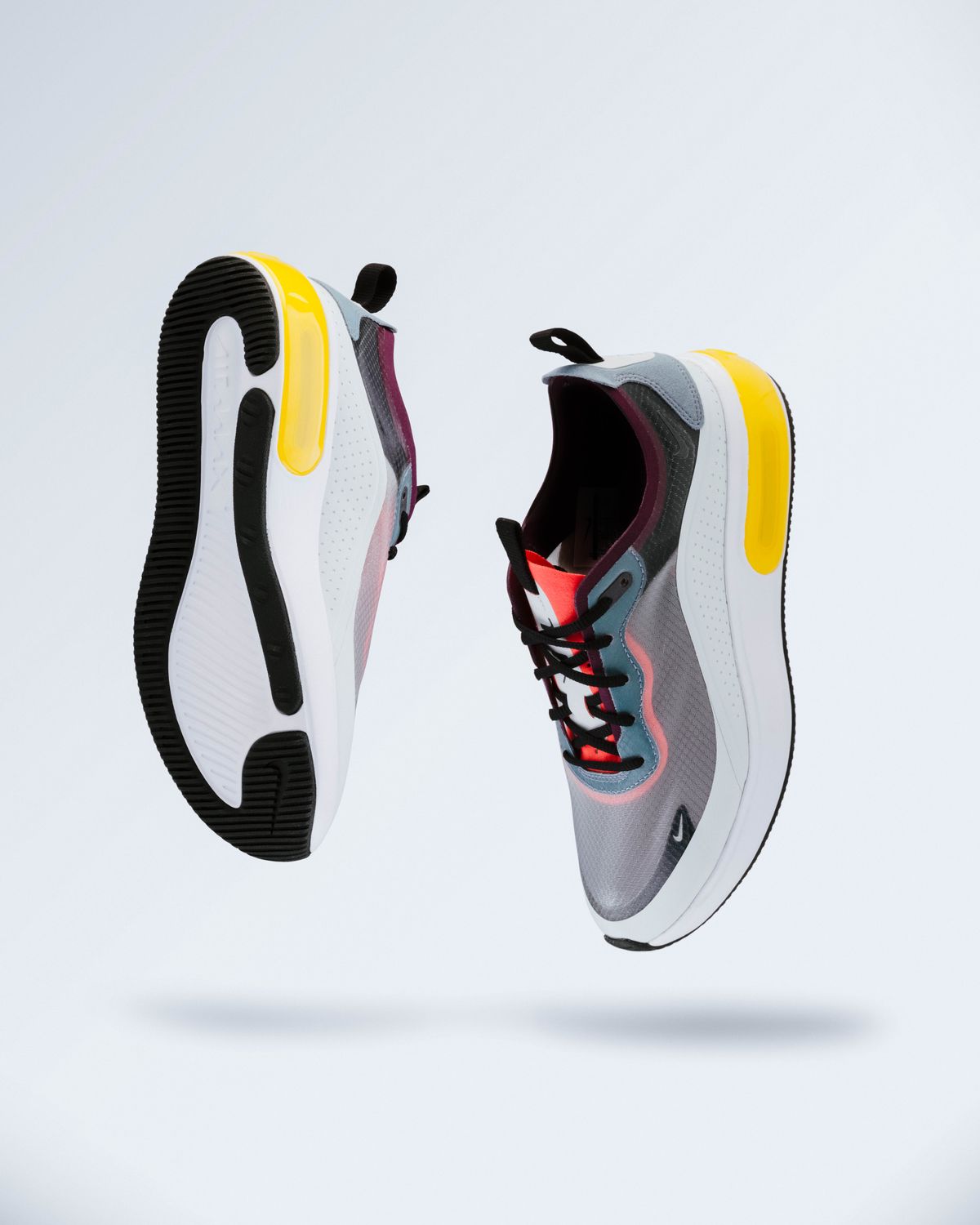
Cushioning: how much of it reaches your spine
Shoe companies talk about cushioning as if more is always better. The research on this is more interesting than the ads suggest: cushioning reduces peak impact at the foot, but your body adapts to whatever is under it. Runners in highly cushioned shoes land harder, because the nervous system recalibrates. The net load on the spine doesn’t drop as much as you’d hope.
For walking, which has lower impact than running, the practical range is 18-26mm of stack height. Under 15mm and you’ll feel every paving slab. Over 30mm and you get a soft, vague ride that’s tiring on long walks and unstable on anything uneven.
Material matters for consistency. EVA foam is light and cushioned and compresses permanently after a few hundred kilometers, so the shoe feels great in month one and flat by month eight. Polyurethane holds shape longer but weighs more. Rubberized EVA is the current compromise and appears in most mid-priced walking shoes.
Test cushioning with your thumb, not the product description. Press hard into the heel of the midsole. It should give 3-5mm and spring back immediately. If your thumb sinks 10mm, that foam will bottom out under your body weight. If it doesn’t move at all, the shoe will feel like a plank on concrete.
The insole is the other half of this. A removable insole with a firm heel cup adds real value, because you can swap it for a supportive one later without changing shoes. Flat glued-in insoles with no shape at the arch are a sign the maker saved money where your back will notice.
Weight: 100 grams is a real difference by 5pm
Every extra 100g per shoe adds up over a day. It doesn’t sound like much, but your hip flexors lift that shoe roughly 5,000 times on a normal day. Research on running economy suggests each 100g adds about 1% to energy cost, and while walking is slower, the fatigue pattern is similar.
The working range for women’s walking shoes is 260-340g per shoe in an EU 38. Under 260g you’re usually looking at a minimal shoe with thin cushioning. Over 380g and you’re into stability or hiking territory, which is fine if you need it but tiring if you don’t.
Weigh them if the listing doesn’t say. A kitchen scale is more honest than a spec sheet, and returns are easier than back pain. Heavy shoes also tend to have stiffer soles, which is the other reason they tire you out.
Light doesn’t mean flimsy. The trick is structure without bulk: a thin shank under the midfoot, a firm heel counter, and a rubber outsole only where you need it. That’s how a 300g shoe can feel more stable than a 400g one.
One more weight factor people miss: what you carry. A shoulder bag loaded with a laptop pulls one side down, and your lower back spends the walk compensating. Switching to a backpack, or at least swapping shoulders every ten minutes, changes the load pattern more than 50g of shoe weight ever will. Shoes are the easy variable to fix, not always the biggest one.
The heel counter nobody checks
Squeeze the back of the shoe. This is the single fastest test in the shop and almost nobody does it.
A firm heel counter holds your heel in place, so your ankle doesn’t wobble with each step. Every wobble is a small correction your hip and lower back have to manage. Over 8,000 steps, a sloppy heel becomes a tired back. A good counter resists your squeeze, springs back, and comes up high enough to cup the heel bone.
Cheap shoes use soft fabric and a bit of cardboard. You can feel it immediately: the shoe folds like a sock. Those are the pairs that feel wonderful for 20 minutes and terrible by lunchtime.
Related: heel slip. Lace the shoe properly, then try to lift your heel out. More than 5mm of movement means the last is too wide for your ankle or the lacing is wrong. Try a heel-lock lacing pattern before you give up on the pair, since it fixes the problem about half the time.
If you want the detailed version of how uppers and counters are built, this breakdown of what survives 500 miles goes deeper than most product pages ever will.
What shoes won’t fix
Here’s the part that doesn’t sell shoes. If your back pain is persistent, worse in the morning, or comes with tingling or numbness down a leg, footwear is not your solution. Go get assessed. Shoes can reduce a daily irritant; they can’t treat a disc, a nerve, or an inflammatory condition.
Even for ordinary mechanical aches, the strongest evidence points at movement and strength rather than gear. Walking itself is good for most backs, and the mechanics of human gait explain why small changes in how you walk matter more than the shoe’s logo. Ten minutes of glute bridges, dead bugs, and hip flexor stretches three times a week will do more than a $200 pair.
I’d also push back on the idea that you need a “medical” shoe. Most people with mild back discomfort do fine in a normal walking shoe with a proper drop and a firm counter. The orthopedic-looking pairs with velcro straps are for specific foot conditions, and they’re not inherently better for your spine.
One genuine exception: if you have significant leg length difference, a heel lift inside a neutral shoe can help, but get the height measured rather than guessed. Stacking random insoles is how people create new problems.
Testing a pair in ten minutes
Do this in the shop, not at home after you’ve cut the tags off.
- Walk on a hard floor for two minutes barefoot first, to feel your natural stride
- Put the shoes on and walk the same route, comparing whether your hips feel level
- Squeeze the heel counter and press the midsole with a thumb
- Stand on one foot for ten seconds; if you wobble badly, the sole is too soft or too tall
- Walk down a slope or stairs, since descents expose stability problems
Do it at the end of the day, when your feet are at their largest. Wear the socks you actually walk in. If you use an insole, bring it.
For daily walking, a pair in the 280-320g range with a 8mm drop and a firm counter covers most needs. Something like this breathable mesh walking pair works for warm weather and shorter commutes, though the mesh upper gives less lateral support than leather. If you want a bit more height without a heel, a thick-soled option with hidden height is a reasonable compromise, as long as the stack stays under 30mm.
For office days where you’re mostly standing, a soft leather sneaker that’s already broken in handles a full day better than a flat, and it looks fine with trousers. Browse the full shoes catalog if you want to compare silhouettes side by side.
Two more things worth doing. Rotate between two pairs so each midsole gets a day to recover, which keeps the cushioning honest for longer. And replace your walking shoes every 500-800km, or when the midsole stops springing back. Worn-out cushioning is worse for your back than no cushioning, because it fails unevenly.
Start with drop and heel counter, since those two changes are free to check and fix most of the problem. Then look at weight and cushioning. If your back still aches at 4pm after a month in a better pair, the shoes weren’t the main issue, and that’s useful information too. For a wider look at fit and materials, the overpronation guide covers what happens when your foot rolls inward, which is often the hidden cause of that late-afternoon ache.
