

The pair gets bought in a hurry, usually the week before an interview. It’s black, it’s pointed, and it looks right in the shop mirror under that flattering yellow light. Three weeks into the job, it’s the shoe nobody wants to put on, and it sits by the door waiting for a reason that never comes.
That pattern shows up again and again in business casual shoes for women. The purchase decision gets made for a fifteen minute conversation with a hiring manager rather than for the 2,000 hours that follow.
Looking back at how that happens is more useful than another list of what to buy. The mistakes are consistent, the red flags were visible at the time, and the fix is usually cheaper than the original pair.
What most people buy, and why it stops working
The typical purchase, and the one you’ll recognise from your own cupboard, is a pointed court shoe with a 75mm heel, a synthetic upper, and a sole thin enough to feel every tile joint in the corridor. It costs somewhere between 40 and 70 euros. It looks sharp. It also has no lining, no arch support, and a heel base about the width of a thumbnail.
Day one is fine. Day four is where your trouble starts. The synthetic upper doesn’t stretch to the foot, so the shoe presses on the same two spots every step. A thin sole transmits impact straight up through the heel. And the pointed toe, which looked so clean on the shelf, turns out to be a squeeze for anyone whose second toe is longer than the big toe, which is a large share of the population.
By the end of week two, you’ve demoted the shoe. It comes out for days with no walking and no stairs, which in most offices is no day at all. That’s the honest version of how a business casual shoe fails. It’s rarely a dramatic blowout. It’s a slow retreat to the back of the cupboard.
The cost to you isn’t just the 60 euros. It’s the replacement pair bought at short notice, usually worse, usually full price, usually in a hurry on a Saturday.
What business casual actually means in most offices now
The phrase has drifted a long way from its 1990s meaning. The standard definition of business casual still centres on trousers, collared shirts and closed-toe shoes, but the practice is looser. Plenty of workplaces now accept clean trainers with tailored trousers, and quite a few accept open-toe sandals in summer, a shift that mainstream fashion coverage has tracked for several seasons.
What still reads as too casual in most offices isn’t the shoe style itself. It’s the state of the shoe. A scuffed white trainer looks worse than a polished loafer, and a pair with a collapsed heel reads as sloppy no matter what it cost.
Practically, the safe zone for a woman’s working wardrobe looks like this.
- Court shoes and pumps at 40 to 60mm, in leather or a good suede. Safe in almost every office.
- Loafers and mules with a closed toe and a proper sole. Now widely accepted, and the most comfortable option on this list.
- Ankle boots in autumn and winter, plain, low heel. Fine unless the dress code is explicitly formal.
- Clean minimalist trainers in white, navy or black. Accepted in creative and tech offices, risky in law and finance.
Anything with a heel above 80mm, a platform, or a visible logo moves into evening territory. Anyone who works in a conservative industry should assume the tighter reading of the dress code and dress to that. It’s easier to relax than to recover from being the person who wore the wrong thing to a client meeting.
The red flags that were visible at the time
None of the failures below are mysterious. They’re all things a buyer could have spotted in the shop with two minutes and a bit of thumb pressure.
First, a sole with no give. Press the ball of the shoe with a thumb. If the sole feels like a sheet of plastic with no flex, every step will land as a jolt. Good shoes flex at the ball, which is where the foot bends.
Second, an unlined upper. Turn the shoe over and look inside. Bare synthetic suede lining, or no lining at all, means the foot slides against the upper and the upper has nothing to hold its shape. This is the single biggest difference between a 50 euro pair and a 130 euro pair, and it doesn’t show on the outside.
Third, a heel that’s narrow at the base. A 75mm heel with a 6mm base is a balancing act on carpet and a genuine hazard on wet stone steps. A block heel at the same height spreads the load and feels completely different after four hours.
Fourth, a toe box that narrows too early. Put the shoe on a flat surface and look from above. The widest point should sit roughly where the ball of the foot sits. If the shoe starts tapering 3cm before that, the toes will be compressed all day.
Fifth, and this is the one almost nobody checks: the heel counter. Squeeze the back of the shoe between finger and thumb. If it folds, the shoe will lose its grip on the heel within weeks and the foot will slide forward until the toes hit the front. That’s the specific mechanism behind most “these shoes got too small” complaints, and the shoes never actually changed size.
Fit, width and the half size nobody tries
Most of the fit problems behind a failed business casual purchase come down to two numbers: length and width. Shops stock the first and rarely mention the second, which is why so many people end up with a shoe that’s the right length and the wrong shape.
Your foot has a width, and it doesn’t change with the shoe. If the widest part of your foot sits outside the widest part of the shoe, the upper will press on the joint with every step. You’ll feel it as a dull ache by mid-afternoon, and it will get worse, not better, as the day goes on. No amount of breaking in fixes a width mismatch.
The half size question is worth trying properly. If a shoe feels tight across the ball but long enough, going up half a size usually makes it worse, because the extra length lets the foot slide forward and jam the toes. What you actually want in that situation is a wider fitting or a different last, not more length.
Here’s a quick test that works in any shop. Stand up, then press down on the leather across the widest part of your foot. If the leather dimples easily and there’s no pressure back, the fit is close. If your foot bulges over the edge of the sole, the shoe is too narrow and no insole will save it.
Heel fit is the other half. A small amount of movement is normal. More than 5mm of lift means your heel will rub, and once a blister forms on the back of the heel, you’ll stop wearing the shoe for a fortnight, which is exactly how a good pair turns into a cupboard resident. If the length is right and the heel still slips, a suede heel grip is a legitimate fix. If the shoe is simply too long, return it before the tags come off.
Anyone with a high instep should also check the strap or the vamp depth. A shoe that cuts across the top of the foot looks fine standing still and becomes unbearable after an hour of sitting and standing. Test it by sitting down with the shoe on and flexing your foot. If the upper digs in, it will dig in all day at a desk.
What went wrong, in one concrete case
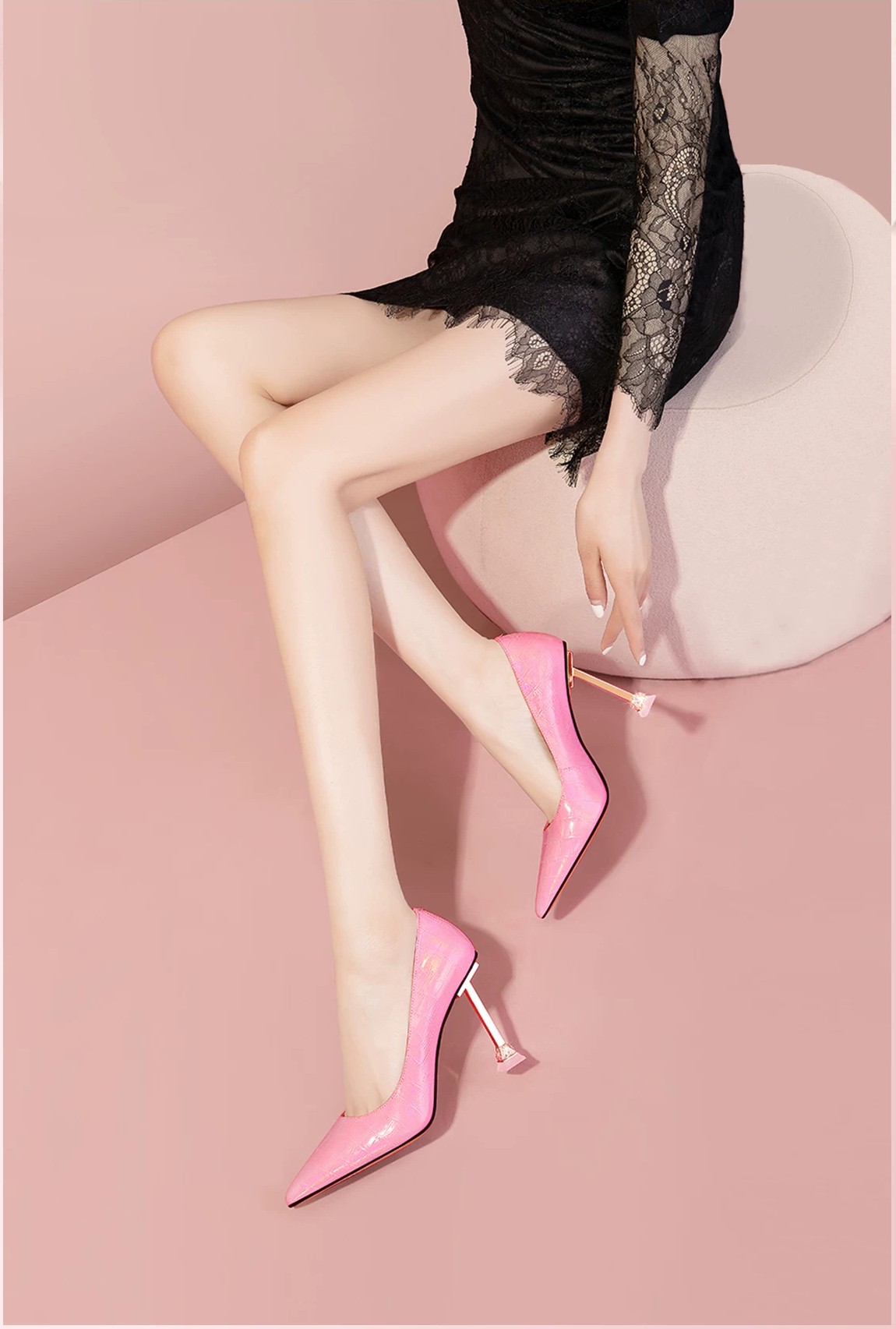
A reader’s story that’s typical: a pair bought for a second interview at a logistics firm, black patent, 80mm, pointed, 55 euros. The interview went well. The shoes came out again on day one, then day two, then not again for eleven days.
By the second week there was a crease across the vamp, right where the foot bends. Patent doesn’t recover from that. The crease hardened, and after a month it pressed on the top of the foot with every step. A heel grip fixed the slipping at the back but pushed the foot further forward, which made the toe squeeze worse.
The pair lasted four months before it went into a donation bag, which works out at roughly 3.40 euros per wear. A better pair at 130 euros, worn three days a week for two years, lands closer to 0.85 euros per wear. The cheap pair was the expensive decision.
It’s worth saying plainly that this isn’t a story about spending more. It’s a story about spending on the parts that fail. Patent costs more to make than smooth leather and fails faster in an office. A 55 euro leather loafer with a stitched sole would have outlasted the 55 euro patent court shoe by a wide margin.
There’s a second lesson in that story too, and it’s about the interview. The pair didn’t need to be the sharpest thing in the room. It needed to be the pair that could be worn again on Monday without a second thought.
Making a decent pair last two years instead of four months
A pair that’s built well still dies early if it’s treated badly, and most of the damage happens in the first month.
The biggest killer is wearing the same pair every day. Leather absorbs moisture from the foot and needs roughly a day to dry out. Worn daily, it never fully dries, the lining breaks down, the shape softens, and the smell arrives. Two pairs worn on alternate days will each last far longer than one pair worn every day, and that’s before you count the days you save by not replacing them.
When you take them off, don’t throw them in a cupboard still warm. Let them air, ideally with cedar shoe trees or rolled newspaper inside to hold the shape while the leather cools. That single habit keeps the vamp from creasing deeply, and deep creases are what make a pair look old before its time.
Clean leather every few weeks rather than every few months. A damp cloth, a little conditioner, five minutes. Patent needs even less: a wipe with a damp cloth and nothing abrasive, because patent scratches permanently and can’t be polished out. Suede needs a brush when dry and a protector spray before the first wear, not after the first rain.
Rotate the heel too. If you always walk the same route on the same surface, the heel block wears unevenly, and once one corner is down to the plastic, the shoe starts to tilt. A cobbler can replace a heel tip for a few euros, which is a lot cheaper than a new pair.
Finally, keep an eye on the sole join at the toe. That’s where water gets in first, and once the glue line opens, the whole sole starts to peel. A five euro repair at the right moment buys another year.
Who these shoes do suit, honestly
Pointed patent courts are not a bad shoe. They’re a bad daily shoe for most people, which is a different claim.
They work well for anyone whose working day is mostly seated, who drives or takes a short taxi, and who changes into something else at the desk. They work for people with narrow feet and a high arch, who don’t need width and don’t need much cushioning. And they work for a specific kind of job: client-facing, short meetings, a lot of standing and greeting rather than a lot of walking.
They don’t work for anyone who commutes on foot, climbs stairs, stands for hours, or has a wide forefoot. Those people are better served by a genuine leather pair with a shallower vamp and a wider toe, which reads just as professional and behaves nothing like patent.
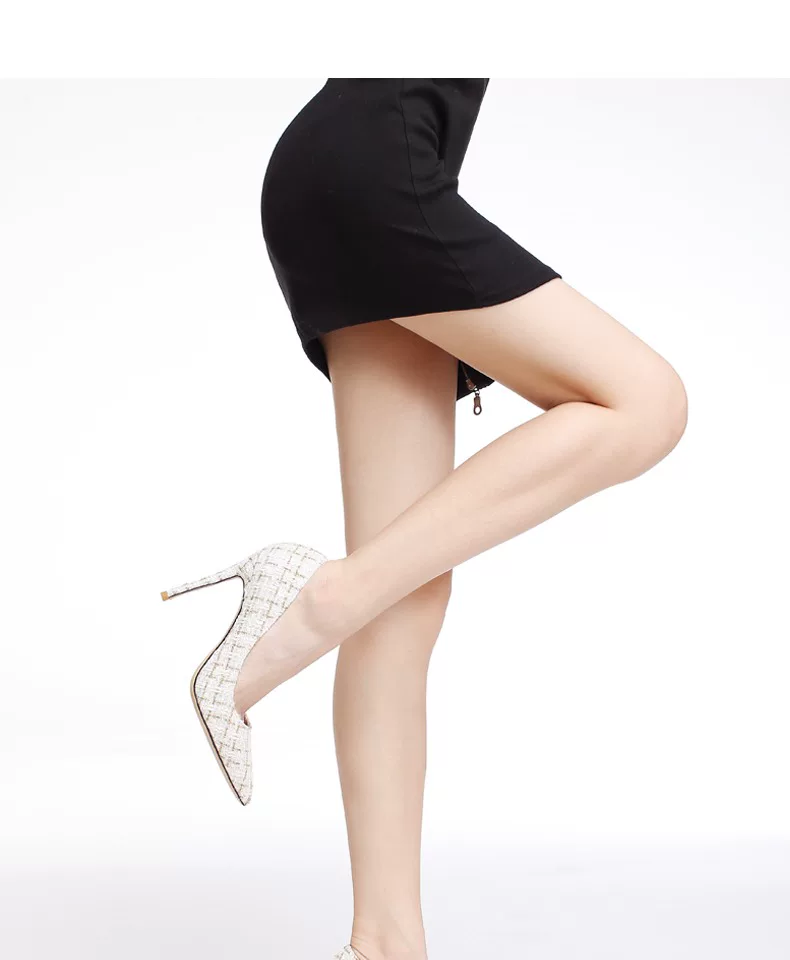
The same logic applies to white leather. A woven white leather heel is a good business casual option in spring and summer because the weave lets the upper move with the foot and the colour hides light scuffs. It’s a bad choice in a rainy city in November, when every splash mark shows.
There’s also a middle option worth knowing about: a slingback with a low kitten heel, which sits between a court shoe and a sandal and handles both a desk day and a dinner. Our notes on slingback kitten heels that work from office to dinner cover that specific trade-off.
One more group worth naming: anyone who has already bought the wrong pair twice. The pattern there is usually buying for the outfit rather than the day. If that’s familiar, the fix isn’t a better shoe, it’s a different starting question.
Six weeks later: what the good pair looks like
The test of a business casual shoe isn’t how it feels on the first morning. It’s how it feels on a Wednesday in week six, when the novelty has worn off and you’re choosing it out of habit rather than hope.
A good pair at that point has a slight foot shape pressed into the insole. Not a collapse, just a soft imprint where your heel and the ball of your foot sit. The upper has softened at the flex point without a hard crease. The heel counter still holds your heel, and you can walk from the station to the office without thinking about your feet at all.
If instead your pair has a deep crease across the toe, a heel that slips, or a sole that’s started to peel at the front, you know exactly which of the five red flags you missed. That’s useful information. Take it to the next purchase instead of blaming your feet. If you want to see how a working rotation is meant to feel, our piece on work shoes that survive a full working week takes the same approach day by day.
One habit worth building: keep a note on your phone of the pairs that worked, with the brand, the size and the width. After two or three records you’ll see the pattern, and you’ll stop guessing in shops. Most people buy the same wrong shoe three times before they start doing this.
And if you only remember one thing from all of this, make it the thumb test. Press the insole and press the heel counter. If both hold, you’re already ahead of most of the pairs on the shelf.
Three questions before buying the next pair
These are the questions that separate a pair that gets worn from a pair that gets stored. Ask them in this order, in the shop, with the shoe in your hand.
- How many hours a day will this be on my feet, including the commute and the stairs? Anything over six points to a lower heel and a thicker sole.
- Does the sole flex at the ball, and does the heel counter hold its shape when squeezed? Both are construction checks, and both are visible in ten seconds.
- Can I name three outfits I already wear that this works with? If not, the shoe is a costume, not a wardrobe item.
Then subtract one thing from the plan: the idea that the interview pair has to double as the everyday pair. It rarely does. One good low-heeled leather pair for actual working days, and one sharper pair for the days that call for it, covers more ground than trying to make a single compromise shoe do both jobs.
Business casual shoes for women get judged over months, not minutes. The pair that survives is usually the boring one with the flexing sole and the lined upper, bought on a normal Tuesday rather than the night before an interview. If the last pair is already in the donation bag, that’s the only lesson worth carrying forward. Buy for the Tuesday.
