

The box arrived on a Thursday. I’d ordered an EU 38 because that’s what I wear in the brand’s boots, and the shoe that came out of it was long enough to fit a thumb and a half behind my heel. Not a small miss. A two-size miss, from a listing that promised true-to-size.
That’s the thing about buying European walking shoes from a screen. The number on the box is a local convention, not a measurement. An EU 38 is roughly 24cm of internal length in one last and nearly 25cm in another, and the width can vary more than the length. The pair I sent back wasn’t badly made. It just wasn’t my foot’s shape.
What follows is what I learned across three pairs, one return, and about 90km of city walking, including the part nobody warns you about: the shoes that felt fine in the hallway were the ones that hurt on wet stone. If you’re shortlisting european walking shoes for women and can only buy one pair before a trip, this should save you a return label.
The order that arrived two sizes off
Here’s what I did wrong, in order. I converted my US size with a chart on a retailer’s page instead of measuring my foot. I ordered at 9am, when my feet were at their smallest. And I chose the colorway I liked before checking whether that style was built on the brand’s narrow last.
Measure in centimeters, standing, at the end of the day. That’s the only number that travels between brands. My right foot is 24.3cm and my left is 23.9cm, which I only discovered after the return. I’d been buying to the left foot for years.
The second thing I’d change is the width question. European lasts are often narrower through the forefoot than US equivalents, and “EU 38” tells you nothing about that. If your foot measures wide at the ball, look for a brand that publishes width in centimeters rather than a letter. The standardization of shoe sizing explains why the numbers never quite line up across countries, and it’s worth ten minutes before you spend 150 euro.
One more detail that cost me a week. Returns from outside the EU can take a month to process and the shipping isn’t always refunded. That changes the maths: a pair that’s slightly wrong is more expensive than it looks.
Last shape is the phrase that would have saved me the whole episode. A last is the foot-shaped form a shoe is built over, and brands use several. One last runs narrow with a tapered toe, another is roomier through the ball. Two shoes from the same label can feel like different brands. If a listing mentions the last by name, that’s a good sign. If it doesn’t, assume nothing.
What I do now is order two sizes when I can and send one back. It costs a little in shipping and saves a month of guessing. Try them on at the end of the day, wear the socks you’ll travel in, and walk around the block rather than the hallway. It’s not a perfect test, but it’s close enough to catch the obvious misses before a flight.
What the first 3,000 steps told me
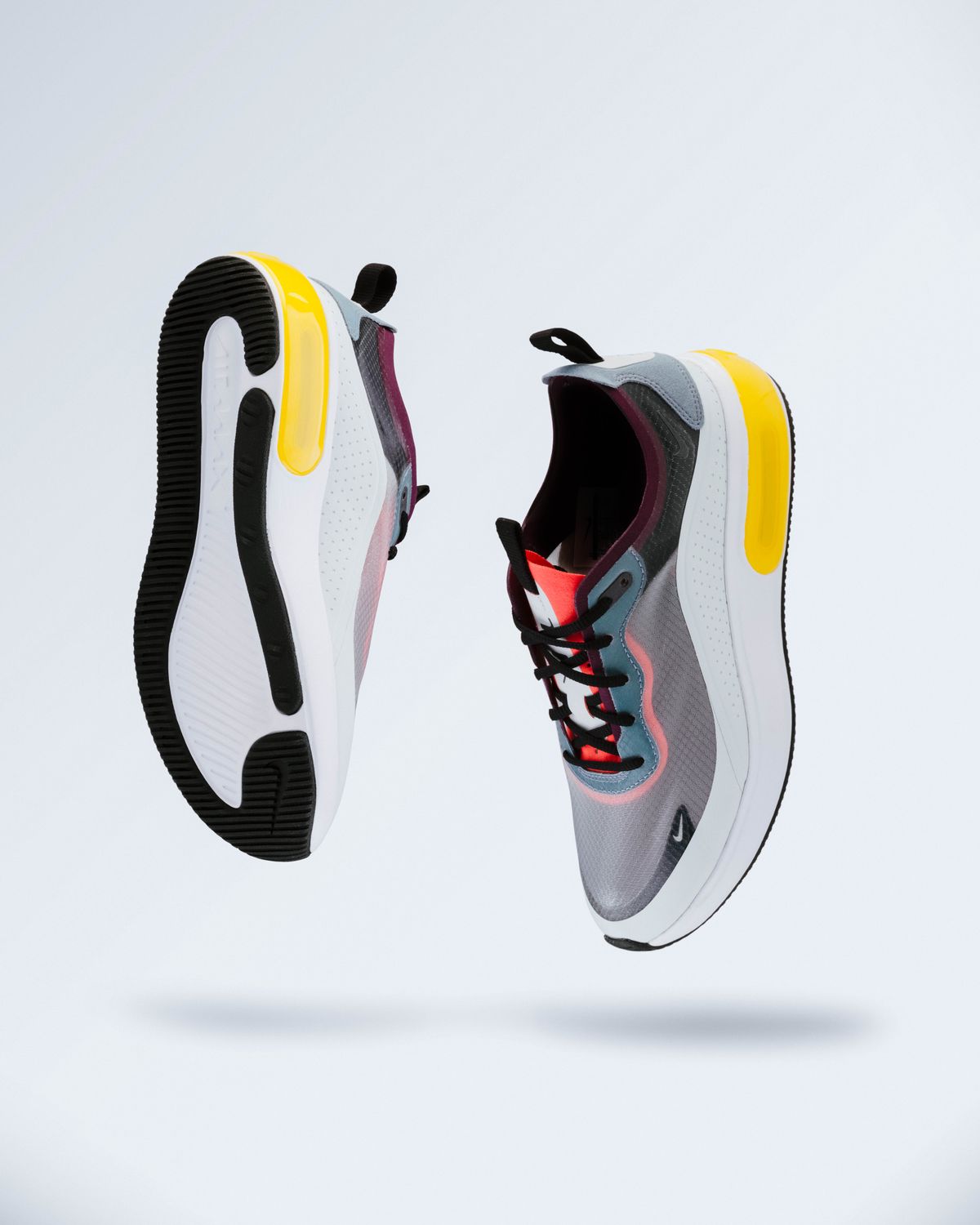
Replacement pair fit properly in the hallway. Then I walked 3,000 steps to the market and back, and three things showed up that I couldn’t feel standing still.
First came heel slip on the left foot only. Half a centimeter of lift, invisible in a mirror, enough to warm up the skin above my heel by the time I got home. I relaced with a heel-lock pattern, which means running the lace back through the top eyelet on each side before tying. That fixed about 80% of it.
Toe pressure on the right was next. The shoe was the right length but the toe box tapered early, and my big toe sat against the inner edge. Not painful. Just present, on every step. If you feel that in the first mile, you’ll feel it in the ninth hour.
Heat came third. Synthetic lining plus a warm afternoon equals a damp sock, and a damp sock equals friction. That one I fixed with better socks rather than a different shoe.
By the end of that walk I had a red patch above my left heel about the size of a coin. Not a blister yet. That’s the window where you can still fix things, and it’s roughly a 25-minute walk from home.
What happens if you ignore it is predictable. The shear forces behind a blister keep working on the same patch of skin, the upper layer separates, and fluid fills the gap. By then a plaster is damage control, not prevention. Most people find out on day two of a trip, which is a much worse place to learn it than your own street.
This is the part of the process that shops can’t replicate. You need a hard surface, some distance, and enough time for the small irritations to become obvious. Three thousand steps is about 25 minutes. It’s the cheapest test available.
Cobblestones in the rain: the test I didn’t plan
I had a week of dry weather and felt smug about my choice. Then it rained for two days, and the streets turned into a slip hazard I hadn’t considered. Polished stone plus a hard rubber outsole plus a slight downhill equals a walk where you’re gripping with your toes the entire time.
My shoes were fine on asphalt and mediocre on wet setts. Not dangerous, but enough that I changed my route to stay on the flatter, rougher streets. That’s the honest trade of a city shoe: outsole compounds that last a long time are usually the ones that slide first.
What I’d look for next time: a softer compound, medium-depth tread with small sipes, and a forefoot that bends where my toes bend. A flexible forefoot lets the shoe conform to the domed stones instead of rocking on two points. A stiff one makes every cobble a small event.
If your trip includes old town centers in autumn or winter, plan for wet stone. It’s not a hypothetical. It’s the default condition for about four months of the year in half of Europe.
Stairs are the other thing I underestimated. Old cities are full of short flights of stone steps with worn, slightly rounded edges, and a stiff toe catches them. I caught one on a wet afternoon and only stayed upright because I was holding a railing. After that I started watching where I put my foot, which is not how anyone wants to spend a holiday.
The fix isn’t exotic. A sole that bends at the ball, a tread with actual edges, and a lower platform. Tall, stiff shoes look substantial and behave badly on a staircase when the surface is wet.
One thing I won’t do again is wear cotton socks in the rain. Wet cotton stays wet, and by the time I got back to the room my feet had been sitting in a damp sock for two hours. That’s how you get a blister on a day you’d otherwise have been fine. Wool dries while you walk. It sounds like a small detail until you’ve spent an evening with your feet in a hotel sink.
The fixes that cost about 25 euro
None of my problems needed a new shoe. They needed three small changes, and I’d do all of them again before a trip.
- A replacement insole, 12 euro. The original foam had flattened by week two. A firmer one with a slight heel cup changed how the whole shoe felt underfoot.
- Better socks, 10 euro a pair. Merino blend with a cushioned sole. Less friction at the heel, and they dry overnight in a hotel bathroom.
- Spare laces, 3 euro. Not because mine broke. Because the original laces were too short to tie a proper heel lock.
The insole was the change I noticed most. It added a little weight, maybe 40g, and gave back more than it cost in heel comfort. If your shoes come with a thin glued-in insole, that’s a sign the maker saved money in a place you’ll feel.
Socks are the other one. Cotton feels nicer for the first hour and worse for the next seven. A wool blend handles sweat better, and the difference at the end of a long day is real. I now pack three pairs and wash one every night.
One thing I wouldn’t spend money on: gel heel pads. They feel good for an afternoon and then migrate. Fix the heel hold with lacing instead, and spend the money on the insole.
Laces deserve a line of their own because they’re the cheapest fix nobody makes. Most stock laces are 10 to 15cm too short for a heel lock, and the flat cotton ones loosen within an hour of walking. A pair of slightly longer, slightly elastic laces costs almost nothing and holds the midfoot far better. On a long day you’ll notice that you’re not retying them every twenty minutes.
Drying is the last small habit. Pull the insoles out every night, even when the shoes don’t feel damp. The foam under your heel holds sweat, and a night of air circulation on both sides of the insole doubles its useful life. It takes ten seconds and it’s the difference between a shoe that smells neutral in week two and one that doesn’t.
What I’d do differently, and the pair I kept for dinner
If I were starting over, I’d buy two pairs and return one, testing both indoors on the same evening. I’d measure both feet after a day of standing. And I’d walk 3,000 steps on pavement before deciding, because the hallway tells you almost nothing.
Packing changed too. The walking pair goes at the bottom of the bag, the evening pair flat on top, and the total weight of both is under a kilo. That’s less than the single pair of chunky trainers I used to bring, and it covers twice as many situations.
What I stopped packing is worth mentioning: the third pair. It never got worn, and it took up the space I needed for a jacket. Two pairs is the point where the bag still closes without a fight.
I’d also stop trying to make one pair do everything. My walking pair is now a plain, slightly boring shoe with a soft outsole and a roomy toe box. For dinners I carry a light pair that packs flat. That combination weighs less than one heavy walking shoe plus a “nice” pair I never wore.
The dinner pair matters more than people admit. After 18,000 steps, the last thing you want is to squeeze into something stiff. A low, stable heel works: these low commuting heels that stay wearable after a long day are the sort of thing that earns its luggage space, and a woven leather style like these woven leather heels for warm evenings out handles the same job with a lighter look.
For sizing, start from measured centimeters and read a fit guide rather than a conversion table. The note on where wide widths add room is the one I wish I’d read before my first order, and the all-day walking section is a decent place to compare weights before you commit.
One last thing. The pair I almost sent back became the pair I wore every day for a month. The problem was never the shoe. It was the half-size assumption I’d been carrying around for years.
Where this approach doesn’t help: if you have a diagnosed issue with your plantar fascia or your Achilles, fit checks alone won’t be enough. Get the shoe right and then get the loading right, because a better shoe can’t fix a tendon that’s being asked to do too much. That’s a conversation with a physiotherapist, not a product page.
So measure your feet tonight, in the evening, standing, in centimeters. Everything else gets easier after that.
