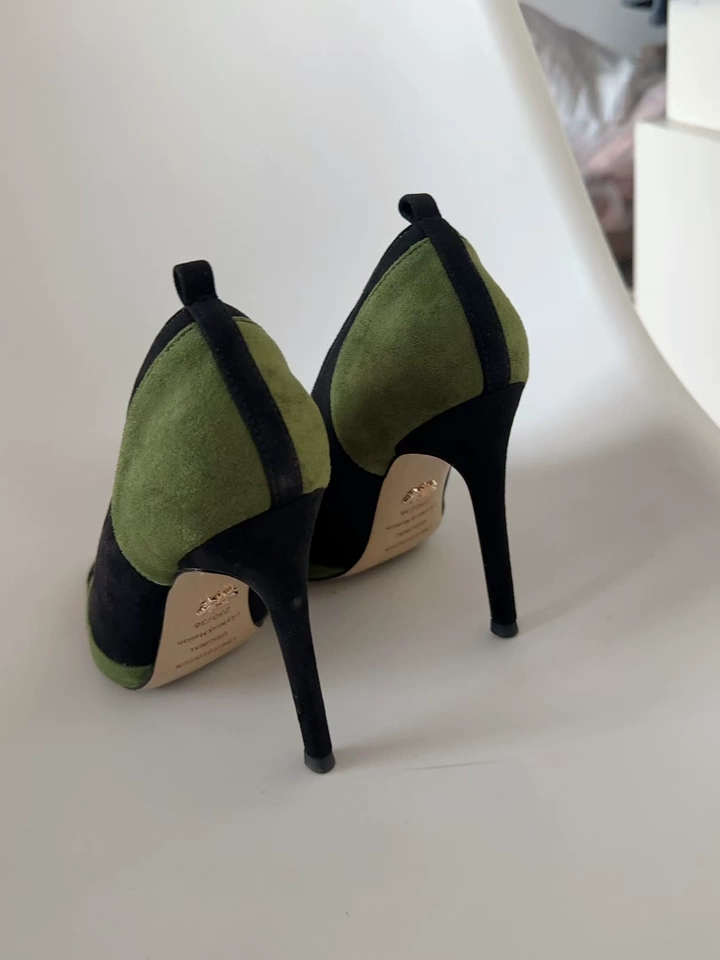
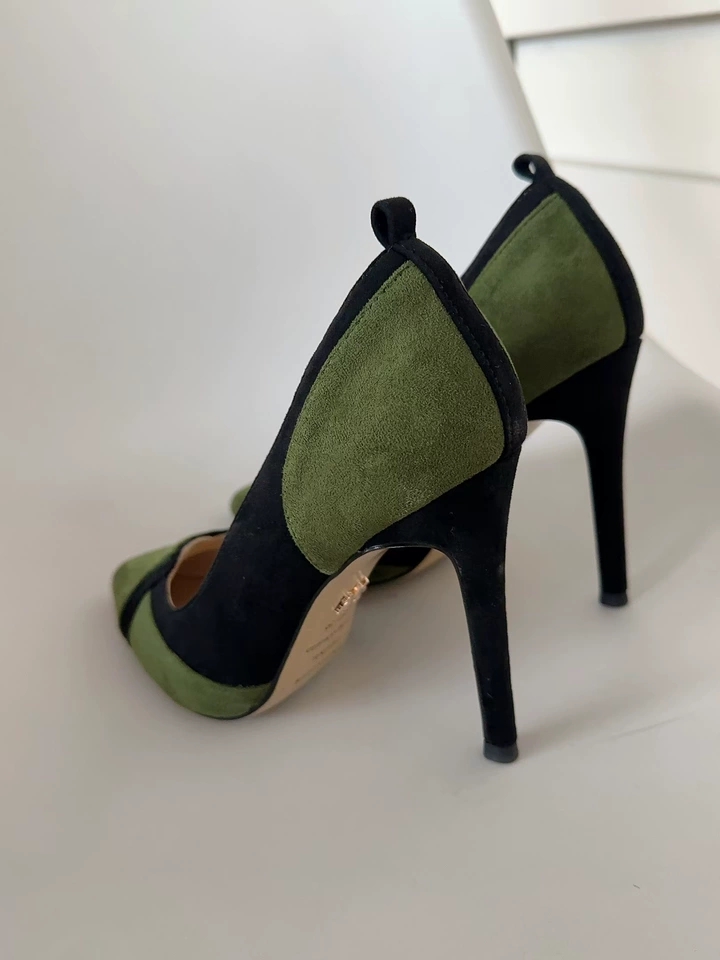
It’s 7:40 on a Tuesday. You’ve got one shoe on, one in your hand, and a train at 8:02. The question in your head isn’t which pair looks better with the grey trousers. It’s whether your feet will still be talking to you at 6pm, after the school drop-off, the walk from the station, and the two hours of standing at the printer because the seating plan changed again.
That’s the real brief for work shoes. Not “office appropriate”. Not “smart enough for a client meeting”. You need something that gets you through a specific day with a specific number of steps, and most pairs sold as office shoes are designed for a photo, not a Tuesday.
Here’s what actually decides whether a pair survives your week, plus the swaps that turn one pair into three days of outfits.
Count the hours you’re actually on your feet first
Before you look at a single shoe, do the arithmetic. Most office jobs aren’t sitting jobs or standing jobs. They’re a mix, and the mix matters more than the label.
Take a normal desk day. You walk to the station, maybe 900 steps. You stand on the platform for six minutes. You walk from the station to the building, another 400 steps. Then you sit for three hours, get up for coffee four times, stand in a meeting room for twenty minutes because someone stole the chairs, walk to lunch and back, and leave at 6pm with another 1,300 steps to get home. Add it up and you’re at 4,000 to 5,000 steps, with two long stretches of sitting in between.
Those sitting stretches are the part people forget. A shoe that feels fine while you’re moving can pinch the moment your foot swells at 4pm and there’s no give in the upper. Ask anyone who has spent a day in a stiff pointed pump and taken it off under the desk.
- Under 3,000 steps and mostly seated: you can wear almost anything with a stable heel
- 4,000 to 6,000 steps with platform standing: cushioning starts to matter as much as shape
- Over 8,000 steps, or any job with stairs and trolleys: treat it as a walking shoe problem
Write your real number down. Mine was 6,200 on a Thursday, which is why the pretty 85mm pair I bought in September now lives in the bottom drawer.
A 40mm block heel beats a flat more often than you’d think
This one surprises people. A completely flat, thin-soled shoe is not automatically kinder to your feet over eight hours. If your office has polished concrete or tile, a flat with almost no midsole gives you nothing to absorb the impact, and by mid-afternoon your heels ache in a dull, hard way.
A 30 to 40mm block heel does three things at once. It lifts your heel off the hard floor, it puts a chunk of material under the back of your foot, and it keeps the shoe’s shape so your arch isn’t collapsing into a wafer. If you want the plainest possible version of this, look at a low block heel built for long office days and notice the width of the heel base rather than the height.
Heel base width is the number nobody advertises. A 40mm heel with a 25mm-wide base is stable. A 40mm heel with a 12mm base is a stiletto in disguise and will wobble on a tiled corridor. Put the shoe on a flat surface and rock it side to side with one finger. If it tips easily, it’ll tip under you.
The other thing to check is where the sole bends. It should flex at the ball of your foot, roughly a third of the way from the front. If it bends in the middle like a bridge, the shoe will fold under your arch and that’s the start of a long, grumpy afternoon. Wikipedia’s entry on high-heeled footwear is useful background on how heel shape changed across decades, but the flex test takes four seconds and tells you more about the pair in your hand.
Three office days, one pair: what you swap, what stays
You don’t need three pairs. You need one pair that reads differently depending on three small swaps. This is the part that saves money.
Day one, the meeting day. Same shoe, same trousers, but swap the sock for a sheer 15-denier liner and add a structured bag. The shoe looks dressier because everything around it got sharper. Nothing about the shoe changed.
Next day, the desk one. Swap the trousers for dark straight-leg jeans, keep the shoe, and drop the bag to a canvas tote. Same shoe, and now it looks like you dressed on purpose for a casual Friday that isn’t Friday.
The third version is the long day, and it’s where the swap that fails turns up. Put the same shoe with a midi skirt and a thin ankle sock and the ankle strap or collar will rub exactly where the sock edge sits, so by 3pm you’ve got a red line. I tried it, twice, hoping it would stop being true. It didn’t.
The constant is the shoe, the insole and the heel height. Everything else is negotiable. That’s why the five-day test of business casual pairs is worth a read before you commit: it’s the same idea stretched over a whole week, and it exposes which pairs only work for one kind of day.
One more swap tip. Keep a spare pair of thin liners in your desk drawer. Half the “these shoes hurt” moments are actually a sock seam problem, and a fresh liner fixes it for 40p.
The ten-minute test in the shop
Fitting rooms are carpeted and shops are climatised, which is nothing like your office. You can still learn a lot in ten minutes if you do the same five things every time.
Walk for two full minutes, not twenty steps. Most people try a shoe the way they try a jacket, standing in front of a mirror. Two minutes of walking tells you whether the heel counter grabs your heel or lets it slide up and down. Sliding means blisters by lunchtime.
Then stand still on a hard floor for one minute, if you can find tile near the till. Soft carpet hides pressure points that tile reveals instantly. Press down through the ball of your foot. If you can feel the floor through the sole, the shoe has no cushioning and an 8,000-step day will hurt.
- Check the width at the widest point of your foot, not the length
- Wiggle your toes. If they can’t move, the toe box is too shallow
- Walk on a slope or a step if the shop has one. Heels that slip on stairs will slip on your office stairs
- Try them at 5pm if you can. Your feet are at their largest then
The 5pm detail is the one people skip and it’s the most useful. Feet swell through the day by up to half a size. A pair fitted at 10am can be a pair that pinches at 4pm, which is exactly when you still have two hours of work left.
And if a shoe needs “breaking in”, ask what that means. Some leather softens in a week. A stiff synthetic upper with a hard seam doesn’t soften, it just stops being new. You’ll find the range of shapes and heights in a soft-soled knit pair like this one is wide enough that you shouldn’t have to gamble on a break-in miracle.
Leather, suede, knit: what each looks like by six
Material decides how a shoe ages, and office life is hard on materials in ways that aren’t obvious in a shop mirror.
Smooth leather is the workhorse. It holds shape, wipes clean, and takes a polish. It also creases across the vamp within a month, and if the leather is a thin corrected grain, those creases go white at the ridge. Look at the inside of the strap where it bends. If the surface looks painted on, expect cracks by spring.
Suede looks richer for about three weeks. Then someone steps on your toe in the lift and you have a mark that needs a suede brush and a bit of patience. In a rainy city, suede office shoes are a bit of a gamble, and I say that as someone who keeps buying them.
Knit and mesh uppers are the comfortable option and the least formal. They breathe, they don’t crease, and they weigh almost nothing. The trade-off is structure: without a firm counter, your foot slides and the shoe starts to look like a slipper by month four. If your workplace is casual enough, they’re a no-brainer. For client-facing days, they read a notch too relaxed next to a wool suit.
One honest limitation: no material stays perfect if you wear the same pair five days a week. Sweat and compression need a rest day. Two pairs worn on alternate days last far longer than two pairs worn one after the other until one dies.
Where office shoes actually fail: the toe box
Ask anyone who has had a corn removed and they’ll tell you the same thing. The problem is almost never the heel height. It’s the front of the shoe.
Mayo Clinic’s page on corns and calluses puts it plainly: these form where skin rubs against bone under repeated pressure and friction. A pointed toe with a shallow box does exactly that to the outside of your little toe, every single day. The fix isn’t a padded plaster, it’s a wider front.
Measure it. Take the insole out of a pair you already own and stand on it. If your foot spills over the edge at the widest point, the shoe is too narrow no matter what the size label says. That’s true for most people who insist they’re “a 38” when they’re really a 38 wide.
Almond and round toes give you 6 to 10mm more room than a sharp point at the same length. If you love the pointed look, go up half a size and add a thin insole so the heel doesn’t slip. It works. It’s also the only trick I know that keeps a pointed toe wearable for a full day.
Toe box depth matters too, and nobody measures it. Press down on the top of the shoe above your toes. If there’s less than about 8mm of clearance, the upper will press on your toenails when you walk. Over months, that’s how you get a bruised nail that takes a year to grow out. Check the heel range with that in mind and you’ll notice how much toe shape varies at the same heel height.
Keeping them past month eighteen
A decent pair of office shoes should give you two years of regular wear. Most don’t, and the reason is usually neglect rather than quality.
Wipe leather down once a week with a damp cloth, then condition it every six to eight weeks. Sounds fussy, takes four minutes, and it’s the difference between leather that flexes and leather that cracks at the crease. Store them with shoe trees or, failing that, rolled-up newspaper. The tree holds the shape while the leather dries, and drying is where most damage happens.
Never dry wet shoes on a radiator. Heat pulls the leather and shrinks the lining, and the shoe never fits the same again. Stuff them, put them somewhere airy, wait a day.
The heels are the other failure point, and it’s cheap to fix. A cobbler replaces a worn top piece for a few pounds. Wait until the heel is down to the plastic and you’re looking at a new heel block or a new pair. Check the back edge of the heel every couple of months. If you can see a lighter colour underneath, book the repair.
One more: rotate. Wear your office pair Monday, Wednesday and Friday, and something else on the other two days. The leather recovers, the insole dries out, and the pair lasts noticeably longer. It also means you stop noticing the one bit that rubs, because you’re not feeling it every day.
If you’re buying this week, start with the arithmetic, not the look. Count your steps, decide your heel height by the floor you walk on, and check the toe box with your own foot rather than the size on the box. Then buy the pair you can walk in for two minutes without thinking about it. That’s the whole test. The rest is just outfits, and a commuting heel with a sensible base covers more of them than you’d expect.
What’s your actual step count on a normal work day? Most people guess low by about 40%. Worth finding out before your next pair.