

The pair looked perfect in the shop window at 11am, under a light that flatters everything. By the third walk, the pink had gone the colour of a strawberry milkshake left in the sun, and the scuff on the left toe was grey and permanent. You didn’t do anything wrong. Pink is just a hard colour to keep clean on a shoe that touches the ground 8,000 times a day.
Which pink you buy decides most of that. So does the material, the sole colour, and how willing you are to spend four minutes a week on upkeep.
Here’s the honest version of shopping for pink walking shoes for women, including the shades I’d avoid and the cleaning mistake that ruins most pale pairs in month one.
Pink isn’t one colour, and two of them are trouble
Walk into any shop and you’ll see four distinct pinks pretending to be the same thing. They behave nothing alike outdoors.
- Blush and powder pink: pale, cool, slightly grey. Looks refined, shows every mark, and reads as white from three metres away.
- Rose and dusty pink: mid-tone with a bit of brown in it. The most forgiving pink on pavement, because dirt sits in the same tonal family.
- Coral and salmon: warm, leaning orange. Cheerful for about six weeks, then it can look sun-faded even when it isn’t.
- Fuchsia and hot pink: saturated and stable. Hides scuffs best of all, but it’s a loud shoe that fights with half your wardrobe.
If you want one rule: the more grey or brown mixed into the pink, the longer it looks new. That’s not fashion advice, it’s just how dirt and dye interact. A pure pastel has nowhere to hide a mark, and pink as a colour covers a very wide range of hues that all photograph similarly and age completely differently.
The sole matters as much as the upper. A white or cream midsole is the first thing to look tired, because rubber yellows with UV and road dust, and there’s no way to clean it back. A pink or grey sole buys you an extra season of looking new. Check the sole before you check the upper.
Three pinks that hold up on real pavement
After enough pairs, a pattern shows up. These three survive a normal walking habit, meaning 30 to 60 minutes a day on streets, in all weather except deep snow.
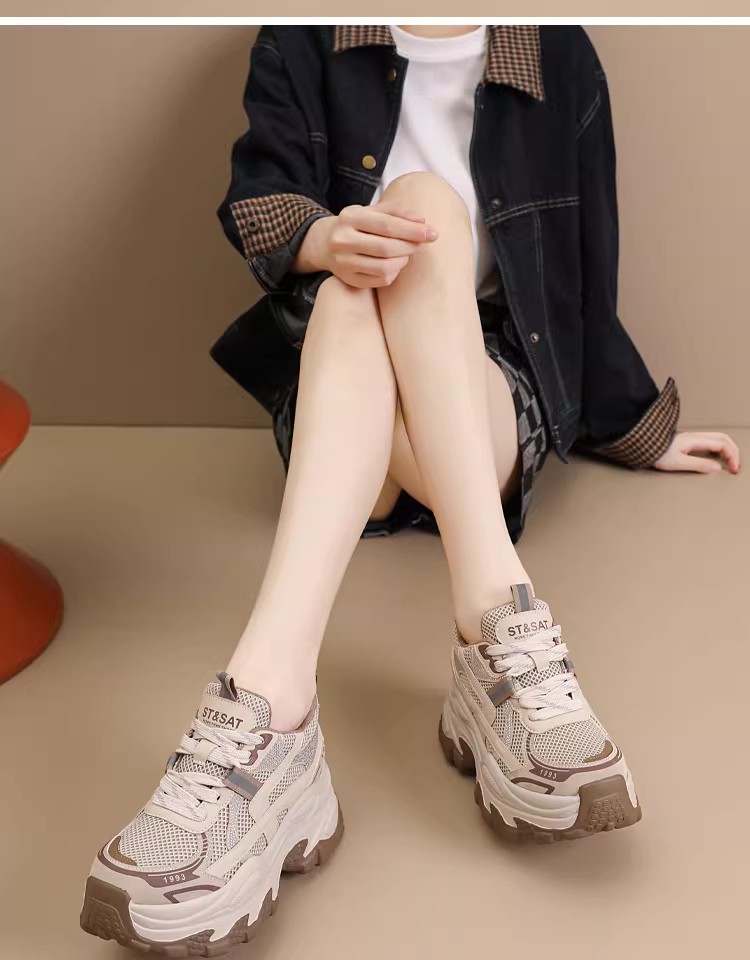
Dusty rose in mesh. The safest bet overall. Mesh takes dye evenly, so the colour doesn’t go patchy at the flex points, and the muted tone hides the grey smudge that comes from brushing against kerbs and car doors. It also doesn’t clash with denim, which is most of what you’ll wear.
Deep fuchsia in knit or synthetic leather. Saturation acts like camouflage. A scuff on fuchsia is a slightly less bright scuff. The catch is styling, since a hot pink shoe wants a plain outfit and looks chaotic next to prints. Worth it if your wardrobe is mostly navy, black and grey.
Warm rose with a tonal sole in leather. The dressiest option, and the one that creases most visibly. Leather takes on a patina that reads intentional if you keep it conditioned, and looks shabby if you don’t. Two minutes with a cloth every week is the difference.
What I’d skip: pale blush in canvas, and anything with a white EVA midsole if you plan to walk daily. Both look second-hand by week five. This isn’t a quality problem, it’s a colour-and-material mismatch, and no amount of careful wear fixes it.
Rain, puddles and the material question
Water is where pink shoes reveal their construction. A single wet walk can leave a tide line that never comes out, especially on suede and on light canvas.
The tide line is a wicking problem. Water carries dissolved dirt into the fibre, then evaporates at the edge of the wet patch and leaves the dirt behind in a ring. That’s why the mark is darkest at the border and why scrubbing the middle of it does nothing. Clean the whole panel, edge to edge, and the ring has nowhere to form.
How each upper handles a wet day:
- Engineered mesh: dries in about 4 hours at room temperature, colour stays even, but grit works into the weave and needs a soft brush.
- Knit: dries fast in the sun, holds water longer than mesh, and can stretch out of shape if you dry it on a radiator.
- Coated synthetic leather: wipes clean, doesn’t absorb, and is the easiest pink to keep looking new. Least breathable of the group.
- Suede and nubuck: absorbs dye-deep stains. A pink suede shoe in rain is a one-way trip to mottled.
- Canvas: cheap to replace and the worst at holding a pale dye. Expect fading at the flex line within a month.
Never dry a wet pink shoe on a radiator or in direct sun. Heat sets both the stain and the fade, and the midsole can warp. Stuff it with newspaper, leave it in a hallway, wait. Boring, but it works.
For genuinely wet cities, a coated upper plus a rubber outsole is the combination that keeps its colour. If you want the cooler-weather version of the same logic, this piece on rubber sneakers and what actually keeps rain out goes deeper on membranes and seams.
Cleaning pink without turning it peach
Most pink shoes die from cleaning, not from walking. Bleach-based cleaners strip the red component of the dye first, which leaves a peachy, slightly yellow cast that can’t be reversed. Once you see it, it’s done.
A routine that keeps colour intact:
- Brush dry dirt off with a soft brush before anything gets wet. Wet dirt becomes dye.
- Mix a drop of mild washing-up liquid in a cup of cool water. Warm water opens the fibres and pushes dirt deeper.
- Work with a microfibre cloth in small circles, one area at a time, rinsing the cloth often.
- Blot with a dry towel, stuff with paper, air dry away from heat.
- For white soles, use a magic eraser on dry rubber only. Keep it away from the upper.
For mesh, a soft toothbrush gets grit out of the weave without stretching it. For leather, a pH-neutral conditioner twice a season keeps the finish from cracking at the crease. That’s the whole kit, and it costs less than one replacement pair.
Look at what the dye is certified to before you scrub it with anything harsh. Textiles carrying OEKO-TEX certification have been tested for restricted substances, which tells you the colour is stable rather than sprayed on top of the fabric. That matters on a shoe you’ll clean repeatedly, because cheap surface dye comes off with the dirt.
Machine washing is a gamble I’d only take on cheap canvas. The drum beats the shape out of the heel counter, and pink dye can bleed into the lining if the water runs warm. If you do it, cold cycle, in a pillowcase, no spin.
Where pink walking shoes let you down
Nobody writes the downside section, so here’s mine. Pink walking shoes for women are harder to live with than black or grey ones, and the reasons aren’t obvious in the shop.
They date faster. A black shoe looks current for five years. A specific pink looks like the season it was bought. That’s fine if you replace shoes yearly, annoying if you expect four winters.
Outfits get harder. Mid pinks sit awkwardly next to olive, mustard and rust, which happen to be half of autumn dressing. You’ll end up wearing them with denim and grey more than you planned.
Dirt hides in the spots you can’t reach. The inner heel, the tongue edge, the seam above the toe. Those are the places nobody cleans and everybody sees when you sit down.
Hot pink reads younger than it is. A hot pink trainer with a chunky sole can tip into kids’ shoe territory, particularly in small sizes. Dusty rose avoids this completely.
None of that means don’t buy them. It means buy them as a second or third pair, not as the only shoe you own. Pink earns its place when it’s the pair you reach for on a bright day, not the pair you’re stuck with in a downpour.
Fit still comes first, and 8,000 steps changes the maths
Colour is the fun decision. Fit is the one that decides whether the shoes get worn. Walking shoes take roughly 1.5 times your body weight through the forefoot on every step, so a shoe that’s merely okay standing still becomes a problem at kilometre three.
This is where pink walking shoes for women differ from the fashion version of the same colour. A fashion pair gets you from the car to a table. A walking pair has to survive an hour of heel strike, toe-off, and sideways loading on kerbs, and a shoe built for the second job carries more structure in the heel than a shoe built for the first. If the pink pair you like feels flimsy at the back, it’s a fashion shoe in walking colours.
Three checks that matter more than shade:
- Toe room: 10mm in front of your longest toe, measured standing.
- Flex point: the shoe should bend at the ball, not mid-arch.
- Heel hold: no lift when you walk, even with thin socks.
Try shoes on in the afternoon, with the socks you’ll actually wear, and walk on a hard surface for two minutes. If the heel slips, size down or use a heel lock, because lifting heels cause the blisters that make people blame the colour and buy black instead.
One more thing specific to pale uppers: they run visually small. A blush shoe on a wide foot looks wider than the same shoe in black, simply because light colours expand. If you’re between sizes, that’s a reason to pick the larger one for comfort and stop worrying about how it photographs.
Socks change the fit more than people expect. A thin cotton sock adds about 1mm of girth, a cushioned wool sock adds three. If you plan to wear these through autumn, try them on with the thick pair, not the thin one you grabbed on the way out. Half the “pink shoes are tight” complaints are sock complaints.
What to wear them with, without overthinking it
Pink walking shoes are easier to style than the internet suggests. The trick is to repeat the colour once somewhere else, so the shoe looks chosen rather than accidental.
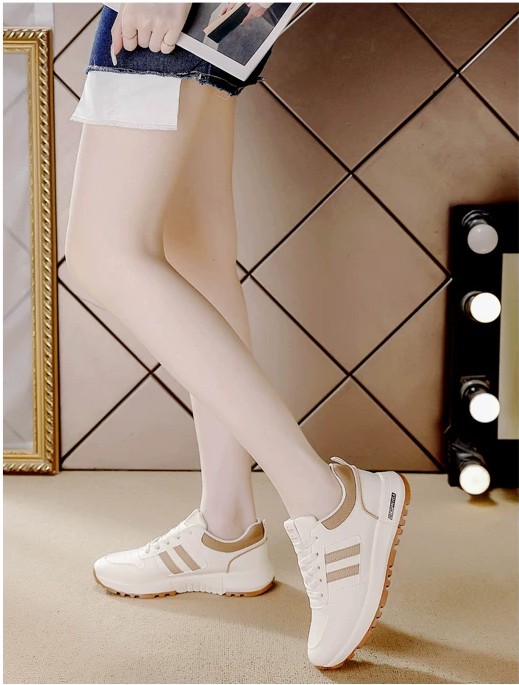
Combinations that work:
- Dusty rose shoes, raw denim, white tee. The denim’s blue keeps the pink from going sweet.
- Fuchsia shoes, all black outfit, one pink detail at the neck or wrist.
- Coral shoes, cream trousers, tan bag. Warm with warm.
- Blush shoes, grey wool, silver jewellery. Cool with cool.
Combinations that fight: pink shoes with olive cargo trousers, pink with mustard, pink with a floral print in a different pink. Not illegal, just visually noisy.
If you want the walking pair to do double duty on casual Fridays, the mesh soft-soled sports shoes keep a low profile in pale colours, and the thick-soled dad shoes with hidden height suit the fuchsia end of the range better, since the chunky shape looks intentional in a loud colour.
For the flat, minimal option that works with wide-leg trousers, the breathable flat-bottomed board shoes come in exactly the kind of low-contrast colourways that don’t shout. Browse the sneaker shapes side by side if you’re deciding between a low profile and a chunky sole, and the broader women’s shoe categories if the walk is only part of what the pair has to do.
One pair, one honest expectation
Buy the muted pink if you want two years of looking new. Buy the fuchsia if you want a shoe that announces itself and hides its scuffs. Skip the pale blush in canvas entirely, especially if you walk near traffic, because road spray is grey and it lands on the toe first.
And clean them on a Sunday, four minutes, before the dirt has time to become part of the fabric. Pink shoes don’t fail because they’re pink. They fail because nobody wipes them until it’s too late.
