

You’ve probably noticed the pattern without naming it. The inside edge of your shoe soles wears down first. Your knees ache after a long walk, mostly on one side. And by the end of a shopping day, your arches feel like they’ve been working overtime, because they have.
That’s usually overpronation, where your foot rolls inward and your arch collapses as you push off. Women’s walking shoes for overpronation are built to slow that roll, but the category has become a mess of marketing: everything claims “support” now, and half of it means nothing more than a slightly thicker insole.
Here’s the filter. You need a shoe with a firmer medial section, a 6-10mm drop, and a midsole that doesn’t compress into mush under the arch. You don’t need a max-stability brick, and if your pronation is mild, that brick can cause as many problems as it solves.
Three signs you actually overpronate
Look at the pair you’re retiring. Set both shoes side by side on a table and look at the heel from behind. If the inner edge of the heel is worn at an angle, with the outer edge still thick, that’s your gait talking. Most people wear the outer heel first, which is normal, then move inward. Wearing the inner forefoot down to the midsole is the stronger signal.
Second sign: how your knees feel. Overpronation rotates the lower leg inward, which puts extra load on the inside of the knee. If your knee pain shows up after 40 minutes of walking and eases when you sit, that’s worth paying attention to.
Third sign: the arch ache. Not heel pain in the morning, which is more likely plantar fascia, but a tired, hot feeling along the inside of the arch that shows up late in the day. You’ll know it because taking your shoes off feels genuinely good.
The mechanics of foot pronation are worth ten minutes of reading, mostly because the term gets used as if it’s a disease. It isn’t. Everyone pronates. The question is whether yours is excessive and whether it’s causing symptoms.
One practical test you can do tonight: wet your feet, step on a paper bag, and look at the print. A print that shows the whole foot, with no curve on the inner edge, suggests a low arch and likely overpronation. A print with a clear inner curve and a narrow band under the midfoot suggests a higher arch, which often means the opposite problem.
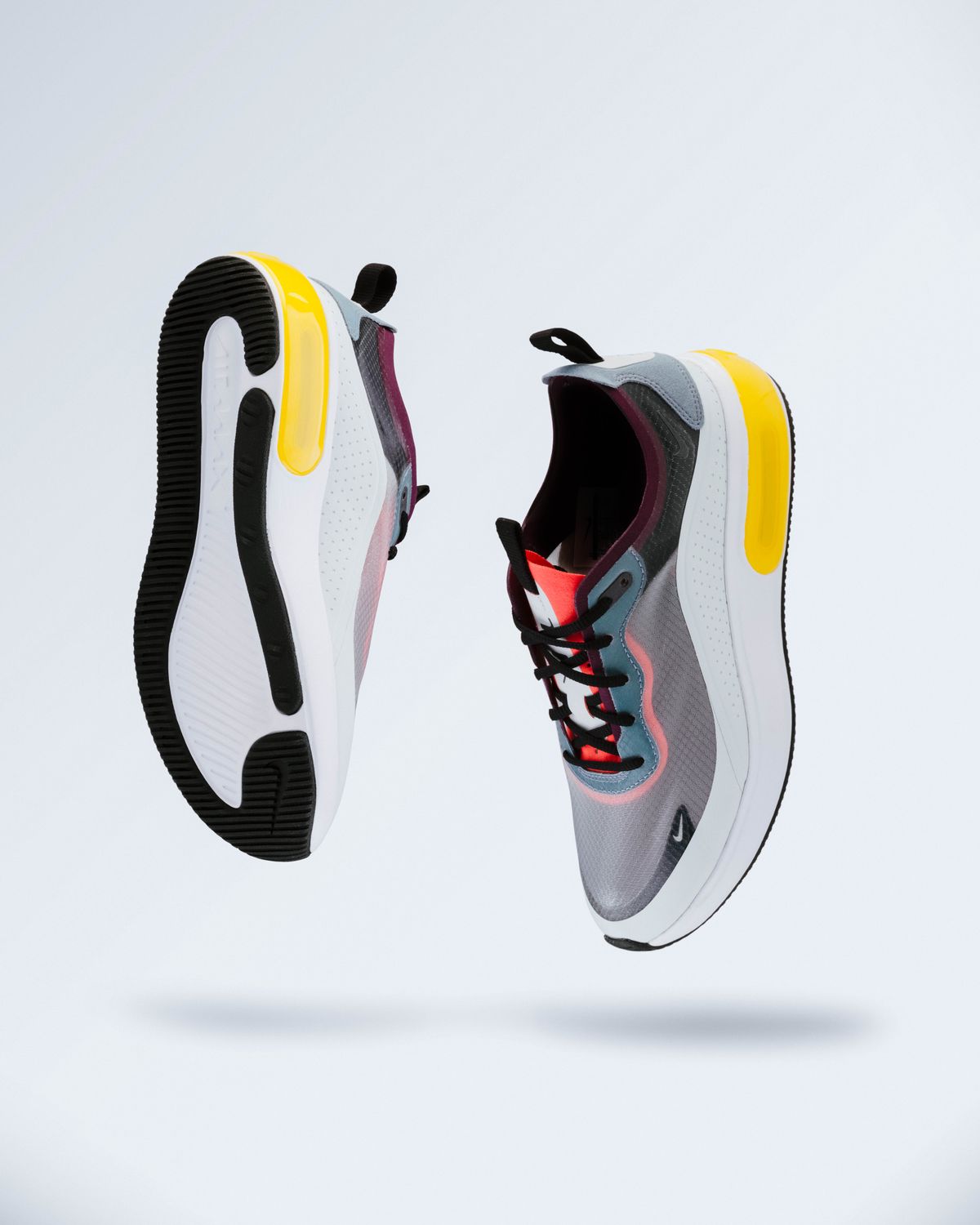
What “support” actually means inside the shoe
There are four mechanisms, and they feel different underfoot.
- Medial post: a denser wedge of foam on the inner side of the midsole, usually 2-4mm thicker, that resists compression. It’s the classic approach and still the most effective for moderate overpronation.
- Dual-density midsole: the whole inner half is firmer, not just a post. Smoother transition, less of a “lump” feeling under the arch.
- Guide rail: a firmer rim around the outside of the heel that keeps your foot centred in the shoe. Popular now because it doesn’t feel like a correction.
- Firm heel counter: a stiff plastic or leather cup around the heel that stops the foot from tilting inward at contact. Cheap shoes use soft fabric here, and you can feel the difference instantly.
Press your thumb hard into the inner midsole, about 30mm behind the ball of the foot. Then press the same spot on the outer side. The inner side should feel noticeably firmer, not rock hard. If both feel identical, the shoe has no real support no matter what the box says.
Now press the arch area from inside the shoe. If you can feel the midsole give more than 3mm under your thumb, it’ll collapse under your body weight at push-off. That’s the failure mode that makes a soft, comfortable shoe useless for pronators.
The heel counter test is simpler. Squeeze the back of the shoe between your thumb and fingers. If it folds easily, it won’t hold your heel. If it resists and springs back, it will.
The wet footprint test has a big blind spot
Here’s where I’d push back on the standard advice. The wet test tells you about your arch height when you’re standing still. It says nothing about how your foot behaves when you’re walking, which is when pronation actually happens. Plenty of people with flat prints walk with perfectly normal mechanics. Plenty of people with high arches overpronate because their ankles are unstable.
So use the print as a hint, then watch yourself walk. Stand in front of a mirror or have someone film you from behind for 20 seconds. Look at your Achilles tendon: if it curves inward like a parenthesis as you push off, that’s dynamic pronation and it matters more than the print.
This is also why I’d skip self-diagnosing from a single test and buying the most supportive shoe on the shelf. The wrong correction is worse than none. If you have pain that persists past two weeks, see a podiatrist, because the clinical picture of flat feet is a useful read, because the same symptom can come from very different causes.
There’s a useful rule of thumb from running shops that transfers to walking: mild pronation, pick a neutral shoe with a firm heel counter. Moderate, add a medial post. Severe with pain, get assessed before you spend anything.
Drop and stack height for a pronating foot
Drop is the height difference between heel and toe. For overpronation, 6-10mm works well for most walkers, because it keeps the heel slightly elevated and reduces the forward slide that collapses the arch. A zero-drop shoe asks your calf and Achilles to do more work, which is fine for some people and a bad idea for a foot that’s already unstable.
Stack height is the total foam under your foot. For walking, 20-26mm is the practical range. Below 18mm you lose cushioning on pavement, and above 30mm the shoe gets tippy, which is the opposite of what an overpronating ankle needs. You want to feel the ground enough to trust it.
What about rocker soles? A curved sole that rolls you forward can reduce the work at push-off, and plenty of women with pronation like them. The catch is that a strong rocker reduces proprioception, so if you have balance issues, test them carefully on uneven ground before committing.
Weight matters here too. A stability shoe with a medial post usually runs 320-380g per shoe in an EU 38. If a pair claims support at 250g, the support is coming from a thin plastic shank rather than real foam density, and it’ll feel harsh after an hour.
One number to check when you try them on: heel-to-toe transition. Walk ten steps and notice whether the shoe rocks you forward smoothly or drops you onto the forefoot. A harsh drop is a sign the sole is too stiff for your stride, even if the support is right.
When more support makes things worse
Max-stability shoes exist for a reason, but they’re overprescribed. If your pronation is mild, a heavy medial post can push your weight to the outside of the foot, and then you’re dealing with outer ankle strain instead of inner knee strain. I’ve seen this happen to two people who bought “the most supportive” pair on a shop assistant’s advice.
Signs you’ve gone too far:
- A feeling of standing on a ridge under your arch, especially after 20 minutes
- Your outer ankle getting sore, which wasn’t a problem before
- The shoe feeling like it’s tipping you outward when you stand still
- Calluses forming on the outer edge of your big toe joint
If any of those show up, go down one level of support rather than adding an insole. Stacking a supportive insole inside a stability shoe is the most common way people turn a workable pair into a painful one.
And be honest about the limits of footwear. A shoe can slow a roll. It can’t fix a weak hip, a tight calf, or a stride that’s too long. Ten minutes of calf raises and glute work three times a week does more for most mild pronators than a $180 shoe. That’s not the fun answer, but it’s the accurate one.
If your feet are wide as well as pronated, fit gets harder, because support structures take up room. Look for brands that publish width options, and check the low-profile sneaker range for pairs with a roomier forefoot before you default to a men’s model.
Fitting a support shoe without guessing
Support shoes fit tighter than neutral ones because the midsole takes up volume. Go up half a size if the toe box feels snug at the end of the day, and always try them with the socks you’ll walk in. A 4mm insole plus a thick sock can eat a full size of room.
Check three fit points in the shop:
- Heel lock: lace them up and try to lift your heel. More than 5mm of movement means the counter is wrong for your ankle
- Arch contact: you should feel the shoe touching your arch without pressure. Pressure means the post is too tall for your foot
- Toe room: a thumb’s width, about 10mm, ahead of your longest toe when standing
Then walk for five minutes on a hard floor, not carpet. Carpet hides everything. If you can, find a slight slope and walk down it, because descents are where pronation gets worse and where most shoes reveal their weaknesses.
Take the insoles out and look at them. A removable insole with a firm heel cup is a good sign, because you can replace it with an orthotic later without fighting the shoe’s built-in shape. Glued-in insoles are a dead end.
Break them in over a week, not a day. Start with 20 minutes, then 40, then your normal walk. Support foam needs a few hours to soften at the post edges, and a brand-new stability shoe always feels firmer than it will at hour ten.
Matching the pair to your actual walking week
If you walk 30 minutes a day on pavement, you need moderate support and decent cushioning, nothing extreme. A pair with a firm heel counter and a light medial post covers it, and it won’t feel like a medical device with jeans.
If you walk 90 minutes or more, or you’re on your feet for work, prioritize the midsole. Firmer foam that holds its shape matters more than the post, because a collapsed midsole at hour two undoes all the support built into hour one. Polyurethane midsoles last longer than EVA here, though they’re heavier.
Mostly indoors or on smooth floors? You can go lighter. The grip requirements drop and the support requirements stay the same, so a low-profile pair with a firm counter works. Something like this thick-soled pair with height inside handles a lot of standing, though the extra stack isn’t ideal on cobblestones.
For mixed use, including travel and long days out, a breathable mesh walking option is the light end of the spectrum, but check the arch support before you commit, because mesh uppers offer no lateral hold at all.
Two pairs is the practical setup if you walk daily. Rotating gives each midsole 24 hours to recover, which extends usable life by roughly a third. It also means you’re never stuck wearing a wet pair on a rainy Tuesday.
Sort the shoe that fits your foot first, then the one that fits your outfit. The reverse order is how people end up with a beautiful pair and a sore knee. If you want the wider picture on materials and sole construction, this guide to leather walking shoes that last covers the build details, and packing for 20,000 steps a day is the travel version.
Start with the wear pattern on your old pair, add one honest look at your Achilles in a mirror, then buy moderate support rather than maximum. Women’s walking shoes for overpronation don’t need to be ugly or heavy. They need a firm counter, a midsole that doesn’t collapse, and enough room that your toes can still do their job. If the inner edge of your heel stops wearing down at an angle after two months, you got it right.
