

It’s 9:40pm at a wedding in early November, the band is packing up, and somebody wants one last group photo by the door. You look down at your silver shoes, then at the phone screen, and the shoes have gone a flat, chalky grey. That’s the moment most people find out that silver kitten heels and phone flashes don’t get along automatically. I found out the same way, standing on a cold pavement in a borrowed wrap coat, holding a glass of something warm and pretending the photo didn’t matter.
I’ve since shot the same pair in daylight, under kitchen spotlights, in a lift with bad strip lighting, and on a balcony at midnight. The shoe is the same. What the camera sees changes completely. So if you’re buying silver kitten heels for a wedding, a party, or a work dinner where photos will happen, the useful question isn’t “is this silver nice?” It’s “what does this silver do when a flash hits it at 9pm?”
What silver does under a phone flash at 9pm
Here’s the short version. Metallic finishes are mirrors with a bit of texture, and a phone flash is a small, hard light source sitting about 30cm from the lens. Point that at a mirror and most of the light bounces straight back at the camera. On a screen, that reads as a white blob with no shape, and any rhinestones or crinkle finish turn into visual noise.
The finish matters more than the colour. A mirror-finish silver, the kind that looks almost like foil, will blow out first. A brushed or pearled silver holds its shape because the light scatters across the surface instead of bouncing back in one direction. Satin is the safest of the three, and it’s usually the cheapest to replace when it scuffs.
Three things I do now, in this order:
- Step back to about 1.5m and let the photographer zoom. Distance softens the flash falloff.
- Turn the foot about 30 degrees so the flash hits the vamp instead of the toe box straight on.
- Ask someone to hold a second phone screen at low brightness near your feet. It fills the shadow under the arch and stops the shoe looking like it’s floating.
None of that fixes a bad finish. It just gives a decent one a fair chance.
There’s a difference between rhinestones and a hammered metal finish that only shows up at night. Rhinestones are cut glass with a foil backing, so each stone throws a tiny hard highlight, and a cluster of them reads as one bright patch with no detail. A hammered or brushed surface breaks the reflection into soft bands, which keeps some shape in the photo. If the listing photo shows a shoe that looks like a single white shape with no edges, that’s what you’ll get at the party.
Also check where the metal sits. Silver on the heel counter and the toe only, with a matte or fabric middle, photographs much better than an all-over plated shoe. The contrast gives the camera something to hold onto, and it makes the shoe look less like a prop.
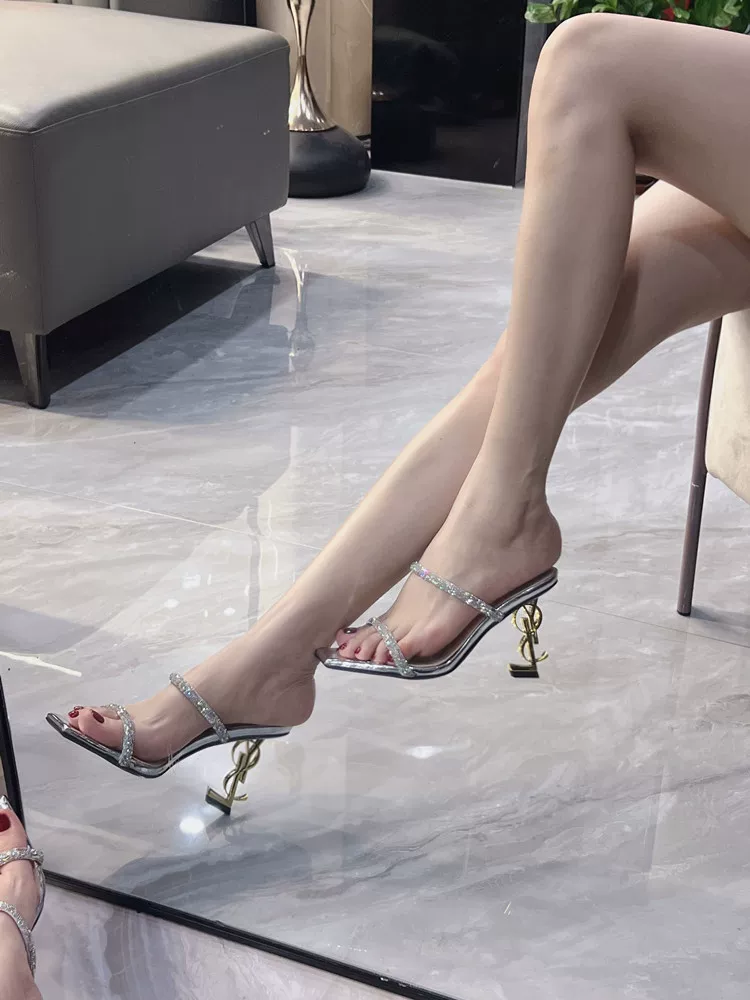
Daylight at 11am tells you the real colour
Take the same pair to a window at 11am and the story changes. Silver picks up whatever is around it: grey pavement, green hedge, the blue cast of an overcast sky. On a north-facing windowsill in November, my pair looked almost gunmetal. Two metres closer to a low sun, they went warm and slightly cream, which is not a colour I would have called silver in a listing photo.
That’s normal. Silver has no hue of its own, so it borrows one. If you want a pair that reads clearly silver in photos, look at the base metal under the plating. A slightly warmer base gives you something closer to pewter. A cool base gives you that icy, almost blue finish that photographs well at night and looks a bit hard in daylight.
Test it before you commit. Hold the shoe next to a white wall and take one photo with the flash on, one without. You’ll see the same two shoes in the same frame, and you’ll know immediately which version you’re happy to be tagged in.
White balance is the other half of it. Most phones default to auto, and auto white balance will happily turn a warm silver into beige because it’s trying to make the wall look neutral. If you’re shooting a photo you actually care about, tap the shoe on the screen to lock exposure before you shoot. That one tap is the difference between silver and taupe.
Backgrounds matter as much as light. Silver against a dark wood floor reads rich and slightly warm. Silver against grey concrete goes cold and industrial, which can look sharp or can look cheap depending on the rest of the outfit. Silver against white marble disappears. If you’ve got a choice of where to stand for a photo, pick the dark surface, and stand half a metre away from the wall so you get a bit of shadow behind you.
One more daylight detail worth checking: the seam where the plating meets the lining. In flat light, a poorly bonded edge looks fine. In raking side light, it shows as a thin bright line around the topline, and once you’ve seen it you can’t unsee it. Turn the shoe sideways to a window and look along the edge.
A 50mm heel photographs longer than it looks
Silver kitten heels usually sit somewhere between 40mm and 60mm. Mine measure 50mm at the back, which is high enough to change your posture and low enough that you can walk a city block without thinking about it. On a phone camera held at chest height, though, that 50mm looks like 30mm, because the lens is looking down at the foot and shortening everything below the ankle.
The fix is boring and it works. Get the camera to knee height. Not floor level, which makes the foot look like a boat, and not standing height, which flattens the heel. Knee height, roughly 50cm off the ground, keeps the proportion honest.
This is also why the kitten heel’s 1950s origin is a useful thing to know when you’re shopping. The shape was designed as a compromise: a heel you could walk in for a full day, worn by women who wanted the line of a heel without the punishment. That compromise is exactly what makes it hard to photograph. It doesn’t shout in a full-length shot, and it doesn’t dominate a close-up either.
If you want the heel to read as a heel in photos, wear a pointed toe. A pointed toe extends the visual line of the leg by about 2cm, and it does more for the silhouette than adding 10mm of heel height would.
The heel shape itself matters too. A curved heel, the kind that flares slightly at the tip, looks shorter in profile than a straight stiletto of the same height, because the eye follows the outer curve rather than the full drop. A straight heel with a slight taper reads taller and sharper. Neither is better. They just suit different photos, and if you’re choosing between two pairs online, look at the side profile and ask yourself which one you’d recognise across a room.
Heel tip size is a small detail with a big effect on how a shoe looks in motion. A tip under 8mm looks delicate and slightly unstable in a walking shot. A tip around 10mm looks planted. That’s the kind of thing a phone camera picks up in a candid photo and a posed one hides.
The angle that flatters: knee height, one foot forward
Stand with one foot slightly forward and the front knee bent a little. The back foot takes the weight, the front foot points about 20 degrees outward, and the heel lifts just off the ground. That single pose does three things at once: it separates the two shoes so they don’t merge into one silver shape, it shows the side profile where the heel curve lives, and it stops the toe box from flattening into the frame.
If you’re sitting, cross the ankles rather than the knees. Ankle-crossing keeps both shoes visible and puts the heel in profile. Knee-crossing hides one shoe entirely and makes the visible one look wider than it is, which is a bad trade for a photo you’ll keep.
Watch the ankle strap, if your pair has one. A strap at the wrong height cuts the ankle into two short sections, and in photos it reads as a thicker ankle than you have. The strap should sit either right on the ankle bone or 2cm above it. Anything in between is the worst of both.
For the group shot, angle your body about 45 degrees to the camera and turn your head back. Your shoes end up in three-quarter view, which is where a kitten heel looks most like itself: low, sharp, and a bit retro. Straight-on, the same shoe looks like a plain pump with the heel cut off.
If someone is taking a walking shot, slow down. Most people speed up when a camera points at them, and a fast walk with a low heel produces a heavy landing that the camera catches as a flat foot. Take one deliberate step, let the front heel touch first, and pause for a beat. It feels ridiculous. It looks fine.
Hands are worth a mention because they give the pose away. If your hands are clasped in front of you at waist height, the eye goes there first and the shoes become an afterthought. Let one arm hang, or hold a glass at hip level. The frame reads down the body instead of stopping at the hands.
Where these shoes go flat on camera, honestly
Silver kitten heels are not a magic photo shoe, and I’d rather say that now than have you find out at the event. In a wide shot with ten people, a 50mm silver heel disappears. The eye reads silhouette and colour, and a low silver shoe against a dark floor is a small pale smudge. If the photo matters more than the comfort, a higher heel or a darker shoe photographs stronger.
Second problem: creasing. The pointed toe bends where you push off, and silver plating shows that crease faster than leather does. After about 20 wears, mine had a soft diagonal line across the vamp that catches light in every photo. Nothing fixes it. A shoe repairer can polish it down, but the plating is thin and you risk going through to the base.
Third, scuffs. Silver hides dust and shows scratches. A brushed finish is more forgiving than a mirror finish, and a matte finish hides almost everything. If you’ll be walking on gravel, cobbles, or a wet pavement, a matte pair will look better at the end of the night than a glossy one that started out sharper.
And the last one, which nobody mentions: they’re not warm. A 50mm pump with a thin sole is a summer shoe, whatever the listing says. I wore mine to a November wedding with 15 denier tights and regretted it by 10pm. If your event is outdoors after dark, plan for that.
What I change before a photo: tights, hem, nails
Tights are the biggest lever. Bare legs make a silver shoe look colder and harder, and in flash photos the contrast between skin and metal gets ugly. A 15 denier sheer in a shade close to your skin tone softens the transition at the ankle. A 40 denier opaque makes the whole leg read as one line, which is flattering but heavy for a summer event.
Hem length matters more than most people think. A hem that ends 5cm above the ankle bone leaves a visible strip of leg between fabric and shoe, and that strip is what makes the outfit look considered. A maxi that grazes the floor hides the shoe completely, which is fine if the shoe is a compromise and pointless if you bought it for the photos.
Nails: go either clearly polished or clearly bare. Chipped polish next to a metallic shoe reads as mess in a close-up, and phone cameras are unforgiving at that distance. A short, clean nail in a neutral shade works with every silver finish I’ve tried. Dark polish pulls the eye down and makes the shoe look like an afterthought.
One small thing that made a real difference for me: matching the bag hardware. Silver shoe plus gold bag is a deliberate clash and it can look great, but it needs commitment. If the rest of the outfit is quiet, keep the metal consistent, and the photo stops looking accidental.
Colour is the other lever. Silver sits well with navy, charcoal, black, and most greens. It fights with cream and beige, where the two warm neutrals make each other look slightly dirty in photos. If you’re set on a cream dress, add a cool-toned bag or a silver belt so the metal looks intentional rather than mismatched.
And if the event is long, bring a second pair. I know how that sounds. But a folding flat in a bag the size of a paperback has saved more evenings than any amount of heel engineering, and nobody has ever noticed me changing shoes under a table.
Reading a listing photo before you pay
Most product photos of silver kitten heels are shot from above, at an angle that flatters the toe and hides the heel. That’s the least useful angle you can get. Before you buy, look for four things in the gallery.
- A true side profile, with the heel tip visible and the sole line flat to the ground.
- A close-up of the heel tip. A plastic tip on a 50mm heel wears through in about 30 wears and is cheap to replace; a metal tip lasts longer and sounds different on tile.
- The inside of the shoe. A padded insole about 4mm thick is the difference between a full evening and a taxi home.
- One photo on a foot, even a mannequin foot. It tells you where the topline sits relative to the ankle bone.
If the listing has none of those, ask. A seller who can’t send a side profile is usually working from a supplier catalogue and has never held the shoe.
Price is a rough signal, but not the one people assume. Below about £45, silver plating is usually a spray finish over synthetic leather, and it will scuff through at the toe within a season. Between £60 and £120 you tend to get a bonded foil over leather or a decent synthetic, which holds up for a couple of years of occasional wear. Above that you’re paying for the shape and the insole, not for the silver, and the metal doesn’t get meaningfully better.
The one thing worth paying for is the insole. A 4mm padded insole with a slightly cupped heel costs very little to make and changes the whole experience of a 50mm shoe. If a listing mentions it, that’s a real signal. If it mentions “comfort” and nothing else, assume there’s nothing there.
For a plain, wearable version, look at a plain silver leather pair with a fine heel, which is the shape that survives daylight and flash without much fuss. If you want the sparkle for an evening, silver rhinestone one-piece heels photograph brighter but need more care with the angle. And if your feet prefer a softer upper, soft leather pointed kitten heels break in faster than plated styles, though the finish won’t gleam as much.
For context on how different finishes behave across sizes, I wrote about how glitter heels behave across three sizes, and the same logic applies here: the smaller the shoe, the more the sparkle dominates the frame. You can also browse the heels section for higher options, or the wider women’s shoes collection if you’re still deciding on a silhouette.
One last thing about height, since it affects both how you walk and how you look in a full-length photo: heel height changes posture and gait in ways you can feel by the third hour, and a 50mm heel is roughly where most people stop noticing they’re wearing a heel at all.
If you take one thing from all this, take the test. Before you commit to a pair, put it on, stand near a white wall, and take two photos: one with flash, one without. If you like both, buy it. If you only like one, you’ve just found out which events it’s for, and that’s worth knowing before you spend the money.
