

Monday, 7:35. The hallway is dark and there are three pairs by the door: the black loafers that pinch at the toe, the running shoes with the grey midsole, and last year’s white pair with the scuff on the left heel. If you’re like most women in this situation, you take the white pair. Then you spend the next nine hours hoping nobody kneels down next to your desk.
White walking shoes for women get bought for the wrong reason. Most people pick them in April, on a bright Saturday, thinking about jeans and coffee. Then they wear them forty hours a week to an office with grey carpet and a tiled kitchen, and the shoe quietly fails in month two.
The short version: a white pair can carry a five-day week, but only if the midsole is thick enough, the upper is the right material for your climate, and you accept that it is a two-pair strategy rather than a one-pair one. If you wear the same white shoes every single day for a year, no material survives it.
In this trade, the same conversation happens every autumn. Someone brings back a pair that “went grey”, and the shoes are fine. The rotation was the problem.
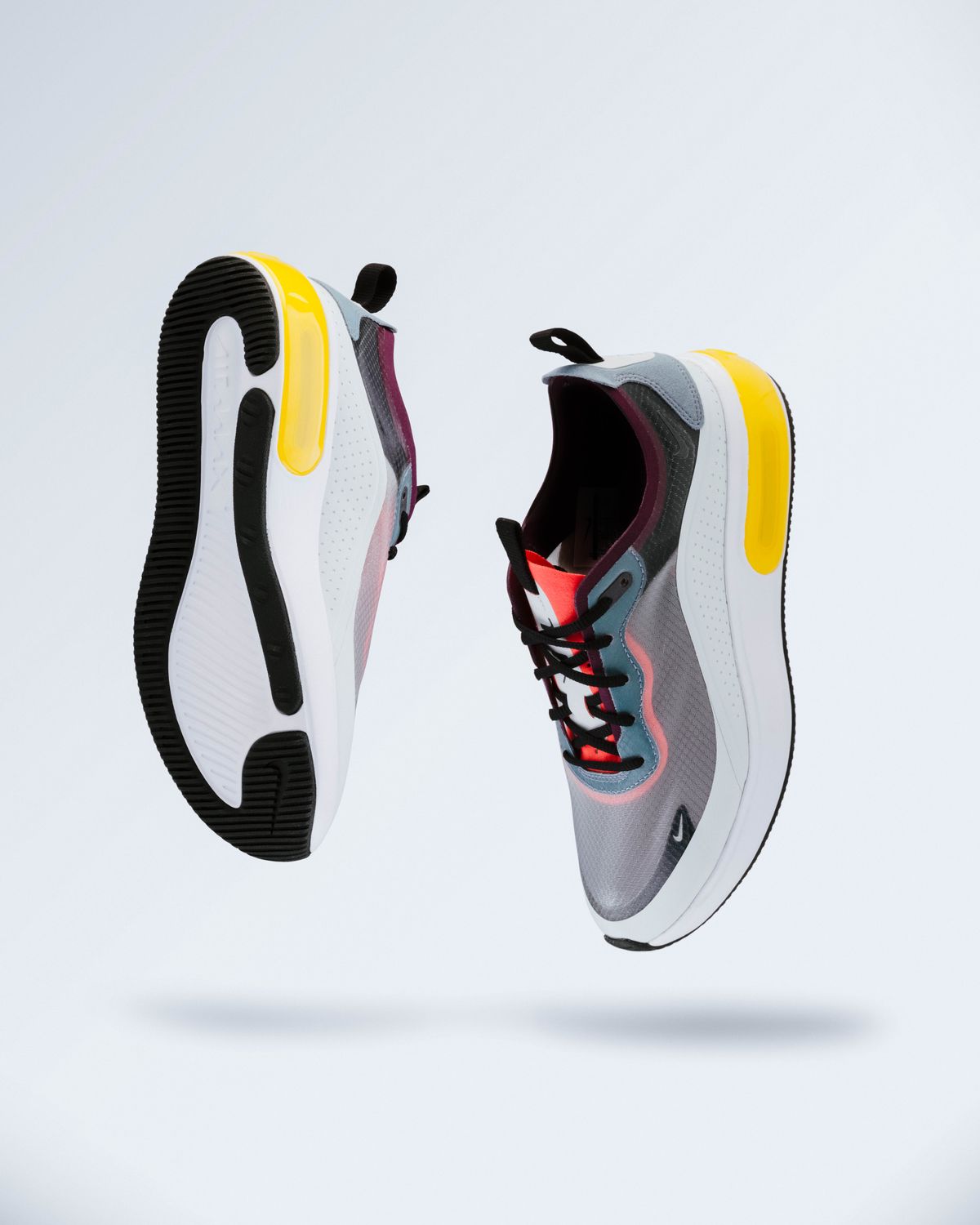
A white pair earns its place on Monday, not on Saturday
Weekend white and weekday white are different products with the same photo on the box. Saturday white needs to look good in daylight for three hours. Weekday white needs to survive eight hours of indoor carpet, one tiled kitchen, a car park, and whatever happens at lunch.
That changes what you should buy. For a five-day week, the upper needs to be cleanable with a damp cloth rather than brushed, and the colour needs to be an off-white or cream rather than a bright optic white. Pure white shows every mark from the first week and looks tired by week six. Bone, ivory, and pale grey walk the same distance and look better doing it.
Three things decide whether white works for your week:
- The collar height. A low collar rubs less on a desk chair but lets in cold air on the walk in.
- The midsole colour. A white midsole ages faster than a gum or grey one.
- The outsole pattern. Flat, shallow tread is fine indoors and dangerous on a wet station platform.
None of that appears on the product page. You find it out in the first ten days, which is exactly when the return window is still open. Use those ten days properly: wear them on the commute, not around the living room.
There’s a second-order problem with white that catches people in office jobs. Indoor lighting is warm and slightly yellow, which flatters bone and cream and washes out optic white. Under the strip lights of a meeting room, a bright white pair reads a shade bluer than the trousers you matched it to at home. That mismatch is subtle enough that nobody says anything and obvious enough that you notice it in every photo taken that day.
Off-white also hides the two things that ruin a white shoe first: the crease across the toe box and the dark line where the collar meets the ankle. On a bright white upper both look like damage. On bone or ivory they read as texture.
The commute test: tile, carpet, and one wet pavement
Walking shoes for a workweek are judged by three surfaces, and most buyers only test one. Carpet is forgiving. Tile shows you everything about grip and noise. Wet pavement outside the office is where the outsole either works or doesn’t.
Try this before you commit. Wear the pair for a full commute, including the walk from the station, and pay attention to the heel strike on the last 200 metres. If the heel slides forward inside the shoe when you walk downhill, the heel counter is too soft for daily use. If you hear a slap on tile, the outsole is too hard and your knees will feel it by Thursday.
The other thing to check is how the shoe handles a wet pavement with a smooth finish. Many white walking shoes for women come with a shallow tread because it photographs better. On a rainy Monday, that tread behaves like a bar of soap on a bathroom floor.
A practical compromise: keep the shallow-tread white pair for dry days and put a rubber half-sole on it. A cobbler will do it for the price of two coffees and it doubles the usable season.
Noise is the other thing that only shows up in real life. A hard outsole on polished tile clicks, and in a quiet office that click is the loudest thing in the room. Soft rubber is silent and wears faster. If your building has stone floors and open-plan seating, pick quiet over durable and expect to replace the pair sooner.
One more test worth doing at home: walk in the pair on a hard floor with a thin sock, then again with your normal work sock. If the fit changes enough that you notice it, the shoe has no room for a seasonal sock and it will be a summer-only purchase whether you planned that or not.
Midsole thickness: 18mm is the line, 25mm is the comfort zone
Here is the number that matters more than any other. Under about 18mm of midsole, a walking shoe is a fashion flat with laces. It looks fine standing still and turns punishing after 6,000 steps, especially on tile or concrete.
Between 18 and 22mm you get a shoe that still looks like a shoe and can handle a commute. Above 25mm you’re into a rocker shape, which is great for distance and starts to look like a trainer under a pencil skirt.
How to check without a ruler: put the shoe on a table and look at the gap under the arch. If the arch nearly touches the table, the midsole is thin and there’s no cushioning under the middle of your foot. That’s the spot that aches at 3pm.
Also press the heel with your thumb. A good walking midsole gives 3 to 4mm and springs back. If it feels like a brick, it’s EVA that has been compressed at the factory and it will feel worse in three months, not better.
For a desk job, 20 to 22mm is the sweet spot: enough under the ball of the foot, low enough to read as a proper shoe. For anyone walking more than 8,000 steps a day, go thicker and accept the trainer silhouette.
Heel-to-toe drop matters too, and almost nobody asks about it. A drop of 8 to 10mm suits most people walking on flat pavements. A drop of 4mm or less puts more load on the calf and Achilles, which is fine for trained runners and less fine for someone who sits at a desk for nine hours and then walks home in the dark.
If you have had heel pain in the past, the combination that helps is a slightly thicker midsole plus a small drop, plus a heel counter that holds the foot rather than letting it roll inward. That last part is where cheap white shoes fail. You can feel it at the back of the shoe: press the heel counter with your thumb, and if it folds flat, it won’t hold anything.
Mesh, knit, or leather: three uppers after forty wears
White uppers age differently depending on the material, and the difference shows up around wear forty, which for a workweek is about two months.
Mesh breathes best and cleans easily with a cloth, but it creases into permanent folds across the toe box and holds onto dust in the weave. It also lets water straight through, so a rainy commute means wet socks by 9am.
Knit is the softest from day one, which is why it sells. It’s also the least structured, so it stretches where your foot pushes and can start to look baggy across the instep after a season. Good for wide feet, bad for anyone who wants the shoe to hold its shape.
Leather takes a week to break in and then holds up for years. Smooth leather wipes clean, which matters more than breathability for an indoor job. Suede is the one to avoid in white: it marks in the rain and no amount of brushing brings the nap back evenly.

Quick comparison, based on what comes back through the door rather than what the labels claim:
- Mesh: best airflow, worst in rain, creases permanently at the toe.
- Knit: softest on day one, stretches out by month four, best for a wide forefoot.
- Smooth leather: slowest break-in, easiest to clean, longest life.
- Suede: looks best in the box, worst after one wet walk.
For a five-day office week in a wet climate, smooth leather wins on maintenance alone. In a hot, dry city, mesh is more comfortable and the creasing matters less because you’re not wearing them with tights.
One detail worth knowing: coated or treated leather is often certified for low chemical content. If skin sensitivity is a factor, look for an OEKO-TEX Standard 100 label on the lining, which means the material has been tested for harmful substances.
Your sock drawer decides whether white works at all
This is the part nobody warns you about. A white shoe frames whatever is above it, and the sock is the first thing people see when you sit down.
- White socks with white shoes and cropped trousers: reads deliberate and clean.
- Black socks with white shoes: reads like you got dressed in the dark, and it’s the most common mistake in winter.
- Nude or skin-tone liners: invisible, works with everything, gets holes first.
- Grey marl wool: the winter answer, especially with wider trousers that cover the ankle.
In cold months, thicker socks change the fit by roughly half a size. If you buy white walking shoes in October wearing thin liners, they’ll feel tight in January when the wool socks come out. Either size for the thicker sock or keep a summer pair and a winter pair, which is what most people end up doing anyway.
The other sock rule: cotton holds moisture and stays damp all day. Wool blends dry faster and smell less. For an eight-hour indoor day that difference is larger than any cushioning feature on the box.
There’s a mirror-image problem in summer. Thin no-show liners slide down inside a white shoe because the lining is smooth and there’s nothing to grip. The fix is a liner with a silicone heel strip, or a shoe with a slightly rougher lining. Sounds trivial until you’ve fished a sock out of the toe of a shoe in a car park.
If your feet sweat heavily, white shows it around the collar by mid-afternoon. That’s a lining problem, not a colour problem, and a pair with a leather lining handles it better than one with a synthetic mesh lining, which holds the moisture against the shoe instead of letting it dry.
Sizing: the half size that gets handed over too often
Shops hand over a half size up because it solves the immediate complaint, not the long-term one. A shoe that’s half a size too big feels fine for twenty minutes and then lets the heel lift on every step. A shoe that’s slightly short feels tight for a week and then moulds.
Measure at the end of the day, standing, with the socks you’ll actually wear. Then check these three points in the shop:
- Thumb’s width between the longest toe and the end, on the longer foot.
- No pressure on the outside of the little toe when you stand on one leg.
- Heel stays put when you walk on a slope, without needing to grip with your toes.
If the width is the problem rather than the length, sizing up won’t fix it and it will make the heel slip worse. That’s a different purchase. Narrow and wide fittings exist, and the site’s women’s walking shoes collection is organised well enough to compare shapes side by side before you order.
Also worth a look: the 12°C morning problem at the office, which covers how much shoe volume you lose when the heating kicks in at nine.
The honest case against white for a five-day week
White is the highest-maintenance colour in a shoe cupboard, and there’s no clever workaround. It shows rain spots, coffee, and the grey line where your trousers brush the collar. If you don’t want to wipe a pair of shoes once a week, buy grey or black and stop reading white reviews.
There are also weeks where white is simply wrong. Funerals, client presentations in conservative industries, anything with a formal dress code after 6pm. That’s what the white leather heels kept for the days a flat won’t do are for, and it’s also why the thick-heel pair for desk days with a meeting earns its space in the cupboard.
One more thing that doesn’t get said: white walking shoes look worse when they’re almost clean. A pair with an even, worn-in patina reads fine. A pair with one bright white shoe and one grey one looks like a mistake. If you clean one, clean both, and use the same cloth.
Cost per wear is the argument that settles it for most people. Track it the way the cost-per-wear maths for work shoes does: a pair at 90 that lasts 180 wears costs 50 cents a wear. The same pair ruined by daily wear in six months costs double that, and the shoes were never the problem.
What a two-pair rotation actually looks like
The workable version isn’t complicated. One pair does Monday, Wednesday, Friday. The other does Tuesday and Thursday plus the weekend. Both get 24 hours to dry out between wears, which is the real reason rotation works: moisture, not fashion.
Give each pair a wipe on Sunday evening. Ten minutes with a damp microfibre cloth and a little mild soap on the scuffs. Let them air dry away from a radiator, because heat cracks the midsole and shrinks the lining. Stuff them with newspaper if they got wet on the way home.
Replace the insoles at about month eight rather than replacing the shoes. Insoles are where the smell and the flattening happen first. A 12 pair of wool-lined insoles resets a pair that’s otherwise still solid.
If you only buy one pair, buy the leather one and accept that it will be a Tuesday-to-Saturday shoe, with something else on the wettest days. If you buy two, buy one leather and one mesh so the week has an answer for rain and an answer for a heatwave.
Walking a lot is not a fashion problem, it’s a materials problem. Look at how the biomechanics of walking load the foot: heel strike, roll through the midfoot, push off the big toe. Every one of those three points needs something under it. A thin white shoe on tile only supports the middle one, and even that badly.
So the test isn’t whether the pair looks good by the door on Monday morning. It’s whether you still reach for them on a Thursday in February, when it’s dark at 5pm and the walk home is 900 metres of wet pavement. That’s the pair worth keeping. The other one goes in the bag for the charity shop, and you start again with a better checklist.
