

The invitation says garden party. The grass is real, the marquee floor stops 40 centimetres from the edge, and the drinks reception happens on the lawn. This is the exact moment a shoe decision gets tested, and it’s the moment most people get wrong.
Navy blue slip-on shoes for women are the quiet answer to that problem. I’ve watched enough people try them on at a fitting bench to know why they work and where they fail. The colour does half the job. The construction does the rest.
Most of what follows is the stuff a shop assistant won’t volunteer, because it’s the difference between the pair that comes back in a week and the pair that gets worn to three events in one summer.
Navy reads better than black in daylight
Black is the default for anything formal, and outdoors it’s the wrong default more often than people admit. In flat midday light, black leather goes dusty-looking, and against green grass it reads as a shadow. Navy holds its colour. It picks up a little blue from the sky and keeps some depth in the shade.
There’s a practical side too. Scuffs on black leather show as grey, which is high contrast. Scuffs on navy show as slightly lighter navy, which is nearly invisible from a metre away. For a shoe that’s going to walk across gravel, that matters.
What navy doesn’t do is flatter every outfit. With a black dress it can look like a mistake in low light. With white it needs warmth somewhere else, in a bag or a wrap, or the whole thing goes nautical. Where navy wins is with the colours people actually wear outdoors: cream, sage, dusty pink, soft grey, and any print with blue in it.
The trade-off is availability. Navy sits behind black and nude in almost every production run, so the size range thins out earlier and the colour is often the first to sell through in a 37 or a 41. If you see a navy pair that fits in spring, don’t wait for a sale.
The heel, the grass, and the 30mm rule
A stiletto on a lawn sinks. Not sometimes. Every time, and further than you expect, because the load goes through a tip about 8mm across. Anyone who has spent a drinks reception on tiptoe trying to keep a heel out of the turf knows the rest: the shoe tilts, your ankle rolls, and you end up standing on the paving all evening.
The fix isn’t a flat. A completely flat slip-on on soft grass is its own problem, because there’s nothing to stop your foot sliding forward when the ground gives. What works is a block heel between 25mm and 40mm with a footprint of at least 25mm across. At that width the heel presses into the turf like a thumb rather than a needle, and the small amount of sink stabilises you instead of the opposite.
One detail separates a good block from a bad one, and it’s rarely in the listing: whether the heel sits under the centre of your heel bone or is offset toward the back. Heels set too far back make the shoe feel like it’s tipping you forward. Look at the shoe from the side. The back edge of the heel should sit roughly in line with the back of your own heel, not 10mm behind it.
Wedge soles handle grass better than any heel, and they’re the safe call if the party is entirely outdoors. Just know a wedge doesn’t flex, so your calf does the work on the walk from the car park. The broader history of footwear is a useful reminder here: most sole shapes were invented for a surface, not for a look, and grass is a surface.
This is the single biggest difference between navy blue slip-on shoes for women that work outdoors and the ones that end up in a bag after an hour.
What actually keeps a slip-on on your foot
Slip-ons fail at the heel. Always the heel. If there’s no elastic gore, no concealed strap and no shaped heel counter, the shoe is relying on friction alone. And friction drops the moment your foot gets warm.
So check three things, in this order. Squeeze the back of the shoe: it should hold its shape and spring back, not fold flat. Look for elastic panels at the sides, which let the opening flex without stretching out permanently. Then look at the throat, the opening your foot goes through. A throat that sits much lower than the top of your instep will let your heel lift with every step.
In the trade, the honest version is that slip-on lasts get cut narrower than lace-up lasts from the same brand, because the shoe has to stay on without laces. That’s why one size can feel tight across the ball of the foot and loose at the heel. It’s not your foot. It’s the last.
The lining is the other thing worth checking. An unlined leather slip-on stretches into a slipper within a season. A leather-lined one keeps its shape. Textile lining is cooler and lighter, but it holds moisture, which is exactly what you don’t want outdoors in July.
If you want something that reads more formal than a flat, a suede single shoe with a modest heel does the job, and the blue patterned pair is the nearest thing to navy with a print in it.
The two-hour standing test
Garden parties are not walking events. They’re standing events with short walks between the standing. That changes which shoe wins, and it’s why a pair that’s fine on a commute can be awful at a wedding.
Standing loads the same small area of foot for an hour at a time. Under the heel it’s soft tissue and fat pad; under the ball of the foot it’s the metatarsal heads, and they don’t like being pressed into a hard surface. A sole thinner than 12mm under the forefoot transmits almost all of that pressure straight through. You’ll feel it as a dull ache around the 70-minute mark, and by two hours you’ll be shifting weight from foot to foot without noticing you’re doing it.
The test I use now, before buying any slip-on for an event: stand still in them for two minutes on the hardest floor in the shop. Not walk. Stand. If you want to move after 90 seconds, the shoe will not survive a reception.
Then check the heel counter again while you’re standing. A shoe that lets your heel rise when you’re static will let it rise twice as much once you’re on grass, because the ground is moving under you as well.
One more thing about standing: the toe box needs a little room above the toes, not just in front of them. A slip-on that presses on the top of your toes is fine sitting down and unbearable standing up, because your toes spread and lift slightly when you take weight. That 3mm of clearance is the difference between an evening and a long evening.
Sizing: the half size nobody mentions
Slip-ons and lace-ups don’t size the same, even inside one brand. A lace-up can be snug at the instep because you can adjust it. A slip-on can’t, so the fit has to be right at the opening, and that pushes people into the wrong size in one direction or the other.
Three rules hold up in practice:
- Fit the widest part of your foot first, then check the length
- Leave 5mm in front of your longest toe, and never more than 8mm
- If the heel slips with a thin sock, try a heel grip before sizing down
The heel grip trick saves more returns than anything else I know. A 3mm suede grip at the back costs very little and takes up the space a half size would have taken, without squeezing your toes. Sizing down instead is how you end up with a shoe that fits the heel and crushes the little toe.
Try slip-ons at the end of the day. Feet swell, and there are no laces to give the extra volume back. Anyone buying at 9am is buying for a smaller foot than the one that will be in the shoes at 6pm.
Damp grass is the real enemy
Evening garden parties mean dew, and dew means the bottom 20mm of your shoe is wet within an hour. What happens next depends on the material.
Uncoated suede absorbs water and darkens, and it doesn’t always dry back to the original shade. Mine have a tidemark around the toe from one wedding in a field. Coated leather wipes clean. Patent wipes clean and then shows every fingerprint. Nubuck is the worst of the lot, because it absorbs and then marks.
There’s a reason navy blue slip-on shoes for women get bought in a panic the week before an event, and this is it. Nobody plans for dew. They plan for the dress, then discover the lawn.
There’s a cheap defence: a spray protector, applied twice a week apart, before the event. It doesn’t make suede waterproof. It buys you the 20 minutes you need to get off the grass without a permanent stain.
The other damp-grass risk is dye transfer, and it runs both ways. Navy can leave colour on a pale footbed, or on the hem of a light dress that brushes against it. If you’re wearing cream or ivory, put the shoes on with the outfit a few days early and walk around indoors for ten minutes. Warm, slightly damp feet are when dye moves.
Nobody warns you about this because it never shows in a photo. It shows on the inside of a hem, at the end of the night, when it’s too late to do anything.
The outfit maths: hem, ankle, hosiery
The length of the dress decides the shoe more than the shoe decides anything else. A midi hem that ends at the narrowest part of your ankle makes a low slip-on look deliberate. A hem that stops at mid-calf does the opposite, and the leg reads shorter than it is.
What works with navy slip-ons, in order of reliability:
- A hem at or just above the ankle bone
- A hem 5cm to 10cm below the knee, with a bit of flare
- A long hem that skims the top of the foot
What usually doesn’t: a hem landing exactly at the widest part of the calf. That’s a hard line to wear with any low shoe, and no amount of styling fixes it.
Hosiery is the other variable. A 15-denier sheer tight close to your skin tone keeps the shoe looking formal and stops the lining sticking to your foot. An 80-denier opaque tight changes the register completely and pushes the outfit toward autumn. Bare feet in a leather-lined shoe on a hot day are fine until about hour three, when the slipping starts.
One thing I’d push back on is the idea that navy shoes need a navy bag. They don’t. Tan or cream looks better with navy than a matching bag does, because matching navy to navy across two materials almost never works. The dye lots differ, and you can see it in daylight.
The same logic applies to a belt or a hair ribbon. Pick up the blue in one place only, and let everything else stay neutral. Two navy accessories in different materials is the one styling move that makes a good pair of navy blue slip-on shoes for women look cheap.
What I’d buy, and what I’d skip
For one garden party a year, buy the cheapest pair that fits properly and don’t overthink it. For two or three outdoor events a summer, the maths changes and a leather-lined block heel in navy starts paying for itself, because you stop buying a new pair every June.
What I’d skip: any slip-on with a heel under 15mm and a sole so thin you can feel gravel through it. It solves the grass problem and creates a standing problem, and standing is what you actually do at these events. Also skip anything with a decorative buckle sitting exactly where your instep flexes. It looks fine in the box and digs in by the second drink.
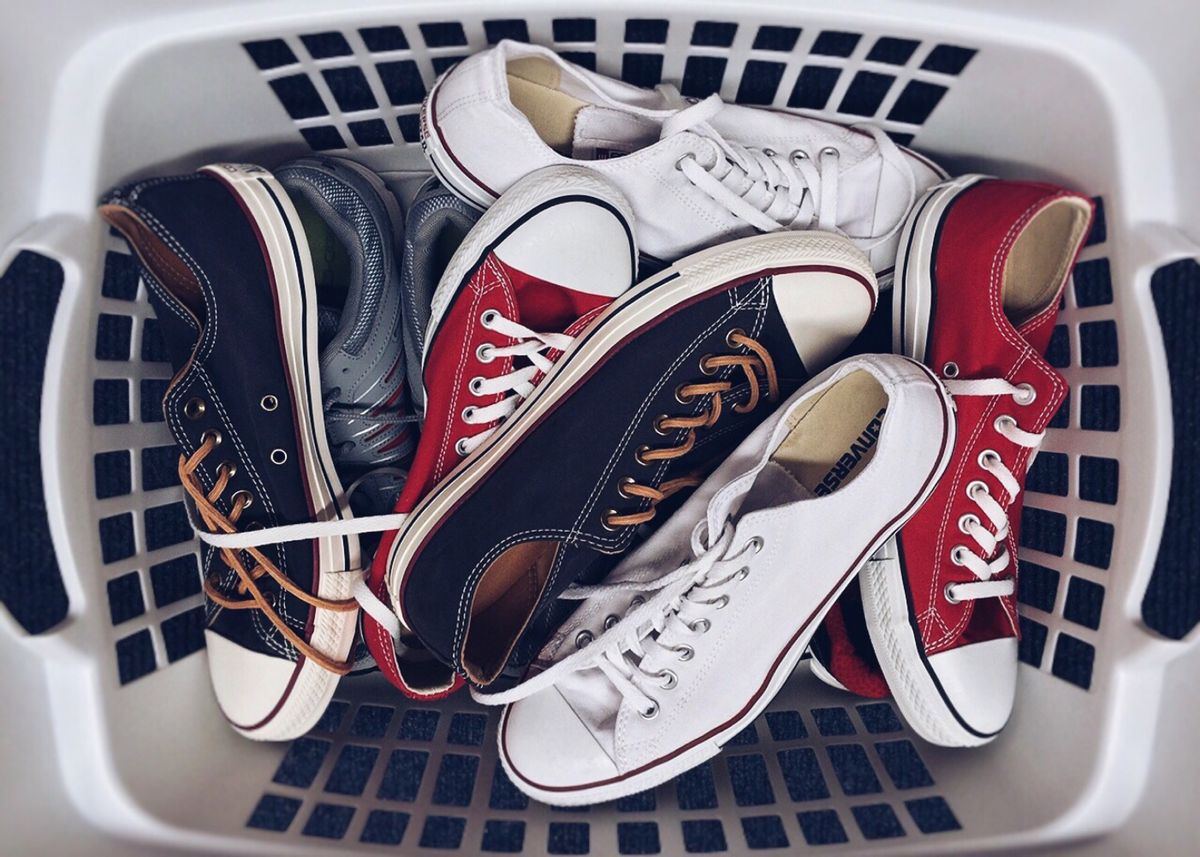
That’s the footprint question in one image. A heel that wide will hold on a lawn. Anything narrower and you’re balancing.
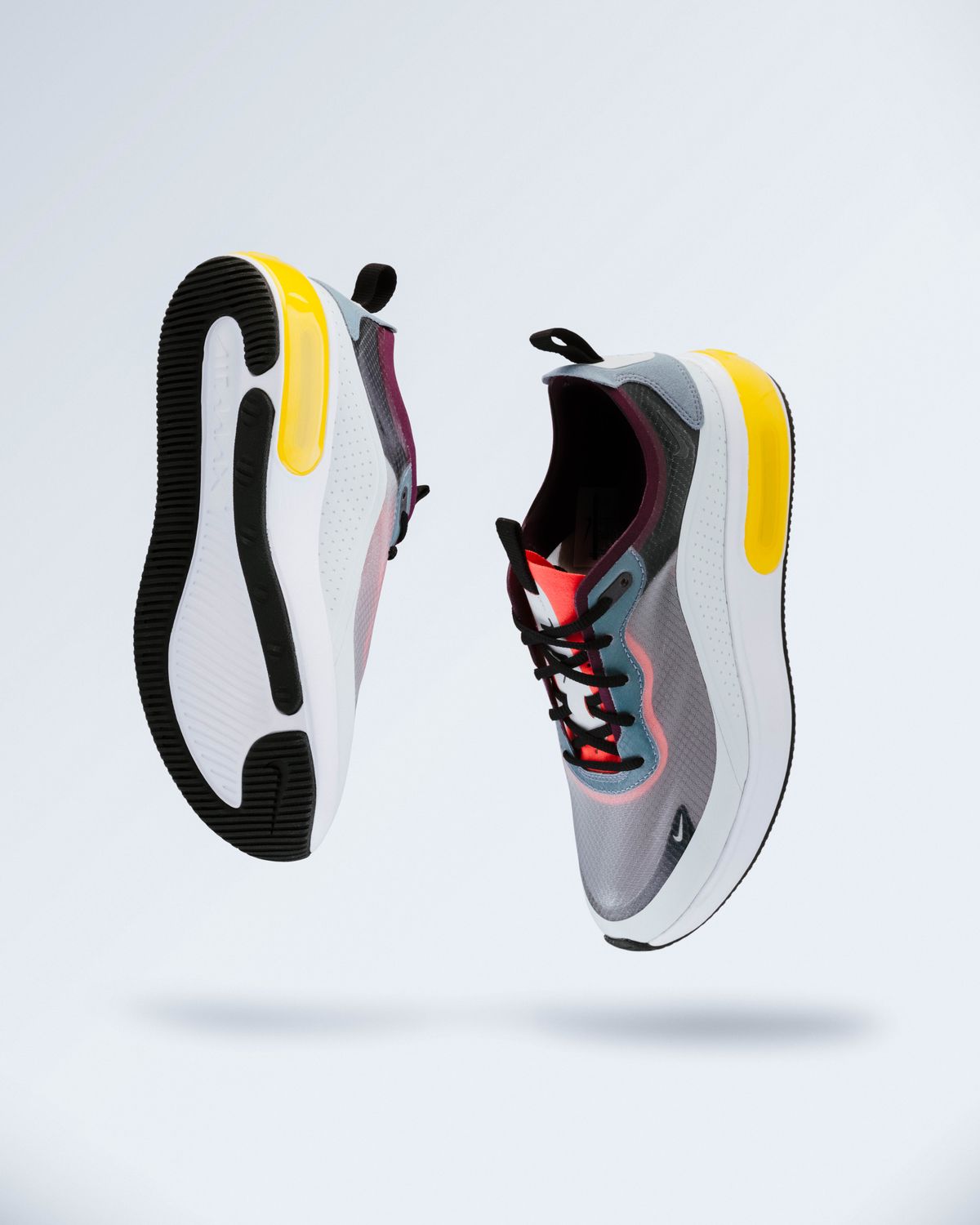
Look where the hem lands there. A centimetre either way changes the proportion, which is why trying the whole outfit together beats trying the shoe alone.
If you want a second opinion on toe shape before you commit, this piece on toe shapes and foot width covers the part that sizing charts leave out. For the technical side, the history of shoe sizing systems explains why the same number means different things in different countries. The wider low-heel range is worth a look if navy turns out to be sold out in your size, which it often is by June.
And if the invitation says garden party while the forecast says rain, wear the block heel and keep a pair of flats in the car. That’s not defeat. That’s the only plan that survives an English summer.
If you’re shopping for navy blue slip-on shoes for women this month, do it in the afternoon, on a hard floor, with the outfit you plan to wear. Fifteen minutes of that beats an hour of reading listings.
