

At 19:40, ten hours into a shift, the feet decide the argument. Not the shoes on the shelf, not the ones in the photo with the nice light. The feet.
Anyone who works a long rota in a fixed dress code knows the pattern. The pair that looked smart on day one is the pair you’re desperate to kick off in the changing room by hour eight. Uniform shoes for women get bought on looks and judged on the last four hours, and almost nothing in a product description prepares you for that.
Most workplace dress codes are narrower than shoppers expect. The rules usually come down to a colour (all black, occasionally all white), a closed toe, a heel under a certain height, and a surface that can be wiped. That leaves a wide field of shoes that technically comply and still hurt. This is about the subset that survives the shift.
What a uniform policy actually locks down
Three constraints repeat across nursing, hospitality, retail, pharmacy, and salon work: colour, closure, and heel height. Colour is usually all black or all black with a black sole, and a white logo the size of a thumbnail can be the thing that gets a pair rejected. Closure means a closed toe and, in kitchens, a closed back. Heel height caps tend to sit between 25mm and 40mm, and a surprising number of policies now specify a flat or a low block.
The rules don’t say anything about the three things that decide whether you can walk at 20:00. Sole thickness. Heel hold. Whether the upper can breathe.
That gap is where most bad purchases happen. A shoe can be policy-perfect and functionally wrong, and the person wearing it spends eleven months finding out.
- Colour: all black, sometimes black sole, sometimes no visible logos
- Toe: closed, no peep toe, no open back in food handling
- Heel: 25mm to 40mm in most written policies, flat in many
- Surface: wipe-clean, non-porous where spills are likely
- Nothing at all about cushioning, flex, or fit
Read the policy for the minimum. Then buy for the maximum, which is hour twelve.
The twelve-hour test: where shoes fail
Discomfort doesn’t arrive evenly. In a shoe with a thin sole, the first thing to go is the ball of the foot, usually between hours three and five, and it announces itself as a hot spot rather than pain. In a shoe with a poor heel hold, the failure is earlier and sharper: a blister at the Achilles by hour two, because the heel is lifting 8mm with every step.
Then there’s the swelling. Feet get bigger across a long day, sometimes by half a size, and the shoe that fit at 7am is a different object by 15:00. Anyone who has worked a double knows the feeling of a laced shoe that suddenly has no room above the toes.
By hour eight, the problems have usually stopped being about the foot and started being about the leg. A heel that’s too high for the surface, or a sole that’s too stiff to flex, sends load up the calf. That’s why so many long-shift workers describe the last two hours as a calf problem rather than a foot problem.
The fix isn’t a single feature. It’s a combination: a sole with enough stack to absorb impact, a flexible forefoot so the foot can roll, and a heel counter that holds. One of the three is not enough. Shoes with great cushioning and no heel hold still blister. Shoes with a locked-in heel and a plank for a sole still bruise the ball of the foot.
There’s a cheap way to predict all of this before you spend money. Take the shoe out of the box and bend the forefoot with both hands. It should flex where your toes flex, about a third of the way from the toe, and it should stop there. A shoe that folds in half like a paperback has no structure under the arch. A shoe that won’t bend at all will fight you on every step.
Then press your thumb into the heel counter, the stiff part at the back. It should give slightly and spring back. If it folds flat, your heel will roll out of the shoe by hour three.
Slip resistance: what the number means
Every kitchen and most hospital floors are slip-rated, and the ratings are not marketing language. The common standard uses a coefficient of friction measured on a wet surface, and a shoe marketed as slip-resistant has usually been tested on both steel and ceramic tile with a contaminant like water or oil. The relevant detail is that a sole can pass on tile and fail on a greasy floor, because the tread pattern that channels water doesn’t necessarily channel oil.
Practical version: look at the tread. Deep, wide channels that open at the edge of the sole shed liquid. Fine, shallow zigzags don’t, no matter what the label says. If you work near oil, ask for the specific test result rather than the word “slip-resistant” on the box.
Tread depth also wears. A sole that starts at 4mm of tread is down to 2mm within a year of full-time wear on hard floors, and slip resistance drops with it. That’s a replacement signal, not a repair one.
Occupational safety agencies treat floor surfaces as an engineering problem with a footwear component, which is roughly the right way to think about it. The guidance on walking and working surfaces is written for employers, but the logic applies to anyone choosing shoes for a wet floor. The underlying physics of friction between two surfaces explains why a wet tile and a greasy tile need different tread patterns.
Soft isn’t the same as supportive
There’s a belief that the softest shoe is the kindest shoe, and full-time workers pay for it. A very soft midsole compresses under load and stays compressed. By month four, a shoe that felt like a pillow has a flat patch under the heel and no rebound left.
What holds up better over 12 hours is a firmer foam with a thin, softer layer on top. The firm layer stops the shoe collapsing, the soft layer handles the first centimetre of impact. You can test this in a shop by pressing your thumb hard into the midsole and holding for five seconds. If the dent stays visible, it’s too soft for daily full-time wear.
Stack height matters too, but less than people think. Anything under 15mm at the forefoot will transmit floor hardness straight into the ball of the foot. Over 35mm and the shoe starts to feel unstable on stairs, which is a real risk on a busy ward or a wet kitchen.
Some people add an insole on day one. That’s usually a mistake. An insole takes up volume, and a shoe that was already snug becomes a shoe that pinches across the instep. Add insoles only to shoes with room to spare, or buy a half size up if the insole is part of the plan.
All-black leather and the wipe-clean rule
Leather is the right upper for most uniform work, and the reason is boring: it can be wiped, it doesn’t hold smells the way textile does, and it keeps its shape past the point where a synthetic upper starts to sag.
The exception is anything that gets genuinely wet, like a kitchen floor at close. There, a coated leather or a purpose-built work shoe beats an uncoated one, because uncoated leather absorbs water and then takes a day to dry. Wet leather also stretches, and a shoe that stretched on Tuesday is loose by Friday.
Care is simpler than the internet suggests. Wipe with a damp cloth at the end of the shift, let them dry away from a radiator, and use a neutral cream once a month. Polish is optional unless the policy mentions shine.
On black: scuffs show as grey, not brown, and a black heel edge is the first place to go. A £6 tin of black cream handles both. Skip it for a month and the toe box starts to look dusty in a way that no amount of wiping fixes.
Heel height under a dress code
If the policy allows 40mm, most people are better off at 25mm to 30mm. The reason isn’t comfort in the abstract, it’s load. Every 10mm of heel height shifts weight forward onto the ball of the foot, and at 40mm on a hard floor that shift is noticeable by hour six.
It’s also the first thing to check when you’re shopping for uniform shoes for women in any dress code. Get the heel wrong and the rest of the shoe can’t rescue it. The mechanics of heel height and forward load are well documented, and the short version is that every centimetre moves weight off your heel and onto the ball of your foot.
A block heel at 30mm with a wide base is close to the sweet spot for a shift that mixes standing and walking. It keeps some of the shape a uniform code usually wants, and it spreads load across the heel rather than concentrating it on a post.
For anyone who wants the look of a low court shoe rather than a trainer, a low block-heel court shoe with a padded insole does the job without the balancing act, and a pointed court style works where the dress code leans formal. Check the heel height against the written policy before you buy, because a pair that’s 5mm over the limit is a pair you can’t wear at work.
A thin stiletto at 60mm is a different question. Some policies allow it. Almost no foot enjoys it after eight hours on tile.
Socks, liners, and the 3pm problem
Most of the misery in uniform shoes is moisture. A foot produces sweat all day, and in a closed shoe with a synthetic lining that moisture has nowhere to go. The result is slipping inside the shoe, which causes friction, which causes blisters in places you didn’t know could blister.
Two changes fix most of it. A merino or cotton-blend sock rather than a pure synthetic, and a fresh pair halfway through a long shift if the shift allows it. For anyone who can’t change socks, a thin liner sock under the main one absorbs the moisture and takes the friction, which is the whole trick.
Powder helps for about four hours. After that it clumps, and clumped powder is worse than none. If sweat is a genuine daily problem, a moisture-wicking liner is a better spend than any spray.
There’s also the smell question, and leather wins here by a distance. Textile uppers hold odour in the foam, and no spray gets it out of the midsole. Rotating two pairs so each can dry for a full day does more than any product.
If your shift involves standing in one spot rather than walking, socks matter less and the sole matters more. Static standing loads the same patch of foot for hours, and no sock fixes a midsole that has flattened. That’s a different shoe requirement from a shift that covers eight kilometres, and it’s worth knowing which one you actually work.
Uniform shoes for women get sold as a single category when they’re really two: the walking shift and the standing shift. The first needs flex and grip. The second needs stack and a wide, flat base. Buying one pair for both is how people end up with a cupboard full of shoes they can’t wear for more than four hours.
Buy at 4pm, and other sizing rules
Feet are biggest in the late afternoon. Anyone who buys at 10am in a cold shop is buying for a foot that will be bigger by the end of the day, and the difference is often enough to turn a comfortable shoe into a tight one.
Three sizing rules apply to almost every uniform shoe:
- Measure at the end of the day, standing, with the socks you’ll actually wear
- Keep 5mm to 8mm in front of the longest toe, no more
- Check width at the widest part of the foot, not at the toe
Width is where most people get it wrong. A shoe that’s long enough but narrow will push the big toe inward over months, and the resulting sore spot looks like a shoe problem but is really a width problem. If the shoe pinches at the ball of the foot, going up a size won’t fix it. A wider fitting will.
Staff who wear orthotics have an extra constraint: the insole eats volume, so the shoe needs to be bought around the insole. Bring it with you. Every good shoe shop will let you try it, and any shop that won’t is telling you something.
Breaking in on a rota
Nobody gets a free fortnight to break in a new pair, so the breaking-in has to happen on real shifts. That’s manageable if it’s staged.
Wear them for the last two hours of a shift for three days. Then a full shift. Then two full shifts back to back, which is the point where most problems show up. Keep a blister plaster in your bag for the first week, because the Achilles is the usual casualty and it usually happens on day two rather than day one.
What you shouldn’t do is wear them for a twelve-hour shift on day one because the rota left you no choice. That’s how a pair that would have been fine gets retired to the back of the cupboard with a story attached.
If a shoe is still biting after two weeks of staged wear, it’s not going to settle. Leather stretches across the width by a few millimetres, not across the instep, and no amount of thick socks changes the last. Return it while you still can.
The cost-per-wear sum that decides it
A £35 pair worn five days a week that dies in four months costs about £4 a week. A £95 pair that lasts fourteen months costs about £1.60 a week. The expensive pair is cheaper, and it’s also the pair that doesn’t need replacing in the middle of a busy stretch.
That arithmetic only works if the expensive pair actually fits. Paying more for a shoe that pinches just makes the pinching more expensive.
The same logic explains why rotating two pairs beats wearing one pair into the ground. Each pair gets a day to dry out, which roughly doubles the useful life of both, and the total spend over two years is lower than replacing a single pair three times.
Union and workplace guidance in most countries treats footwear as part of the employer’s duty of care where a uniform is required, so it’s worth asking whether there’s a contribution available. Plenty of people never ask and pay for it themselves for years.
One number worth keeping in your head: a full-time worker on hard floors covers roughly 1,500 to 2,000 kilometres a year. That’s the distance from London to Istanbul, on tile, in shoes that were designed for a pavement. It makes the £95 pair look almost reasonable.
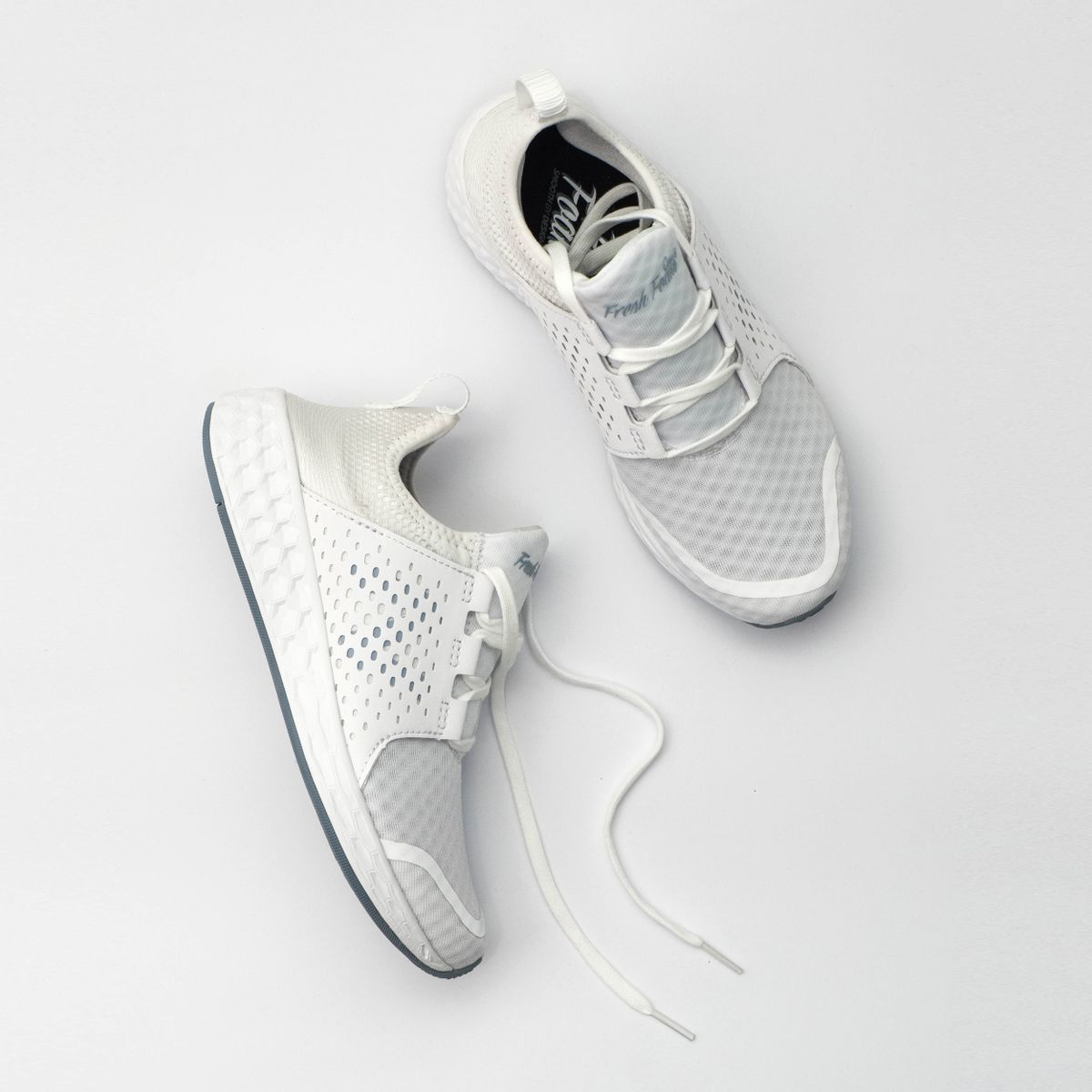
Look at the sole in that photo rather than the upper. The stack under the forefoot is what decides whether hour nine is bearable, and it’s the one thing a product page rarely mentions.
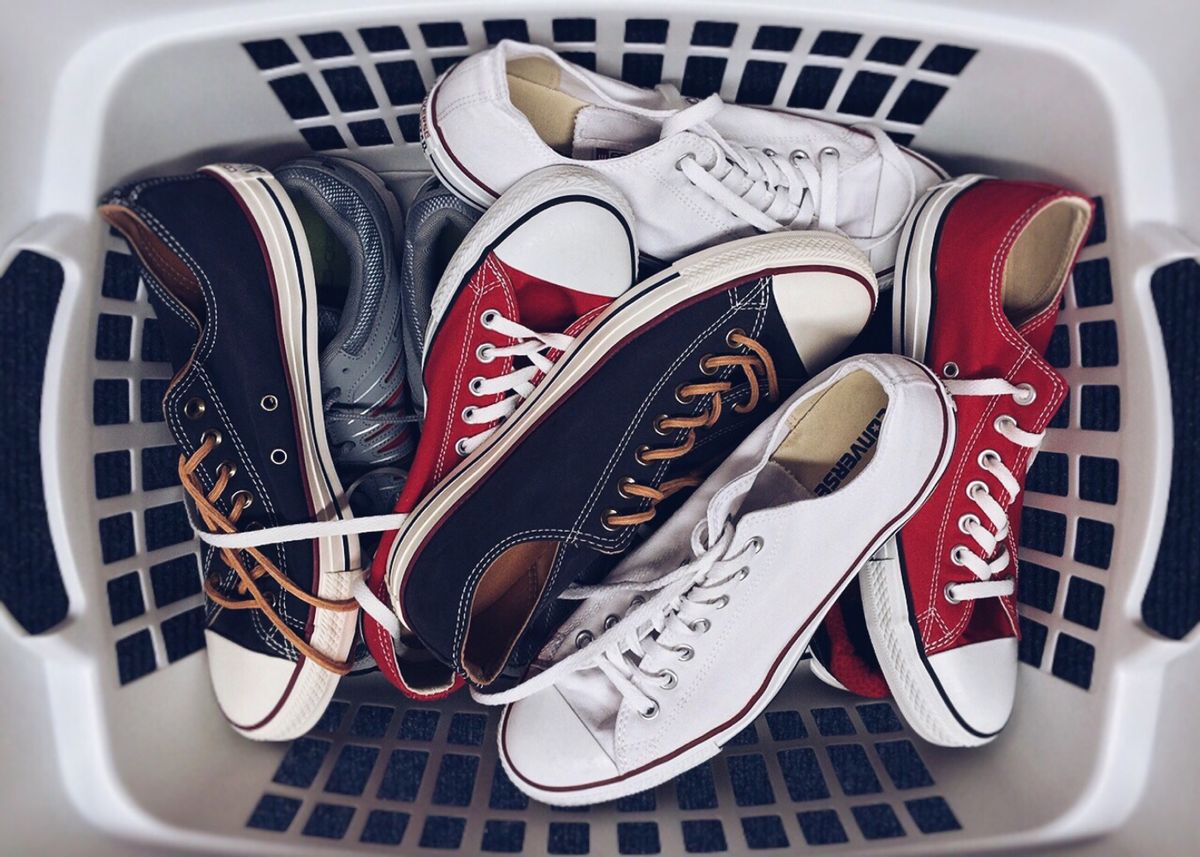
Grey is worth considering where the policy allows it. It hides scuffs better than black does on the toe, and it reads less like a school shoe than a plain black flat.
One last thing that rarely gets said: the shoes you wear to work are tools, and treating them that way makes the buying easier. Set a budget per year, buy two pairs instead of one, replace on tread depth rather than on looks, and stop trying to make a single pair do a twelve-hour shift and a night out. The cost-per-wear arithmetic on dressier pairs follows the same rule, and the wider heel range is where most uniform-compliant options live.
If you only remember one number from all of this, make it the heel: 30mm, block, wide base. It clears most dress codes and it’s still standing at 20:00.
