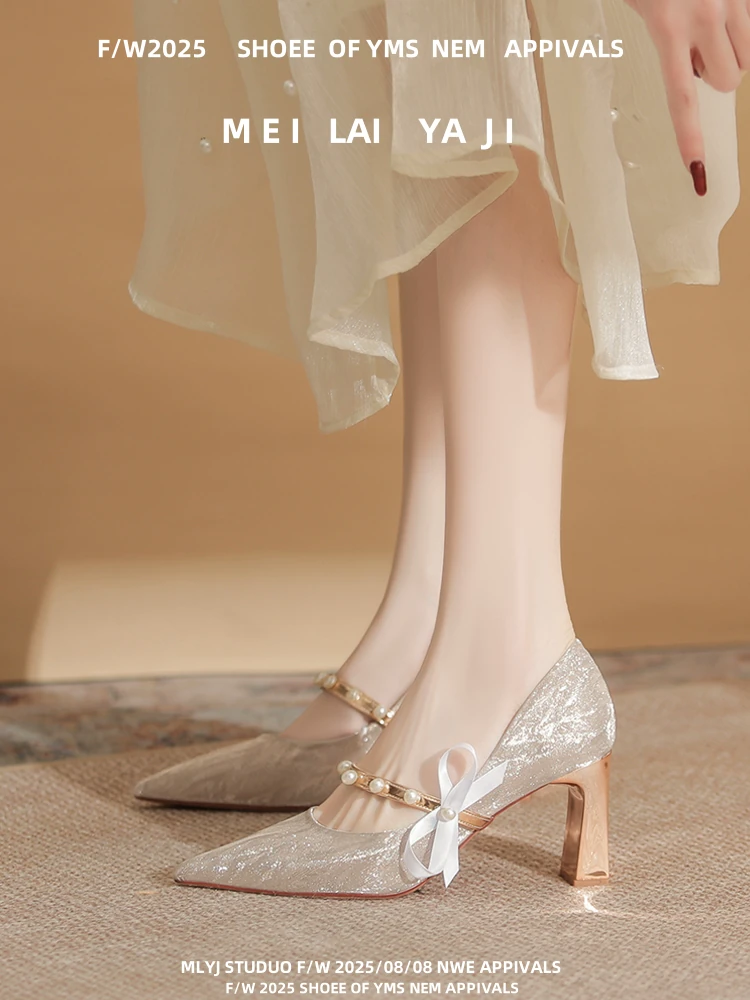
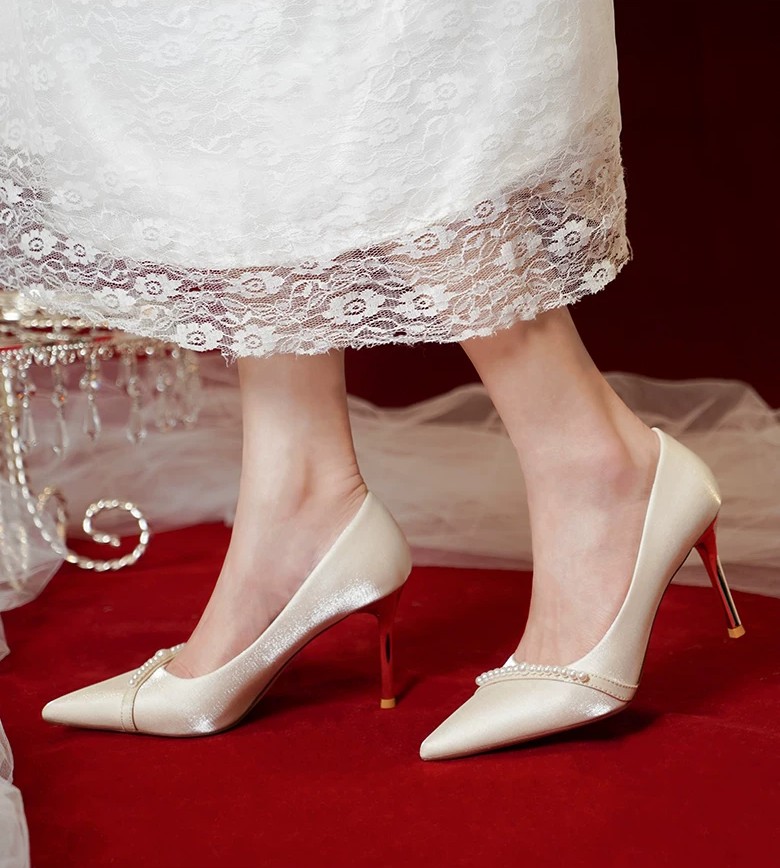
A pair of silver heels sits in a box for eleven months, gets worn four times in December, and then goes back in the box. That pattern repeats so often that the price on the tag tells you almost nothing about what the shoes cost. The useful number is price divided by wears, and for most silver pairs the second half of that sum is smaller than anyone expects.
Silver is the one metallic that photographs better than it looks in person, which is why it sells. Under shop lighting it reads as cool and expensive. In a hallway mirror at 7pm it can read as slightly grey. Understanding that gap is most of the buying decision, and the rest is arithmetic that takes about two minutes.
What a pair of silver heels actually costs per wear
Start with an honest wear count, not an aspirational one. Most people who own silver heels wear them between four and eight times a year. The occasions are narrow: weddings, a December party, a birthday dinner, maybe a black-tie event that comes up once. That’s the real number, and it’s the one to divide by.
The arithmetic looks like this. A €120 pair worn six times a year costs €20 per wear in year one. So does a €400 pair worn twenty times a year. Same number, very different shoes, and the second pair will still be wearable in year five while the first has started to peel at the heel.
Where it gets interesting is the third year. The cheap pair usually needs new heel tips by then, and the metallic finish on the counters has started to rub through. The expensive pair needs the same tips and nothing else. Tips cost about €8 to €15 fitted, so the gap closes slightly, but only slightly.
None of this means the expensive pair wins. It means the number to compare is not the price on the shelf. It’s price divided by the wears you’ll genuinely give it, plus whatever repairs come due. A €70 pair worn twice is worse value than a €300 pair worn twelve times, and nobody at the party can tell which is which from three metres away.
There’s a second cost that rarely gets counted: the outfit. Silver heels pull an outfit toward the dressy end, which often means a bag, a jacket, sometimes a second pair of tights. If buying the shoes means buying two other things to go with them, that belongs in the sum too.
Three owners silver heels end up with
After enough of these conversations, buyers tend to fall into three groups, and each one should be shopping differently. The distinction matters more than brand or budget.
- The once-a-year wearer. One wedding, one holiday party. Four wears total, maybe. This buyer should spend as little as possible on a pair that looks right in photos, and accept that it will look tired by the third outing.
- The December regular. Something on every second weekend from late November to early January, plus a summer wedding. Twelve to eighteen wears a year. This is the buyer who should care about heel stability and a finish that survives being wiped with a napkin.
- The person who actually likes silver. Wears it with jeans, to the office, on a Tuesday. Thirty-plus wears a year. For this group silver heels are not occasion shoes at all, and the whole calculation flips: buy the best pair available, because it’s about to become a workhorse.
Most people assume they’re in group two and are actually in group one. That’s not a criticism, it’s just how calendars work. Counting last year’s occasions in a calendar app takes thirty seconds and settles the question better than any amount of browsing.
Group three is smaller than the shops suggest, but it’s the group where silver genuinely earns its place. A silver heel with a 60mm block reads almost neutral against grey trousers, and it does something a black pump can’t: it stops a dark outfit from looking like a uniform.
When the cheap pair becomes the expensive one
The failure mode with cheap metallic shoes isn’t the sole falling off. It’s the finish. Metallic coatings on lower-priced shoes are usually a foil or a sprayed film over corrected-grain leather or synthetic, and that film starts to lift at the flex point across the toes. Once it lifts, it doesn’t go back. You get a pale patch on a silver shoe, and no polish matches it.
The second failure is the heel. A slim 90mm heel on a bargain pair is often hollow, which is fine until it catches a paving joint and snaps at the pin. Heel height itself is not the enemy; the narrowness of the heel tip is what changes how you walk, and a snapped pin isn’t always repairable. If it is, the repair can cost more than the shoe did.
Cheap also gets expensive in a quieter way: discomfort you tolerate. If the shoe pinches and you wear it twice and then never again, the cost per wear is whatever you paid divided by two. A €60 pair worn twice is €30 per wear. That’s the most expensive shoe in the wardrobe, and it’s the one nobody thinks of as a bad buy.
The flip side is real, though. Paying more doesn’t guarantee a better finish. What predicts it is the construction detail: a leather upper under the metallic layer, a stitched sole rather than a glued one, and a heel tip that looks like it’s meant to be replaced. Those three things are visible in about ten seconds if you know to look, and none of them require trusting a price tag.
There’s also a resale angle that changes the maths for the group-three buyer. A well-kept pair of silver heels from a recognised maker holds a chunk of its value, which means the effective cost of ownership drops again. A cheap pair resells for nothing. That’s not a reason to buy for investment, but it’s a reason not to assume the cheaper option is the frugal one.
The shade matters more than the brand
Silver is not one colour. There’s bright chrome, soft pewter, warm champagne, and a gunmetal that’s nearly grey. All four get sold as silver, and they behave completely differently against skin and against fabric.
Bright chrome reflects everything, including the floor, so it picks up a greenish cast in a room with a carpet and a yellowish one under warm bulbs. Pewter is flatter and reads closer to grey, which makes it the most wearable of the four for daytime. Champagne sits warm and photographs beautifully next to ivory, which is why bridal ranges lean on it. Gunmetal is the safest of all if the rest of the outfit is dark.
What makes a metallic finish read as metal is the way the surface scatters light rather than absorbing it, and that scattering depends on the size of the particles in the coating. Fine particles give a soft sheen. Coarse ones give sparkle, and sparkle is what looks cheap under a phone camera at a party.
So when comparing two pairs, look at them from two metres away rather than up close. The one that still looks like metal from across a room is the better buy, whatever the particle technology on the label says.
Warmth is the other variable. If your skin has yellow or olive undertones, champagne and soft pewter will flatter more than chrome. If it’s pink or cool, chrome and bright silver will look sharper. That’s not a rule anyone enforces, but it explains why the same shoe can look expensive on one person and slightly off on another.
There’s also a practical reason to prefer the softer shades. Chrome shows every fingerprint and every scuff, because the contrast between the bright surface and any mark is high. Pewter and champagne hide the same damage. If the pair is going to be worn often rather than photographed once, that alone is worth the switch. A warm champagne pair with a softer finish will look newer for two seasons longer than a mirror-bright one, and it works with more of what’s already in the wardrobe.
Re-tipping, resoling, and the number that decides
Heel tips are the cheapest repair in shoemaking and the one people skip. A worn tip exposes the plastic pin underneath, the pin wears unevenly, and the heel starts to lean. A leaning heel changes how you walk, which changes how the shoe wears, which is how a €200 pair becomes unwearable in eighteen months.
Replacing tips costs very little and takes a day. Doing it once a year on a pair worn weekly is the single highest-return habit in a shoe wardrobe. It’s also the reason a pair of silver heels can sit in a box for three years and still be fine: nothing wears while it’s in the box, provided it’s stored dry.
Resoling is the bigger decision. On a cemented sole, a cobbler can usually add a protective half-sole rather than replace the whole thing, which extends life for a modest cost. On a stitched sole the full repair is straightforward. On a moulded synthetic sole neither option is clean, and that’s the point where the arithmetic stops working.
Two things worth checking before any repair:
- Is the upper still sound at the flex point? If the finish has lifted, a new sole won’t save it.
- Is the heel straight when the shoe is on a flat surface? A lean of more than a couple of millimetres usually means the pin is bent, not just the tip.
If both answers are yes, repair. If either is no, the money is better spent elsewhere, and the honest cost per wear of that pair has already been decided.
The December problem, and what to do about it
Silver heels have a seasonal spike that no other colour has. Between late November and New Year, they go from occasional to constant, and then stop dead. That spike is where most of the wear happens, and it’s also where most of the damage happens, because parties involve standing on pavements in the cold, taxis, crowded floors, and other people’s shoes.
Three things protect a pair through that month. Wipe the metallic finish with a dry microfibre cloth the same night, before anything sets. Keep them out of the boot of a car, where cold and condensation do quiet damage. And don’t wear the same pair to three events in a week; give each pair a day to dry out, because moisture inside the shoe is what softens the counter and starts the heel slip.
There’s a workaround for the seasonal spike that costs nothing: buy silver in a shape you’d wear in daylight. A pearl and silver pair with a lower heel gets worn to lunch, to the office, to a school event, and the wear count climbs from six to twenty without any extra spending. That’s the whole trick with metallics. The colour isn’t the problem. The shape is.
For the pure evening version, the ones that only work with a dress, the sensible strategy is the opposite: accept low wear, buy accordingly, and put the saved money into the pair you’ll wear fifty times. A pair like these crystal-detailed heels for a single formal evening are bought for one night, and pretending otherwise is how people end up with a shelf of unworn shoes.
One more seasonal note, because it costs people money every year. Silver worn with black tights in December looks different from silver worn with bare legs in June. The contrast goes up, the metallic reads harder, and the same pair that looked soft in summer looks a bit sharp. If most of your wears will fall in winter, try the pair on with the tights you’ll actually wear. Half the returns in January happen because nobody did that in November.
A buying test that takes ninety seconds
Before paying, do these five things in the shop, in this order. If the pair fails two of them, it fails.
- Put both shoes on a flat surface and look along the heel. Any visible lean at this stage gets worse, not better.
- Flex the shoe at the ball, gently. There should be some give. A shoe that won’t flex at all will make your foot do the flexing.
- Press a thumbnail into the metallic finish near the toe crease. If it lifts or shows a lighter layer underneath, the finish is a film and it will peel there.
- Stand and shift your weight to the balls of your feet. If your toes curl or grip, the heel pitch is too steep for you, whatever the millimetre figure says.
- Walk ten steps on a hard floor. Listen. A clicking or rattling sound means a loose heel block, and that’s a return, not a repair.
If you’re buying online and can’t do any of that, the fallback is the return window. Order, try them on carpet for two minutes, and send them back if the heel leans or the finish feels like a film. A shop that won’t take returns on shoes is telling you something about the shoes.
Photographs are the other trap. Product shots are lit to make metal look like metal, and stock images are frequently taken under a softbox aimed straight at the toe. Daylight is the only test that matters, so if the pair arrives in the morning, look at them by a window before you decide. Two minutes at the window is worth more than twenty reviews.
Care, once they’re yours, is mostly about the finish. Metallic coatings don’t take polish; they take a dry cloth and, on a scuff, the tiniest amount of colourless cream. The rules for keeping a high-shine finish from going dull apply here too, and the mistake to avoid is the same: aggressive products that strip the surface layer.
One testing habit that costs nothing: wear the pair around the house for an hour in the evening, when your feet are at their largest. If the toes press at that point, they’ll press at every party. If they’re fine at 9pm, they’re fine.
Storing them is simple. Tissue in the toe, dust bag, out of sunlight, heel down. Silver that’s kept in a plastic box in a warm room dulls faster than silver that’s kept in a cotton bag in a cupboard, and the difference shows up within two seasons.
If you want to compare shapes and heel heights before committing to a colour, the honest starting point is the full heels range rather than a single product page, because the shape you’d actually wear is usually one category over from the shape you searched for.
So the question isn’t whether silver heels are worth the money. It’s how many times you’ll put them on, and whether the answer changes if the heel is 60mm instead of 100. For most people, the second answer is the one that turns a display shoe into a pair that gets worn out properly.