

It’s 8:10 on a Tuesday, you’ve got a meeting at ten and a wedding at four, and the pair by the door is already pinching the outside of your little toe. You haven’t left the hallway yet. That’s usually the moment people start looking at women’s square toe heels, and it has nothing to do with a trend report.
Short version first: a square toe gives you roughly 4 to 6mm more room at the widest part of the foot. On a long day that’s the difference between walking and wincing.
Everything else, the shape, the heel height, the outfit math, comes after that one fact. So let’s start with the foot and work outward.
What a square toe actually does to your foot
Your foot spreads when you stand. The metatarsal heads, the five knobs just behind your toes, widen by a few millimetres under body weight. A pointed toe squeezes them back together. A square toe lets them sit closer to where they’d sit barefoot, which is why women with a wider forefoot tend to describe square pairs as “suddenly comfortable” rather than “broken in”.
The shape has a long history in women’s footwear, and the history of the high-heeled shoe is a decent place to see how toe shapes keep cycling back. What matters for you is the geometry, not the era.
Here’s what the extra room does in practice:
- Less sideways pressure on the big toe joint, which is where bunions get aggravated
- No curling of the smaller toes, so no rubbing on the outer edge
- More surface area under the ball of the foot, which spreads pressure instead of concentrating it
That last point is the one people miss. A square toe is not a comfort feature by design. It’s a comfort side effect. The shape was never invented to be kind to feet, it just happens to leave more room than a pointed toe does at the same length.
There’s a measurement worth remembering here. A standard women’s medium width runs about 85 to 90mm across the ball of the foot at the widest point. A pointed toe at that same width narrows to roughly 55mm by the time it reaches the toe, and your toes have to fold to fit. A square toe keeps closer to 70mm at the front edge. That 15mm difference is the whole argument in one number.
Now the part nobody says out loud. A square toe does nothing for heel height. If you put a 100mm heel on a wide toe box, your calf still shortens and your forefoot still takes the load. The toe shape fixes one problem. It doesn’t fix the slope.
So when you try a pair on, check two things separately. First, wiggle your toes. If they move freely, the toe box is doing its job. Second, stand still for a full minute and notice your arch and calf. If those complain, the heel is the issue, not the toe.
How square is too square?
This is where most buying mistakes happen, because “square toe” covers three pretty different shapes.
Soft square. The front edge is barely flattened, maybe 20mm of straight line across the toe. It reads almost pointed from a distance and works with everything a pointed pair works with. Easiest starting point if you’re unsure.
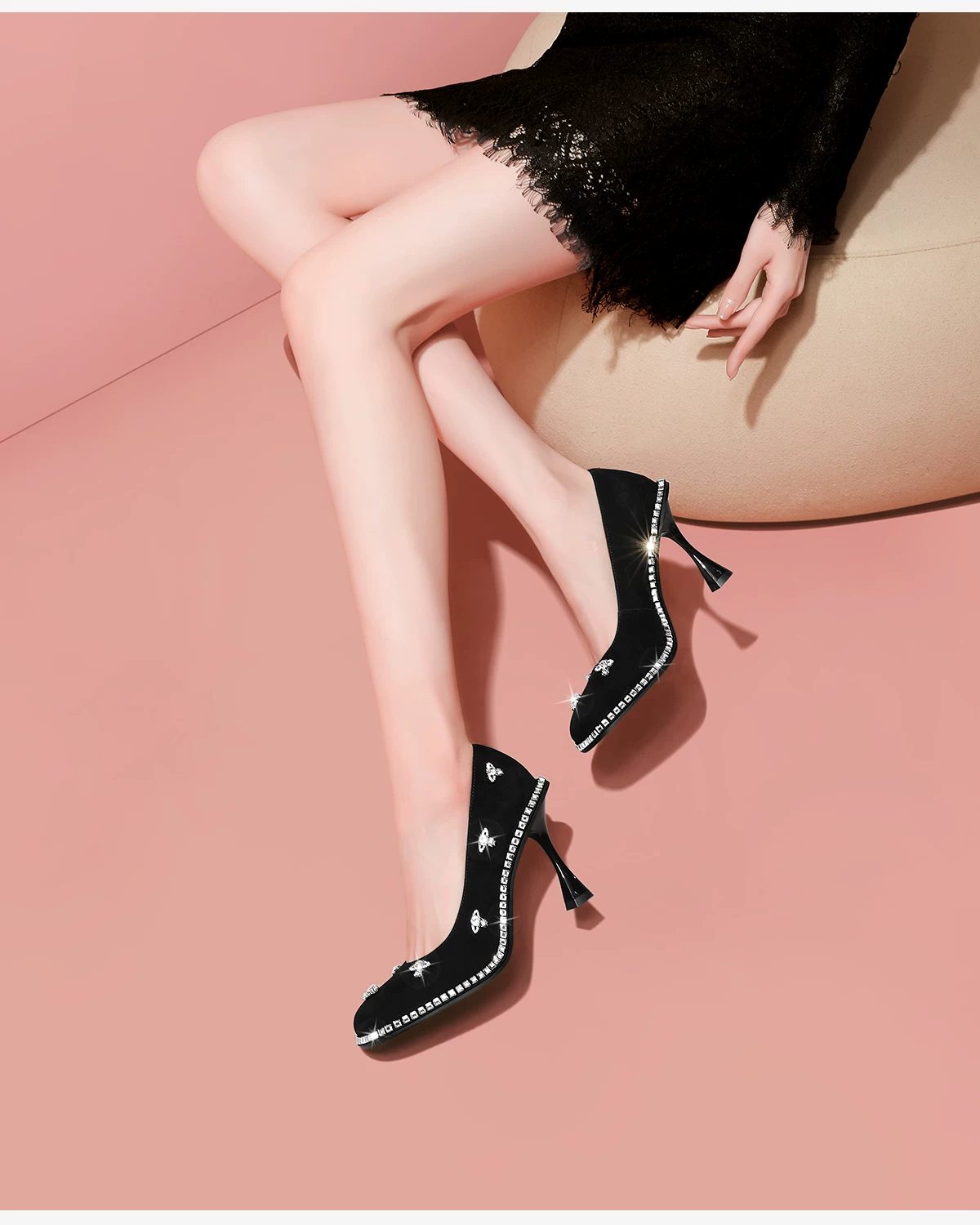
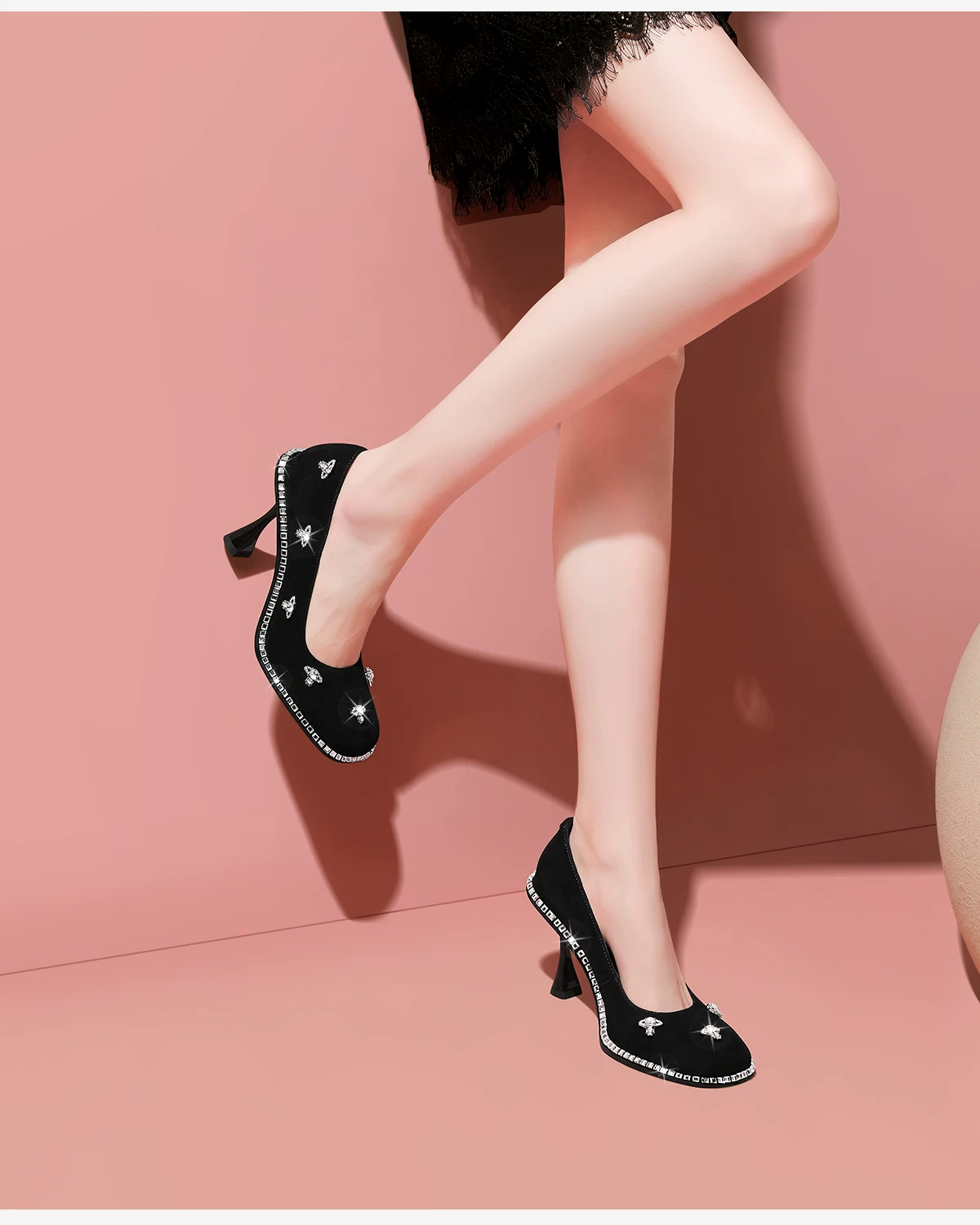
True square. A clear flat edge, corners slightly rounded. This is the version you see on most women’s square toe heels in shops right now. It looks deliberate and modern, and it plays well with straight-leg trousers.
Wide square. A boxy front that’s visibly wider than your foot. Great with wide feet, harder to style. On a short leg it can visually cut the line of the foot, which makes you look shorter than you are.
My rule after trying all three: match the toe width to your actual forefoot, not to the photo. If the shoe is wider than your foot by more than about 6mm on each side, you’ll get a gap that catches the light and reads cheap.
There’s a second rule about length. A square toe needs your longest toe to sit at least 8mm back from the front edge. Less than that and the corner of the box presses down on the toe when you walk. More than 15mm and the shoe starts to look like a boat.
One more thing to look at: the seam. A square toe with a visible top seam right where your toes bend will crack within a season on cheap leather. Run your thumb across that line. If it feels stiff, walk away. The same instinct applies to pointed high heels with a shallow vamp, where a stiff front edge cuts into the toes even faster.
Sizing: the 5mm rule nobody tells you
Square toes run differently from pointed toes, and it’s not consistent across brands. Some run true, some run a half size long because the box adds visual length.
Do this instead of guessing. Try the pair at the end of the day, when your feet are at their largest. Bring the socks or tights you’ll actually wear. Then check three measurements with your thumb: space at the front, space at the sides, and heel grip.
Front space should be 8 to 12mm. Side space should be zero, meaning the shoe touches your foot without pressing. Heel grip means your heel lifts less than 5mm when you walk.
If the front is right but the heel slips, size down and accept a snug toe. If the heel grips but the front is tight, size up and add a thin insole at the back. Never size up to fix a heel that slips sideways.
Wide feet need one extra step. Measure your forefoot width while standing, then compare it to the insole width in the listing. A lot of listings give insole length only, so ask the seller for width. Two centimetres of width difference is a whole size, and no amount of breaking in fixes it.
And here’s a small confession. I bought a pair of square toe heels half a size up last spring because the shop had nothing else, and they flopped off my heel for three months until I gave them away. Sizing up is not a fix. It’s a delay.
Which outfits survive a square toe
The shape reads architectural, so it pairs best with clothes that have some structure. Straight-leg jeans, tailored trousers, a midi skirt with a defined waist. All of those give the toe something to argue with.
What tends to fail is anything very dainty. A bias-cut slip dress with a wide square toe looks like two outfits stapled together. Same for slim cigarette trousers with a long break, because the boxy toe and the tapered ankle fight each other.
A few combinations that consistently work:
- Dark straight jeans, cropped at the ankle, with a 60mm square toe in black leather
- Wide-leg wool trousers and a soft square toe in the same colour family as the trouser
- A knee-length skirt with a rhinestone square toe pair on a slim heel, if you want the toe to carry the outfit
Colour matters more than most guides admit. A nude square toe looks heavier than a nude pointed toe because there’s more material visible from above. If you want the leg-lengthening effect, pick a shade within one step of your skin tone, and read how beige heel shades read against skin tone before you order online. Getting that wrong is the single most common reason a neutral pair sits in the box.
Black is the safe bet for the office. If you want the toe to disappear rather than announce itself, look at the women’s shoe styles sorted by category and filter by how much toe box you actually want.
Strap placement and heel height math
Heel height changes what the square toe can do. At 50 to 60mm, the foot sits fairly flat and the toe box does most of the comfort work. From 80mm up, the load shifts forward and the toe box starts acting like a brake, which is good, but the front edge has to be long enough to hold your toes in place.
Seventy millimetres is the number I’d recommend to most people. It’s high enough to change your posture and low enough to walk a kilometre without planning a sit-down.
Straps are the second variable. An ankle strap keeps the heel locked, which matters more with a square toe because the box is heavier and the shoe can pivot. A slingback does the same job with less visual weight but needs a snug fit at the heel cup, not just at the strap.
Two quick checks before you buy:
- Walk ten steps on a hard floor. If you hear a slap at the heel, the strap or the heel cup is wrong
- Stand on tiptoe. If your toes slide forward and hit the front edge, the shoe is too short
Platforms change the math again. A 20mm platform under a 90mm heel gives you the posture of 90mm with the ankle angle of 70mm. That’s a real advantage for anyone who wants height without the calf strain, and it’s why platform square toes have quietly become a practical choice rather than a statement one.
The one combo I’d avoid is a wide square toe with a very thin 90mm stiletto heel. The visual weight is all at the front and the support is all at the back, and the shoe looks like it’s about to tip forward even when it isn’t.
The 15-minute break-in test you can do at home
You can learn more about a new pair in fifteen minutes at home than in an hour walking around a shop, mostly because shop carpet hides everything. Put them on with the tights or socks you plan to wear, then set a timer and do four things in order. None of this needs special equipment and none of it damages the shoe.
First, walk up and down a hard floor for five minutes. Listen for the slap at the heel and feel for the moment your toes slide forward. If your toes hit the front edge on the flat, the pair is short, and no amount of wear will add length. Second, stand still for three minutes and shift your weight slowly from the outside of each foot to the inside. You’re checking whether the front edge digs into the top of your toes, which is a shape problem rather than a size problem.
Third, sit down and cross one leg over the other for two minutes. A square toe tends to gap at the sides when the foot relaxes, and that gap is what rubs later. Fourth, walk up a short flight of stairs, if you have one. Stairs are the fastest way to find a heel cup that’s too shallow, because your heel will lift and drop with every step.
If any of those four checks fails, stop. Wearing them around the house for a week won’t fix a short toe box or a shallow heel cup, and once you’ve scuffed the sole you’ve usually lost the return. If all four pass, you can wear them out the next day with a bit of confidence, and keep a couple of blister plasters in your bag for the first long walk anyway.
One last tip that costs nothing. Wear the new pair for the first time on a day when you can sit down every hour, not on a day with a 40-minute standing commute. Give the leather a chance to mould at the flex point before you ask it to survive eight hours straight.
Where they fail, and who should skip them
Square toes aren’t a universal upgrade, and pretending otherwise wastes your money.
They photograph wider than they look in person. If you’re buying for a specific event with a lot of photos, try a soft square instead of a true square. The camera exaggerates flat front edges.
Cheap PU square toes crease badly across the top seam within weeks, and the crease sits right where your toes bend, so you see it every time you look down. Leather creases too, just later and more gracefully.
Rain is the third problem. A wide toe box holds water at the front and takes longer to dry than a pointed pair, which matters if you commute on foot. Treat leather pairs before the wet season and skip suede entirely for autumn.
Open fronts have their own traps, and the fit logic there is closer to the open toe opening that stops toes spilling over the edge than to anything a closed square toe does.
Who should skip them? Anyone with a very narrow forefoot, because the extra width turns into a gap that rubs. Anyone who needs a formal, sharp silhouette for work, since a true square toe reads more fashion than boardroom. And anyone with a short leg who wants the elongating effect of a pointed toe, because the flat front edge works against that.
Care is simple. Wipe the front edge after wear, since that’s where scuffs land first. Store them with the toe box supported so the shape doesn’t collapse. And rotate them with at least one other pair, because wearing the same square toe five days a week flattens the leather at exactly the same two points.
If you’ve been living in pointed pairs and your toes hurt by Thursday every week, a square toe is worth one honest try. Buy one pair in a mid heel, in a colour you already wear, and wear them for a full workday before you decide anything. Your little toe will give you a straighter answer than any review will.
