

The first cold rain of November hits, you pull on the boots you bought last winter, and by the time you reach the bus stop your heel is sliding sideways with every step. Nothing is broken. The boots just were never built to be walked in.
That’s the trap with female boots with heels. They look sturdy in the photo because there’s more material on them. Underneath, the heel is glued on at an angle that only works when you’re standing still.
Here’s what to check before you spend a winter in a pair. It takes about ten minutes in the shop and saves you four months of regret.
What a heeled boot has to do that a pump doesn’t
A pump carries your weight for two hours at a time, mostly indoors, mostly sitting. A boot carries it across wet pavement, up and down stairs, and through a full working day. That changes what the shoe has to do.
The biggest difference is torsional stiffness. Your foot twists slightly with every step, and a boot has to resist that twist without locking your ankle. Cheap heeled boots fail here first. Grab the toe and the heel and try to twist the boot like a towel. Some give is fine. If it folds easily, the shank is cardboard and your arch will feel it by 3pm.
The second difference is where the load lands. In a pump, the ball of your foot takes almost everything. In a boot with a heel of 60mm or more, the shaft can share some of that load if the fit is close at the ankle. If the shaft is loose, the boot swings and the ball of your foot does all the work anyway.
Third, a boot has to keep water out at the sole seam. That’s the weakest point on almost every pair under about 90 dollars, and it’s invisible until the first rainy day.
Read the construction history of the boot and you’ll see the shape was originally workwear. The heel existed to keep the foot out of mud, not to add height. Modern heeled boots borrow the look and skip the engineering, which is why so many of them feel wrong after an hour.
Shaft height: measure your calf, not your leg length
Most buying guides give shaft height in centimetres and leave it there. That number tells you almost nothing on its own. What matters is where the top edge lands on your leg.
Measure your calf circumference at its widest point while standing. Then measure the circumference of the boot opening in the listing. If the boot opening is more than 30mm wider than your calf, the shaft will slouch and rub. If it’s smaller, you won’t get the zip up over tights.
Height-wise, three ranges cover most people:
- Ankle boots, 8 to 12cm shaft, sit below the ankle bone and work with almost any trouser
- Mid-calf boots, 20 to 30cm shaft, hit the widest part of the calf and are the least forgiving fit
- Knee-high boots, 38 to 45cm shaft, need your calf measurement or they will not zip
Mid-calf is the range I’d avoid unless you can try them on. The top edge lands exactly where the calf swells, so a 10mm error shows up as a visible gap or a tight band. Ankle boots and knee-highs are more forgiving because the top edge sits on a straighter part of the leg.
One detail worth checking: whether the shaft has a stretch panel at the back. A 40mm elastic gusset buys you roughly one clothing size of adjustment, and it’s the difference between a boot you wear all winter and one you wear twice.
Heel placement decides whether you can walk
Heel height gets all the attention. Heel position matters more.
Put the boot on a flat surface and look from the side. The heel should sit directly under your own heel bone, not behind it. If the heel block is set back by more than about 15mm, every step becomes a small forward tip and your toes claw to compensate.
Width of the heel base is the second thing. A 25mm stiletto on a boot is a balancing act, even on carpet. A 40mm block gives you a stable platform and looks less heavy than people expect, especially on an ankle boot with a tapered toe. If you want height with stability, a thick heel pair that spreads load across the heel block is a much better winter bet than a slim one.
Angle matters too. A boot with a 90mm heel and a 20mm platform behaves like a 70mm heel because the ankle angle is the same. That’s not a marketing trick, it’s geometry, and it’s why platform boots feel easier than their height suggests.
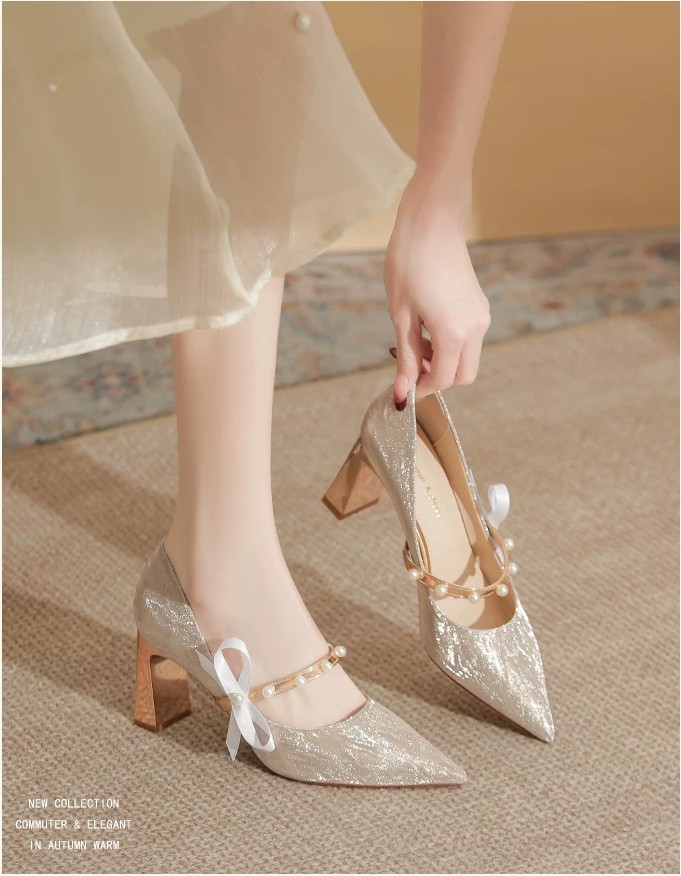
Sole grip in wet weather (the bit brands skip)
Almost no product page tells you the sole compound. That’s a problem, because smooth rubber on wet paving is the single most common reason people stop wearing a pair of heeled boots.
Turn the boot over. You want a sole with visible tread depth of at least 3mm at the forefoot, and a heel tip that isn’t a hard plastic cap. Hard plastic tips are what make that clicking sound on tile, and they’re also what slides on wet stone.
Two cheap fixes if you already own a slippery pair. A cobbler can fit rubber heel tips for a few dollars, and a stick-on anti-slip pad at the forefoot costs less than a coffee. Neither looks elegant from underneath, but nobody sees the sole.
Leather soles are the other trap. They’re beautiful in a shop and dangerous in rain. If your pair has a leather sole, get a thin rubber half-sole fitted before the first wet week, not after the first fall.
And if you commute on foot, pay attention to the heel-to-toe drop when you’re walking downhill. A boot with a 90mm heel and no platform forces your toes into the front edge on any slope. That’s the moment most people decide the boots are “uncomfortable” when really they’re just badly shaped for hills.
Sizing for tights, socks, and swollen ankles
Boot sizing has one extra variable that shoe sizing doesn’t: what you’ll wear inside. A pair that fits over bare feet in September may not zip over 80-denier tights in January.
Try boots on with the thickest sock you realistically wear, and do it in the afternoon. Feet swell by up to 5% over a day, and ankles swell more than feet do. Shopping at 10am is how people end up with boots that feel tight by dinner.
Then run this sequence:
- Zip up fully and stand. The shaft should touch your calf without pressing a line into it
- Walk ten steps. Your heel should lift less than 8mm inside the boot
- Go up and down a step. If the back of the boot digs into your Achilles, the shaft is too tall for your leg
If the length is right but the calf is tight, look for a wide-calf version before you size up. Sizing up to fix a calf gives you a boot that’s too long in the foot, and you’ll feel it every step.
Half sizes are worth hunting for. Most heeled boots are sold in whole sizes, and a 5mm difference at the heel is the difference between locked in and sliding. If you’re between sizes, take the smaller one when the shaft is elastic and the larger one when it’s rigid leather.
One more thing about leather versus synthetic. Leather gives about 2 to 3mm over the first month. PU doesn’t give at all. If a synthetic pair feels snug in the shop, it will feel snug in March too, just with more creases.
Break-in: the two-week plan that works
Heeled boots rarely need breaking in at the foot. They need it at the shaft and the heel counter, and that takes a different approach from walking around the block.
Week one, wear them indoors for 30 minutes a day with thick socks. That’s it. You’re softening the leather at the flex point behind the ankle, not testing your endurance.
Week two, wear them outside for short trips of under an hour. Bring a spare pair of flats in your bag the first two times. If the boot starts rubbing the Achilles, change shoes instead of pushing through, because that particular rub turns into a blister fast and takes a week to heal.
Skip the hairdryer trick. Heating leather to force it to stretch weakens the finish and can crack the shaft where it bends. If the shaft is genuinely too tight, take it to a cobbler who can stretch it evenly on a proper machine.
Also treat the leather before the first wet day. A basic water-repellent spray applied to clean, dry boots takes five minutes and buys you a season of not worrying about salt stains. Reapply every six to eight weeks through winter.
Which heel height to buy first
If you’re buying one pair and want it to cover as much of winter as possible, 60mm is the practical answer. It’s tall enough to change how trousers hang and low enough that a 20-minute walk to the station doesn’t wreck your calves. Fifty millimetres is the safer choice if you’re on your feet all day, and 70mm is where the walk starts to need planning.
Above 80mm, the shaft starts doing strange things to your gait. Your knee straightens more, your step shortens, and the boot’s top edge presses into the calf on every stride. That’s not a fit problem you can solve with a bigger size. It’s the height working against the shape.
There’s also a body-proportion effect people don’t always expect. A tall woman in a 90mm heeled boot can end up looking like she’s on stilts, especially in photos where the boot shaft is the same colour as the tights. If you’re over about 175cm, 50 to 60mm usually looks more balanced, and the height maths for tall frames is worth a read before you order.
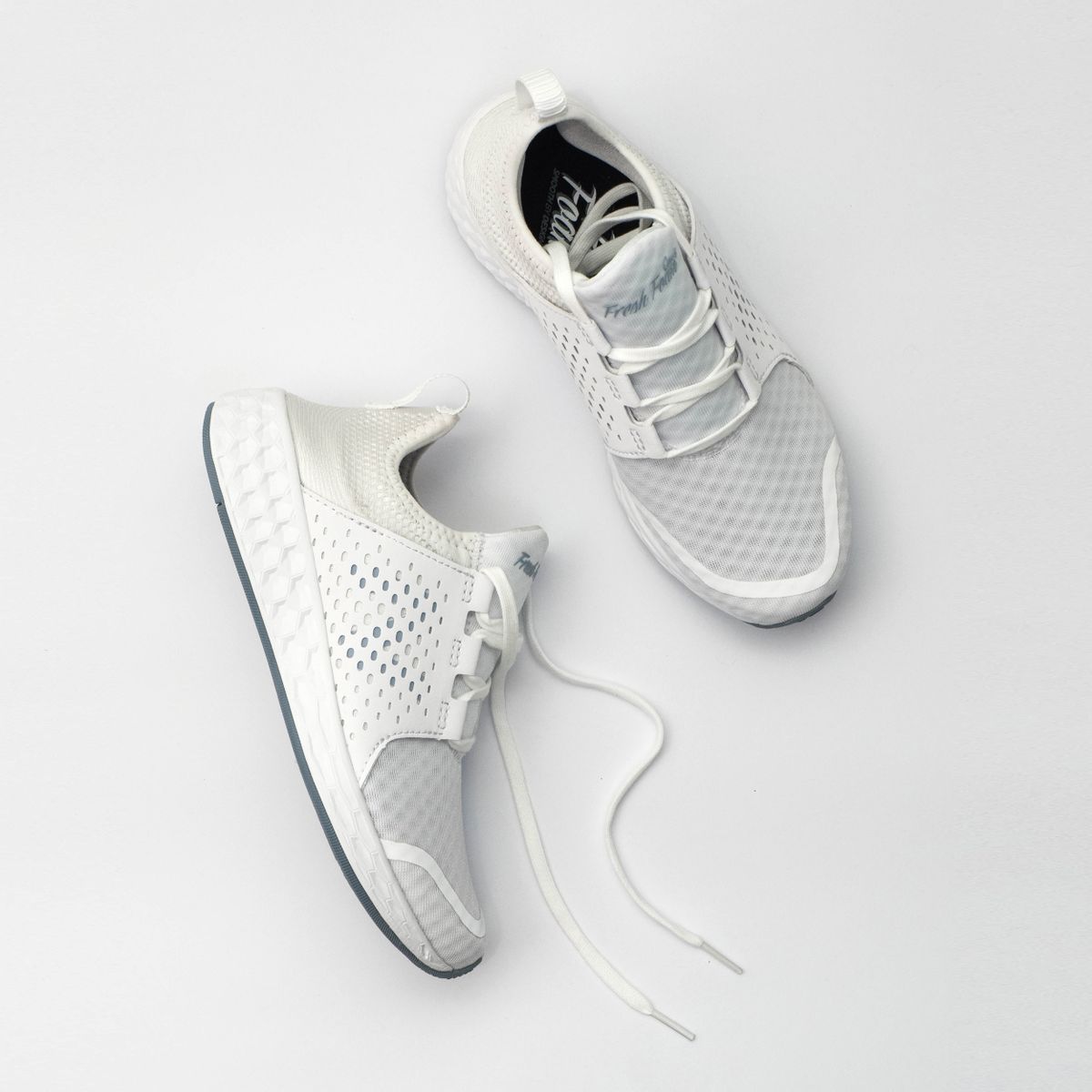
Colour plays a part in how tall the boot reads. A black boot with black tights gives one continuous line, which adds height. A contrast boot with bare legs cuts the line at the ankle. Neither is wrong, but if you’re buying one pair to make your legs look longer, match the boot to your tights rather than to your coat.
And think about the heel tip before the heel height. A 60mm boot with a worn plastic tip feels worse than a fresh 80mm, because you’re walking on a sloping surface. Replaceable tips cost little and change everything about how a boot handles.
When to skip heeled boots entirely
Some situations don’t call for them, and forcing it wastes money.
Walking more than 6,000 steps a day on your commute makes a heeled boot the wrong tool no matter how good the shank is. Flat boots with a proper sole will serve you better, and you can keep the heeled pair for desk days.
Anyone with plantar fasciitis or a healing ankle injury should skip them this season. The rigid shaft that helps most people can press exactly where you don’t want pressure, and a 70mm heel changes how your fascia loads. Get the injury settled first, and read up on plantar fasciitis loading before you go back to heels.
Live somewhere with ice and heeled boots become a genuine hazard. No sole compound grips properly on ice, and a narrow heel gives you a very small contact patch. Wear them to the office and change shoes there if you must.
For evening pairs, the same rules apply but with less margin. A satin black heel with a slim profile will not save you on wet cobbles, so keep those for cars and doorways. Browse the the full shoe catalogue by style if you want to compare bases side by side, and if laces are part of the design, check where the ties need to sit on a lace-up pair before you commit.
One last honest note. Heeled boots photograph better than they feel, and that gap is widest in the mid-calf styles everyone pins on Pinterest. If you want one pair that earns its space by the door, pick an ankle boot with a 60 to 70mm block heel, a rubber sole, and a stretch panel. Then measure your calf before you order the knee-highs, not after they arrive and won’t zip.
