

Your toes have been complaining since the last wedding. Pointed shoes pinch the joint, square toes look like you borrowed them from a different decade, and you’ve started wondering why nobody makes a heel that’s just… foot-shaped.
They do. It’s the round toe, and it’s been in production for about four hundred years without ever going out of style. It just doesn’t photograph as well as a pointed one, so it never gets the campaign.
Here’s what round toes actually do well, where they fail, which of the three shapes to buy, and how to wear them without looking like you’re on your way to a christening.
The oldest shape in the closet, and the least examined
Round toes predate every other last shape still in use. Long before heeled footwear became a fashion object, shoes were built to follow the outline of a foot, and feet are round at the front.
What that means practically: a round toe asks your forefoot to do nothing. No taper, no pinch at the joint, no curling of the little toe. On a foot with a wide ball or a tender joint at the base of the big toe, that’s not a small difference. It’s the difference between wearing a shoe for an evening and wearing it for a living.
It also explains why round toes are over-represented in comfort ranges and under-represented in editorials. They’re not photogenic in the way a stiletto is, because there’s no sharp line to catch the light. Photographers want geometry. Feet want room.
If the joint itself is the problem rather than the shoe, it’s worth understanding what pressure from a narrow toe box does to the big toe joint over a few years.
Two things to know before you shop. First, round doesn’t mean shapeless: a well-cut round toe still has structure across the vamp, and a badly cut one collapses and looks like a slipper. Second, round doesn’t mean flat: this shape works at 70mm as easily as at 20mm, and most of the comfort reputation comes from the toe, not the heel.
Three rounds: almond, true round, and bubble
The word covers a wide range, and picking the wrong branch is why some people think round toes look childish.
Almond. A soft point, wider than a pointed toe but still tapering. Visually the most elegant of the three and the closest to a classic pump. If you want one pair that works for work and for dinner, buy almond.
True round. A half-circle front, no taper at all. Maximum room, minimum sharpness. It reads slightly vintage and works best in suede or a matte leather, because a shiny true round toe looks like a school shoe.
Bubble or balloon. Round and slightly puffed, wider than the foot needs. Fashion-forward, very distinctive, and unforgiving of a wide ankle or a heavy calf because it adds volume right where you don’t want it. Buy it as a statement, not as your daily pair.
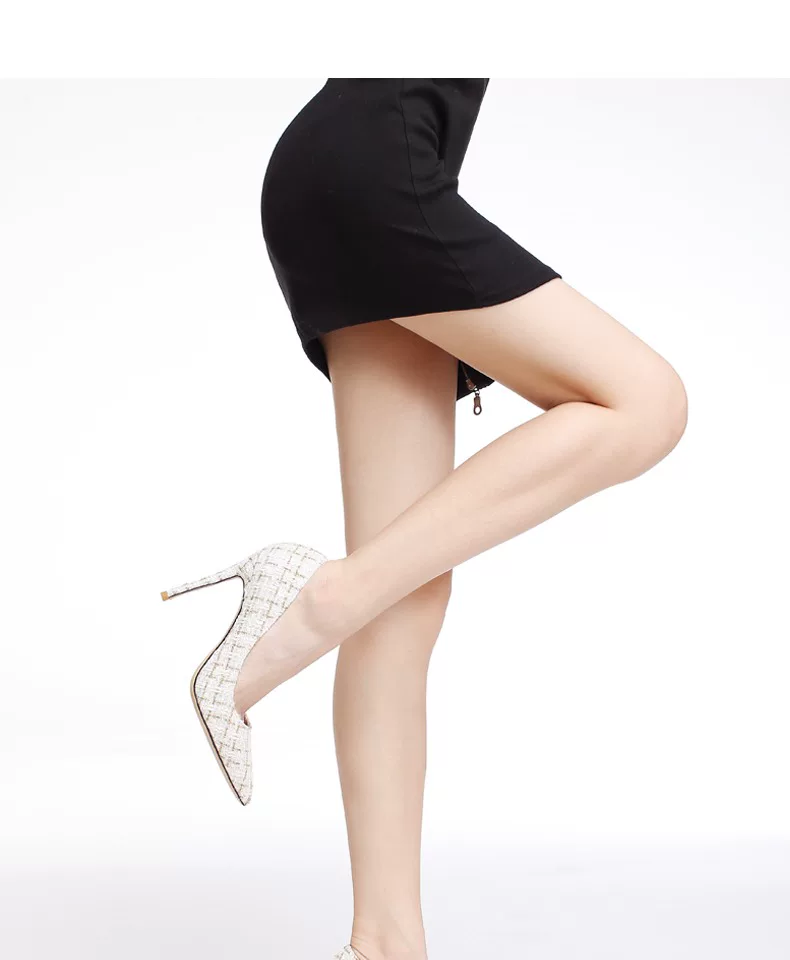
Then there’s the toe-spring question, which nobody explains. Look at a round toe shoe from the side: the tip should lift 10 to 15mm off the surface. With no spring, the toe drags and wears through in a month. With too much, you’ll catch it on stairs. Pointed shoes hide this because the tip is far forward. Round shoes show it immediately.
Finally, the vamp height. A round toe with a low vamp shows a lot of toe cleavage and reads summer. A round toe with a higher vamp reads winter and office. Same shape, different shoe, and the difference is about 10mm of leather.
Heel height: round toes carry more than you think
The received wisdom is that round toes belong on low heels. That’s only half true. A round toe can carry 70mm perfectly well, and it does it with better balance than a pointed toe at the same height, because the wider base at the front gives your foot more to push against.
Where it goes wrong is proportion. If you want the sharper, more graphic version of this debate, why a square toe box changes the fit covers the other end of the spectrum. At 90mm and up, a round toe starts to look like a golf tee: narrow stem, wide top, slightly comic. That’s the version people photograph and then describe as “cute”, which is rarely the goal.
What works, from low to high:
- 20mm to 30mm. Travel, long days, anything involving a train. This is the height where round toes are genuinely unbeatable.
- 45mm to 60mm. The everyday sweet spot. Enough lift for a dress, stable enough for pavement, and the shape stays in proportion.
- 70mm. Works with a block heel or a stacked heel. With a thin stiletto it starts to look unbalanced.
- 90mm and above. Only with a platform or a very tapered last. Otherwise, skip.
Two structural details matter more than the number on the box. A heel set slightly forward under the arch takes load off the ball of the foot, and a wider heel base at 60mm is more stable than a narrow one at 45mm. Both are visible if you turn the shoe over in the shop.
If you want a round toe that behaves like a proper heel rather than an orthopedic compromise, start at the 50mm mark. A white kitten heel with a rounded toe is the version that gets worn to work, to lunch, and to a wedding without a single complaint from your feet.
The length rule: round toes need the full 10mm
Here’s where round toes quietly punish people. A pointed shoe lets your toes slide forward into the taper. A round shoe doesn’t, so your longest toe sits exactly where the shoe ends, and any shortage becomes pressure on the nail.
The rule: you need 8 to 10mm of space between your longest toe and the inside of the toe box when you’re standing. Not sitting, because a foot lengthens when it takes weight. If you can’t feel that gap, the shoe is short, even if the size label matches what you always buy.
Measure once and keep the number. Stand on paper with your weight even, trace the outline, and measure heel to longest toe. Add 10mm. That’s the internal length you need, and it’s a more reliable shopping number than a size, because sizing between makers drifts by up to 8mm.
Two more fit checks that matter specifically here:
- Toe depth. Press down on the top of the toe box. You want a few millimetres of clearance above your toes. Round toes are wide but can be shallow, and shallow is what actually hurts.
- Heel hold. Walk twenty steps. More than 6mm of lift at the heel means the shoe is too long, and a round toe can’t be fixed with an insole without pushing your toes forward.
Wide feet get a bonus with this shape, but not a free pass. And when you’re ready to browse, the wider women’s shoes catalogue sorts by shape rather than by trend. A round toe handles the forefoot. It doesn’t handle a wide heel or a high instep, and those need a different fitting conversation entirely.
Why round toes read “sweet” in photos, and how to fix it
Photographs reward edges. A round toe has none, so it photographs as soft, and soft is one step away from twee. That’s a styling problem, not a shoe problem.
What turns it around:
Sharpen something else. A round toe under a straight tailored trouser looks intentional, because the hard line is above the ankle. The same shoe under a ruffled skirt looks like a children’s outfit.
Go dark and matte. Black suede in a true round toe reads grown-up. Pale patent in a true round toe reads first communion. Same shape, opposite messages.
Keep the heel visible. A cropped hem that shows the ankle and the top of the shoe does more for this shape than any other styling choice.
Avoid ankle straps on the bubble shape. Two curves competing, and the foot looks like it’s in a cage.
And one counterintuitive note: round toes look better in motion than in a mirror. They photograph flat and they walk beautifully, which is why the same pair that disappoints you in the changing room becomes the one you reach for every morning.
Where round toes beat every other shape
Not every category, but four of them consistently.
Long days on your feet. Conferences, trade shows, retail shifts, museum trips. The forefoot stays spread, and the load stays distributed. Nothing else comes close at the same heel height.
Weddings, as a guest or as the bride. Seven hours in shoes is a different event from seven minutes. A soft-soled round toe with a padded insole is the difference between dancing and sitting down at 9pm, which is why so many bridal heels are built on a round or almond last rather than a pointed one.
Travel. One pair, three outfits, all-day walking, and no ice. A 30mm round toe in black leather is the single most useful shoe in a suitcase.
Recovery periods. After a bunion flare, after a long summer of bad shoes, or during the weeks when your feet are just tired. It’s not medical equipment, but it’s the shape that stops making things worse.
The flip side: if you’re short and want height, or if you want your legs to read long in a photograph, a pointed or an almond toe does that better. Round toes are honest, not flattering.
The honest downsides
Three real ones, in order of how often they come up. None of them is a reason to avoid the shape, but you should know what a low round heel really feels like after eight hours before you commit.
They can look dated or juvenile, depending on the finish. Round-toe white patent with a bow is a specific costume. Round-toe black suede is a wardrobe workhorse. The shape is neutral; the material carries the message.
They show wear at the tip. Because the toe sits lower and closer to the ground than a pointed tip, round toes scuff on kerbs and stairs first. A rubber toe tap fitted by a cobbler before the first wear costs very little and doubles the life of the front.
No leg-lengthening effect. If that’s the goal, this is the wrong shape and no amount of styling fixes it. Worth knowing before you spend on a pair.
There’s also a fit trap that catches people who’ve only worn pointed shoes: round toes can feel loose across the top even when they’re the right length, because there’s no taper to hold the forefoot. If the shoe gapes at the sides when you walk, it’s too wide, not too long, and sizing down will only shorten it.
What to check before you pay
Five things, all doable in a minute with the shoe in your hand.
The toe box holds its shape. Press it. If it collapses flat, it’ll collapse on your foot by week three.
The counter is firm. Squeeze the heel cup. Soft counters let the foot roll inward and the shoe slides off.
Lining. It should be leather. Synthetic lining plus a closed round toe equals a sauna by mid-afternoon, and the smell never fully leaves.
Sole flex. It has to bend where your toes do. Not at the arch. Bend it and watch.
Padding you can feel. Press the insole at the ball of the foot. Half a centimetre of foam is worth more than any arch support claim on the box.
For care, keep it simple: brush suede after every wear, use a neutral cream on leather, and store them with a shoe tree so the round shape doesn’t flatten at the toe. Round toes lose their shape faster than pointed ones when they’re stored badly, because there’s no structure holding the front.
One pair, worn properly
Buy almond if you want one pair that covers everything. Buy true round in black suede if you want comfort without a costume. Keep the heel at 45mm to 60mm, leave a full 10mm in front of your longest toe, and press the toe box before you pay for it.
And next time you’re standing at a wedding at ten at night, watching half the room take their shoes off, you’ll know exactly which shape you’re wearing.
